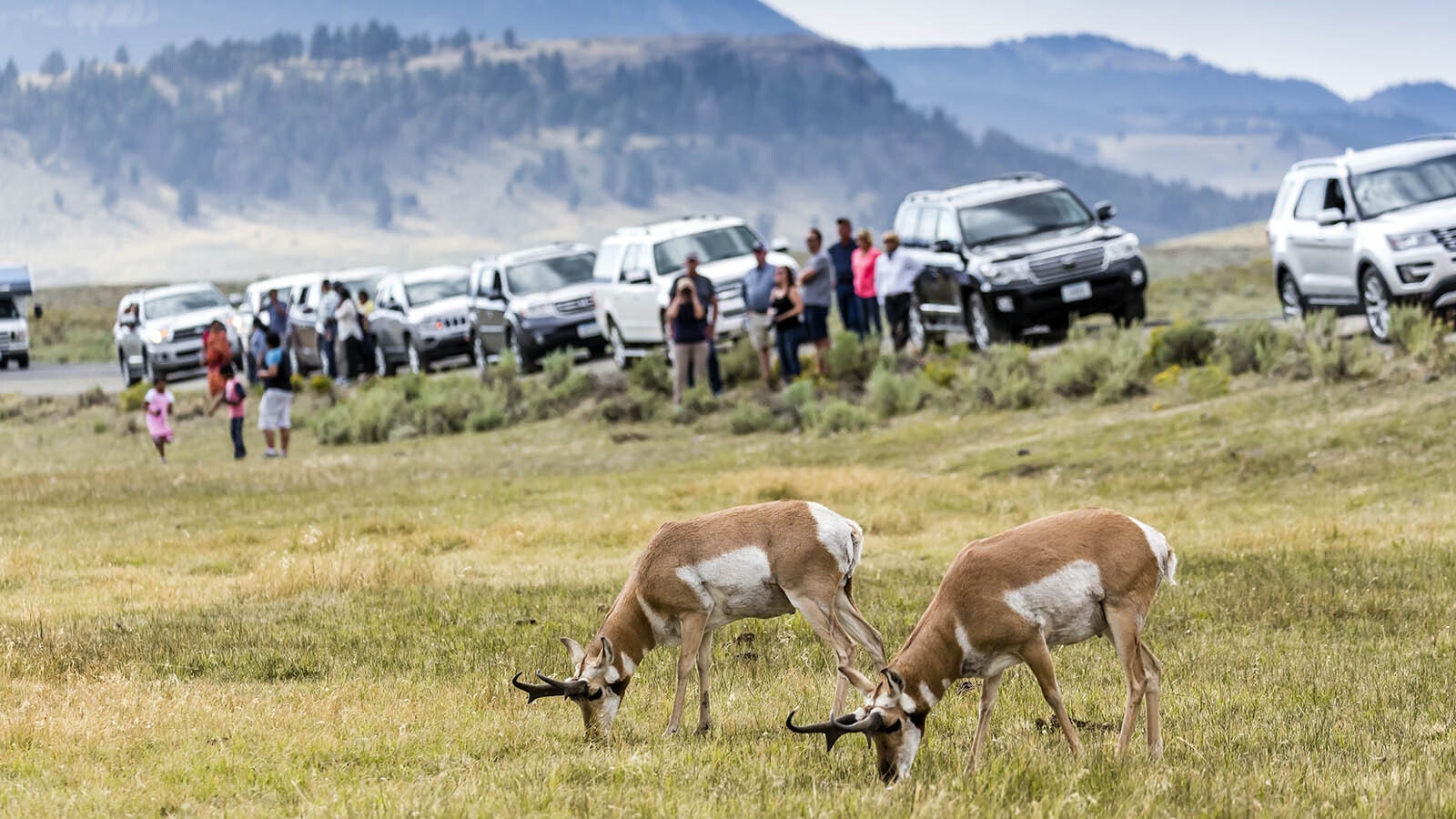
There’s no argument about the iconic status of Wyoming’s elk or mule deer, but when it comes to pronghorn, that can be a different story.
Pronghorn are commonly — though incorrectly — called antelope, which might be indicative of their undeserved second-class status among Wyoming’s wildlife.
The speedy species is “the Rodney Dangerfield of the ungulate world. It doesn’t get any respect,” retired wildlife biologist Rich Guenzel of Laramie told Cowboy State Daily. “They’re really common in Wyoming, so we take them for granted.”
Indeed, Wyoming has an estimated 382,000 pronghorn, more than any other state.
But their numbers could be declining, and like Wyoming’s other premier wildlife species, they deserve some help, Guenzel said. And the state’s prized herds are only a season removed from losing thousands of animals to a huge winterkill.
Working with the WYldlife Fund, he and his wife Mary recently launched a program specifically for pronghorn. It’s at about $350,000, and it’s hoped that it can grow to at least $500,000.
Guenzel said he and Mary first set aside money in 2008, using some family royalties from oil and gas development in Sublette County.
But they were “looking for the perfect place for it to go to help pronghorn,” and a partnership with the WYldife Fund soon followed.
‘Laser-Focused On Pronghorn’
The WYldlife Fund has helped raise money for numerous conservation projects, including a planned $28M wildlife crossing along a stretch of U.S. Highway 26 near Dubois that has been especially deadly for mule deer.
But there’s never been an effort specific to pronghorn, which face many challenges of their own, WYldlife Fund President Chris McBarnes told Cowboy State Daily.
“We’ve had nothing that’s laser-focused on pronghorn,” he said.
The first project earmarked for the pronghorn-specific fund will be the removal and/or replacement of 11.6 miles of “wildlife-unfriendly fencing” in the Red Desert this summer, he said.
It’s part of a longer-term project to remove or revise 26 miles of fence there.
“It’s woven-wire fence. They (pronghorn) can’t get over it, they can’t get under it, they can’t get through it,” McBarnes said.
And the fencing is blocking access to thousands of acres of suitable pronghorn habitat in the Red Desert.
Working with private landowners, the plan is to remove some sections of fence and replace others with fencing that pronghorn can pass though, usually by crawling under it.
Pronghorn can jump over fences in a pinch, but they prefer crawling under them, McBarnes said.
Will They Ever Recover?
The epic winter of 2022-2023 was especially hard on wildlife in Sublette County, which is central territory for Wyoming’s most prized pronghorn herds.
A one-two punch of winterkill and a rare pneumonia outbreak there killed thousands of pronghorn. The losses were so great, the Wyoming Game and Fish Department cut the number of antelope tags in some hunt areas.
Guenzel said he’s worried those herds may not ever completely bounce back.
“I think that, based upon their current level of productivity, they might never fully recover,” he said.
One of the species’ biggest challenges is habitat loss and disruption of migration routes, Guenzel said.
“You can lose segments of the population, and if they can’t migrate to where they need to get to, then they’re gone forever,” he said.
That’s why efforts such as the fencing project in the Red Desert are so vital, he said.
Mark Heinz can be reached at mark@cowboystatedaily.com.