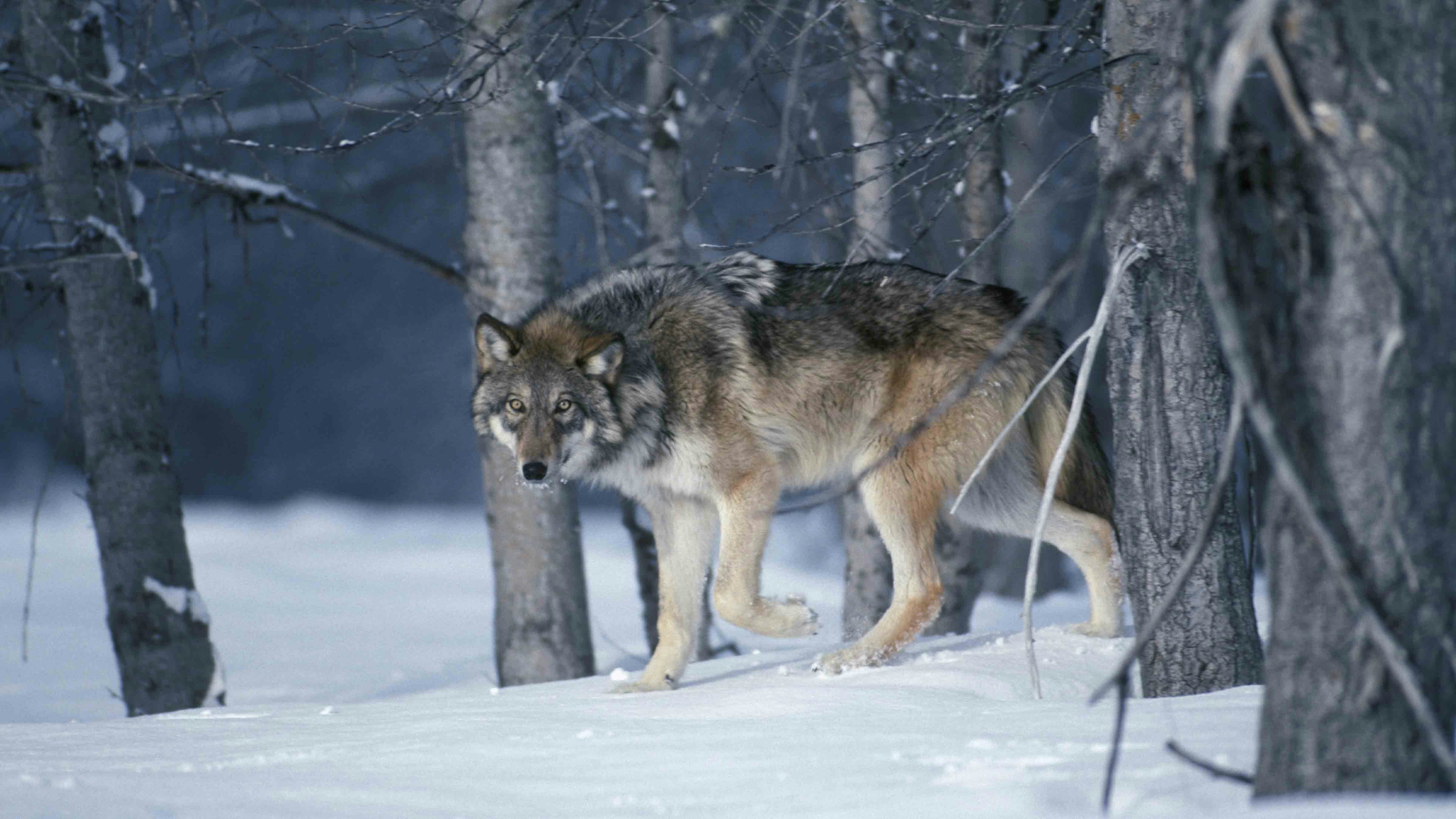
With roughly 350 wolves calling Wyoming home, the state’s wolf population is at “healthy levels,” according to the Wyoming Game and Fish Department, and a livestock industry spokesman said the current wolf management plan is working.
However, a wildlife conservation advocate said wolves should be allowed to expand their territory and increase their numbers.
Game and Fish on Monday released its annual report on wolf monitoring and management stating that while wolf population remains above objective, the number of livestock killed by wolves was down last year.
Is The Policy Working?
“Wyoming has a proven track record of successfully managing our gray wolf population, and we will continue that approach into the future,” Game and Fish Director Brian Nesvik said in a statement accompanying the report.
Jim Magagna, executive vice president of the Wyoming Stock Growers Association, told Cowboy State Daily on Tuesday that Game and Fish’s wolf management has been effective.
“We believe Wyoming’s wolf policy has worked quite well,” he said. “It’s assured a very viable wolf population in that part of the state,” the trophy game management area for wolves in northwest Wyoming.
Wyoming’s wolf management policy also mitigates ranchers’ losses to the predators, he said.
“Certainly, we still suffer losses. But the with the combination of the wolves’ predator status in much of the state and other tools we have kept it within reason,” he said. “Of course, no loss is truly acceptable, but we have been able to keep it within reason.”
Arguing the other side, Wyoming Wildlife Advocates Executive Director Kristin Combs told Cowboy State Daily late Monday that Wyoming still has “an incredibly low number of wolves” in the trophy management zone.
She added that the state’s “predator zone” for wolves should be eliminated, so packs might have a chance to expand their range.
“There could be wolves down around Lander and in the Bighorn Mountains,” she said.
Wyoming Wolves By The Numbers
There are three tiers of wolf management in Wyoming.
Inside Yellowstone and Grand Teton national parks, wolves remain under full federal protection and may not be hunted.
In the trophy game management area, roughly 15% of Wyoming adjacent to the parks, wolves may be hunted during set seasons, and hunters must have wolf tags.
In the rest of Wyoming, or roughly 85% of the state, wolves are designated as a predatory species and may be killed at any time, with no bag limit or tags required.
Wyoming has nearly 200 wolves within the trophy game management area, and 352 total in the entire state, according to Game and Fish.
“As of Dec. 31, 2023, at least 192 wolves and 17 breeding pairs reside within the wolf trophy game management area. When combined with other jurisdictions within Wyoming, the state has at least 352 wolves and 43 packs, with at least 24 breeding pairs,” the agency stated.
The number of wolves has apparently been increasing, primarily due to more pups being born and “lower mortality than noted in previous monitoring years,” according to Game and Fish.
“Wyoming is maintaining wolf numbers at healthy levels, and 2023 marked the 22nd consecutive year wolf numbers in Wyoming have exceeded the criteria outlined for recovery of the species,” the agency reports.
Combs said the numbers don’t tell the whole story. Wolves being killed by hunters might have split packs up.
The number of wolf packs has increased in the trophy game area, she said.
“I think that is indicative of hunting. When packs get fractured, particularly when you remove the breeding pairs, then you will get more packs,” Combs said.
Moreover, Wyoming’s wolf management plan is working only if the goal is to essentially keep the wolf population holed up in the northwest corner of the state.
Some people like that containment policy, but Wyoming Wildlife Advocates and other conservation groups would like to see wolves allowed to establish packs across more of the state, she said.
Livestock Losses Down
According to the Game And Fish report, wolves killed 36 cattle and one horse within the trophy management area in 2023, and seven wolves were killed in response.
In 2022, wolves killed 39 cattle and five horses, and 15 wolves were killed in response.
The number of livestock-related conflicts with wolves is at its lowest since 2010, according to Game and Fish.
Magana said there might be a couple of reasons for the dip in livestock losses to wolves in northwest Wyoming, which have been declining for the past few years.
First, because of a drought, ranchers are running fewer cattle in that area, he said.
And also in some places, such as the Upper Green River Basin, fewer losses to wolves could mean more losses to grizzlies.
“Confirmed losses to wolves have declined significantly as looses to grizzlies have increased,” he said. “The grizzlies are driving the wolves away, so that they can have the cattle all to themselves.”
End The Predator Zone?
Wyoming’s predator zone for wolves has drawn some criticism over the years. Most recently, there was public outcry over the alleged torture of a wolf reportedly captured, then later killed by Cody Roberts, 42, of Daniel. The incident took place in Sublette County, which is in the predator zone.
Critics say such actions could have been prevented, or at least much more harshly penalized, in the trophy game management zone.
Moreover, eliminating the predator zone, and perhaps making all of Wyoming a trophy game management zone, would allow wolves to expand across Wyoming and into other states, Combs said.
Wolves are a vital part of a “healthy, biodiverse ecosystem,” but Wyoming’s predator zone won’t allow them to fulfill that role.
“Wolves don’t really have a chance of getting out of Wyoming. Wolves that go into the predator zone are killed pretty quickly,” Combs said.
Magagna said he and other ranchers favor maintaining the predator zone, as it helps keep livestock losses to wolves down across much of the state.
“It would be devastating to our industry” if the predator zone was eliminated, he said.
Mark Heinz can be reached at mark@cowboystatedaily.com.