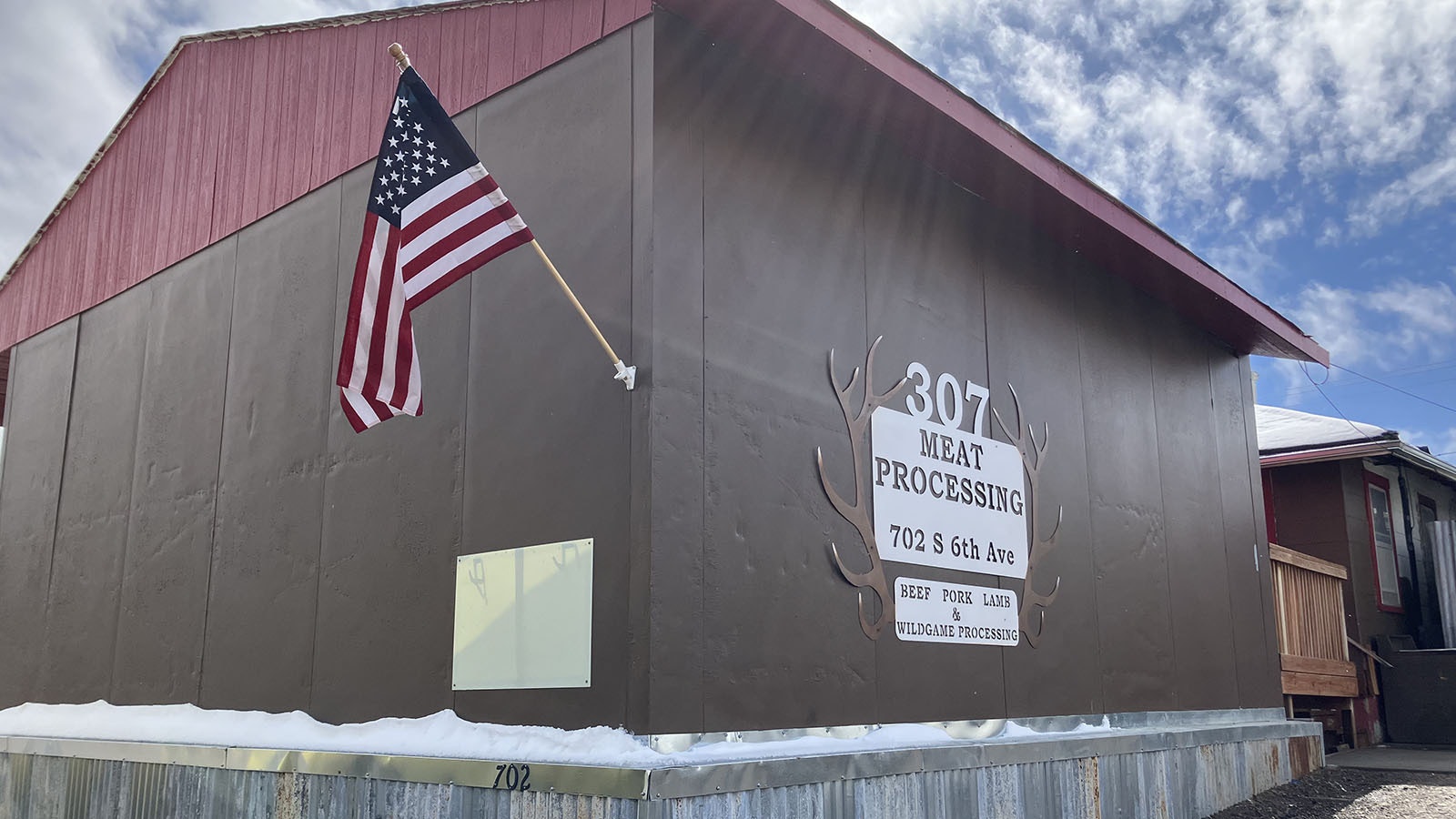
Craig Linden hoped to get a running start last year as the new owner of 307 Meat Processing in Mills, Wyoming, an existing business he had purchased Oct. 27.
He’d had a state inspection prior to taking over the business, which didn’t find any major issues with the plant or its procedures.
“I thought they were giving me a green light,” Linden told Cowboy State Daily.
Once his purchase of the business went through, however, everything changed.
The new inspection, required for a new operator even of an existing business and even if the new owner is a former employee, suddenly produced a lengthy list of things to fix, adding up to $32,000 worth of work before he could open for business.
On top of that, even though no state inspection is required to process game meat, Linden told Cowboy State Daily he was told he’d have to get all meat out of the facility before a re-inspection could happen.
Logistically, that meant he had to shut down processing wild game meat for the month — right in the middle of hunting season — along with a revenue stream he’d been counting on to carry him through what was turning out to be a much rougher-than-anticipated opening.
The situation put his family thousands of dollars in the hole during the business’ crucial beginning months, and the word bankruptcy was thrown around several times during the ordeal.
“We’re not out of the woods yet,” Linden told Cowboy State Daily. “We’re operational, and we’re doing really good now, but it was a very rough start.”
Linden was among a group of Wyoming meat processors attending a listening session last month organized by Wyoming Department of Agriculture Director Doug Miyamoto, to tell the director that the state’s inspection program is too confusing and the rules too inconsistent.
It’s become enough of a problem for Wyoming meat processors that they say it’s hampering the growth of the state’s burgeoning meat industry.
Fighting For Regulatory Certainty
Wyoming’s meat processing industry has been growing quickly since the COVID-19 pandemic exposed a brittle supply chain that was too much consolidated into huge, centralized meat processing plants.
So far, Wyoming has 10 state-inspected plants, 30 custom-exempt plants and 13 federally inspected plants.
Custom-exempt plants are those that process meat for individuals with the processed meat not intended for resale to other customers. It goes right back to the individual for whom it was processed.
The growth in Wyoming’s meat processing industry is just what Wyoming Sen. Cheri Steinmetz, R-Lingle, wants to see.
She is from Goshen County, the No. 1 cattle producing county in Wyoming, and recalls how, during the pandemic, grocery store shelves and meat counters were bare, yet there were feedlots just 5 miles away from the grocery store.
“We’ve worked really hard on that,” Steinmetz told Cowboy State Daily. “We even actually used some of our COVID money to help bolster our processing plants, because we had issues with being able to provide for ourselves during COVID.”
That’s why she was among those disappointed to hear about all the issues Wyoming meat processors were telling her they’ve experienced with the state’s inspection program during the listening session with Miyamoto.
“I think our agency and our meat processors should be partners,” she said. “Not at odds with one another, because we provide a vital service to both producers and consumers, and I think we should all be on the same team working together.”
Steinmetz told Cowboy State Daily she will continue to press for regulatory certainty for the state’s meat processors to ensure they have what they need to continue to grow.
“Without the processors, the agency won’t exist,” she pointed out. “So this should be a partnership.”
State Inspection Program Was Tenuous, Director Says
Miyamoto told Cowboy State Daily he organized the meeting after hearing several of the state’s meat processors had concerns.
“My philosophy has always been, well then let’s swing the shutters back and talk about it,” he said. “And, to be fair, it was designed more as a listening session than a back-and-forth dialogue. We didn’t do a lot of defending ourselves in that.”
Miyamoto said he is reviewing each complaint, going back to the records to see what happened, and reviewing whether any processes can be improved. He plans to report back on this in future meetings.
“But the other side of the story, if I was to boil it down to one statement from me about the meeting, is that we have a contractual obligation with USDA,” he said. “And if we don’t enforce those federal regulations effectively, as they want them to be enforced, processors will not legally be in business.
“So, it’s something that we take very seriously, but we also have limited flexibility on what we can allow at meat processing plants versus what we can’t allow.”
Miyamoto said when he took over the role as director of the Department of Agriculture, Wyoming had a “tenuous” relationship with federal USDA and officials overseeing the state’s meat program.
“One of the first meetings I went to with USDA, they essentially threatened our delegated authority in that meeting,” Miyamoto said. “They told me if we didn’t change our inspection protocols, they were not going to allow us to run our state meat-poultry inspection program any longer.”
That forced Miyamoto to implement new inspection standards to bring the state’s inspection program in line with what the USDA requires. And that part of the effort has been working, he said. The state’s USDA audits have improved.
Licenses Follow People, Not The Plant
One of the other points Miyamoto stressed is that licenses to process mean don’t follow a given plant. When a change in ownership happens, that means a new inspection is needed to ensure there are no major departures from previous practices.
Miyamoto also said the state’s record differs somewhat from some of what processors told him.
“We do have some contrary information,” Miyamoto said.
In the case of the Mills plant’s delayed opening, Miyamoto said the state’s notes indicate the owner was informed that the state Department of Agriculture doesn’t have any jurisdiction over wild game processing.
According to those notes, “We told them, if you want to process wild game, OK, you don’t need our license to do that,” Miyamoto said.
But to process any meat other than wild game, a totally new inspection is required, Miyamoto said. That’s true for every owner, even if the plant is an existing business and even if that business is taken over by an existing employee.
“The condition of that plant may have changed substantially between the last time we were in there, or when the transfer of ownership happened,” Miyamoto said. “So, some of the delays may be unavoidable on our part.”
Miyamoto said in one of the cases where a new plant was delayed from starting operation, the state was waiting on a water sample to come in for verification of adequate water supply.
But the director added that, regardless of discrepancies, he still intends to review all the records related to the complaints he received to see what he can do to make things easier.
“Having a listening session like that is never something easy to do as an administrator of a government agency,” he said. “But, by the same token, I would say that we do want to have this dialogue with our processors, and if there’s a better way to do our job, we’re interested in doing that — with the understanding we still have to maintain regulatory standards so that USDA will continue to grant us the authority to do the program at all.”
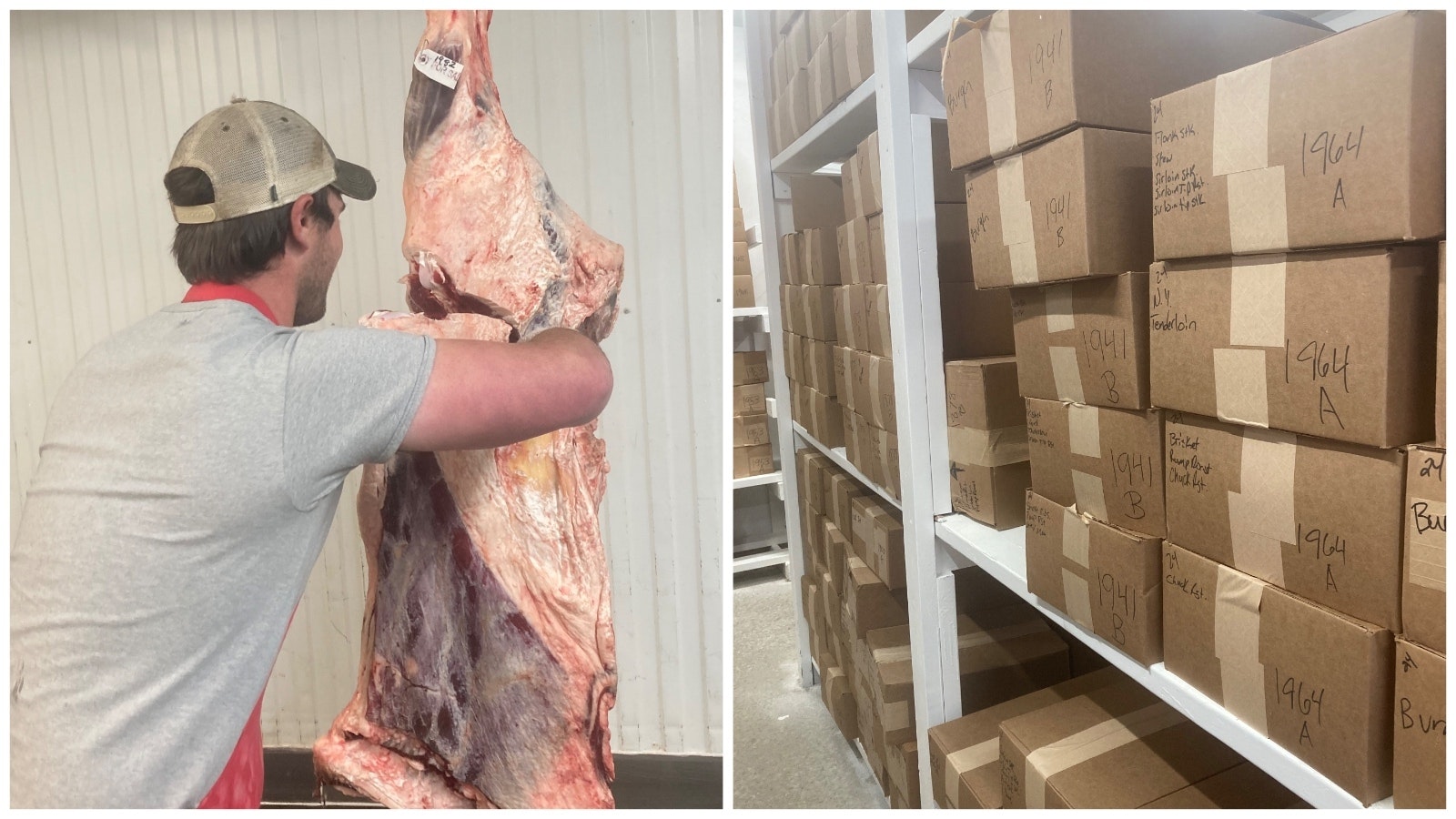
Meat is butchered and packed at 307 Meat Processing in Mills, Wyoming. (Craid Linden, 307 Meat Processing) 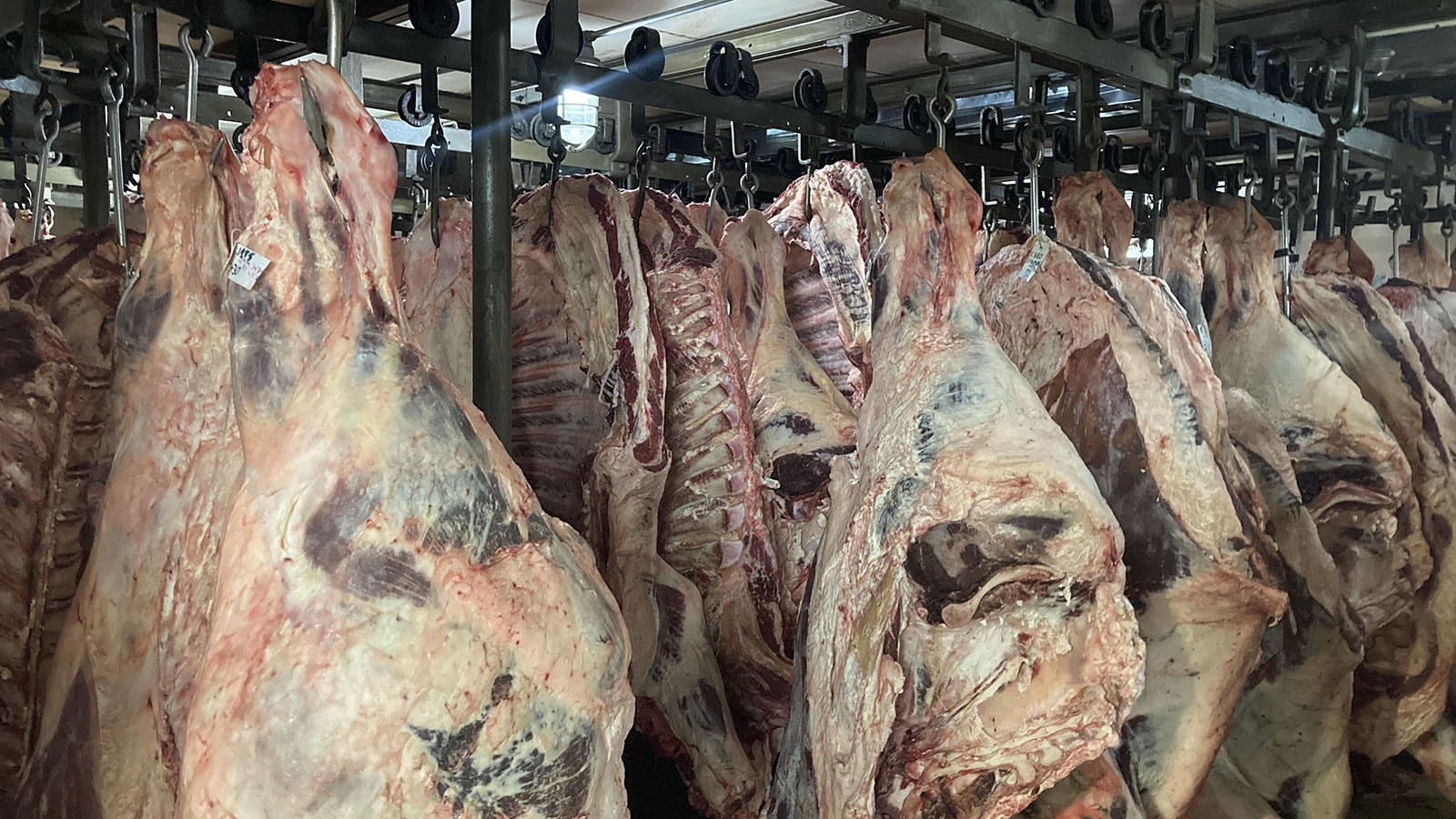
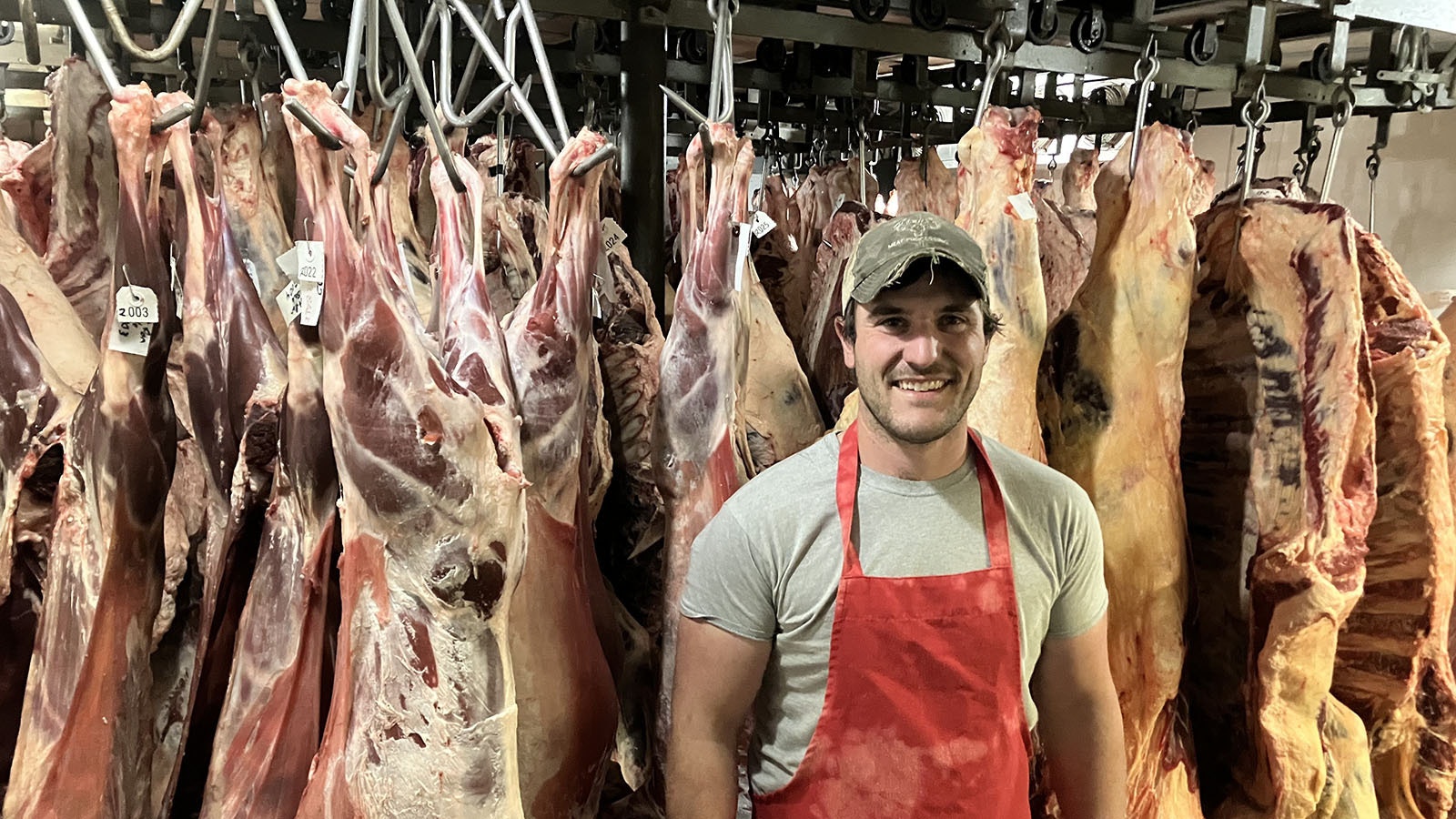
Beef, sheep, and goats, hanging in the meat locker at 307 Meat Processing in Mills, Wyoming. (Craid Linden, 307 Meat Processing) 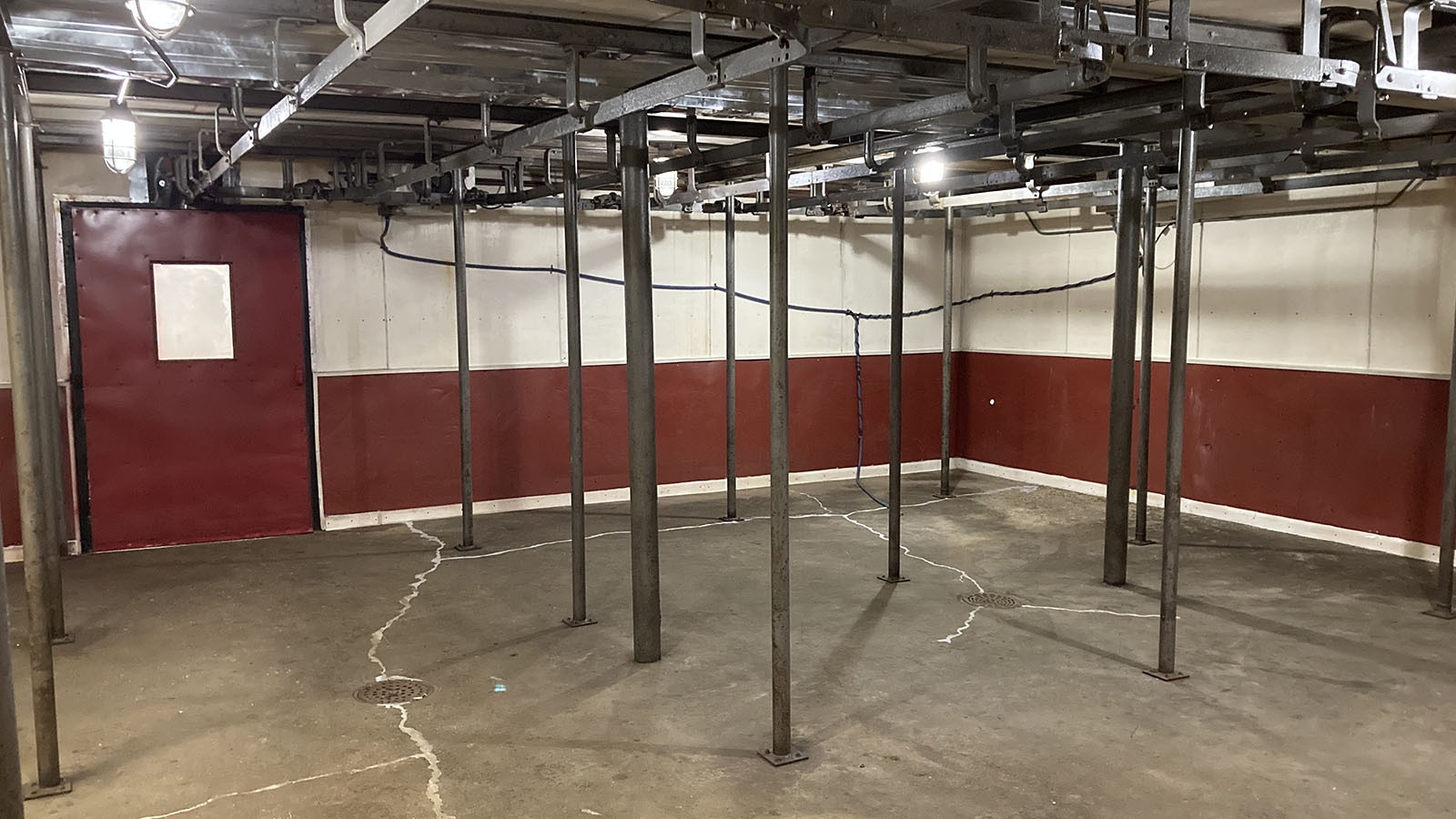
An empty hanging room at 307 Meat Processing in Mills, Wyoming. (Craid Linden, 307 Meat Processing)
Wildly Inconsistent
Wyoming meat processors told stories about labels that were approved, then disapproved, costing one plant owner $15,000 to redo, and of other openings that were delayed despite pre-inspections that said there were no major issues. There also have been occasions where the same inspector reached different conclusions on the same issue at different points in time.
Todd Koehler used to own a custom meat shop in Gillette. He told Cowboy State Daily the state’s inspection process was so inconsistent he finally gave up on it. He’s gone to federal inspection instead.
“There was just no accountability for anything (the state inspectors) do,” he said. “We hired a consultant when we went federal, and we told him about all the things that had happened with the state, and 90% of the time, he said, ‘Nope, they’re wrong.’”
Custom-exempt meat plants are those that slaughter animals and process meat for an individual owner, which is what Koehler was doing in Gillette. That meat is not sold to stores or to other individuals. It’s given right back to the owner who brought it in for processing.
During one state inspection at his custom-exempt shop, Koehler told Cowboy State Daily he was initially told he’d have to stamp all of the custom-exempt meat he was processing for individuals as “not for sale.”
But ink on the meat is something his customers don’t like to see. When Koehler pointed out that none of the meat he processes is ever for sale, that it is all custom-exempt, he was told he could instead place placards at both the cooler’s entrance and exit, stating that all the meat hanging in the cooler is “not for sale only.”
“But, six months later, she comes back and writes us up again” for not stamping the meat, Koehler said.
After several of those kinds of back-and-forth instances, Koehler said he decided to just go federal instead.
“I just did not like fighting with them,” he said. “You know, I’m 62, and I just didn’t want to do it anymore. So, I just gave away a really lucrative business, a money-making business.”
His biggest surprise since going federal?
It’s that federal inspection has been way easier, way more consistent, with less red tape than what he went through with his state inspectors. That’s not at all what he had expected.
“For federal, we can go all the way up the food chain to Washington, D.C.,” Koehler said. “Like, I had a problem with my federal inspector, and I went to the supervisor right away. In five minutes, my problem was taken care of. If it wasn’t, I could go above her to Billings to regional, and then if that doesn’t work, then I can go to (the office in) Denver.
“Problems are getting taken care of, and they don’t have a personal vendetta against anyone. It’s straight out, this is a job. That’s all it is to them. They just get you taken care of, and it’s been so much easier to deal with.”
Holding Back Business Ambitions
The man Koehler sold his business to, Pat Uskoski, had been a worker at the business and related a similar experience as Linden, with an initial walkthrough of the plant he was taking over, where he was told very little needed to be fixed prior to him taking over the existing business.
The like Linden, when ownership changed hands and inspectors came from Cheyenne, Uskoski suddenly faced a long list of things that had to change — some of them things that had previously been deemed OK at the plant for quite some time.
One of those was a personal freezer in a back room for employees to use. The freezer had some steaks in it that had been bought from a retail grocer.
“I got told I couldn’t have that freezer in there,” Uskoski said. “And the freezer said personal use only right on the front of it. But, when that was brought up in the meeting, the guy who wrote me up for it said, ‘You know, there is nothing wrong with having that freezer.’”
That inconsistency is what bothers Uskoski the most.
“I mean, it just kind of proved the point,” he said. “And I use that freezer as an example because it’s not a huge deal at all. It took me five minutes to move it. I moved it over to my garage and everyone’s happy, right? But it’s the principle. Because maybe it’s a little freezer this time, but maybe it’s the whole floor the next. Maybe it’s a $100,000 repair that they deem necessary.”
That inconsistency is holding Uskoski back from bigger ambitions, he told Cowboy State Daily.
“You know, I’d like to build a kill floor on my facility,” he said. “We do mobile slaughter. And I’d like to build a slaughter room on my facility.”
But without consistency of rules, he worries that it could turn into a boondoggle that will cost him more time and lots of money.
“So that’s been a project that’s on hold,” he said. “Because I don’t know. I don’t, honestly, I don’t want to deal with it. Because I just know when I start getting into it, I’m gonna be so mad by the end of it, because they’re gonna decide that, oh no, you need to do this, or you need to do that.”
Renée Jean can be reached at renee@cowboystatedaily.com.