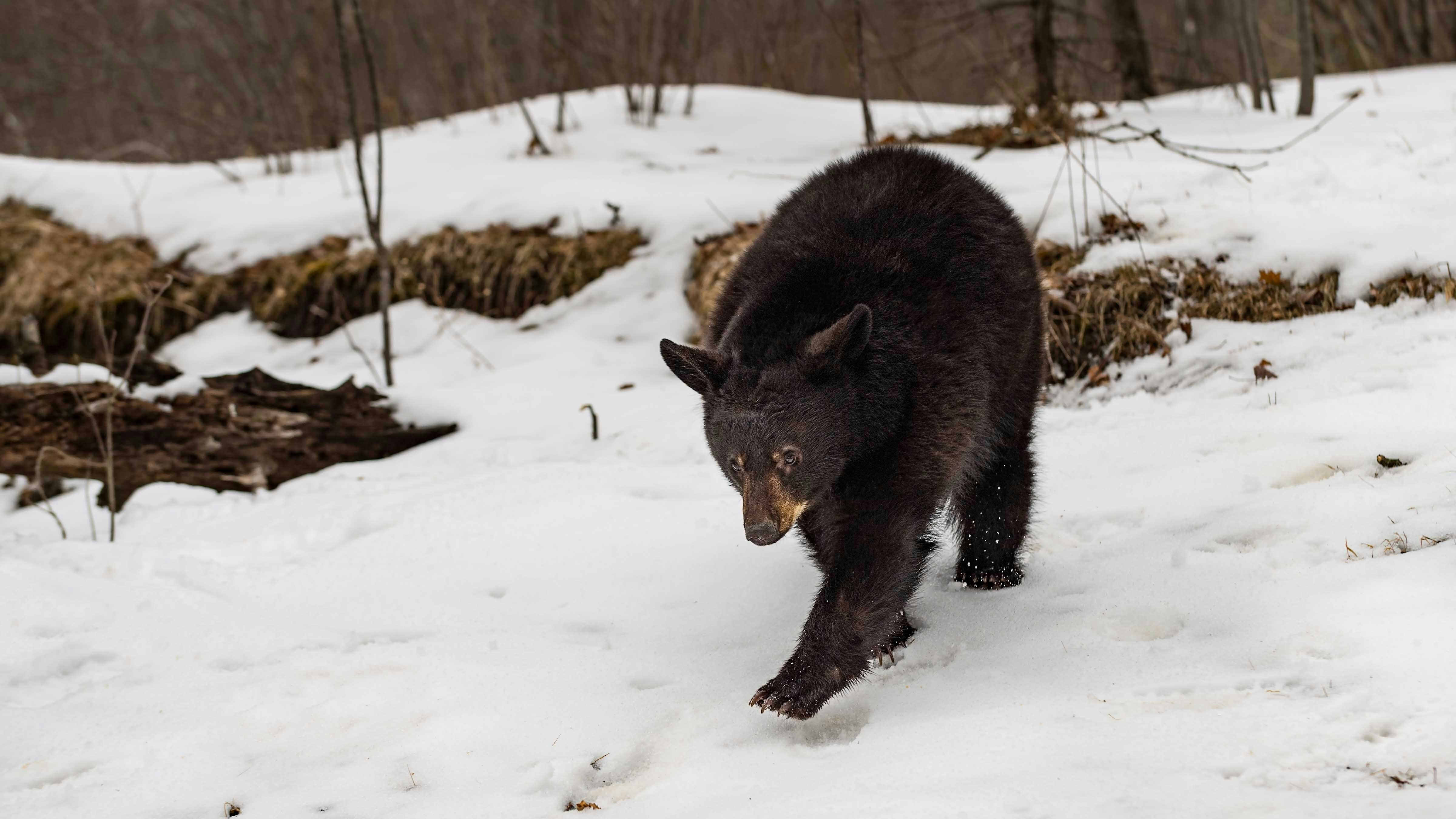
Upon hearing the phrase “air-dropping grizzlies,” a layperson’s mind might go wild with images of huge, roaring bears parachuting from the sky.
The reality isn’t quite that crazy, but is still pretty cool.
And if all goes as planned, perhaps some Wyoming grizzlies could find themselves slung under helicopters, in a drug-induced stupor, on the last leg of their journey to a new home in Washington state.
The U.S. Fish and Wildlife Service and other federal agencies have said that air-dropping bears will likely be the preferred method of getting new grizzlies to remote locations in Washington’s North Cascades Ecosystem.
Not Certain If Wyoming Bears Will Go
After years of planning and speculation, a grizzly reintroduction program for the North Cascades was finally green-lighted. Although it’s not yet clear exactly when grizzlies will actually put paws on the ground there, it could be as soon as this summer.
It’s also not clear yet whether any Wyoming bears will be transplanted to the North Cascades, although federal agencies have named Wyoming as one possible source for grizzlies.
The Wyoming Game and Fish Department hasn’t yet been involved in any of USFWS’s North Cascades grizzly reintroduction plans, Game and Fish large carnivore specialist Dan Thompson told Cowboy State Daily.
Federal bear biologist Frank van Manen said that, to his knowledge, “options are still being evaluated” regarding where the reintroduced grizzlies might come from.
He’s the supervisory research wildlife biologist for the U.S. Geological Survey’s Interagency Grizzly Bear Study Team. The team tracks and monitors grizzlies throughout the Greater Yellowstone Ecosystem in Wyoming, Montana and Idaho.
By Truck To Staging Areas
Helicopter transport will probably be used for the final stages of the bears’ relocation into the North Cascades, according to joint record of decision document from the USFWS, National Park Service and the Department of the Interior.
Bears would be transported first by truck and trailer from their original capture sites to staging areas, according to the document.
“Grizzly bears will be transported from the staging area as soon as possible by helicopter and will likely remain at the staging areas for only a few hours, depending on weather and helicopter availability,” the document states.
Then Slung Under A Chopper
How a grizzly’s chopper ride might go can vary, van Manen said.
But the bears won’t be placed inside the aircraft’s cabin (which is likely a relief for pilots and flight crews).
And parachutes aren’t involved either, van Manen said.
“Indeed, it is a little different than parachuting bears. A lot of details would need to be worked out, and I don't know which exact procedures would be used for any planned releases of grizzly bears in the North Cascades,” he said.
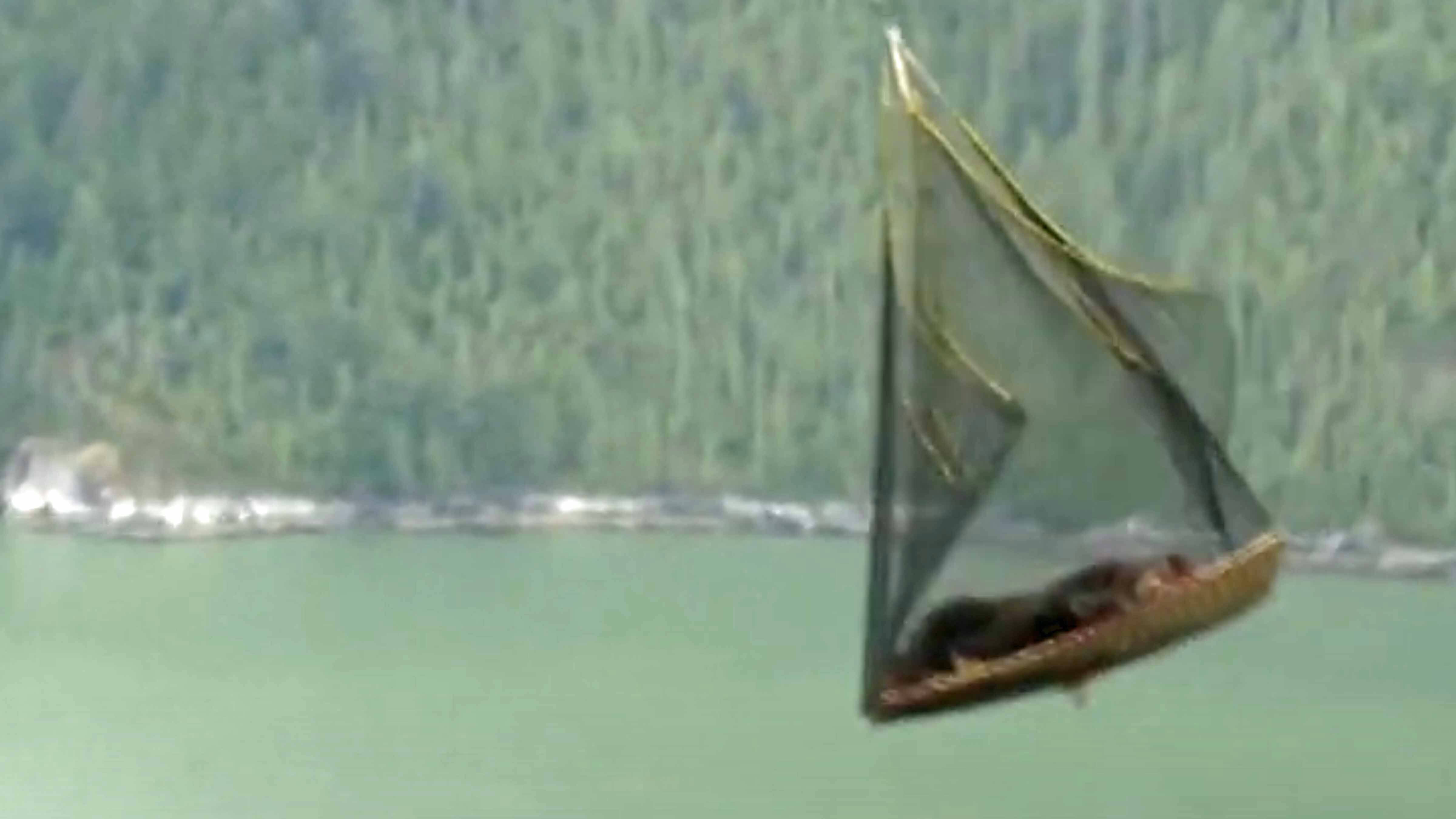
As things stand, tethering grizzlies under choppers is the federal agencies’ preferred option. And moving bears with helicopters is nothing new. The National Park Service has file photos of grizzlies in Yellowstone being slung in strong nets under a chopper in 1970.
Explaining how that works, van Manen said sedatives are involved (for the grizzlies, not the crews).
“Another option is for a captured bear to be moved to a staging area, where it is chemically immobilized, placed in a heavy-duty net or other holding device, and tethered to a helicopter for transport to the release site,” he said.
After the drugged-out flight, the weary grizzly is almost ready for its new home.
“At the release location, the bear is carefully placed on the ground surface, where a ground crew awaits to untether the animal, check the bear's vital signs and prepare it for release by reversing the chemical immobilization drug,” van Manen said. “Clearly, very careful planning is essential to ensure the safety of the animal and personnel.”
Contact Mark Heinz at mark@cowboystatedaily.com
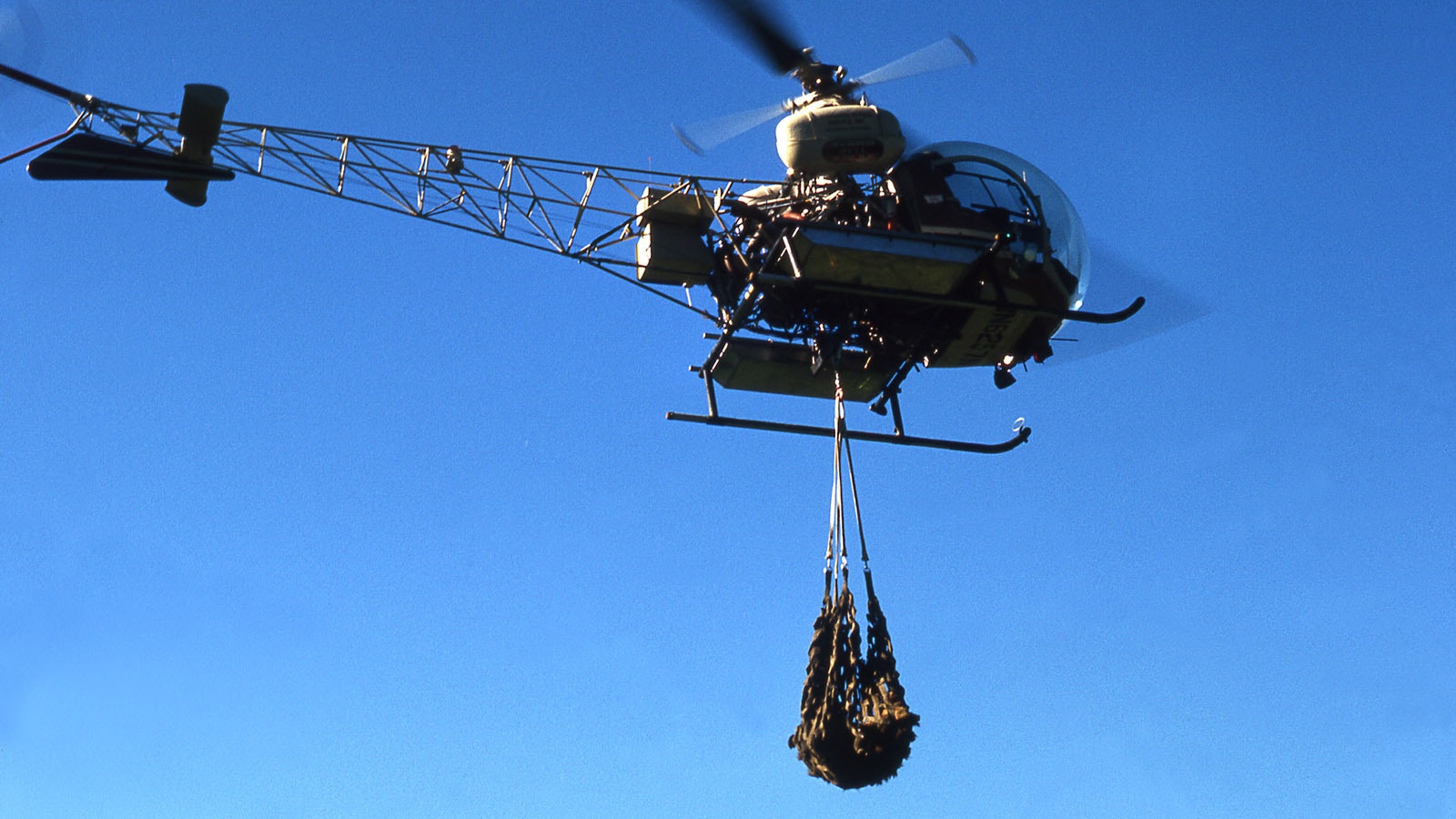
A grizzly bear is transported in a strong net hanging from a helicopter in Yellowstone National Park in 1970. (National Park Service) 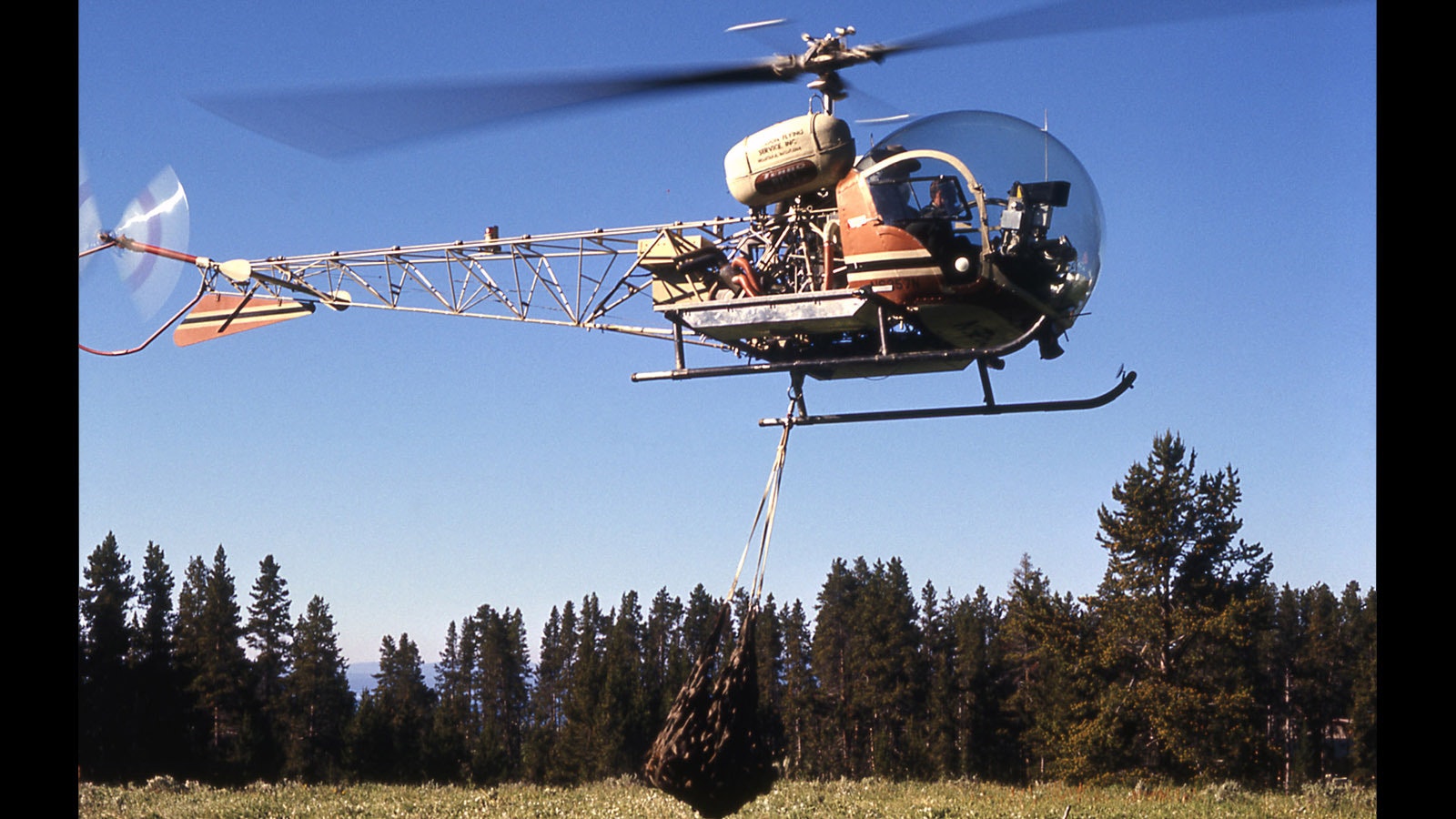
A grizzly bear is transported in a strong net hanging from a helicopter in Yellowstone National Park in 1970. (National Park Service)
Mark Heinz can be reached at mark@cowboystatedaily.com.