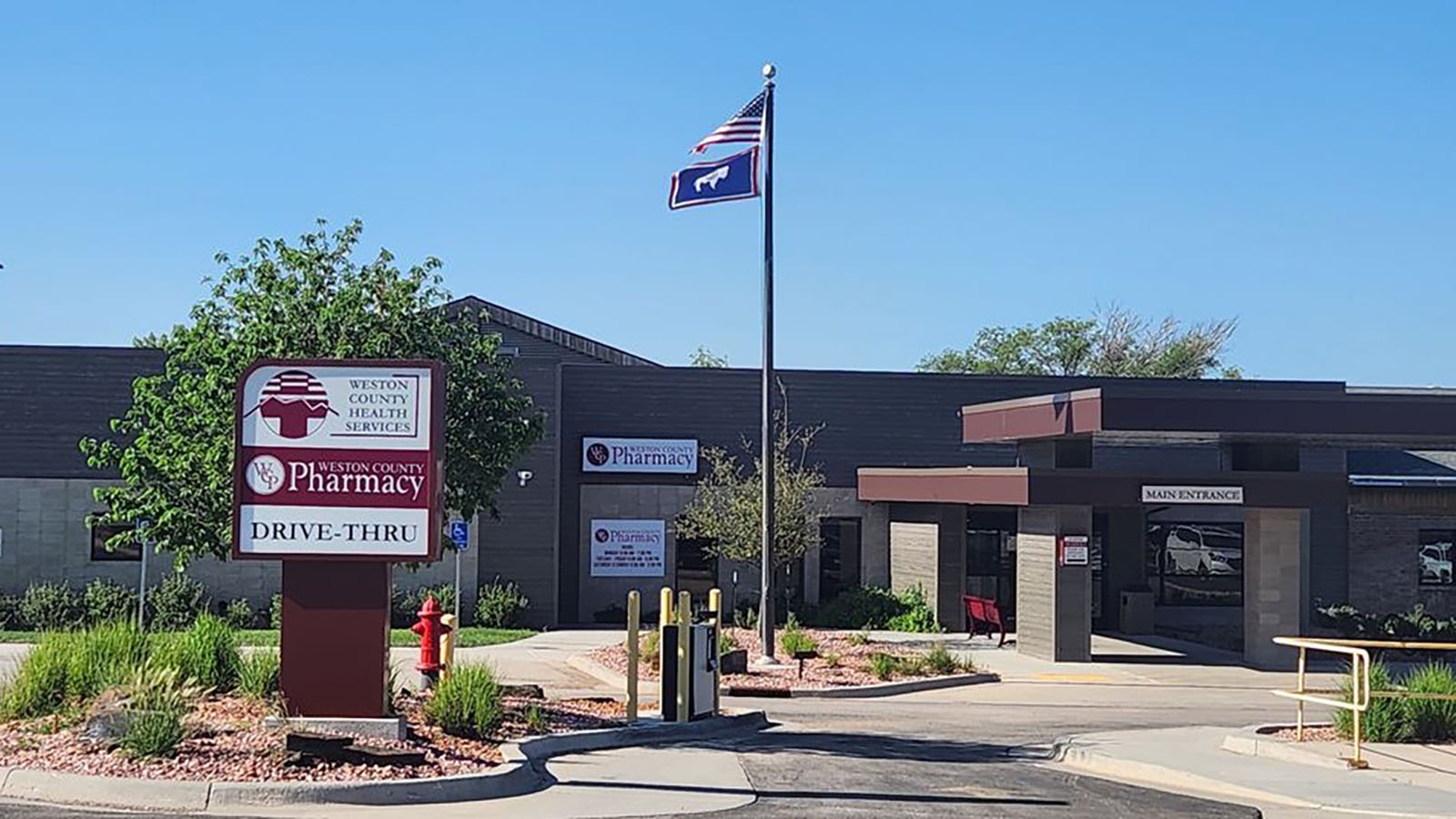
A federal judge has dismissed the lawsuit of a Wyoming woman who claimed her employer, a hospital in Weston County, tried to have her involuntarily committed for trying to expose bad financial practices.
Amanda McDade didn’t specifically warn Weston County Health Services, a governmental entity, of her plan to sue it, though Wyoming law generally requires doing so before suing the government, U.S. District Court Judge Scott Skavdahl wrote Friday in an order dismissing McDade’s lawsuit against the hospital.
McDade’s other claims that the hospital discriminated against her as a whistleblower and as a person with a disability also failed, because McDade did not back the former with relevant law or the latter allegation with evidence, Skavdahl’s order says.
“To the extent Plaintiff asserts Defendant’s alleged actions are ‘obviously’ illegal, the Court disagrees with such a conclusory statement,” wrote Skavdahl.
What She Alleged
McDade had alleged in a December civil complaint that while working as a human resources generalist for Weston County Health Services, she noticed money mismanagement.
She reported her concerns to the hospital board president and was allegedly asked to alter the records to conceal the wrongdoing. After that, a hostile work environment festered around her, her lawsuit says.
McDade’s own doctor, Dr. Sara Thurgood, approached her Oct. 14, 2021, saying she wanted to address concerns she’d heard from others, and that their shared employer was worried about McDade and considering having her involuntarily committed.
In a December interview with Cowboy State Daily, Thurgood acknowledged that she broached others’ concerns with McDade, but said hospital authorities tried to use her, Thurgood, as a “pawn” against McDade.
Rattled, McDade fled the office and later quit her job.
You Gotta Warn The Government
The Wyoming Governmental Claims Act is the mechanism by which people can sue the state government and its entities, generally. When plaintiffs don’t comply with it, courts dismiss their cases.
McDade said she gave the hospital notice of her claims against it Dec. 5, 2023, which the hospital denied. Either way, that falls after the two-year deadline for filing those notices prior to suing governmental entities.
McDade argued back that documents and evidence she gave to the Department of Labor Standards should have been enough notification for the hospital.
Skavdahl characterized that as unrealistic.
“(The hospital) would be put in the untenable position of combing through documents in search of potential claims and then reading McDade’s mind to determine which of those claims she may want to pursue,” the judge wrote.
Wrong Law
McDade alleged she was discriminated against for being a whistleblower regarding the hospital’s alleged misdeeds.
She cited a state law forbidding Wyoming licensed health care facilities from retaliating against whistleblowers who report wrongdoing to the appropriate division of the state Department of Health.
The law doesn’t provide a mechanism to launch a lawsuit, however, Skavdahl wrote.
This Is Not The KKK
McDade’s lawsuit had invoked a federal law, 42 USC 1985 (3), a portion of the Ku Klux Klan Act banning class-based hostility. The act was written to protect African Americans and people who championed their cause from Ku Klux Klan’s violent, post-Civil War discriminatory conspiracies.
Skavdahl didn’t effectively narrow the act’s use in Wyoming to protecting African Americans, but he pointed to the U.S. Supreme Court’s frequent questioning of whether the KKK Act could ever fall outside that goal.
In either case, it can’t be used to protect someone on the basis of having a disability, which was the use to which McDade’s lawsuit attempted to apply it, the judge wrote.
But It Is Familiar
The KKK law is familiar: Former Campbell County Library Director Terri Lesley is invoking that same federal statute in her lawsuit against the Bennett family, whom she’s accusing of conspiring against her and perpetuating injurious falsehoods about her.
Lesley’s conflict with the Bennetts stems from the Bennetts raising alarms about sexually graphic books in the library system, followed by a turnover on the library board and the board firing Lesley.
The Bennetts raised some of the same concerns about Lesley’s use of that statute as Skavdahl raised about McDade’s.
What Disability?
McDade accused the hospital of not accommodating her disability.
Skavdahl’s response to that was essentially, what disability?
McDade alleged that she had a health diagnosis that her employer was aware of, but didn’t name her alleged disability in her complaint.
Other claims, such as McDade’s allegation the hospital created a hostile work environment, also failed due to McDade invoking a legal application that didn’t match her actual claims, and because of McDade’s description of one traumatizing day not being enough evidence of a hostile work environment, the order says.
Cassie Craven, of Longhorn Law LLC, was the attorney who filed McDade's complaint.
Clair McFarland can be reached at clair@cowboystatedaily.com.