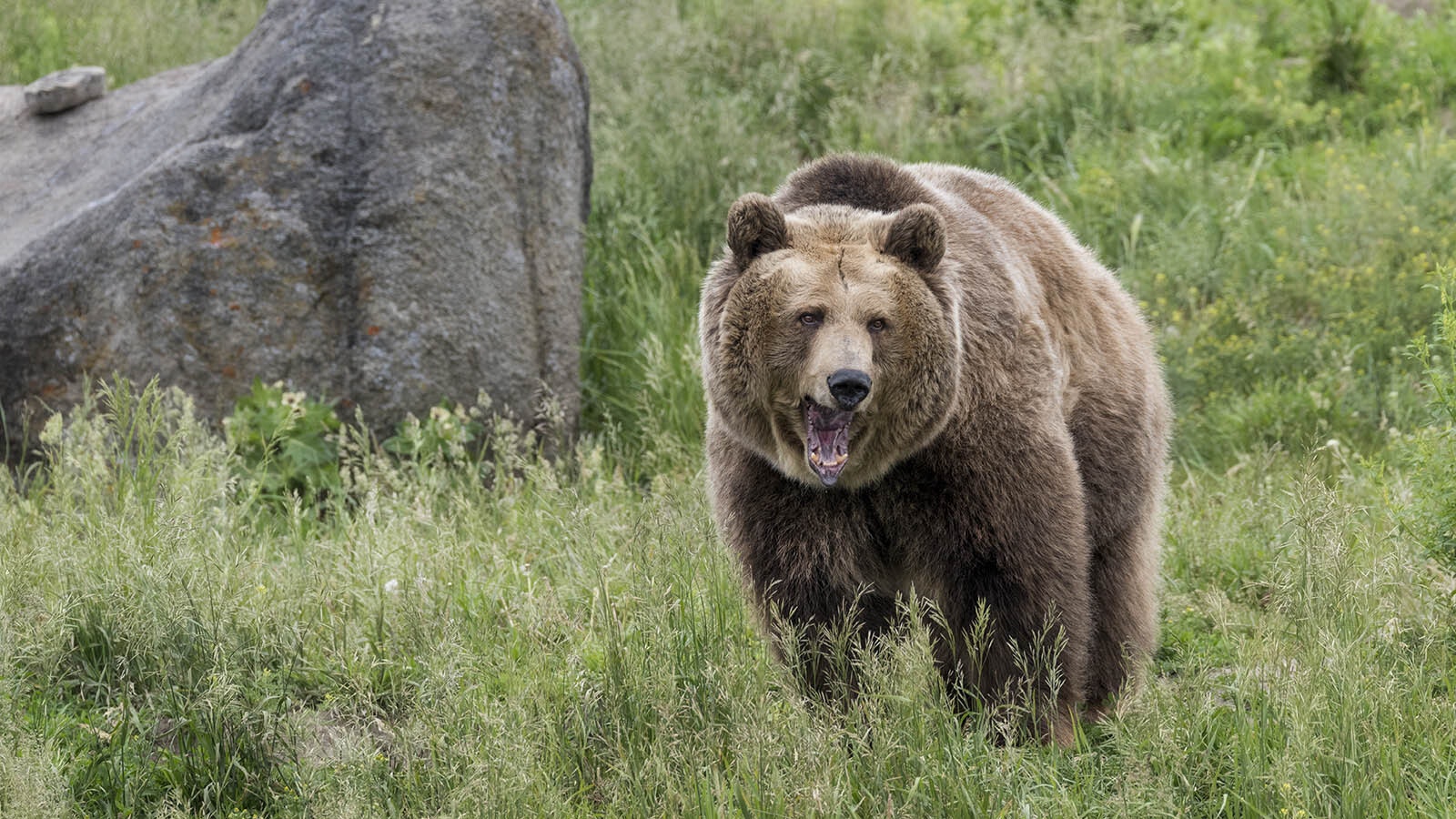
Confirming stories and rumors that have been circulating for years about grizzlies in Wyoming’s Bighorn Mountains, game agents Monday confirmed a grizzly there when they killed a bear that had attacked cattle south of Ten Sleep.
“I’m surprised, but not surprised,” avid bear conservationist and hunter Joe Kondelis told Cowboy State Daily on Monday afternoon shortly after the Wyoming Game and Fish Department announced the news.
“I know a lot of guys who said they have (seen grizzlies in the Bighorns), and I didn’t discount them,” he said.
Game and Fish agents investigated a Sunday report of a cow with injuries consistent with a grizzly attack on private ranchland, according to the agency.
“Wildlife managers verified nearby tracks and signs that suggested the bear frequented the ranch for approximately one week,” Game and Fish reports in a prepared statement. “The sub-adult, male grizzly bear was euthanized after consultation with the United States Fish and Wildlife Service due to its involvement in depredation and its behavior frequenting the ranch.”
‘It’s Going To Be A Continuing Thing’
The spring season for black bear hunting is about to open in the Bighorn Mountains, and Kondelis said he will set up bait sites when the season opens.
He said he’s never personally seen a grizzly in the Bighorns, but Monday’s announcement from Game and Fish shouldn’t surprise anybody because seasoned hunters have long reported grizzly sightings in those mountains.
“I’ve heard, ‘Oh, so-and-so saw one.’ I didn’t pass it off as a myth,” he said, adding that grizzlies have been pushing out from their core habitat in and around Yellowstone National Park for years.
“The bucket (of Yellowstone grizzly habitat) is full,” Kondelis said. “We’ve seen it a lot over maybe the last five to seven years. We’ve been seeing grizzlies out by Byron.”
Byron is a small town in Big Horn County between Powell and Lovell.
He added that it was strange that the first confirmed grizzly report was in the Bighorns was in Ten Sleep area.
“I’m shocked to see one all the way down by Ten Sleep,” he said.
Grizzlies pushing ever-farther out is “going to be a continuing thing,” Kondelis said, given the distances that bears will travel in search of food and new territory.
He added that the report of the grizzly in the Bighorns comes amid a buzz over the recent sighting of a grizzly south of Havre, Montana, part of a continuing pattern of grizzlies pushing ever farther east into Montana’s high prairies.
Won’t Mean A New Population
Game and Fish doesn’t consider the Bighorns suitable habitat for grizzlies, according to the agency’s statement.
“The location of the conflict was in the basin of the Bighorn Mountains and more than 80 miles from the eastern boundary of what is known as the Demographic Monitoring Area — the area considered biologically and socially suitable for grizzly bears,” according to Game and Fish.
“Wyoming’s grizzly bear population is managed and monitored where suitable habitat exists as designated by the USFWS and informed by the Interagency Grizzly Bear Study Team,” Game and Fish Director Brian Nesvik said in the statement.
“The Bighorn Mountain Range is not suitable habitat and the department is not interested in allowing grizzly bears to occupy this area,” Nesvik added. “Their expansion into unsuitable habitat leads to increased conflict potential between bears and humans, which impedes the success of grizzly bear conservation.”
Kondelis agreed that the Bighorns aren’t suitable for an established grizzly population.
“This is just one instance where one grizzly got busted. And hopefully, it’s not a continuing issue,” he said. “However, if you get a couple of grizzlies that go unnoticed, and pretty soon you could have a population.”
Don’t Blame Game And Fish
Kondelis said Game and Fish is doing all it can to keep grizzlies within the designated recovery zone in Yellowstone country. He doesn’t blame the agency for a grizzly showing up in the Bighorns.
“It’s tough for those guys to babysit those bears,” he said. “Bears are just going to be bears.”
Grizzlies remained listed under federal endangered species protection in Wyoming, Montana and Idaho, and may not be hunted by the public.
Mark Heinz can be reached at: Mark@CowboyStateDaily.com