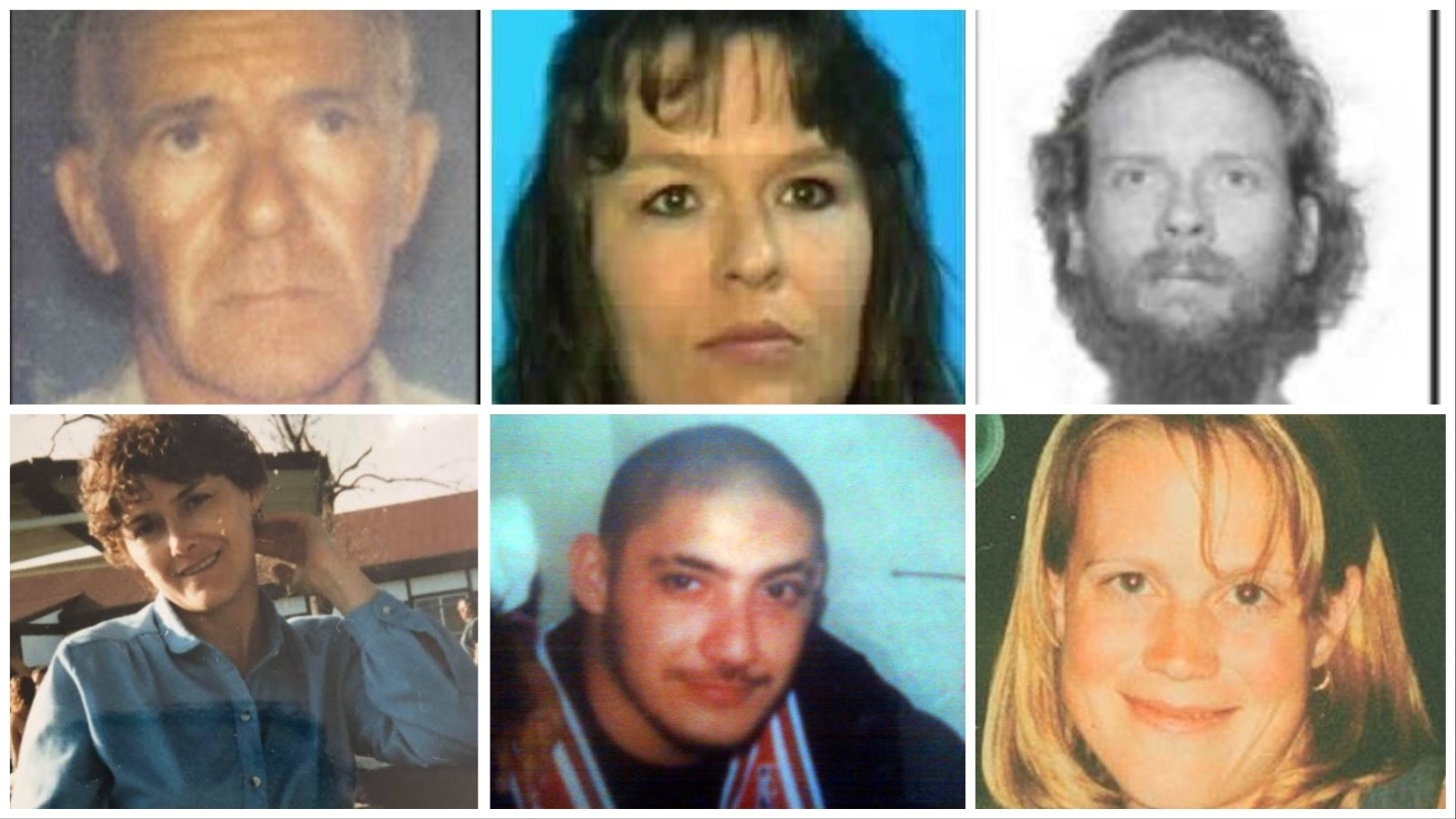
It’s been 25 years since Davida Peterson was shot and killed at gas and propane convenience store in Rock Springs. Nobody has been arrested for the crime as Peterson’s family continues an excruciating wait for answers and justice.
There may be some movement toward making that happen with a pair of new bills passed by the Wyoming Legislature and signed into law by Gov. Mark Gordon this past legislative session that give the Wyoming Division of Criminal Investigation (DCI) more money and tools.
The new laws provide DCI with $300,000 to create and maintain a statewide cold-case database and launch a forensic genetic genealogy (FGG) pilot program.
Under the new legislation, all law enforcement agencies throughout the state will be required to report unsolved homicides and felony sexual assaults two years or older dating back to 1972. The agencies will, however, retain investigative control over their cases unless they choose to reach out to DCI for help.
Basic details of every cold case will be available to the public with a non-public backend containing evidence and other details that will be accessible by law enforcement.
Any additional money remaining from creating the database can be used for investigating cold cases at the agency’s discretion.
Funding for the FGG technology will be available to all state law enforcement agencies through a grant application program still in the works.
‘This Has Gone On Long Enough’
Under the new law, Davida Peterson’s case will be one of roughly 150 unsolved cold cases throughout the state that will be added to the new database.
Peterson’s older sister, Brenda Nellen, was happy to hear that her sister’s case, which is now being investigated by the Rock Springs Police Department, will have wider exposure.
She cautiously optimistic that having her sister’s information available publicly may help generate tips, Nellen told Cowboy State Daily, though she worries that many may not be forthcoming given that the crime happened 25 years ago.
“This has gone on long enough,” she said. “Twenty-five years is long enough to have an investigation going on.”
Should any credible tips come forward, they’ll have to be vetted and investigated by the police, who Nellen said she’s not convinced will follow through with given her negative experience with her sister’s investigation thus far.
That said, she’s encouraged by any new tool that might help bring in information to help solve her sister’s murder.
“Somebody out there knows something,” Nellen said. “We’ve always said that.”
Nellen has no idea what type of evidence was gathered at the crime scene or whether her sister’s case might be a good candidate for the FGG pilot program.
Not Forgotten
Kenneth VanBuskirk’s unsolved death will be another added to the new statewide database.
VanBuskirk’s remains were found near a water tower on a hill in downtown Lusk on Feb. 21, 2016, nearly two years after he was reported missing. To date, VanBuskirk’s father Ernie believes there was foul play in his son’s death, which so far remains undetermined.
Ernie, an 86-year-old retired Converse County Sheriff’s Office deputy, still tears up at any mention of his son.
“It is a lot of heartache even after all these years,” he said. “Also, a lot of dreams and nightmares.”
Having read the police files for himself, Ernie believes there’s more work to be done by the Lusk Police Department and feels strongly that his son’s death was a homicide — and that people locally are afraid to talk.
He was happy when he heard that Gordon signed both bills into law. Anything is better than nothing, he said. For fathers and families like the VanBuskirks, just having his son’s case made public is validating.
“In a way it makes me feel my son is still with us and not forgotten,” he said.
Law Enforcement On Board
DCI Director Ronnie Jones agrees that both new laws are a positive step in helping the agency and law enforcement clear more cold cases.
“We hope that it will help make connections on some of these cases to help develop leads that have not yet been discovered yet or are still out there and hopefully identify suspects,” he said.
In terms of implementation, Jones said the agency is in the process of identifying viable FGG vendors as well as finding the most affordable option for developing the cold case database, whether that’s developing one in house or buying existing software.
The agency is also establishing the process by which law enforcement agencies can apply for FGG grant money as well as criteria based on the types of cases that have sufficient DNA evidence and will have the best results.
Allen Thompson, executive director of the Wyoming Association of Sheriffs and Chiefs of Police (WASCOP), said that state police and sheriffs are also on board with the new laws.
He said initially there was some concern that DCI would take over the cold cases from law enforcement under the new legislation, but once it was cleared up that local agencies would maintain operational control, he said he has not received any pushback.
Thompson said that it might be difficult for some agencies to submit cases dating back to 1972, though overall, he sees the cold case database as a positive tool for all law enforcement.
“It puts a process in place and now we have a framework for entering cases,” he said.
He’s likewise encouraged that all law enforcement agencies will be eligible to apply for FGG funding.
“I think especially the availability of the forensic genealogical DNA on the local level will be very helpful and provide affordable opportunities for agencies to do their own investigation and not inundate DCI,” he said.
Proven Track Record
FGG is an emerging tool to help law enforcement to solve homicides, sexual assaults and to identify human remains using DNA profiles that have been voluntarily uploaded into genealogical databases like GEDmatch in combination with traditional genealogy research to isolate distant relatives using family trees.
Most famously, FGG was responsible for the arrest of “Golden State Killer” Joseph DeAngelo in 2018, and most recently for the arrest of Bryan Kohberger, who is accused of killing four students at the University of Idaho last fall.
In Wyoming, FGG has been used to help solve crimes and identify unknown victims, including the man known as “Pipeline Pete,” whose remains were discovered near Granger in 1982. Last June, his identity was discovered through the use of DNA to be that of 24-year-old Jack Clawson of Sedalia, Missouri, who disappeared during a hunting trip in 1981.
It’s believed that Clawson died from winter exposure and no foul play was suspected.
FGG also was used by DCI in 2020 to link the deaths of two unknown women to notorious serial killer and Iowa long-haul trucker Clark Perry Baldwin.
Along with killing a woman and her unborn child, Baldwin has also been implicated in the murders of two identified women found along Wyoming interstates in the 1990s. The victims were colloquially known as “I-90 Jane Doe” and “Bitter Creek Betty” based on the locations where their bodies were found.
Both were believed to be in their 20s when they were killed.
Baldwin will face trial in Tennessee before being extradited to be tried for his crimes in Wyoming.
Jen Kocher can be reached at jen@cowboystatedaily.com.