The bat populations of Wyoming and Colorado could be in for a long, terrible ordeal from white-nose syndrome (WNS), a disease that has wiped out millions of bats in the Eastern U.S. and is gaining a foothold here.
“It’s spreading across the region, I think it’s going to cause a significant decline (of bats) in Wyoming,” biologist Ian Abernethy told Cowboy State Daily on Monday.
In some bat populations, WNS has caused 100% fatality rates.
“It can lead to local extinctions,” said Abernethy, the vertebrate zoology program manager at the University of Wyoming’s Natural Diversity Database.
That’s the bad news.
The good news is, WNS doesn’t hit all bat species that hard. And there’s been glimmers of hope with some vaccine trials, including in Wyoming, as well as bats developing natural immunity.
Little Brown Bats At Risk
Colorado wildlife officials raised the alarm last week after a sickened little brown bat was found crawling on a bike path in Longmont.
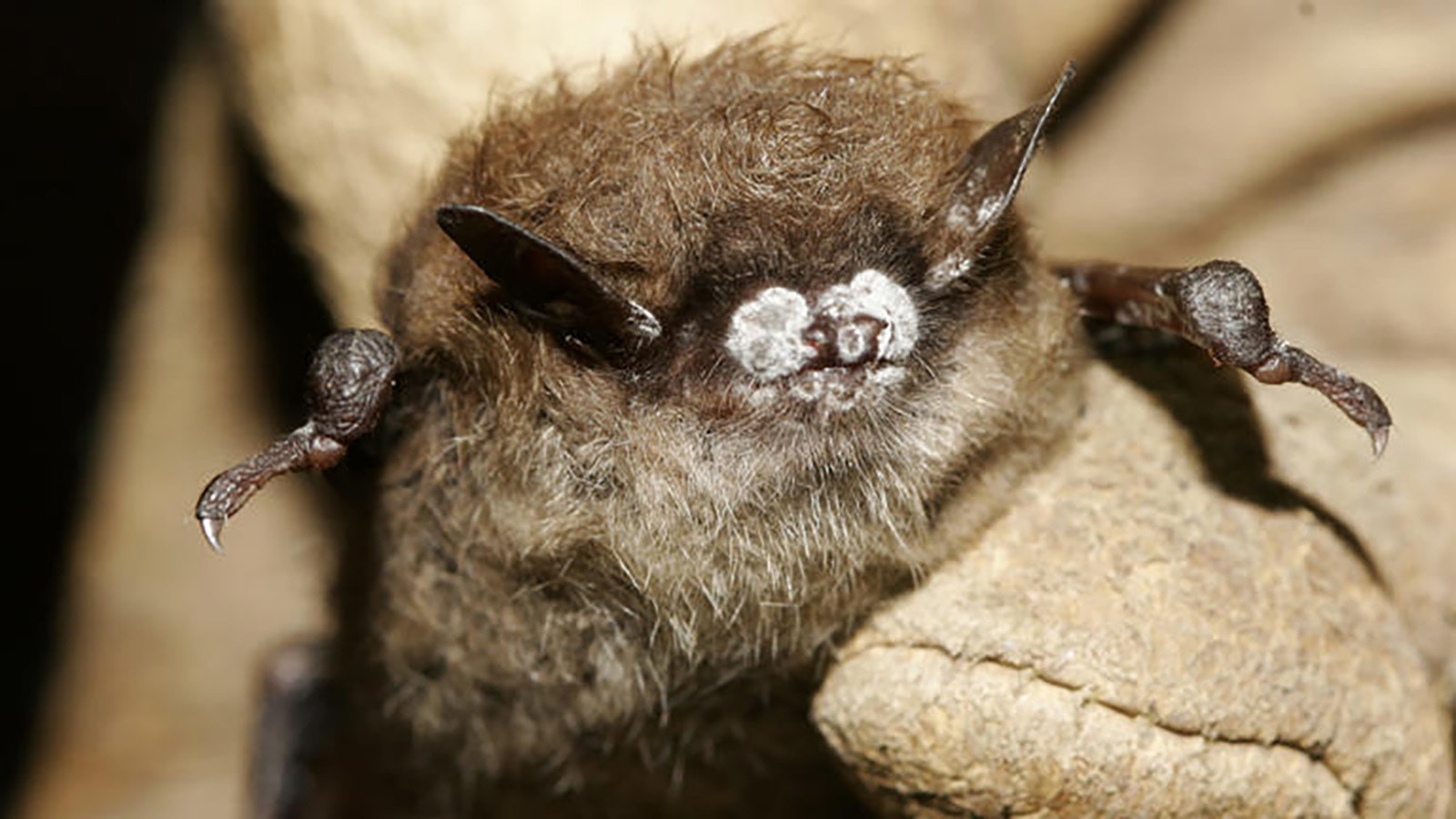
That bat later tested positive for WNS, a fungal infection that can be lethal to many bat species but doesn’t affect humans or pets.
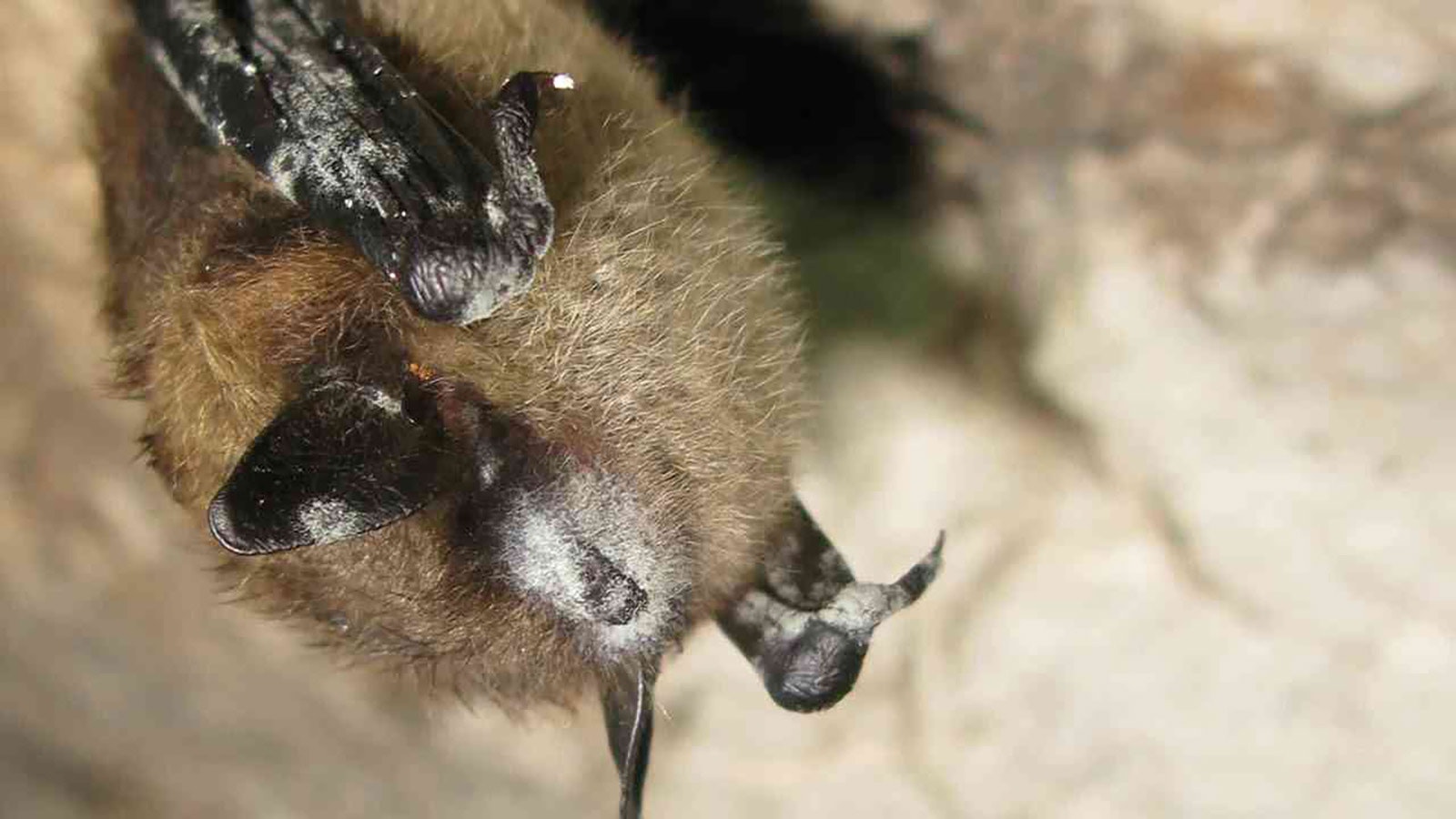
Bats with white-nose syndrome are easy to identify because of the white coloring that forms around their snouts.
Little brown bats are one of the most common species in this region, and are a species that can suffer terrible morality rates from WNS, Abernethy said.
Campers, anglers and others welcome the sight of little brown bats because they’re voracious eaters of mosquitos and other pest insects, he said.
WNS was first detected in Wyoming 2018 in little brown bats near Fort Laramie. It was also detected in the Devils Tower area in 2021.
Tracking the disease can be tough. There’s no evidence of huge outbreaks and massive die-offs in Wyoming yet, but it could be just a matter of time, Abernethy said.
There have been mass losses of bats in the Black Hills region of South Dakota.
“I don’t think it will be any different in Wyoming,” he said.
Infections Spread Westward
WNS is an invasive infection in North America, Abernethy said. It was first detected near Albany, New York, in 2006, and is thought to have come from Eurasia.
The fungus might have hitched a ride on some fruit or “even some mud” that was onboard a cargo ship, he said.
Since cropping up on the eastern seaboard, WNS has steadily spread westward, devastating bat populations as it goes.
It’s most prominent among bats that hole up in caves and hibernate during the winter, as Wyoming’s little brown bats do. The fungus can permeate mud or cave walls and subsequently spread to the bats, Abernethy said.
Bats species that migrate during the winter, instead of hibernating, aren’t as susceptible to infections.
Bats Are Worth Billions
Bats aren’t just fun to watch and handy to have around for pest control on warm evenings, Abernethy said.
Bats are vital to the ecosystem and extremely valuable to agriculture, he said. Like bees, they can be avid pollinators and help agriculture that way.
Bats also help farmers and ranchers by gobbling up crop-destroying insects, Abernethy said. The estimated loss to agriculture from bat die-off caused by WNS is in the “billions of dollars.”
Glimmers Of Hope
Amid the ominous news for Wyoming and Colorado bats, there is hope, Abernethy said.
After nearly two decades of battling WNS, bats in the Eastern U.S. are starting to build up some resistance to the infection, and survival rates among infected bats are starting to climb, he said.
So, there’s reason to think that if WNS takes a strong hold here, Wyoming’s bats will eventually develop similar immunity.
What’s more, effective vaccines might be in development — and there’s already been trials conducted on bats in Wyoming.
“There have been some trial vaccinations in a cooperative effort between UW, the U.S. Geological Service and the Wyoming Game and Fish Department,” Abernethy said.
Those involved giving the vaccine orally to captured bats. As to whether the vaccine will be effective in the long run, it’s too early to tell, he said.
“In laboratory trials, it’s effective,” Abernethy said. “But it’s way harder to assess the effectiveness in wild populations.”
Mark Heinz can be reached at mark@cowboystatedaily.com.