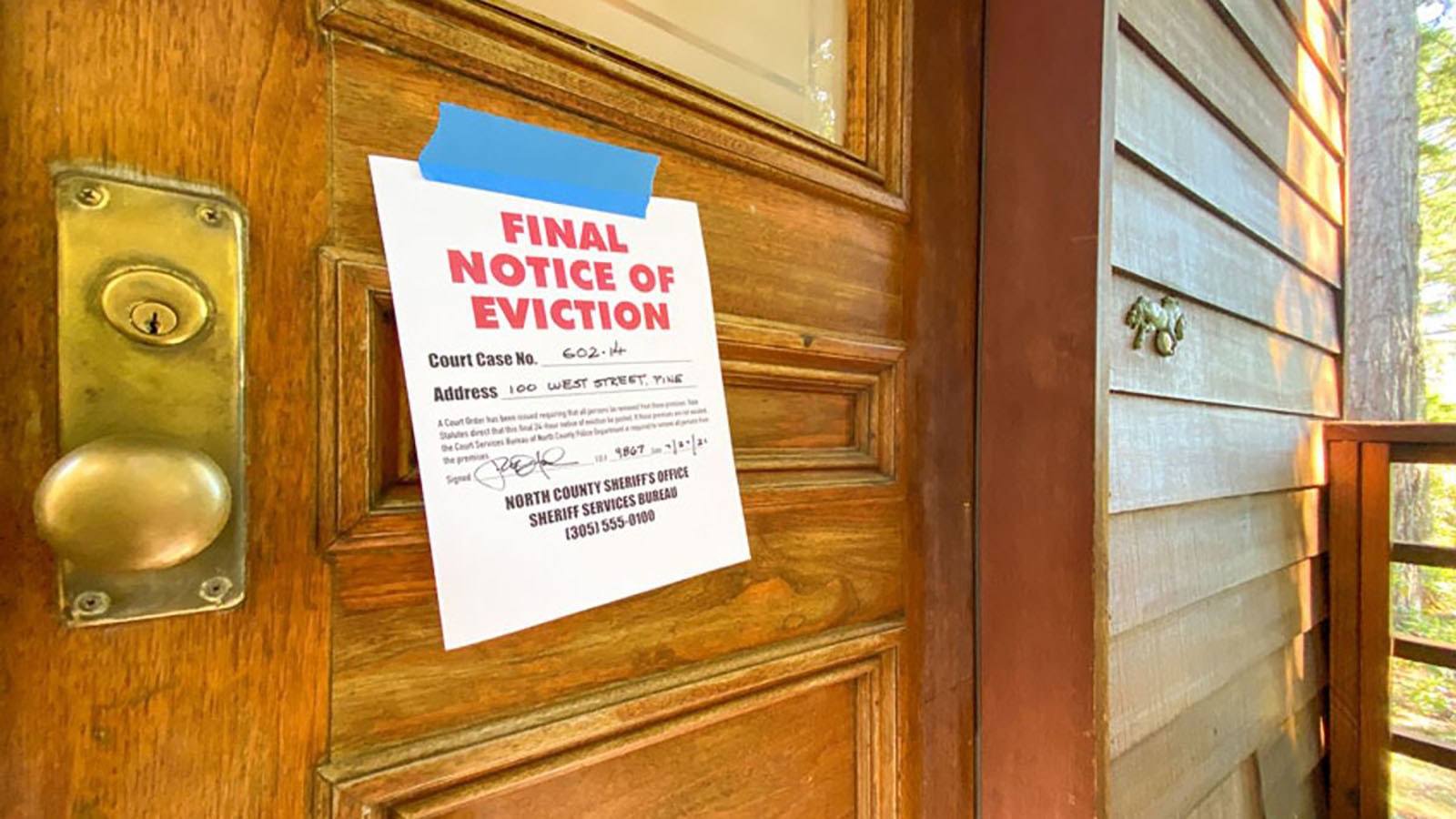
Wyoming is friendlier to landlords than many other states, which makes it not as friendly to squatters, property experts say.
Squatters, or people who occupy homes without permission, are becoming a more public problem around the nation, as indicated by recent cases where squatters have been implicated in theft, violence or both.
A Los Angeles woman was sentenced last week to 240 months in federal prison and ordered to pay $3.9 million in restitution after occupying a dead man’s home, dismembering his body and stealing money from his bank accounts, according to media reports.
In Washington state, a squatter barred his landlord from his own $2 million home after refusing to pay rent for two years, Newsweek reported.
Such scandals haven’t been surfacing publicly in Wyoming, even as they grab more airtime elsewhere.
“The law in Wyoming — especially compared to other states — functions quite well,” said Rep. Clark Stith, R-Rock Springs, who said that, as an attorney, he also represents landlords.
The law here isn’t hyper-restrictive about letting landlords evict people, he added.
Eviction can be “difficult and harsh” for people who can’t afford rent, “but on the other hand, it also makes landlords willing to rent to people,” said Stith.
‘That’s Ridiculous’
Squatters don’t usually try any of that nationally infamous nonsense here, said Charlie Paschall, manager at Foothills Apartments in Gillette.
“Landlords don’t take as much crap, and it doesn’t seem the renters are as entitled as they are in some places,” Paschall told Cowboy State Daily.
He listed a few reasons for that: the courts are efficient; small-town landlords can communicate about the track records of prospective renters; and Wyoming culture boasts more accountability.
He also finds everything runs smoother when landlords are friendly and personable toward their tenants, he said.
Paschall said he’s been to court twice to deal with renters who wouldn’t leave voluntarily. The process took about three months each time.
Compare that to New York City, where it can take two years to evict a squatter, Newsweek reported.
“That’s ridiculous,” said Paschall. “Why would you even want to own anything or be a landlord in a place like that?”
Even if the opportunities there looked lucrative, it wouldn’t be worth it, he added.
Newsweek listed other squatters’ laws, such as Montana’s, where a squatter can claim a home after five years of continuous occupancy. But the owner would have had to know they were living there, and the squatter would have to improve the home and pay property taxes on it.

Foreclosure
Sith said one area in Wyoming law that may be more favorable to squatters is with foreclosure.
The foreclosing bank doesn’t obtain a deed to the property until four months after a foreclosure, which includes a three-month “redemption period” said Stith, adding that for farmland, the redemption period is even longer.
The bank can’t evict squatters during that interval, Stith said, adding that squatters might move in even if the former homeowners are long gone.
Finders Keepers
Chris Hawks, real estate development attorney at Hawks & Associates, said Wyoming has a “squatters' rights” law of sorts, but people tend not to use it.
“I’ve never seen an actual claim for squatters’ rights,” he said, adding that the law is like other states’ adverse possession laws, “only you don’t need to possess ‘openly and notoriously’ against title to the owner.”
The squatter would have to show “exclusive” possession of the premises, however, Hawks said.
If someone lives on the property uncontested for 10 years, that person can end up with the title — even if he wasn’t paying the property taxes during the decade, he said.
That statute of limitations is found at Wyoming Statute 1-3-103.
Could Go To A Jury
Wyoming law lets a landowner sue someone who claims an adverse “estate or interest” in his property.
Hawks said it’s the law on which a landowner would rely to challenge a squatter: Wyoming Statute 1-32-201.
If the person with a “better title” to a home wins the case, he can’t evict the people occupying the home until he pays them for any improvements they made during their stay, says a statute in that chapter.
If the person occupying a home thinks he has a right to live on the premises, he can call for a jury trial, then the jury can sort out who should own what, and who should pay what.
Landowners, Tenants
Like Stith, Hawks said unpaying or unwelcome tenants aren’t likely to run the show in Wyoming.
“Wyoming is historically a property rights state and there is very little law supporting residential tenant rights,” Hawks said.
State law outlines the rights and duties of landlords and tenants in statutes 1-21-1201-1211.
It requires renters to maintain their homes in clean and safe conditions, dispose of garbage, maintain plumbing fixtures, be reasonable about heating and electrical use, stay current on payment and other terms, and clean the home as agreed.
It also directs landlords not to rent unless the unit is safe and fit, and it requires them to maintain electrical systems, plumbing, heating, hot and cold water, and to otherwise maintain the place as the agreement specifies.
Florida Gov. Announcement, Law Professor's Suggestion
Squatter stories have now prompted Florida Gov. Ron DeSantis to take action.
DeSantis vowed in a Wednesday post to his page on X.com (formerly Twitter) to "end this scam and to protect the private property rights of our homeowners."
"You should not have anyone go on your property and take it over, then try to assert some right — it's absurd," said DeSantis in a video on his page.
Legal academics are also sounding off: George Mason University law professor Ilya Somin penned a Tuesday piece in Reason.com, opining that landlords could sue governments with liberal squatters' laws for violating the takings clause of the Fifth Amendment to the U.S. Constitution.
That clause says governments can't take people's property without just compensation. The U.S. Supreme Court ruled in Cedar Point Nursery v. Hassid in 2021 that government-authorized occupation of private property is unconstitutional taking.
"The Takings Clause may not be the best possible remedy for this situation," wrote Sonim, adding that such a lawsuit could take months, and yield only the fair market value for whatever the landlord lost. "However, this avenue can provide at least some valuable redress; the longer the squatters remain, the greater the amount of compensation the government will have to pay. And fear of takings liability may incentivize state and local governments to repeal or tighten up the laws that cause the problem."
Clair McFarland can be reached at clair@cowboystatedaily.com.