Most of Wyoming appears to be relatively safe from massive wildfires — at least through June — but the northeastern corner of the state is already in trouble.
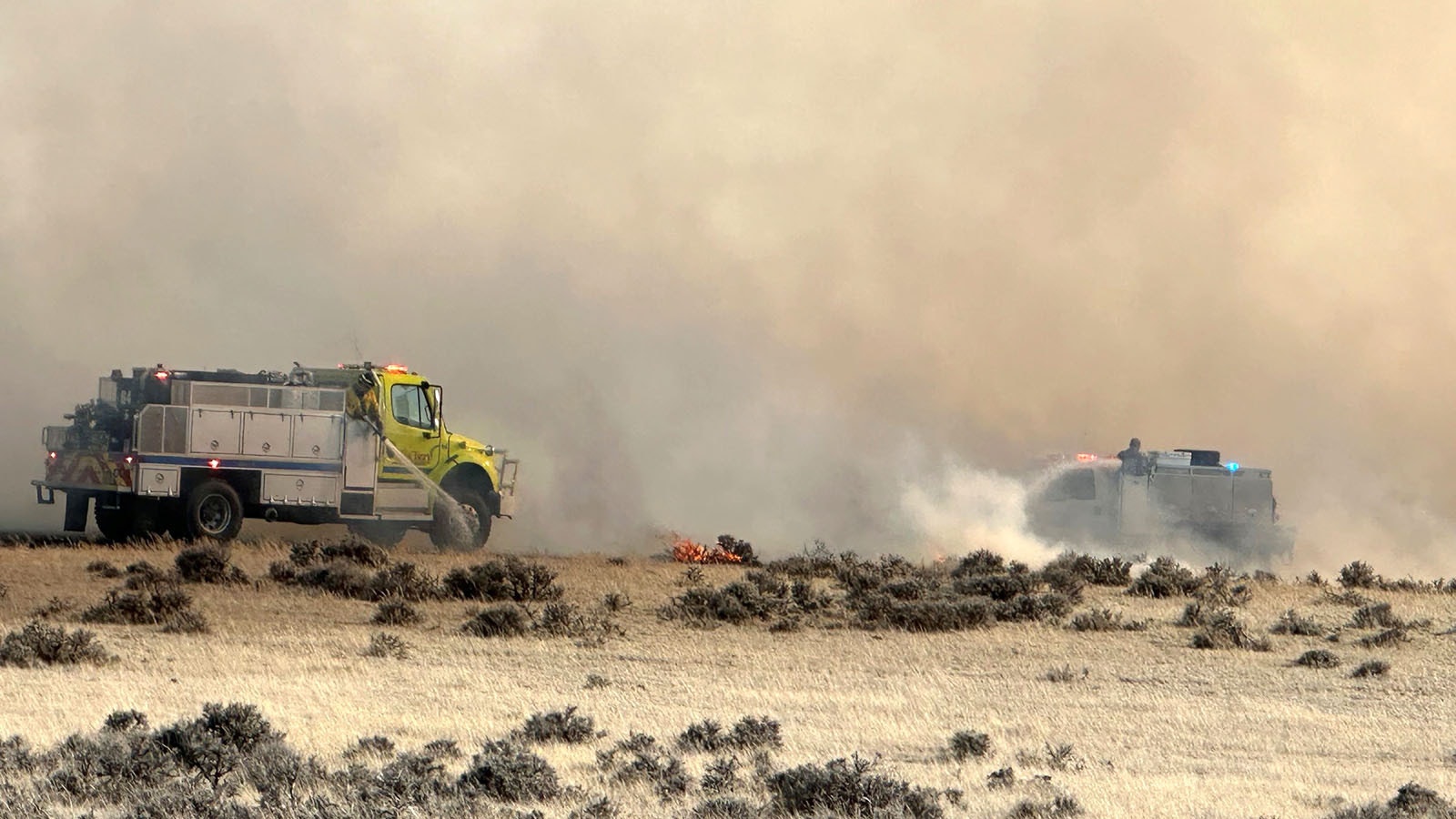
“We’ve already burned more acres so far this year then we did all of last year,” said Charles Harrison, fire warden for the Crook County Volunteer Fire Department.
And it hasn’t been just prairie grass fires. There’s already been two roughly 200-acre forest fires in the county, one near New Haven, and another near Moorcroft, he told Cowboy State Daily.
“The moisture content in the soil is basically zero, and the fuels are dry,” Harrison said. “Fire conditions are not like March should be.”
The Bureau of Land Management has already announced Stage 1 fire restrictions in Crook, Weston and Niobrara counties. So far, that includes restrictions on such things as lighting campfires outside of designated campgrounds, or using older chainsaws not equipped with a spark arrestor.
But things will likely get worse, Harrison said.
“It definitely has all the indicators of being a bad fire season,” he said.

Mountain Forests Still Looking Good
In some of Wyoming’s mountainous regions, things are looking better, some U.S. Forests Service spokesmen said.
Across the vast expanses of the Shoshone National Forest in western Wyoming, snowpacks were still sitting at about 90% of normal, spokesman Evan Guzik told Cowboy State Daily.
The weather between now and June could determine how bad the fire season might get later in the year, he said.
There’s no shortage of potential fuel for forests fires. There are vast swaths of beetle-killed timber, either standing or already down on the ground.
“That’s just our reality right now,” Guzik said. “There’s acres and acres of standing dead trees.”
However, it’s the finer fuels on the ground, such as grasses, that will tell the tale when things really start to dry out toward late summer and fall. Ignition of those fuels could in turn set the dead timber on fire, and winds could make it worse, he said.
“It takes a lot of wind to really get our fires moving,” Guzik said.
The situation is much the same on the Medicine Bow-Routt National Forest in southeast Wyoming and northern Colorado, spokesman Aaron Voos said.
For now, the mountains still have ample snowpack. So, things could hinge on robust the growth of potential ignition fuel like grass this spring.
That abundance of grass “is something that can certainly carry fire. Is it a concern right now? We’re going to have to see what happens during the spring and early summer,” Voos said.
Although the Medicine Bow-Routt, like the Shoshone forest, has acres of beetle-killed timber on it, it’s the “flashy fuels” such as grasses and brush that could cause big blow-ups, he said.
The bigger picture looks good for Wyoming and the surrounding region, according to the National Interagency Fire Center’s (NIFC) latest predictive report.
Most of the region is predicted to be at “normal” risk for wildfire every month from March through June, according to NIFC.

Even ‘1,000-Hour Fuels’ Are Roasting
The hopeful regionwide predictions won’t do much to ease worry in northeast Wyoming, however.
The latest snowstorm over the weekend and Monday gave the area a “small shot of moisture,” but wasn’t nearly enough to change the larger dry trend, Harrison said.
During the last two forest fires, even the “1,000-hour fuels,” or larger pieces of dry timber, were ignited and consumed, he said.
The hours rating for wildfire fuels is calculated by the number of hours it takes a particular fuel source to dry out enough that it might ignite.
Fine prairie grasses might be “one-hour fuels,” he said. So, 1,000-hour fuels going up as early as March certainly doesn’t bode well.
“Things could change between now and summer,” Harrison said. “But right now, we’re anticipating a busy fire year.”
Mark Heinz can be reached at mark@cowboystatedaily.com.