All manner of Wyoming critters have been saved from what was once one of the state’s deadliest stretches of highway for wildlife, thanks to a network of nine underpasses that opened in October.
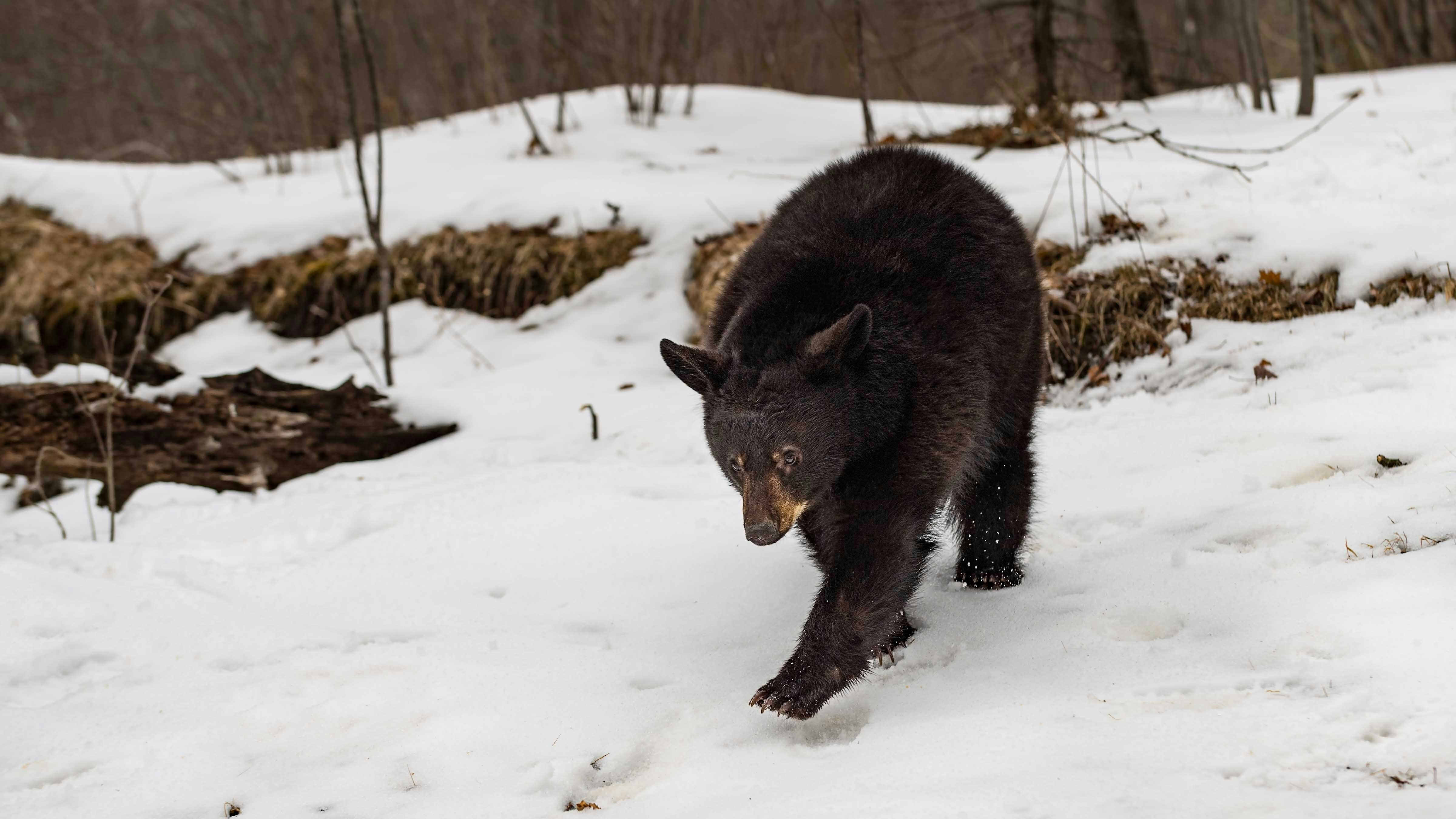
The $15 million Dry Piney wildlife underpass system was built primarily with mule deer in mind. But it’s provided safe passage for a veritable menagerie of wildlife, ranging from lumbering bull moose to scuttling porcupines.
Foxes, coyotes, badgers and bobcats have also been saved from possibly getting run over along Highway 189 between La Barge and Big Piney, said Tom Hart, a wildlife biologist with the Wyoming Department of Transportation.
Before the underpasses and fences to funnel animals toward them were built along a 17-mile stretch of the highway, the roadkill stats were ugly.
There were as many as 150 wildlife collisions reported on that section of highway every year, Jennifer Hoffman, a WYDOT principle engineer, told Cowboy State Daily.
“And those were just the ones that got officially reported. What’s reported is just a small portion of what actually happens,” she said.
Arched Culvert For Antelope
Building wildlife crossings for antelope can be tricky, said Hoffman, who was the lead engineer on the Dry Piney project.
“Antelope don’t like narrow passages, they’re claustrophobic,” she said.
It’s usually best to build overpasses for antelope so they’ve got nothing above them but the Wyoming sky as they cross the highway. However, for the Dry Piney project, overpasses weren’t a good option, Hoffman said.
So instead, crews built an arched underpass culvert right near the middle of the stretch, she said.
“It’s about the same height as the box-style culverts, but it’s almost three times as wide. So it looks way, way more open to the animals as they approach it,” she said.
That seems to have done the trick. Droves of antelope used the arched underpass last November as they migrated toward their winter range, Hoffman said. It’s hoped they’ll repeat that routine as they move back toward their summer range.
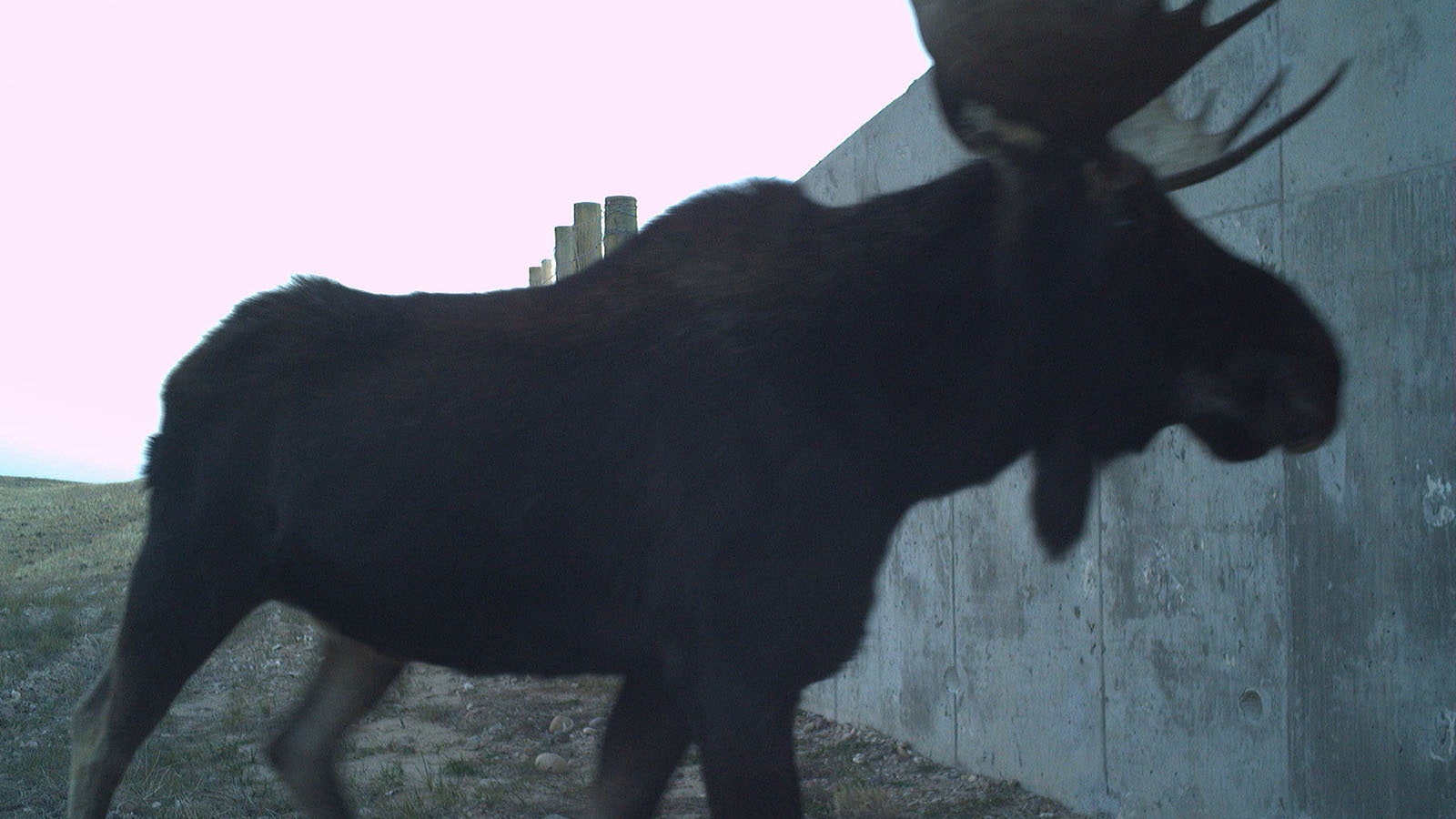
A bull moose uses a wildlife underpass on Highway 189 between La Barge and Big Piney. (Tom Hart, Wyoming Department of Transportation) 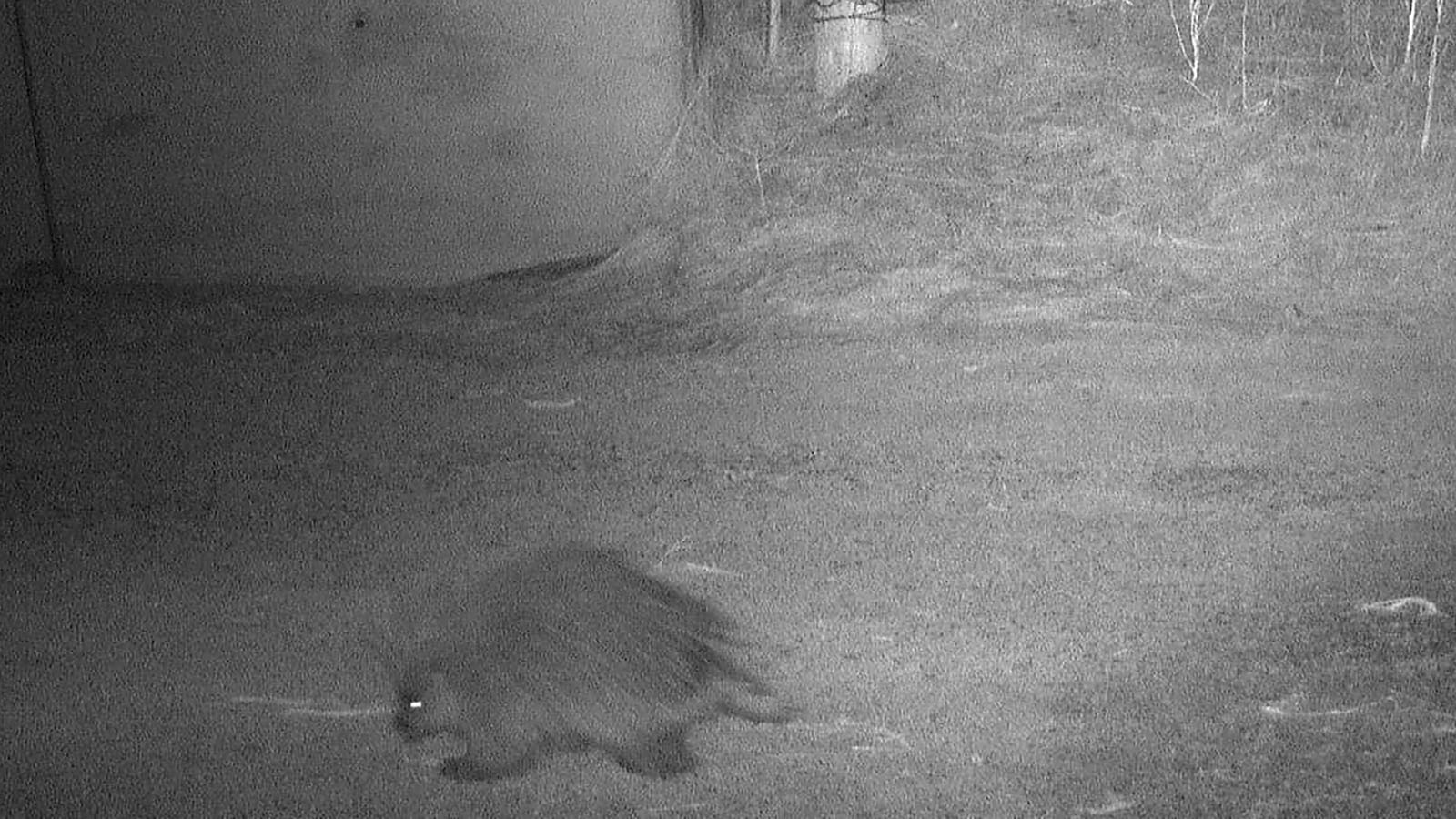
Along with big game animals, smaller critters like this porcupine have taken advantage of wildlife underpasses along Highway 189 between La Barge and Big Piney. (Tom Hart, Wyoming Department of Transportation) 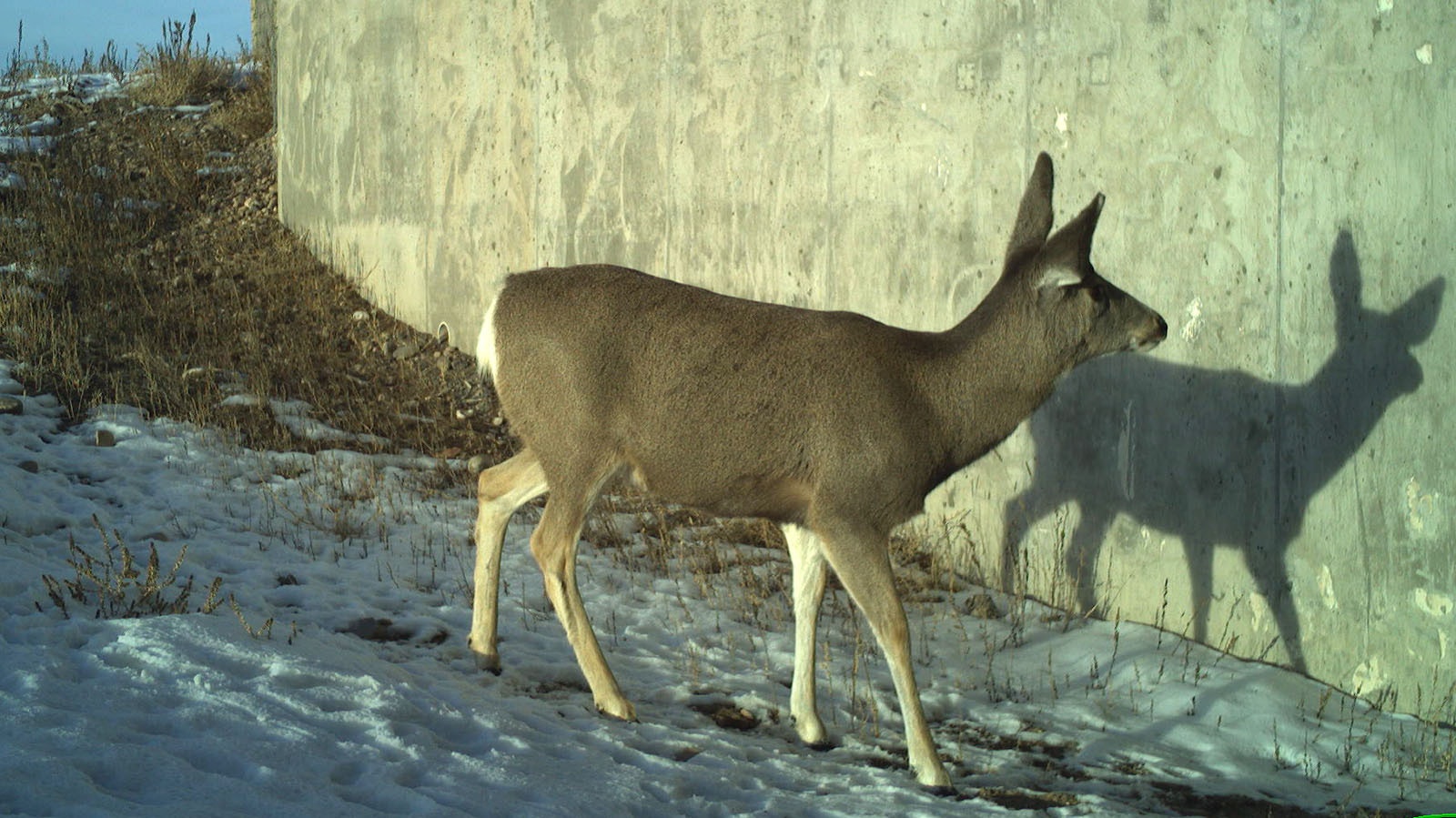
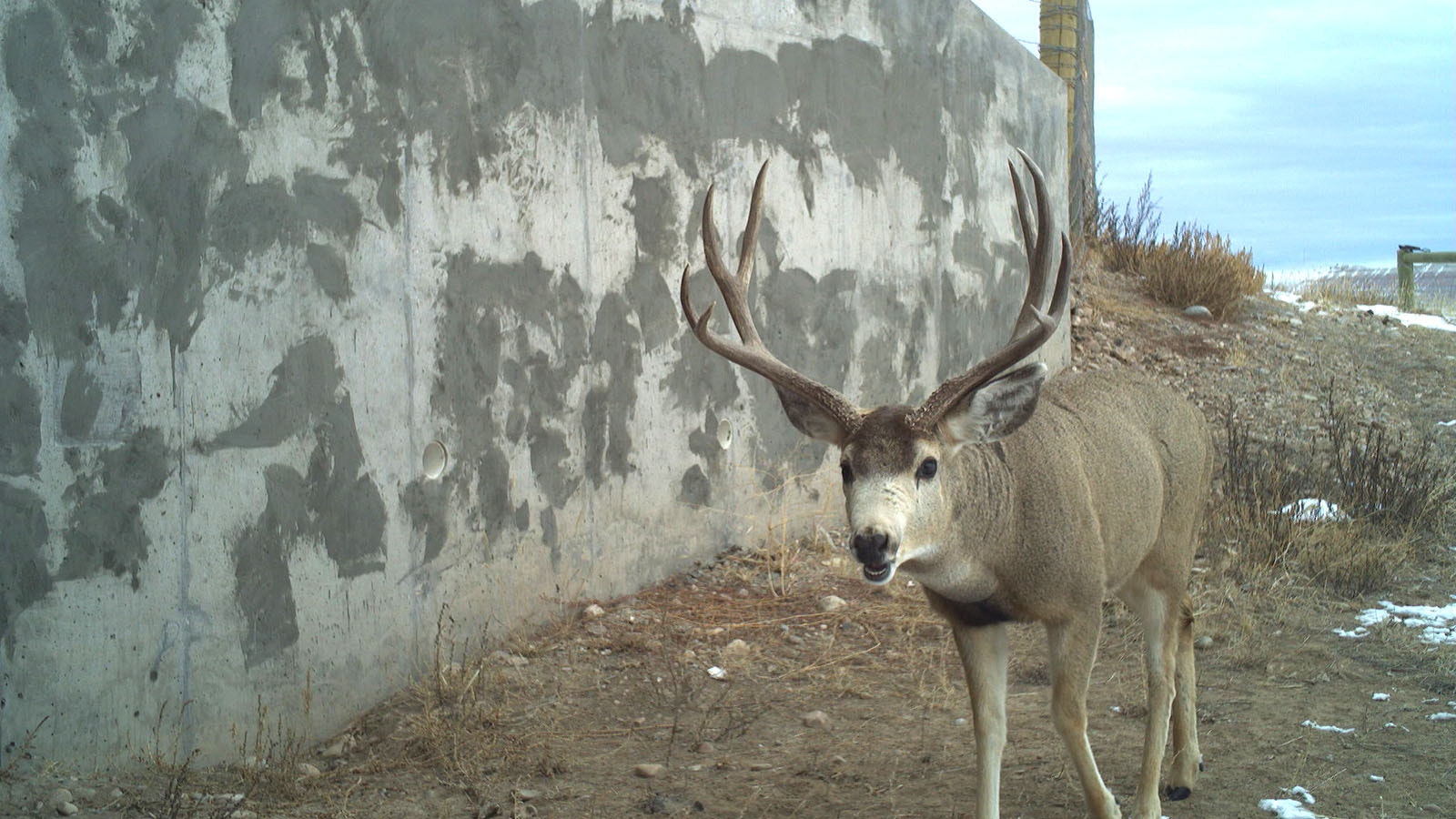
The Wyoming Range mule deer herd suffered terrible winterkill losses last year. Wildlife underpasses between La Barge and Big Piney save the herd from losing even more deer to roadkill. (Tom Hart, Wyoming Department of Transportation) 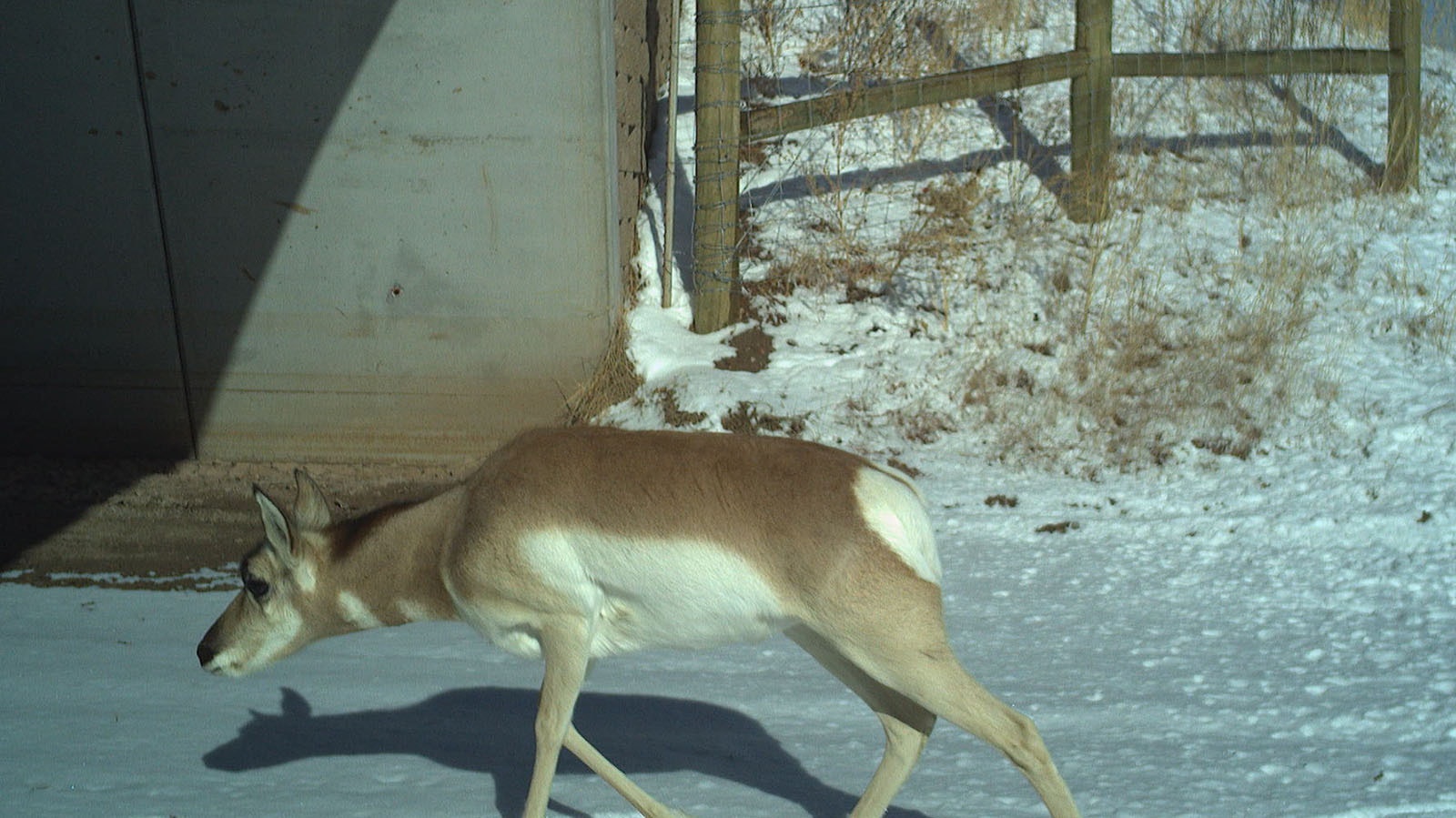
Antelope have joined deer and moose in using wildlife underpasses along Highway 189 between La Barge and Big Piney. (Tom Hart, Wyoming Department of Transportation)
The Deer Really Needed It
During this past winter, and now in early spring, quite a few mule deer seem to be using the underpasses as well, Hoffman said.
But the deer are still getting used to them.
“I checked in with our maintenance foreman,” Jesse Zumpfe of La Barge, and he stated that it seems like the deer haven't been down as low (in elevation) this winter, like they normally might. He's seen a reduction in carcasses that his guys are picking up and the deer are starting to push up on the fence just lately.
“They seem to be a bit confused about where to go,” Hoffman said.
But photos of deer going through the underpasses prove that they’re starting to catch on.
“We expect the animals to take two to three years to acclimate to the fence and underpasses, so the effectiveness of the project won't be fully realized for a while yet,” she said. “But in the meantime, it's nice to see picture proof that at least some of the animals are getting it figured out.”
And the deer, which are part of the treasured Wyoming Range mule deer herd, need safe passage more than any other species.
During the brutal winter of 2022-2003, nearly two thirds of that herd froze or starved to death. Their numbers plummeted from about 30,000 deer to — by the most optimistic estimates — about 11,000.
Next Up, Another Stretch Of 189
While the Dry Piney project is yielding some good news for wildlife, other stretches of Highway 189 remain perilous.
The next big project is a series of seven to eight wildlife underpasses and overpasses planned for a 30-mile stretch of the highway running between Kemmerer and Interstate 80, Hoffman said.
Federal grants will go a long way toward the $30 million price tag for that project, and private donations will help too.
It’s hoped that ground can be broken there by spring 2025, and for work to be completed sometime the following year.
Mark Heinz can be reached at mark@cowboystatedaily.com.