Much like with Wyoming has been the last couple of weeks, spring is already in full swing in Virginia’s Blue Ridge Mountains. And as an avid outdoorsman, Zach Adams wasn’t about to stay inside.
“Me and my friend decided it was a good day to get outside to hunt squirrels and maybe find some sheds (shed antlers),” he told Cowboy State Daily about a recent outing in him home state.
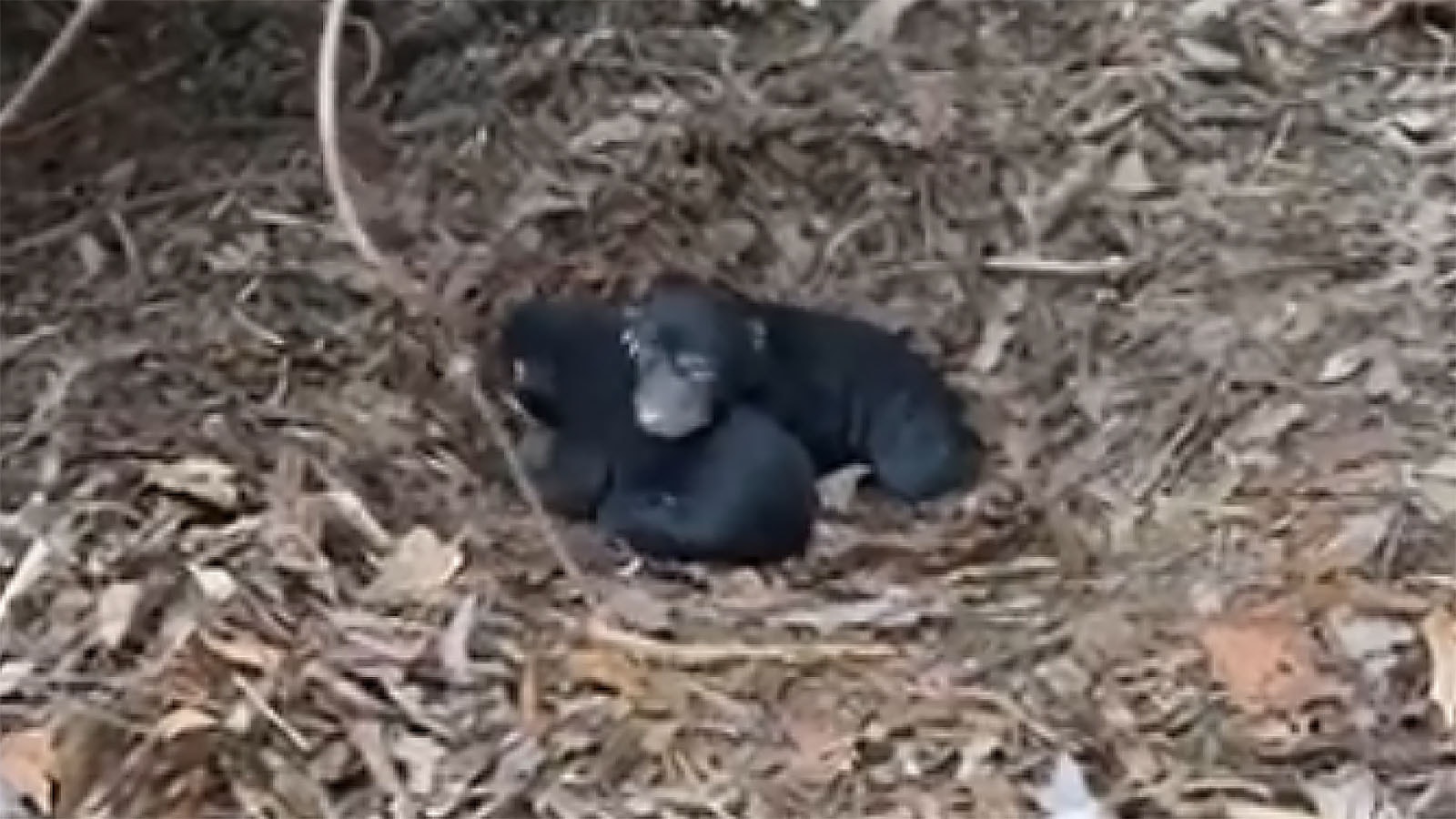
They ended up stumbling across something completely unexpected — two tiny black bear cubs. Luckily, momma bear was young, small and scared, and fled at their approach.
“Had it been a 4- or 5-year-old sow (female bear), she could have come straight at me through that briar patch,” Adams said.
Fortunately, everything worked out. Both of the humans, and all three bears, came through unscathed. Even so, Adams said he learned a valuable lesson about following an unidentified sound into the thick brush and briar patches.
“If we had known those were bears in there, we never, ever would have gone in,” he said.
Keep Eyes Peeled While Shed Hunting
Some Wyoming outdoorsmen agreed that while shed antler hunting might seem like a leisurely springtime activity, safety shouldn’t be taken for granted.
“There are always hazards in the back country and situational awareness is a must. Springtime can be particularly challenging with mothers protecting their young. Nothing more dangerous than getting in between them,” avid hunter, hiker, shed hunter and fishing guide Pual Ulrich of Pinedale told Cowboy State Daily.
Outdoorsman and wildlife conservationists Josh Coursey, who lives near Kemmerer, agreed that springtime shed antler hunting requires caution, particularly when bear cubs might be out.
The possibility of running int a bear with cubs “is real and a preparation that must be accounted for depending on where you are collecting sheds,” he told Cowboy State Daily.
What Is That Noise?
Adams said the day started normally enough for him and his friend. They took a UTV (which he called a “buggy”) up into some of their favorite country – rolling, thickly-forested ridges that are typical of central Virginia.
“We had gotten maybe 150, 160 yards from the buggy when we started hearing something that at first I thought was a hawk screeching,” he said.
Then it started to sound more like a rabbit in distress.
“My friend said, ‘I wonder if a rabbit got snagged in a briar patch?’ And I sort of cocked my head and was like, ‘No, dumbass. Rabbits live in briar patches, how could a rabbit get snagged and not know how to get through?’” Adams said.
“I started thinking, ‘Maybe a coyote has a rabbit snagged down there somewhere, and he’s just waiting for us to move along before he kills it off,’” he added.
Lots Of Critters
Adams said it was frustrating not being able to put a finger on what the sound was, and he knows wild critters. He grew up in the Virgina mountains, and he’s also worked as a waterfowl and deer hunting guide in his home state, as well as places such as Kansas and Canada.
The Blue Ridge Mountains are rich with wildlife. There are whitetail deer, several species of game birds, small game, coyotes and bobcats.
There’s also been rumors of pumas (mountain lions) there as well, Adams said.
“Our DNR (wildlife department) says we don’t have an established population, but I know houndsmen who swear that their dogs have treed pumas here,” he said.
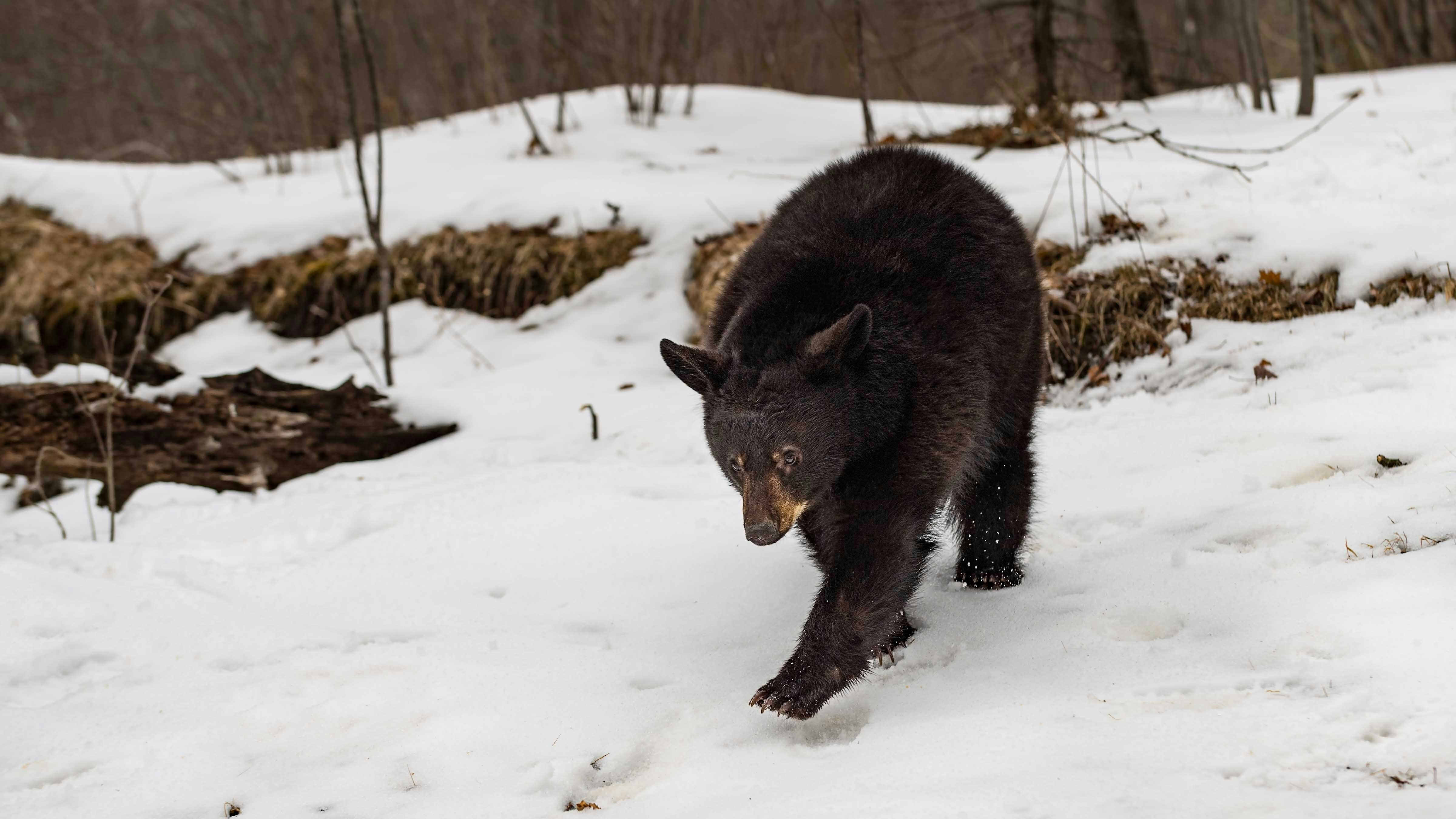
And while Virgina doesn’t have grizzlies, there are black bears — a lot of them. A healthy, full-grown bear can top 350 to 400 pounds or more, Adams said.
But as they closed in on the brush-and-briar patch that the noise was coming from, he and his friend didn’t have bears in mind. They were convinced it was a rabbit or some other distressed small animal.
‘Crash! Crash! Crash!’
They worked their way toward the sound until they zeroed in on the thick patch of cover it was coming from. Adams was armed with a .22 rifle, and his friend had a 12-gauge shotgun.
His friend took a position along one side, while Adams started worming his way in from the lower end.
“All of the sudden, I heard ‘Crash! Crash! Crash!’ coming from the far side, and I had now idea what it was,” he said.
“And then my friend just started hollering ‘Oh damn, oh shit, oh f*ck!’” he said. “And I yelled ‘What is it?’ And he yelled back, ‘It’s a f*cking bear!’”
Adams said his friend didn’t shoot because the bear was obviously running scared, and young.
“I never did see the mamma bear, but he said she was really little,” Adams said.
And then he came nearly face-to-face with the bear’s two cubs. They had been the ones making the odd mewling, screeching sounds.
The two men stayed only long enough to take a quick look and for Adams to shoot a few seconds of video with his cellphone.
The cubs must have been practically newborns, he said.
“I don’t think even the video gets across just how small they were. They could have easily fit right inside your hand,” he said.
But they didn’t try to touch the cubs for fear of getting their own scent on them, and then left quickly.
They backed off a good distance and listened.
Sure enough, after several minutes, they heard the mother bear returning, shuffling through the dry underbrush.
“Everything ended well. Momma bear came back, and I haven’t gone back to that spot since,” Adams said, because he wants to give the bears their space.
Wants To See Grizzlies, Just Not Up Close
Wyoming Outdoorsman Zach Key of La Barge said it’s not unusual for black bears to flee at the approach of humans.
“The black bears seem to smell us or hear us and take off. Nine times out of 10, I see them running away,” he said.
Grizzly bears are another matter, he said. And while they aren’t too common in the mountains near La Barge, “I know over by Cody, people have had a bunch of run-ins with them (while shed antler hunting),” he said.
Adams said he won’t go poking around in any more briar patches. Even relatively shy black bears can turn fierce if they think their cubs are threatened, and he reiterated that he was fortunate the mother bear in his encounter was small and young.
He said he plans to keep exploring more states, and Wyoming is definitely on his list.
“I would love to come to Wyoming and see grizzly bears,” he said, but of course from a safe distance.
Mark Heinz can be reached at mark@cowboystatedaily.com.