Being set in their ways could be a disadvantage to Wyoming’s mule deer as housing and energy development continues in parts of the state, a wildlife biologist said.
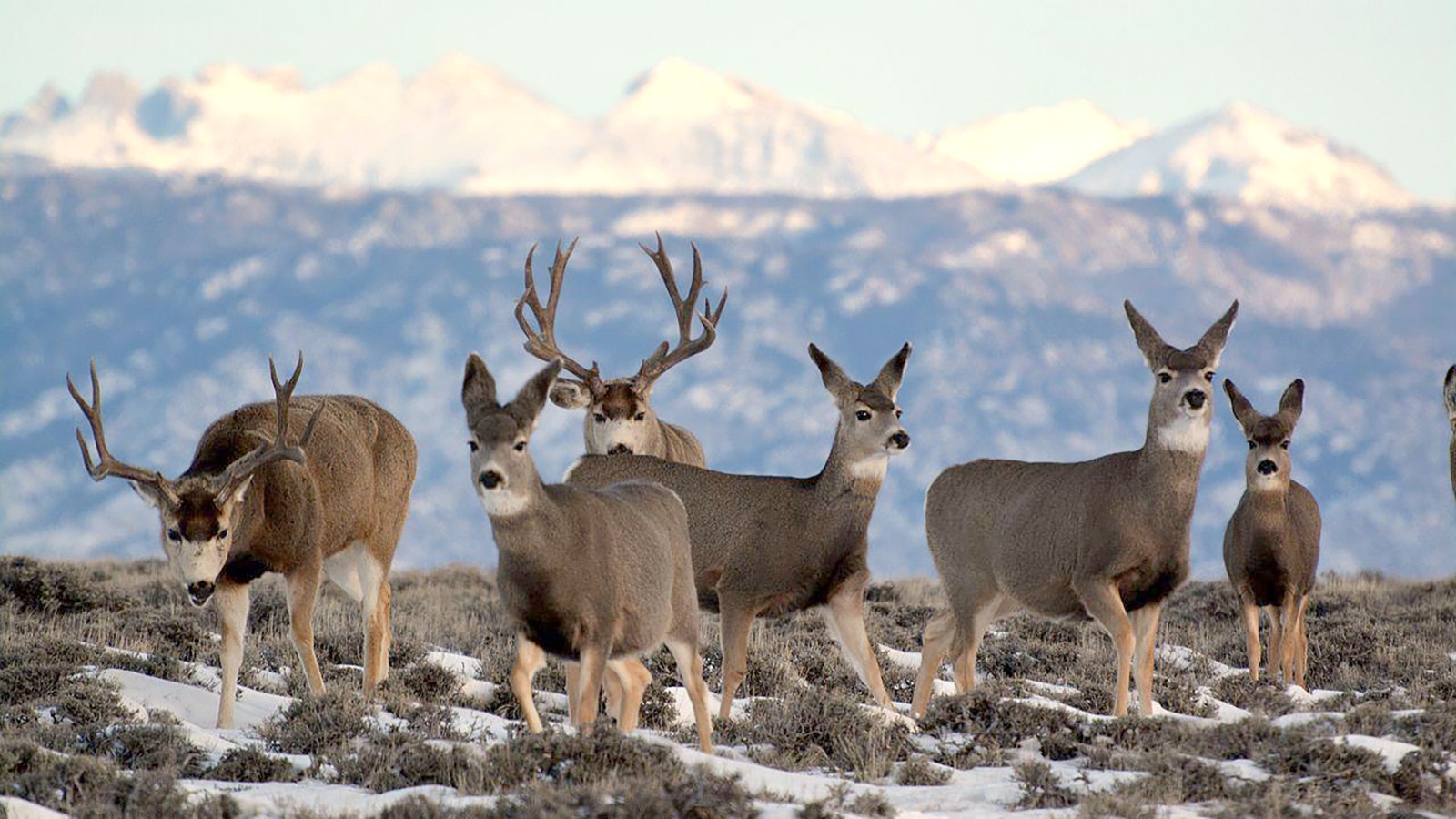
“Elk are very plastic (flexible) in their movements. Pronghorn are a little less plastic, but they’re able to roll with the punches. With mule deer, they almost put their hooves in the exact same place their mothers did,” Kristen Barker told Cowboy State Daily.
She’s the Cody-based research coordinator for the Beyond Yellowstone Program, a collaborative effort between the Wyoming Game and Fish Department, the University of Wyoming and the University of California, Berkeley.
The group recently completed a study of how land development affects big game in the Greater Yellowstone Ecosystem. Research was conducted around Cody, Pinedale and along big game migration corridors in the Red Desert.
It revealed that for the most part, critters avoid development, she said.
“Even if there’s good stuff right around the development, if the animals are going to avoid it, it doesn’t really count as habitat anymore,” Barker said.
Avoidance Tactics
Development for housing or energy can have a big effect on how elk, deer and antelope behave, according Beyond Yellowstone Program’s research brief.
“Our work reveals land development is one of the strongest single influences on migratory big game, affecting everything from where herds live within the broader landscape to where individual animals walk each day,” the brief states.
And it doesn’t take much. A little as 3% of the land in a given area being developed can be enough to disrupt animals’ movement patterns, according to the brief.
But there doesn’t seem to be a one-size-fits-all pattern for Wyoming’s premier big game species — elk, mule deer and antelope, Barker said.
Elk seem to be best at just avoiding human activity and are willing to go out of their way to do it, she said.
“Those Cody elk herds, they can still make big, broad movements” to avoid human activity, she said.
Antelope, not so much. But they still might alter their routes to get around things.
Stubborn Mule Deer Take Long Journeys
But mule deer are “set in their ways and very loyal” to their ingrained migration routes, Barker said.
That’s why people might see mulies showing up in their back yards, she said. It might not be that the deer are completely comfortable being around people, but because homes were built along migration routes, and the deer were just too darn stubborn to change their ways.
And those who see mule deer in their yards should appreciate they might have come from a long way off and still have a long journey ahead of them.
Some deer herds in Wyoming frequently travel great distances as they move between summer range, typically high in the mountains, and winter range in lowlands such as the Red Desert, Barker said.
One Wyoming long-distance record-holder is a mule deer doe, Deer 255, which logged 242 miles one way during her seasonal migration, according to radio collar data.
The Curious Case Of The Estes Park Elk
Of course, many rules in nature have exceptions. As Barker noted, her group’s research indicates that as a general rule, elk like to avoid development.
But here are the huge elk herds that spend part of the year camping out right in the middle of Estes Park, Colorado. Those elk trace their ancestry back to Wyoming. During migrations in and out of Rocky Mountain National Park, they take over the town, grazing in city parks and loitering in downtown business parking lots.
“The situation in Estes Park shows how flexible elk are. One reason they’ll hang out in an area where there’s a bunch of people is, there’s also a bunch of food there,” Barker said. “If there’s not a big cost associated with them being around people, if they’re not being hunted or they’re not being chased around by dogs, they will stick around if the food rewards are there.”
With mule deer, however, their hard-set migration routes might hurt their food supply, she said.
They’ll likely still go through developed spots on their migration routes, but they’ll hurry through. So, they might miss the prime growth periods for certain types of forage along the way, Barker said.
What’s Next
It’s evident that big game animals prefer a “buffer zone” between themselves and human development, Barker said. But just how much distance is required for which species remains unclear, so that could be the subject of further research.
How research might affect policy isn’t up to the Beyond Yellowstone Program, Barker said.
“We’re more of a research group than an advocacy group. We have a mission of getting the information out there in a way that is more digestible than typical scientific research papers,” she said.
And there needn’t be a zero-sum “either-or” between development and wildlife movement, she added.
“It’s possible to have both. It’s possible to have good, solid development and to preserve wildlife migration routes, if we do it the right way,” she said.
Mark Heinz can be reached at mark@cowboystatedaily.com.