Wilson “Charlie” Charles Ricker was the Democratic nominee for Natrona County, Wyoming, sheriff at the turn of the 20th century and was elected in November 1900. Characterized by press at the time, Ricker was “brave and courageous,” and put on his badge Jan. 2, 1901.
Had he not been so brave and courageous, Ricker perhaps might have lived longer and the man who killed him may not have been lynched in the middle of the night by a mob of nearly two dozen masked men. Instead, exactly one year after becoming sheriff, Ricker was gunned down outside of a barn on a ranch east of Casper by a man who had escaped from jail.
Some accounts have the then 59-year-old Ricker born in London, England, on Jan. 27, 1841, while others have him as a native of Massachusetts. Either way, by the time he arrived in Wyoming territory in 1874, he was a man well-acquainted with survival in the West.
Ricker reportedly served as a scout for the U.S. government at the Red Cloud Agency that oversaw efforts to provide supplies and oversight of Native tribes and was involved in responding to a Native raid in the 1870s. He would work on various Wyoming ranches and have a spread of his own in Orin, Wyoming, which is in what’s now Converse County near Glendo Reservoir.
As the new century approached, he was well-established in Casper operating a “dray” business with horses hauling loads in the region and serving as the city’s fire chief.
Spanish American War
An article in the Wyoming Derrick newspaper on March 9, 1899, chronicles his return from serving in Cuba during the Spanish American War as a volunteer with the U.S. Army in charge of a pack train that traveled the island with surveyors.
He returned thankful to still have his health.
“I would not trade Casper for the whole island of Cuba,” Ricker is quoted as saying, “It may be quiet, but a person at least had his health. The coldest weather I have seen since the first of January was 80 degrees above zero in the shade and from that to 110.”
Ricker married Emma Peters in 1885. She was reportedly born in Italy in 1871, but evidently her family soon came to Chicago because during the Chicago fire of 1871, as a baby, Emma was believed to have been given to a family named Peters to take her to safety.
Her family told those who took her they would find them and take her back. But Emma’s biological family was never seen again. Her actual birth date is unknown, though her tombstone says her birth was in 1871.
The couple married in 1885 and would have four children, three girls and a boy.
During his first year as sheriff, newspaper accounts tell of Ricker chasing a suspect to Glenrock, looking for horse thieves, as well as taking care of a minor whose parent had failed him.
And on Jan. 2, 1902, he rode through the Wyoming winter chasing escapees from his Natrona County jail. In a moment of confidence, he would walk up to a barn door to convince the suspect inside to surrender.
A gunshot would ring out and Ricker was knocked to the ground while deputies watched from a nearby house. A gunfight would ensue. And the next morning, when deputies felt safe enough check on the sheriff, he was dead.
Ricker’s pistol, wallet and money were taken. There was a gash on his forehead as if he was struck by a pistol.
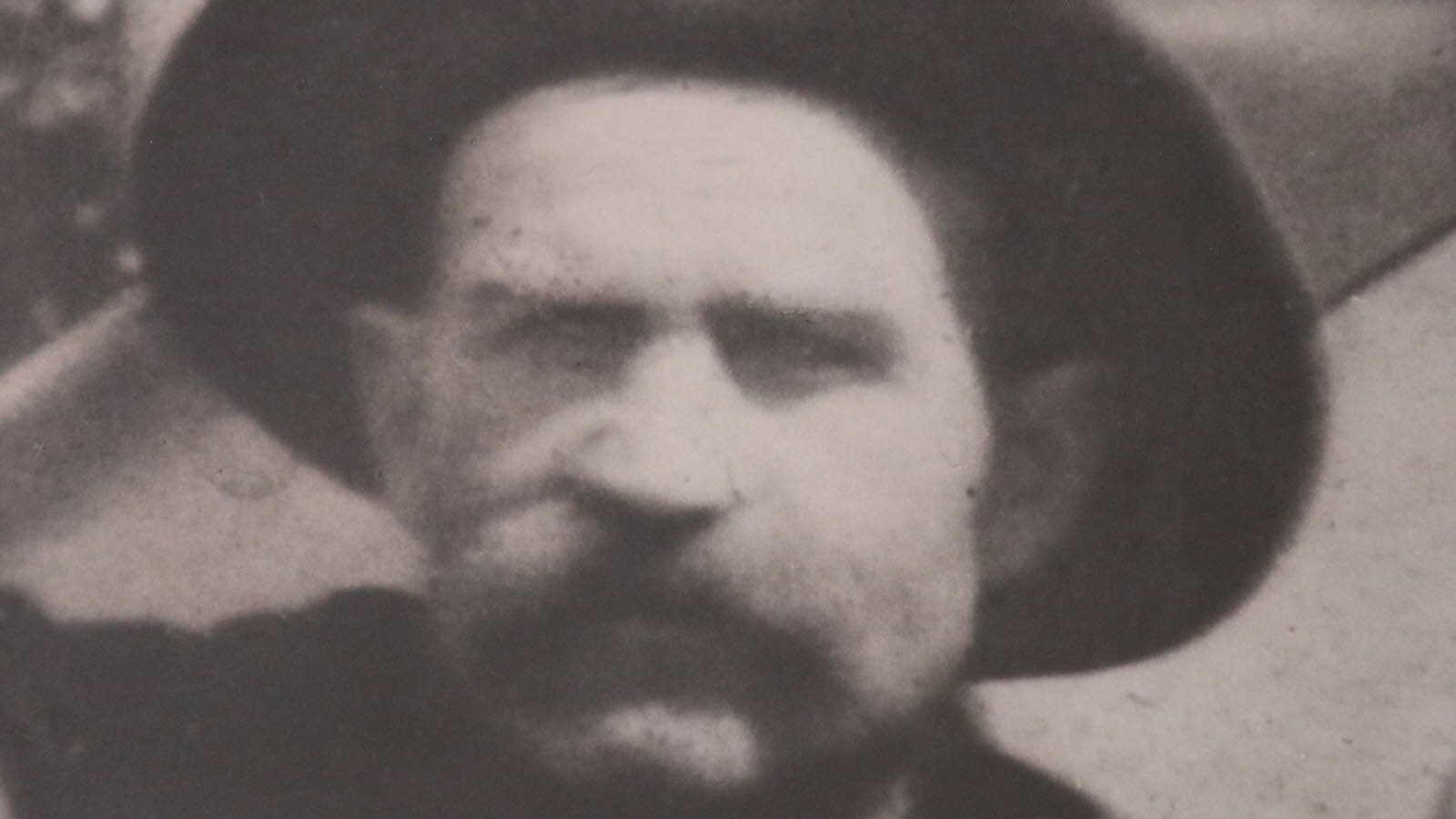
Sheriff W.C. “Charlie” Ricker was a well-liked sheriff of Natrona County in his first year of service from 1901 to 1902. 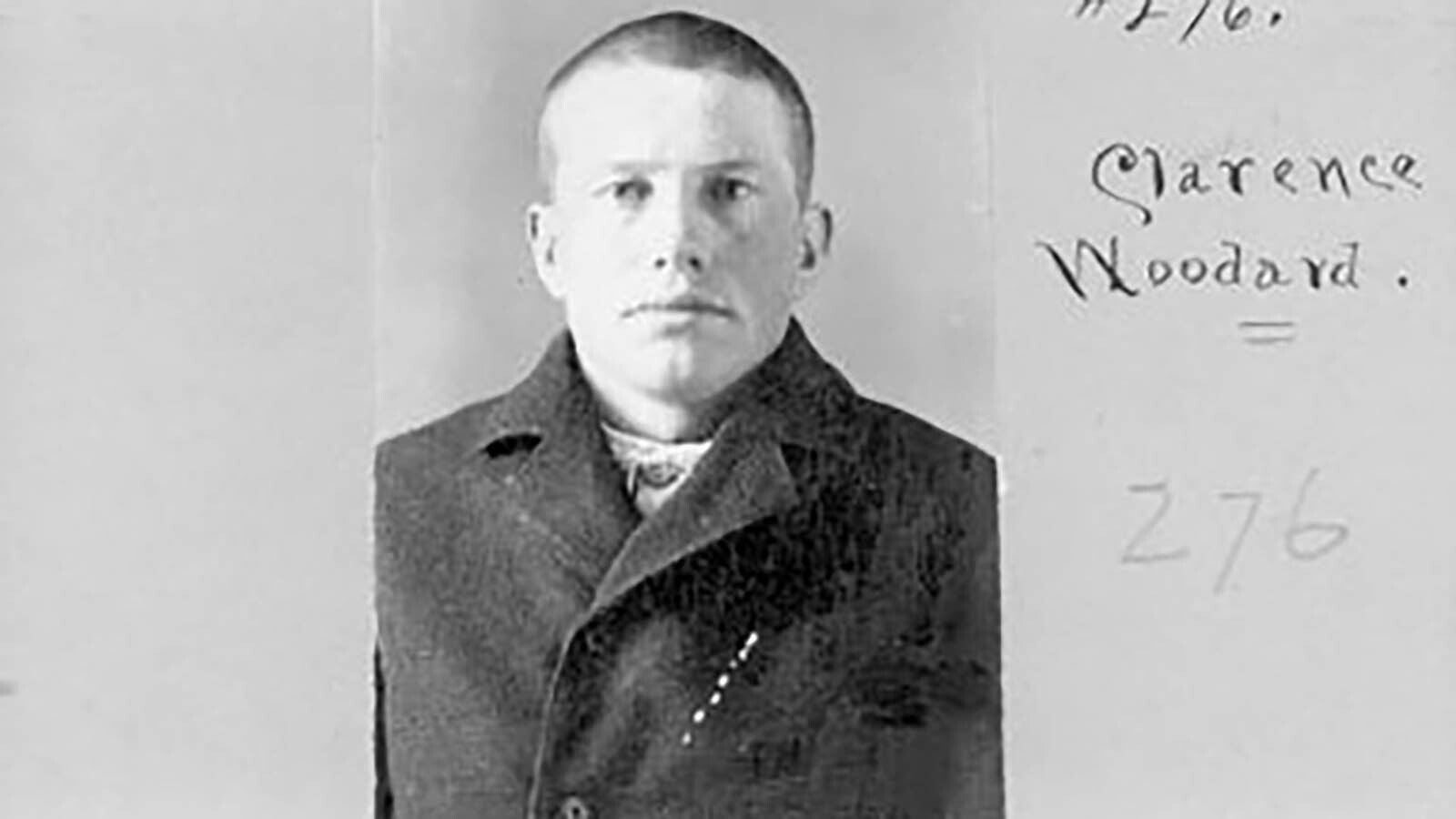
Clarence Woodard was part of the jail escape and was caught at the family ranch after the Sheriff Wilson Ricker was shot. He would plead guilty to stealing items from a neighbor and be sentenced to three years in prison. (Courtesy Wyoming State Archives) 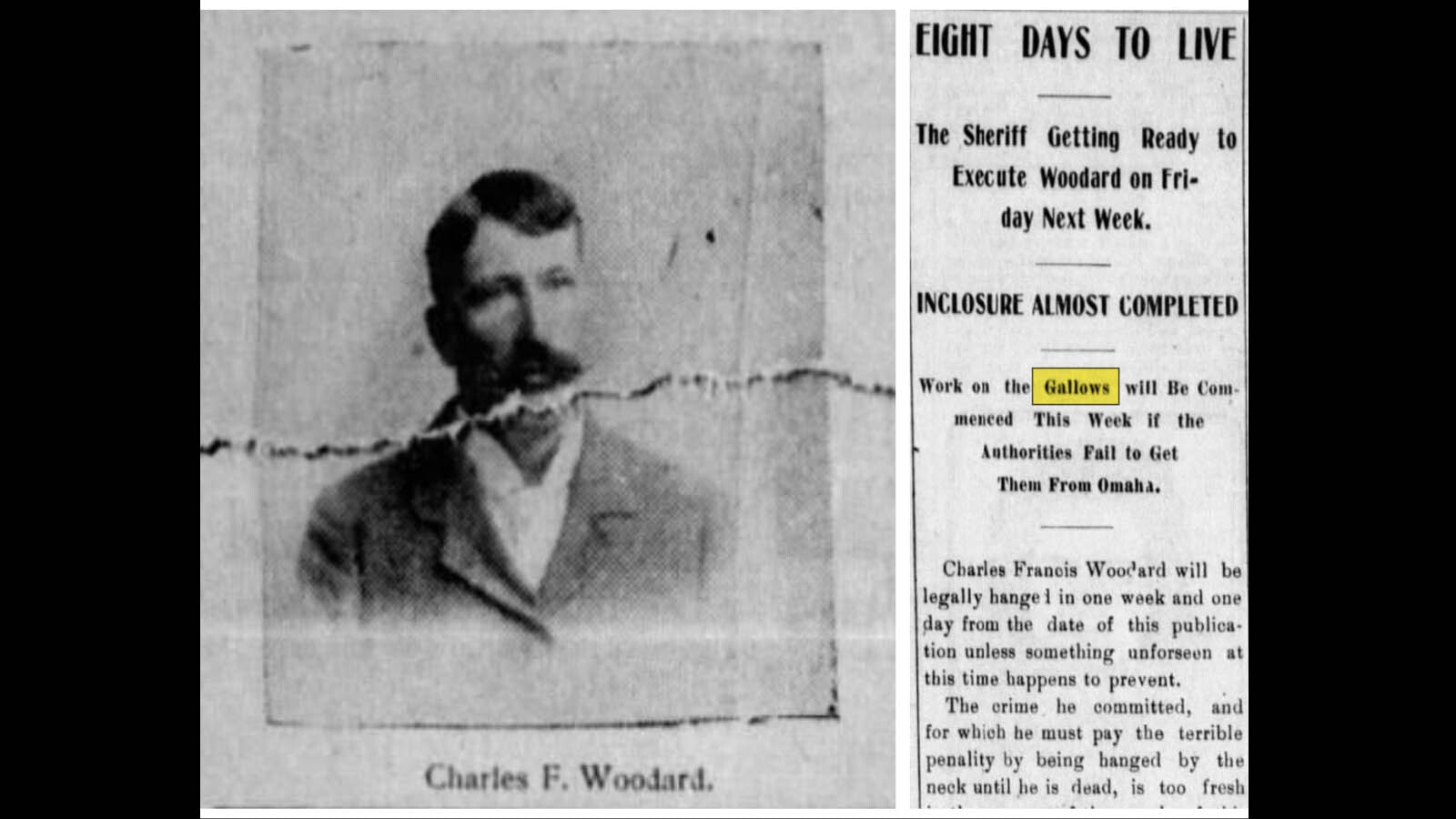
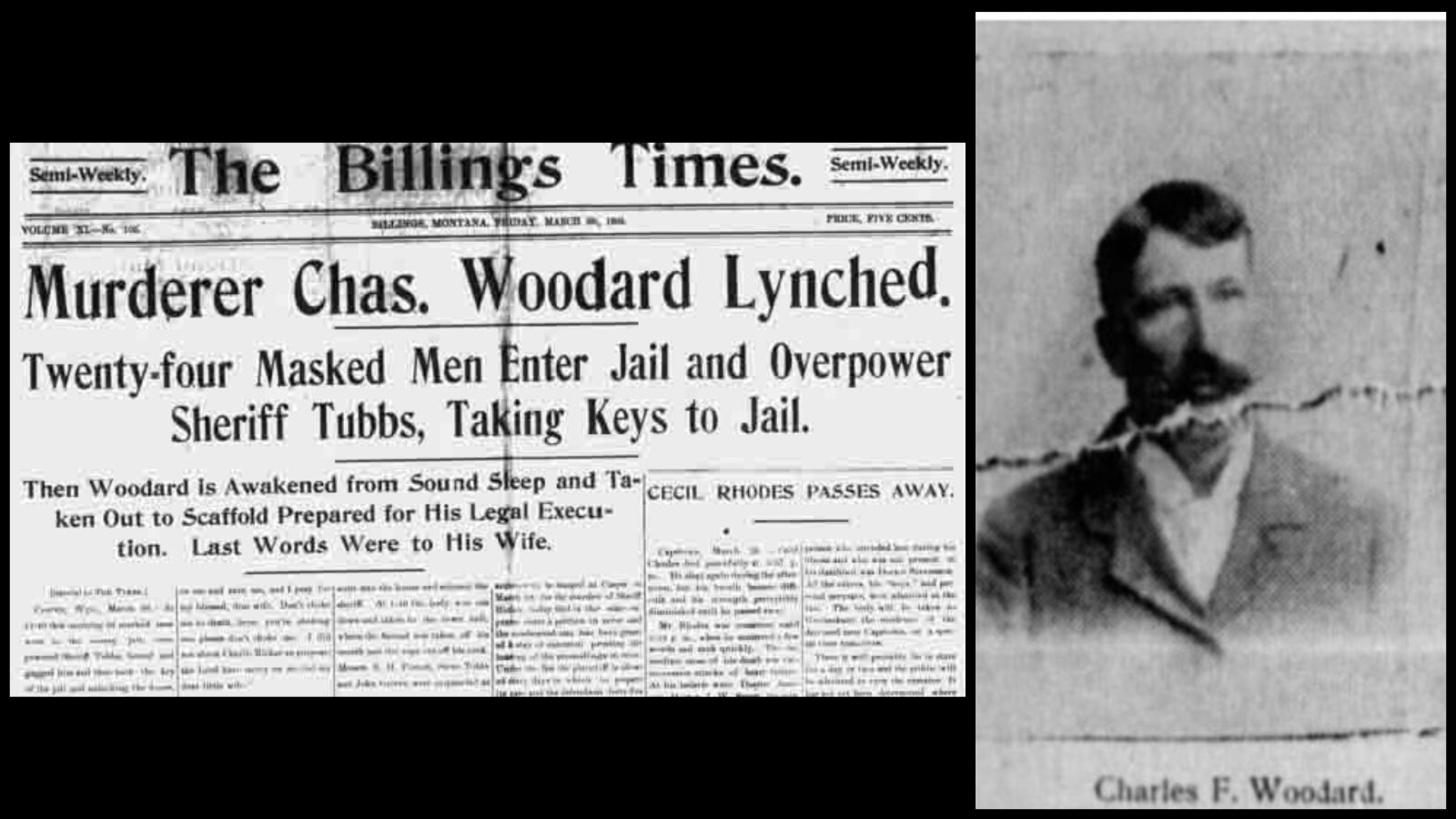
Left, a photo of Charles Woodard as depicted in the Natrona County Tribune. Right, news article in the Natrona County Tribune the week before the vigilante hanging announces that the gallows are almost complete.
Jail Breakout
Newspaper accounts from the time report brothers Charles and Clarence Woodard, along with Jeff Franklin and Frank Foote, were all alleged thieves being held in the Natrona County jail. On Monday, Dec. 30, 1901, they took off their clothes and squeezed through a hole they created by sawing through bars with a knife later court testimony would say they found in the jail.
Ricker, thinking the escapees would eventually head to the Woodard family ranch 50 miles west of Casper near Garfield Peak for supplies, took five deputies and set out for the property on New Year’s Day, a Wednesday. He sent two deputies north, while he and the three others went to the ranch, arriving Thursday.
That evening, and on the anniversary of his first year in office, he and his three deputies were inside the ranch house eating supper about 6 p.m. A man and woman were in the house with them, and dogs started barking and the man from the ranch went to see what was going on, then returned to report they were “barking at coyotes.”
The Natrona County Tribune on Jan. 9, 1902, reported Ricker announced he was going to investigate and went outside with his deputies. They saw a match light in the barn. Ricker walked to the barn after his deputy, James Milne, warned him that if it were the escapees they might shoot.
“Oh, no, they wouldn’t shoot me,” the sheriff was reported to have said. “I have always treated them well.”
Trial testimony would show one escapee, Charles Woodard, was in the barn and lit a match to investigate the horses in the barn. He heard someone approach, yanked out his pistol and shot twice — in Woodard’s words, “to warn” someone.
One of the bullets hit Ricker in the gut.
‘I Am Dying’
Ricker reportedly told Woodard stop shooting, then after minutes of silence, asked for a drink and help.
“It will do no good to bring a doctor. I am dying,” Ricker said. He also mentioned a message to his wife: “Don’t tell her.”
On learning of the death, the Natrona County Commission offered a reward of $1,000 for those responsible for shooting the sheriff. Meanwhile, two of the escapees, Clarence Woodard and Jeff Franklin, showed up at the Woodard ranch that Sunday, were confronted and arrested by deputies who told them to remain at the ranch. The escapees claimed they didn’t know of the killing.
Meanwhile, Charles Woodard escaped to a Montana ranch near Billings and assumed another name until his identity became known after folks at the ranch where he was staying read a description of Woodard. The rancher got handcuffs from the local sheriff.
At an evening meal in late January, Woodard was beat up, handcuffed and turned over to authorities.
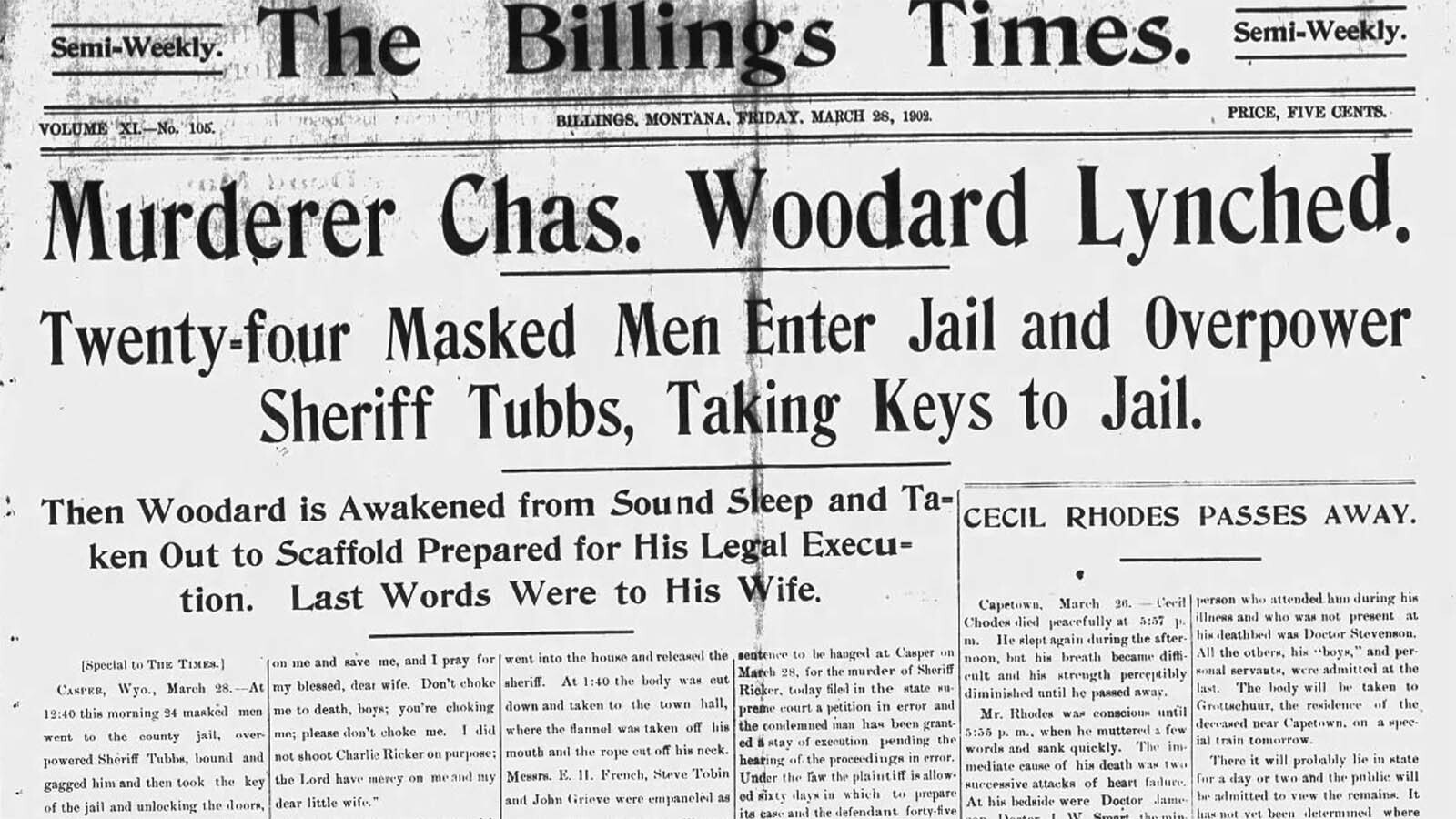
Billings, Montana, headline announces the lynching of Charles Woodard on Good Friday, March 28, 1902. 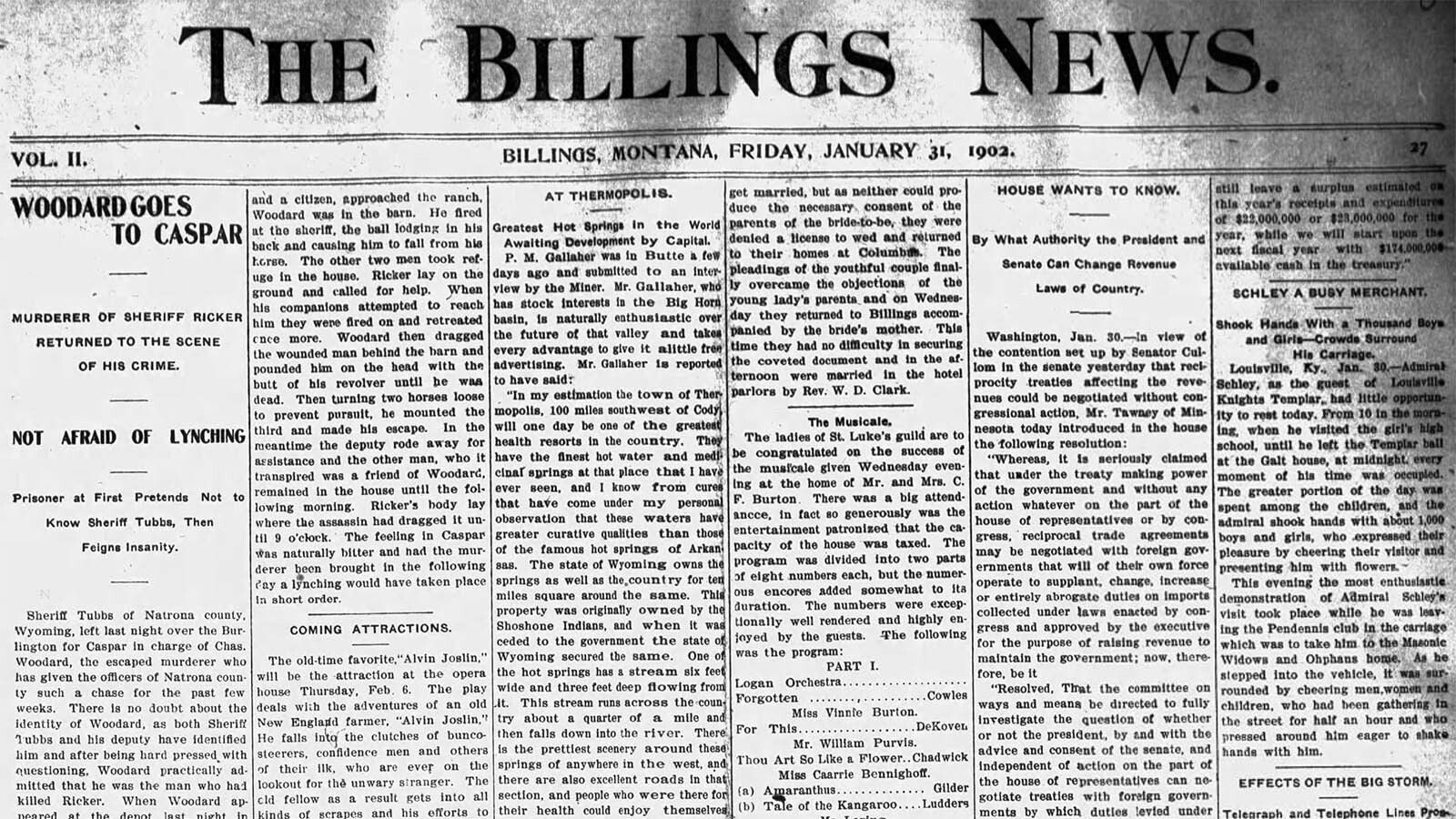
The Billings News in Billings, Montana, reports on the captured Charles Woodard being sent back to Casper.
Speedy Trial
The trial of Woodard in Natrona County moved quickly.
The prisoner pleaded not guilty Feb. 6, 1902. The trial was set for the following Tuesday, Feb. 11, then would be postponed a week. His appointed attorney objected to the trial venue and argued about the impartiality of the jury pool. Judge Charles Bramel denied the attorney’s objections.
Once the testimony began, jurors heard from the deputies and a neighbor to the Woodard ranch. The Montana rancher involved in capturing Woodard also arrived to testify. When it came time to present a defense, Charles Woodard’s attorney told the court that Woodard wanted to take the stand and share his story.
He told the court that when the sheriff approached the barn, he had asked if he was Harry Woodard, his brother.
“I said, ‘No, it is not Harry.’ He said, ‘Oh, it’s you Charley. Throw up your hands,’” Woodard testified. “I said, ‘Go back,’ and jerked the six-shooter out and shot it off.”
Woodard told his attorney and the court he didn’t intend to shoot the sheriff, just to scare him. After learning Ricker was dead, he admitted to the taking his gun belt and weapon. He shot his pistol in the air to warn the others not to approach and said that started bullets flying into the barn.
Defendant Cries
Charles Woodard reportedly cried when recounting the sheriff’s words: “‘Oh my poor wife and babies,’ like that, maybe two or three times.’”
Following Woodard’s testimony, the defense rested. The judge then instructed the jury at 7 p.m. on that Friday, Feb. 21. By 11 after taking five ballots among themselves, the verdict was in – guilty.
On the following Monday, Feb. 24, 1902, the judge ordered Woodard to be hanged March 28.
Meanwhile, his defense attorney appealed the case citing the judge’s actions in the trial, denial of change of venue, and other matters. Woodard’s attorneys asked for a new trial and appealed to the Wyoming Supreme Court for a stay of execution.
On March 28, one of Woodard’s attorneys was on a train to Casper with a stay ordered by the high court. Telegraph lines allowing communication from Casper to Cheyenne were suspiciously not functioning.
Local papers, the Natrona County Tribune and Wyoming Derrick, carried stories about a “vigilance committee” who were warning about any delay of justice.
The editor for the Natrona County Tribune on Thursday, March 27, wrote: “Some people, who seem to be in a position to know what they are talking about, declare that Woodard will not live to see Saturday morning, regardless of the action of the Supreme Court.”

Good Friday Lynching
Just prior to 1 a.m. March 28, which was Good Friday, a mob of about two dozen masked and armed men arrived at the jail. The gagged and bound the new sheriff, took his keys and went to Woodard’s cell. They brought him out naked except for a shirt and put a hood over his head.
The gallows had already been built in preparation for his scheduled hanging that was to happen hours later.
Journalists from the Natrona County Tribune and Wyoming Derrick “stumbled upon” the incident and would report detailed accounts of Woodard’s death.
Newspapers in Cheyenne and Billings would also have the story on their front pages.
After being taken to the gallows and denied an opportunity to put his clothes on, Woodard had a noose placed around his neck.
Woodard is alleged to have said: “To my blessed little wife. Tell dear little wife I love her dearly. Won’t you tell her that boys? I pray that you have the papers print a good article. I pray for myself, I pray for you and I pray for Charles Ricker. I never had a grudge against him in God’s world.’
“’Don’t choke me boys, for God’s sake don’t choke me boys. … I didn’t shoot Charlie Ricker on purpose. Lord have mercy on me and my dear little wife.’”
Newspaper reports state in his anxiety, before the trap door could be sprung, that Woodward slipped and fell, and then was thrown off the edge of the platform, choking and gurgling. Some men pulled on his legs to help the process.
News of the event brought condemnation from other parts of the state about Casper’s vigilante justice.
Judge Bramel was quoted in the Natrona Tribune as saying the hanging was justified.
“They (Casper residents) were wronged in the wanton murder of an officer in who they had placed their trust, and the Biblical ‘eye for an eye’ was to them as the Holy Writ,” he said, as reported in the April 3, 1902, edition of the local paper. “The voice of the people is indeed the voice of God, in this as in other things that go to make up the sum of life, and the people cannot be fooled.”
Casper residents mounted a fundraising campaign to build a house for Ricker’s widow and children. She would remarry and live until 1963. Ricker’s son became a rancher and followed in his father’s footsteps in law enforcement as a Wyoming deputy sheriff.
Dale Killingbeck can be reached at dale@cowboystatedaily.com.