Reflecting on his life and career path as a Wyoming game warden, Scott Werbelow recalled decidedly different experiences with different men.
While he made his life’s work advancing Wyoming wildlife, he grew up in the shadow of an opposite legacy with an alcoholic father and unrepentant poacher.
“We saw the game warden’s truck, and my dad said, ‘Oh shit, there’s the goddamn game warden!’” he told Cowboy State Daily about one of the memories he has of his father. “He took a two-track off the main road, and we hid behind a hill until the warden was gone.”
Later, his parents divorced and his mother remarried a rancher.
Werbelow recalled that “when I was about 10 or 12,” telling the local Wyoming Game and Fish Department warden, Bob Trebelcock, that a trap that Werbelow set had gone missing.
“I told him, ‘I think somebody stole my trap’ and he told me, ‘OK, I’ll look for it,’” Werbelow said.
“About two days later, he came back to the ranch. And he had my trap. I thought he was God, that he’d hunted down that guy who stole my trap,” he said.
Turns out, Trebelcock had himself taken the trap because it wasn’t properly tagged, then brought it back to the young Werbelow, along with a lesson about doing things the right way.
“I saw what my dad was doing, and then I saw that guy who was enforcing the law, and I thought that he was a pretty cool guy,” Werbelow said.
He knew right then what he wanted to be — a Game and Fish game warden.

Book Series
Werbelow is 30 years into his career with Game and Fish. He lives in Meeteetse and is the game warden supervisor for the Cody region.
That’s a long way to come for the son of a poacher whose excessive drinking led to death at age 40 from sclerosis of the liver.
It’s a story so unusual and inspiring, Werbelow decided to write it down. So far, he’s written and published two autobiographical books, “Son of a Poacher: Wyoming Warden in the Making” and “Son of a Poacher II: Blast From My Past.”
Volume III is being edited, and Werbelow hopes it will publish soon.
“The second book takes us to about 1999, and at the end of the third book, we’re at about 2004,” he said, so there’s likely to be more volumes.
Werbelow was born in 1968 and spent his first five years in Emblem, Wyoming. Then his parents divorced and later his mother married Martin Mayland, who owned ranches north of Greybull.
Werbelow described Mayland as a great stepfather who taught him the value of hard, honest ranch work, along with how to hunt, fish and trap ethically, within the boundaries of the law.
“My parents instilled self-confidence and a strong work ethic in me from a very young age,” Werbelow states in his online biography.
Werbelow was set on his dream of becoming a game warden, but struggled in school. When he graduated from high school, his brother talked him into going to Chadron State College in Nebraska and earn a degree in industrial technology.
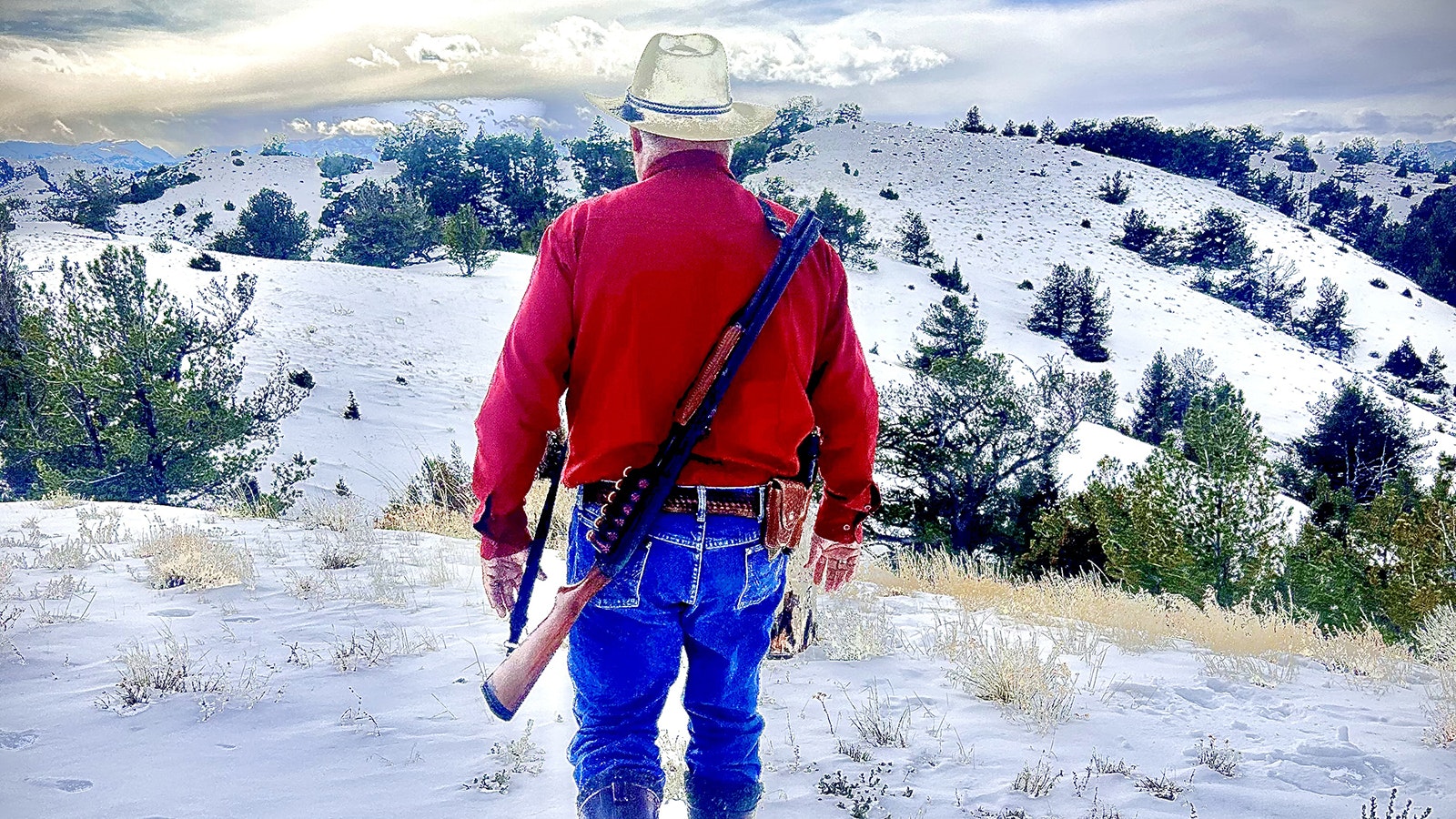
But the hankering to put on the distinctive red shirt and badge of a Game and Fish warden wasn’t so easily put to rest. Back then, jobs with Game and Fish were scarce and competition was fierce.
Werbelow eventually managed to get hired on as a temporary wildlife damage technician and worked his way up.
His big break came when we was called to be the full-time elk feeding ground manager in the Pinedale area. That morphed into a “game warden/feeding ground manager” position, and his career took off from there.

Why Do People Poach?
Given his genetic roots, Werbelow has done much pondering over why people poach — or kill animals illegally or out of season — rather than hunting legally and ethically.
He said that question really started to nag at him when he and his brother were young and spending time with their biological father.
One time, their father made them cut the head off a mule deer that he had shot illegally “and was still alive,” Werbelow said.
The cruelty and blatant disregard for the rules that his father displayed was baffling.
“I thought, ‘Why would my dad do that? Why didn’t he at least take the meat?’” Werbelow said.
Werbelow said he eventually concluded that his father shot animals whenever he could, regardless of whether it was legal or ethical, simply because he liked doing it.
“My dad didn’t poach for food, and he didn’t even really want the trophies. He just liked shooting animals,” he said.
And while busting countless poachers as a game warden, Werbelow frequently encountered that same mentality.
“I interviewed a guy after a poaching bust one time, and he told me, ‘I just get a high off the crack of the rifle, and seeing something die,’” Werbelow said.
For other poachers, it’s all about the ego trip of scoring a big trophy, he added.
“Maybe once, they legally shoot a big animal, say, a 30-inch buck mule deer, and they get all this recognition from their friends,” he said. “And then they feel like they’re this great, mighty hunter, and it’s the only great thing they’ve ever done. And they want that feeling again, and they don’t care if they have to break the law to get it.”
Dangerous Work
Game wardens work long, odd hours and are constantly on call, Werbelow said.
But he’s loved every minute his job has put him in Wyoming’s fantastic outdoors. And the job is great, because he never knows what to expect.
“You might get a call that somebody got attacked by a grizzly bear, maybe even killed by a grizzly bear. And then you go from that to somebody calling about a skunk in a parking lot with a jar stuck over its head,” Werbelow said.
Game wardens also must go into dangerous situations, frequently alone and almost always involving people who are armed.
“The typical guy I’m dealing with has a rifle, a pistol, a can of bear spray and a knife,” Werbelow said. “I’m probably most scared of the guy with the bear spray, who could hit you with that out of the blue and incapacitate you.”
More than a few times, he’s followed possible game law violation cases into hunting camps at night.
“You’re outnumbered. And they’re drinking, and they’re angry because you could be writing them a ticket,” Werbelow said.
“There’s been some situations where I’ve just decided to back out. To just say, ‘OK, you guys have a good evening,’ and then wait and come back with two or three other guys in the morning,” he said. “It’s just better to deal with them in the morning.
“Your brain’s your best weapon, and it will tell you if a situation is turning into something that you can’t handle on your own.”

Inspiring The Next Generation
Though anecdotes from his career anchor the “Son of a Poacher” series, Werbelow said the books also delve deeply into all aspects of his life.
“If you read these books, you’ll probably end up knowing me better than you wanted to,” he said with a chuckle.
He also shared a wry quote from the forthcoming third volume: “I have learned over the years that there are no perfect women or horses! You must decide what you are willing to tolerate.”
And he hopes the narrative of how he overcame his life’s challenges will inspire others.
“I look at my childhood and how I grew up, all the crap I went through,” he said. “My first book, it’s meant to inspire kids. If you want something bad enough, you can get what you want in life.”
He also hopes to get more young people interested in his career field. When he was starting out, the competition was almost impossible. There could easily be 10 other highly qualified candidates vying for the same open game warden slot.
Now, Game and Fish struggles to find only a few qualified candidates, he said.
Aspiring game wardens must be prepared to work hard, and sacrifice some of their own outdoor aspirations.
“If you really like to hunt and fish, you should probably not be a game warden. Because during hunting season, you’re not going to get to go out hunting on opening day, or just take a week off anytime during the season,” Werbelow said.
As he approaches the end of his career, he’s not sure what he’ll do next.
“At the end of the day, I feel like I’ve been blessed to have had this job for 30 years,” he said. “I spent my whole life doing what I love to do, so I’m not sure what my hobbies are going to be when I retire, because I’m probably going to want to do different things.”
Mark Heinz can be reached at mark@cowboystatedaily.com.