Update: The budget amendment in this story survived and remains in the budget.
After Gov. Gordon vetoed a law letting state-authorized charter schools apply for their own grants, the Wyoming Senate voted overwhelmingly Friday to override the governor’s veto.
But the attempt to override the veto didn’t make it all the way through the Legislature: The House of Representatives fell one vote short of its required two-thirds majority and the override attempt failed.
In his Thursday veto letter, Gordon called Senate File 61 an attempt to cinch Wyoming’s fledgling school choice movement together with bailing wire.
The bill would have designated state-authorized charter schools as local education agencies (LEAs), a title that lets them apply for state and federal grants rather than asking their shared state authorizing board to do so for them. It also would have established a process for state charter schools to receive consistent funding via their neighboring school districts.
“I enthusiastically support school choice and am committed to the success of charter schools,” wrote Gordon in a veto letter to the Senate. “Which is why I am anxious (toward) whatever bailing wire is used as a long-term fix.”
Gordon said the bill could jeopardize the integrity and sustainability of the public education system altogether, including the public charter schools, by flooding the state with grant-getters and by tinkering “piecemeal” with school-choice laws without heed to unintended consequences.
He also raised a concern that it could invite a constitutional challenge, and hearkened to the Wyoming Constitution’s requirement that state education be “uniform.”
He encouraged the Legislature to let the state authorizing board act as the grant-getter instead.
Senate Says Absolutely Not
The Senate majority didn’t like that. The body voted 28-3 to override Gordon’s veto, after a brief discussion with all speakers supporting the override.
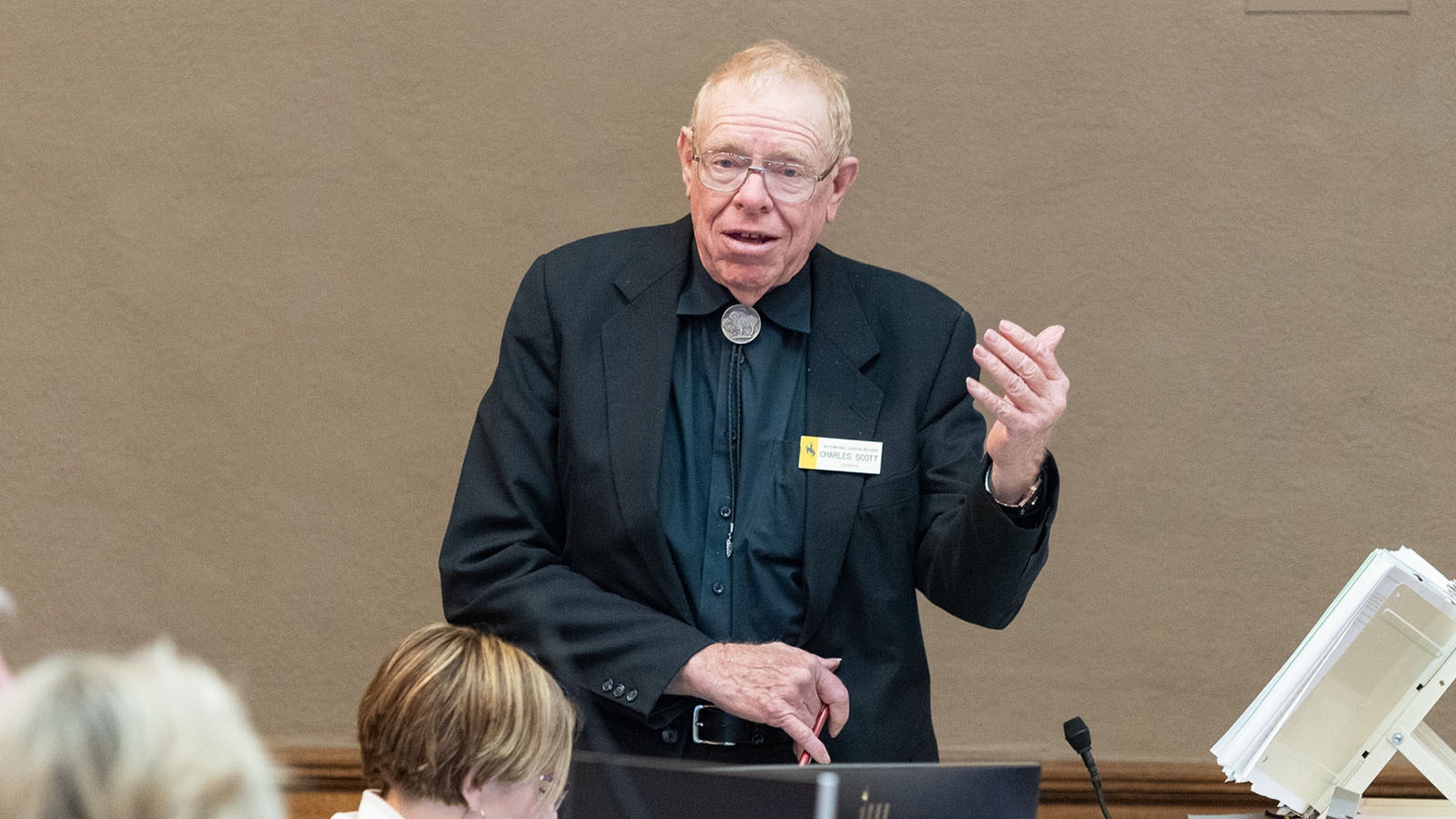
“This bill corrects a very technical area,” Sen. Charlie Scott, R-Casper, told the Senate Friday. Scott chairs the Senate Education Committee, and said the bill is the product of months of work and engagement. “I have difficulty following the reasoning the governor gave us in the veto message.”
Sen. Dan Dockstader, R-Afton, agreed, saying the bill came about at the urging of the schools, and that other states in the region have successfully implemented this bill’s vision.
By A Hair In The House
The House voted 41-20 in favor of the veto override, with one delegate excused from the vote.
That’s one vote shy of the required two-thirds majority.
All House Democrats voted against the override, plus a handful of Republicans. Rep. Steve Harshman, R-Casper, was not present for the vote.
“I think it’s prudent we read this veto message for what it’s worth and take the information very seriously,” Rep. Landon Brown, R-Cheyenne, told the House just before voting against the override.
Brown had voted in favor of the Legislation “all the way through” the lawmaking process, but said he took the governor’s critique to heart and had decided to let the state charter school board try its hand as the grant getter for a while before chipping away at that model.
“This is not one of those pieces of legislation we should be looking at and going, ‘Oh, because this says charter school it’s red meat and we need to just vote for it and get it through,’” said Brown.
‘Got It Wrong Here’
Rep. Ocean Andrew, R-Laramie, disagreed, saying SF 61 is needed to let schools have direct access to the funds they need for legally required programs, such as special education.
Rep. Jared Olsen, R-Cheyenne, said the state authorizing board is not designed to be an LEA. It won’t be able to oversee the grant money pouring in, and it won’t be staffed to meet such a demand, he said.
“I have all the respect in the world for our chief executive,” said Olsen, adding “I do think he got it wrong here.”
House Education Committee Chair Rep. David Northrup, R-Powell, said the debate overlooked the second, also-important half of the bill: language establishing a process for the school districts to pass the charter schools’ state funding through to them.
The state has authorized three charter schools so far and with a new budget amendment it could soon authorize a fourth – then a fifth before 2028. But beyond those five, the total number is capped until 2028 or until the Legislature changes the law to allow more.
Clair McFarland can be reached at clair@cowboystatedaily.com.