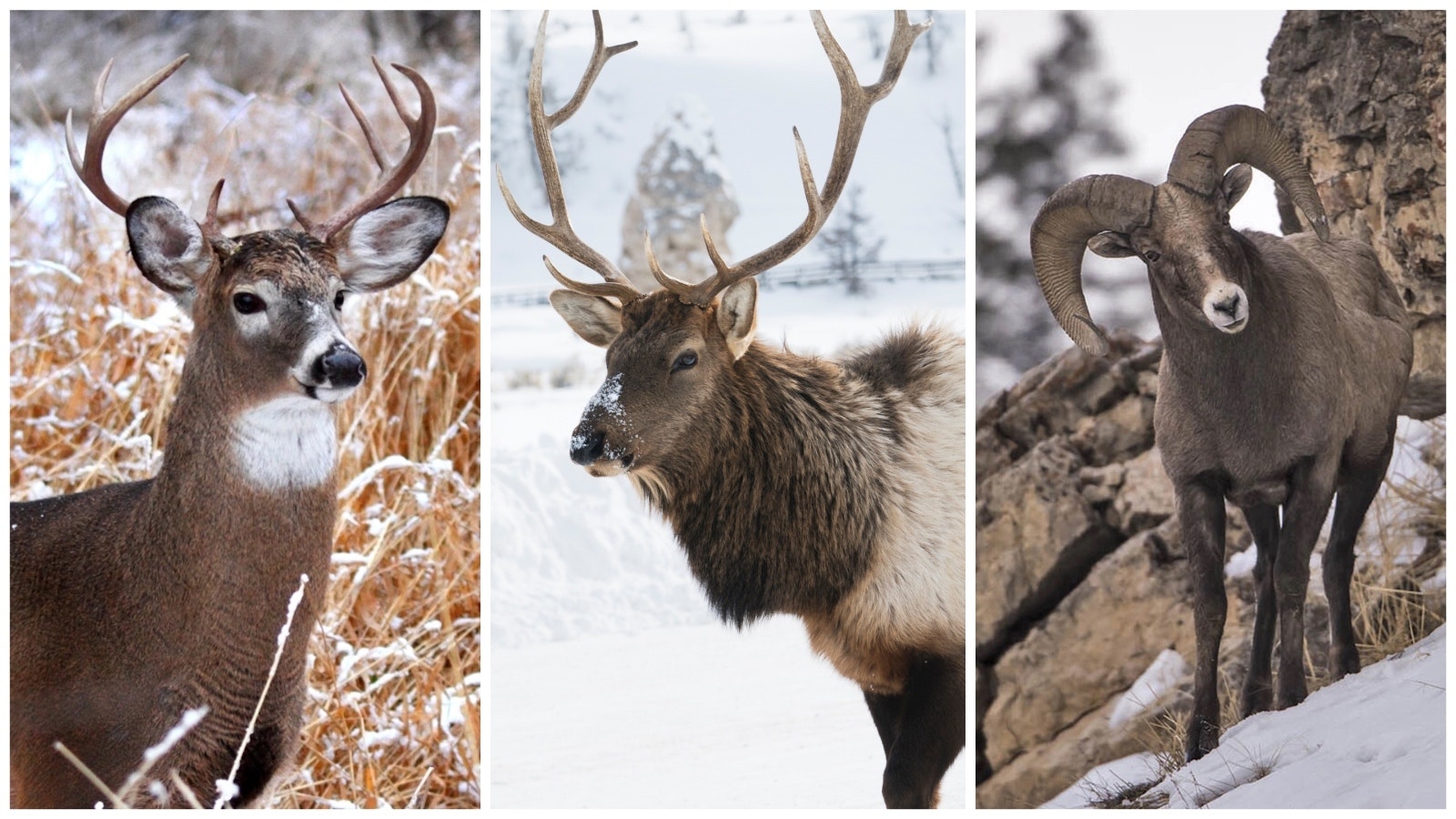
Two weeks into the 2024 session of the Wyoming Legislature, bills dealing with deer, elk and bighorn sheep gained serious traction.
Senate File 118, is doing the best. It could clear the way for a long-awaited reintroduction of bighorn sheep into the rugged Sweetwater Rocks area, in the general vicinity of Jeffrey City in central Wyoming. With no debate, it was passed unanimously by the Wyoming Senate’s Committee of the Whole on Friday.
Senate File 111 would authorize the Wyoming Game and Fish Department to manage mule deer and whitetail deer as separate species, and split hunting tags for those two species. The Senate Travel, Recreation, Wildlife and Cultural Resources Committee forwarded it to the full Senate with a “do pass” recommendation. On Friday, it remanded on the Senate’s general file, awaiting further discussion and a vote.
House Bill 60 would provide compensation payments for ranchers who lose more than 15% of available forage to elk. The compensation would be 150% of lease value on private land, and full value on state land grazing leases. The House Appropriations Committee forwarded it to the House with a “do pass” recommendation, and it remained on the House’s general file Friday.
Hicks Says Bighorns No Worry For Ranchers
Some ranchers in the Sweetwater Rocks area are still worried that if bighorn sheep are reintroduced there, the wild sheep could be used by the federal government or environmental groups as leverage to push domestic livestock off grazing leases.
Cattle rancher Troy Corbett told Cowboy State Daily that he and other ranchers think reintroducing the bighorns is a bad idea.
“Our family ranching operation is among at least 12 other operations in the immediate area that would be directly affected by this action that have attended a number of meetings and come out consistently against the proposal,” he said.
However, the bill should provide ample protection to ranchers, it’s primary sponsor, Sen. Larry Hicks, R-Baggs, said on the Senate Floor on Friday.
There are provisions in the bill that would allow Wyoming to counter any lawsuits brought by “third parties” against grazing leases because of the presence of bighorn sheep, he said.
The bill also authorizes Game and Fish to trap and remove any bighorn sheep that get too close to domestic livestock in the reintroduction area.
Whitetails a ‘Noxious Weed’?
During previous committee discussion regarding SF 111, primary sponsor Senate President Sen. Ogden Driskill, R-Devil’s Tower said whitetail deer are like a “noxious weed.”
They push more-desirable mule deer out, he said. So, more aggressive hunting of whitetails would give mule deer a better chance, and the bill would facilitate that.
However, some hunters told Cowboy State Daily that splitting hunting tags for the two species will just make applying for hunting tags more complicated, and probably won’t incentivize hunters to shoot more whitetails.
Karl Brauneis of Lander also told Cowboy State Daily that whitetail are a native Wyoming species.
“Lewis and Clark noted the whitetail deer all up the Yellowstone valley on their Corps of Discovery,” he said. “We can assume that the migration of the whitetail was up the Yellowstone gallery forest of cottonwood then up the Bighorn tributary to the Wind River and subsequent valley. At any rate, the deer was here at the time of Western white expansion.”
Will Compensating Ranchers Break The Bank?
Some critics of HB 60 say the compensation program could get too expensive for Game and Fish.
“As it stands, the bill would be devastating for the Game and Fish budget. It could potentially be 1/10th of the Game and Fish Budget going for compensation,” Jesh Metten, the Wyoming field manager for the Theodore Roosevelt Conservation Partnership, told Cowboy State Daily.
But supporters say HB 60 would provide ranchers with some much-needed relief from elk gobbling forage they need to feed cattle.
Elk herds in part of Wyoming are bloated to more than twice their objective numbers. That means ranchers can’t keep taking losses for all the forage the elk are eating, Wyoming Stock Growers Association Vice President Jim Magagna told Cowboy State Daily.
For example, one herd northwest of Cheyenne has a 5,000-elk objective, but now has roughly 11,000, Magagna said.
“It’s gotten so excessive that they (ranchers) have actually had to reduce their livestock grazing operations,” he said.
Mark Heinz can be reached at mark@cowboystatedaily.com.