Much of the debate about Wyoming’s wild horses swirls around one question — are they truly wild horses or a feral invasive species?
That doesn’t matter, a wildlife researcher said, because as he sees it, even species considered “invasive” to an ecosystem also can be beneficial.
“I think part of the problem is, the ‘nativeness’ question just closes the door on compromise,” Erick Lundgren told Cowboy State Daily.
He’s a wildlife biologist and researcher based in Arizona and is one of several authors of a new scientific paper challenging the “invasive species” narrative that has driven wildlife management in Wyoming, the West and around the world.
Wild horse advocate Chad Hanson of Casper told Cowboy State Daily he thinks that the narrative of mustangs being in competition with big game animals might get it all wrong.
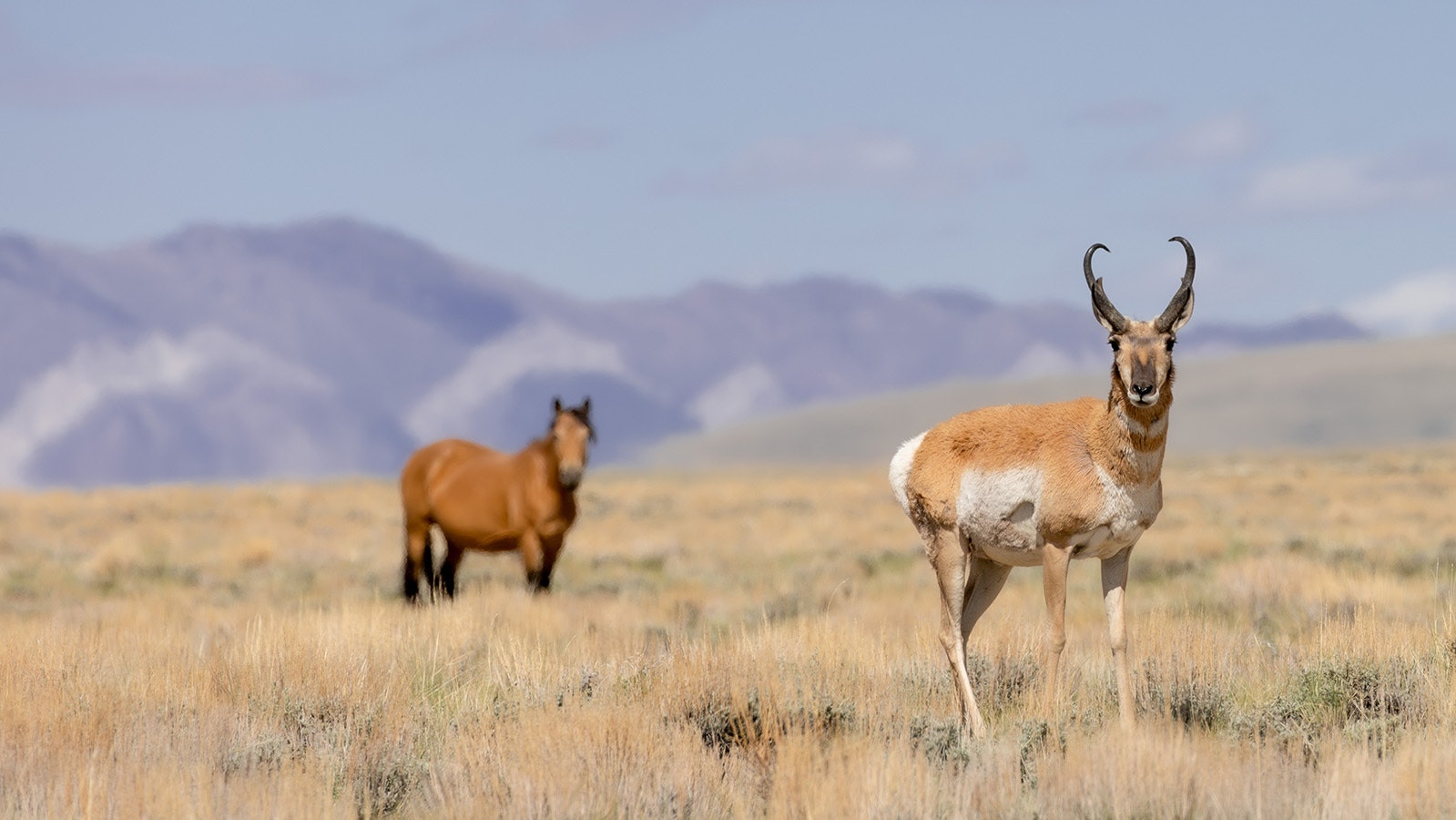
“For the past 12 years that I’ve spent observing wild horses in the field, it’s been obvious that elk, deer and antelope seek out and spend time in the company of mustangs where they can,” he said.
Others disagree. Retired U.S. Fish and Wildlife Service biologist David Paullin of Sheridan recently told Cowboy State Daily that he’s worried about the effects of mustangs on some of Wyoming’s premiere mule deer and antelope herds.
With the deer and antelope still struggling to recover from massive winterkill in 2022-2023, the last thing they need is competition from mustangs for food and water, he said.
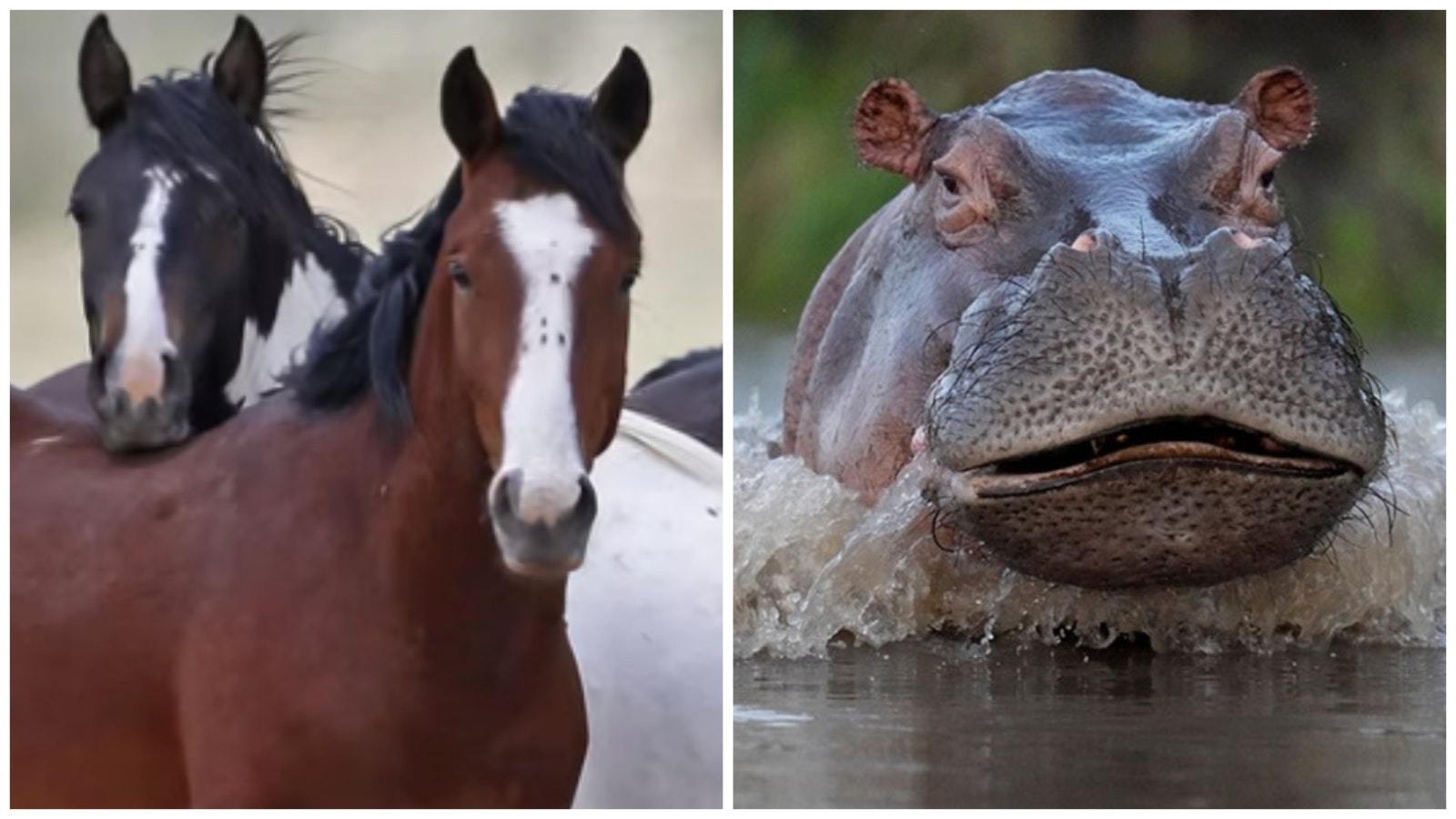
The debate over invasive species isn’t limited to Wyoming, it’s global, and there are plenty of high-profile examples. Perhaps the most notorious are the “cocaine hippos,” the nickname for an exploding non-native population of the giant beasts in Colombia that started with four hippos brought there by drug kingpin Pablo Escobar.
Now there are about 170 hippos roaming the Colombian countryside not only disrupting the local ecosystem, but also reportedly becoming aggressive toward people.
In Australia, feral camels are a holdover from the 19th century when British India and Afghanistan brought camels to the country as beasts of burden. People there are concerned because the now-feral populations of the animals can destroy water holes for native wildlife.
It’s Function That Matters
Whether a species is “native” actually matters far less than how it interacts with the land it is on, Lundgren said.
In that respect, “there’s no discernible difference between native and introduced species,” he said. “The language of ‘invasive biology’ just reduces that into a binary – good and evil.”
For instance, horses in some areas graze off courser vegetation, which deer and antelope won’t touch, but that can leave room for forage that the game herds will eat, he said. And horses use their size as an advantage at times.
“The evidence regarding competition between horses and smaller ungulates shows that, yeah, the horses might chase off the pronghorn. But that (larger animal dominance) happens in any system,” Lundgren said.
Even so, he questions whether that happens enough to truly harm antelope and deer.
After all, antelope and deer for tens of thousands of years shared habitat in what is now Wyoming and the surrounding region with plenty of larger animals, up to and including mammoths, he said.
Predators can also play an important role, he noted, though they also can be unfairly demonized.
“Mountain lions in Nevada kill feral horses, and yet we kill mountain lions at an astonishing rate there, funded by taxpayer money,” Lundgren said, adding that just because a species is “native” that doesn’t mean it can’t be harmful under the wrong circumstances.
“Back East, there are tons of whitetail deer and they can really trash landscapes,” he said. “And we know why. There are no predators left back there to control them.”
Cattle And Camels
Cattle also frequently come up in debates over Wyoming’s mustangs. Ranchers claim that the mustangs compete for the resources they need to keep their herds viable.
Meanwhile, wild horse advocates argue that the horses are blamed for damaging range and game herds that were actually harmed by cattle.
And although beef cattle are themselves a non-native species, it’s how they interact with the environment that matters, Lungren said. Cows that stay in one place to long can cause damage.
“I’ve seen plenty of places grazed to hell by cows, where they’re standing in one place all day long, not moving,” he said.
However, when cattle are moved across the landscape, grazing as they go, they can fill the same ecological niche as other large herbivore species, he said.
Species come and go, and interestingly, Wyoming once had camels, he said.
Camels have become a flashpoint for controversy in Australia that in many ways mirrors the tensions over mustangs in Wyoming.
Camels were introduced to Australia as a means of long-distance desert transport in the days before trucks became plentiful and reliable enough to fill that role, Lungren said.
Since then, the camels have reproduced and spread out across the landscape.
“It’s currently the only wild population of dromedary camels in the world,” he said.
However, many ranchers don’t like them, saying they tear down fences and corrals and hog water supplies. So, some Aussie ranchers will gun camels down by the dozens.
Lundgren said there’s scant research into how much damage the camels actually do.
Everybody Gather At The Watering Hole
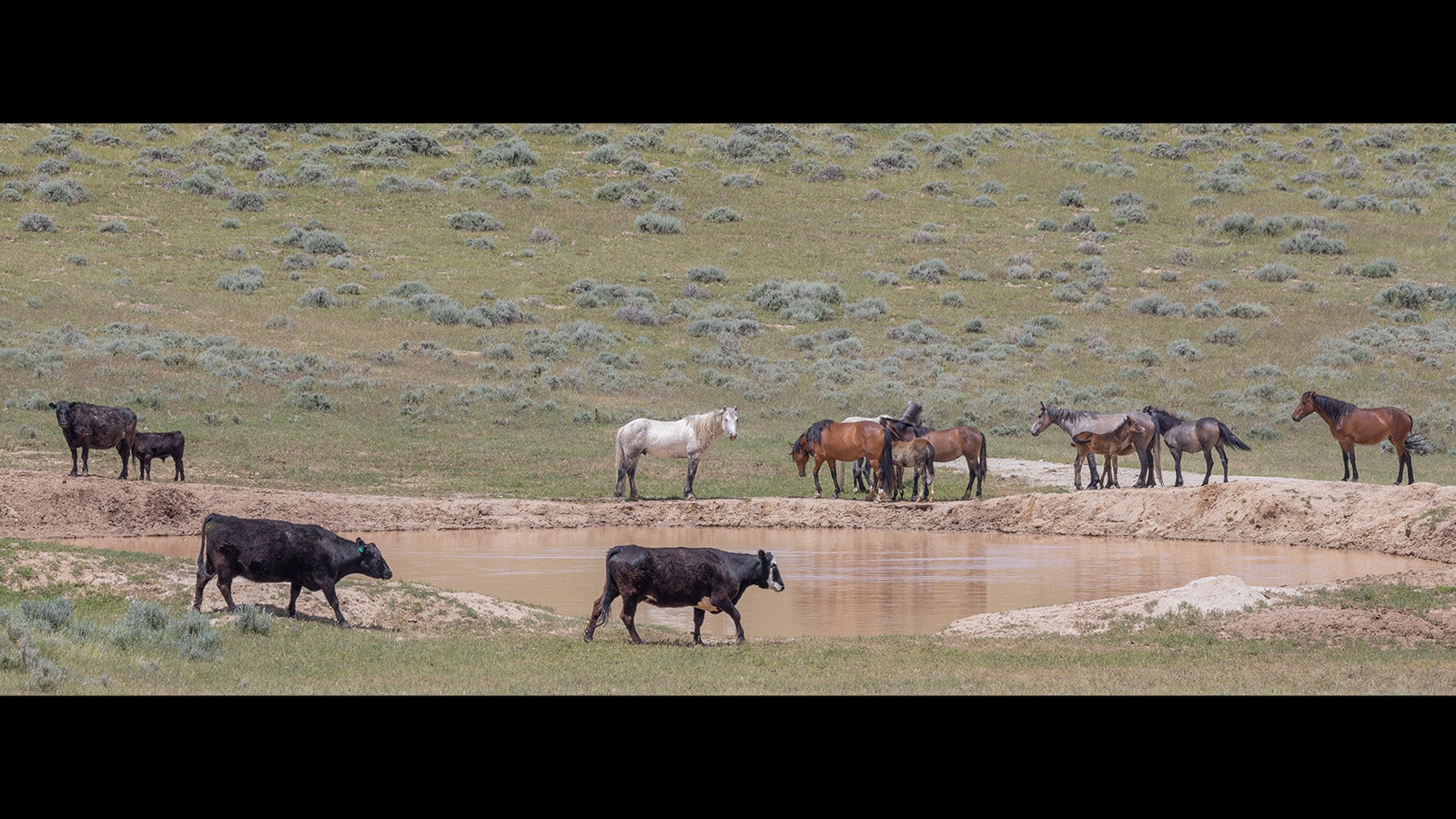
Hanson said he’s seen cattle, mustangs, elk, deer and antelope all gather at waterholes and peacefully share the resource.
And research backs that up, he said.
“A team of four University of Wyoming professors ‘did not find evidence of interference competition between feral horses, cattle, and pronghorn.’ The authors also discovered that, ‘mule deer and elk watering activity also overlapped with horses and cattle,’” he said.
Hanson added that if horses were absent from Wyoming’s ancient landscapes, it wasn’t for long. And, like Lundgren, he argues that whether the mustangs are the same species as the horses that were here before doesn’t matter as much as some claim it does.
“For the record, the oldest horse fossils on earth were found in Wyoming, and recent data suggest that horses survived here longer than we ever thought,” he said. “New DNA evidence places them on this continent 5,000 years ago — a sliver of time in geologic terms.
“Equine history and evolution are fascinating, but biologists increasingly have no use for the distinction between native or non-native fauna.”
Mark Heinz can be reached at mark@cowboystatedaily.com.