The Wyoming Legislature wants the state Attorney General’s office to continue helping local county attorneys litigate complicated cases related to Native American hunting rights.
The Legislature’s Joint Appropriations Committee on Tuesday unanimously continued a previous financial commitment for fighting these disputes, which if they arise, will be funded through the state’s Federal Natural Resource Account.
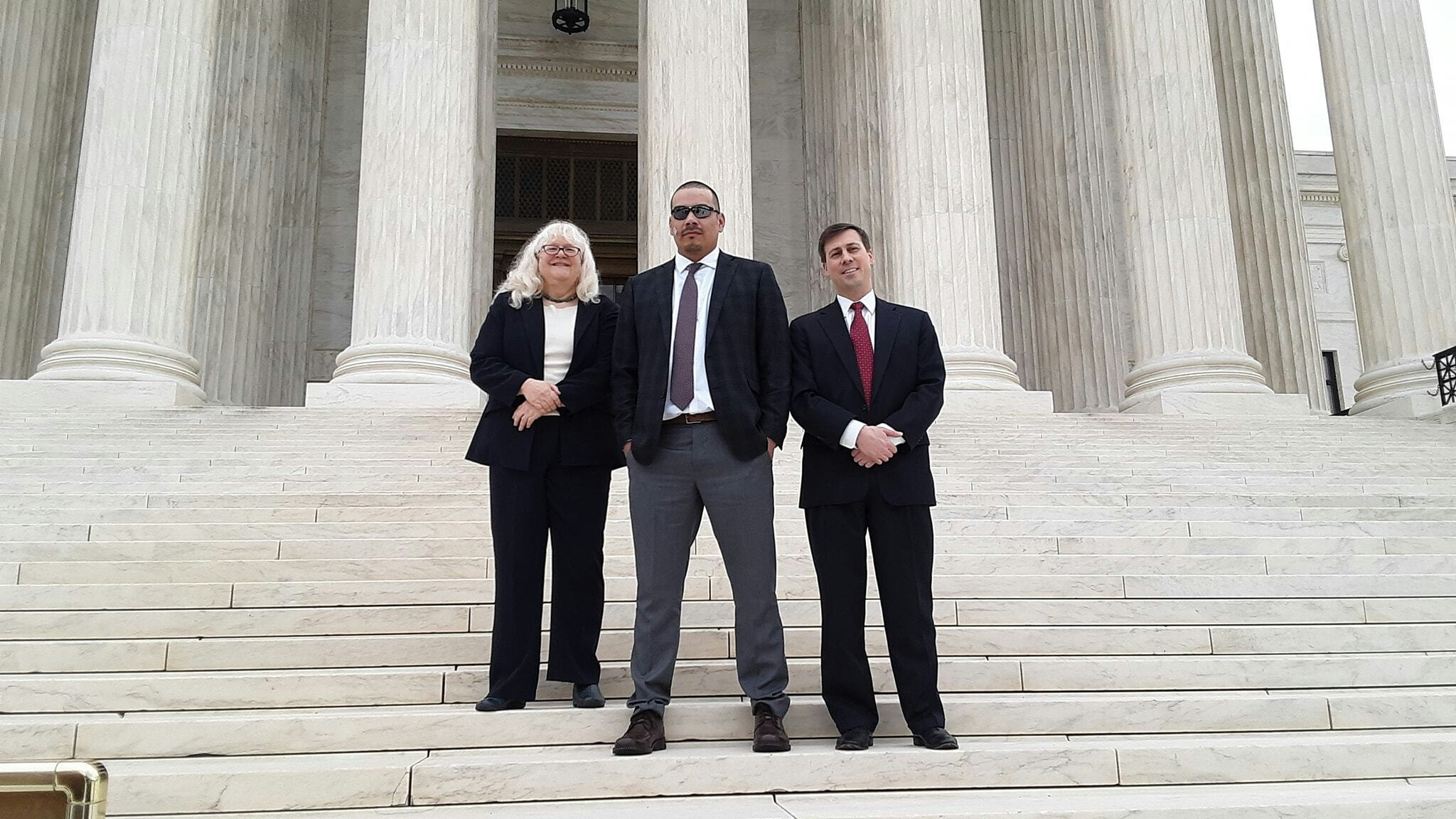
The crux of this commitment centers around Crow Tribe member Clayvin Herrera, who in 2019 won a U.S. Supreme Court decision that had originated in Sheridan County.
The 5-4 decision determined that when Wyoming became a state in 1890, its statehood did not void the previously enacted treaty rights of Crow Tribal members to hunt on “unoccupied lands” of the United States, a decision that also holds weight for the Eastern Shoshone Tribe.
With that decision, it was determined Herrera had the right to harvest the elk that he did outside of the hunting season.
Evolution
The case started as a standard misdemeanor Game and Fish poaching violation heard in Sheridan County Circuit Court in 2014, before advancing to the district court on appeal, and then the U.S. Supreme Court.
It wasn’t until the case advanced to the Supreme Court did the Wyoming Attorney General’s office start providing legal representation on behalf of Sheridan County.
With a staff of five attorneys, Sheridan County Attorney Dianna Bennett told Cowboy State Daily the case severely strained her office’s resources, dedicating a significant amount of time to fighting extremely technical aspects of Native American treaty rights.
“We were just using people that are usually doing other things to basically litigate treaty rights against others,” Bennett said. “It really shouldn’t be a deputy county attorney in Sheridan County litigating these treaty rights and Wyoming-rights cases.”
She believes cases like these hold a high level of significance for Wyoming because of the presence of multiple tribes around the state.
After the case returned to the Fourth Judicial District Court upon the Supreme Court’s ruling and then after the Sheridan County Circuit Court, Bennett solicited state help, and the Legislature started actively funding litigation to help Sheridan County.
With that decision in place, the case effectively became the responsibility of the state Attorney General’s office, which Bennett said at that point assumed the role of a deputy county attorney in the case.
No Longer Involved
After charges of methamphetamine and child pornography possession were filed against Herrera in an unrelated case, he was sentenced to at least 10 years in prison last year.
This sentencing, said Bennett, prompted the Attorney General’s office to drop the case, a decision she did not agree with.
“We didn’t want to dismiss it,” Bennett said. “We had gone that far and realize he’s in prison, but wanted to get this issue hopefully before the United States Supreme Court again after everything had been litigated.”
Bennett said there are still some open-ended legal questions remaining from the case and a Wyoming federal court case that has started.
State Rep. Lloyd Larsen, R-Lander, said during Tuesday’s meeting that due to the Herrera case being dropped, it had been recommended by state staff at an earlier juncture that funding issues like these would no longer need to be continued.
Sen. Dave Kinskey, R-Sheridan, disagrees and said there’s a “real need” to provide supplementary resources to county attorneys to fight these types of cases into the future. Even though the Herrera case is over, he said cases like it “could easily come back.”
“The issue could be easily raised at any moment,” he said.
‘Emboldened’
Bennett agrees, and said there’s “no question” in her mind that a similar case involving Native American treaty rights will pop up again in Sheridan County or another county in Wyoming.
“I think that the (Crow) Tribe feels quite emboldened by where this all ended up,” Bennett said. “I can’t imagine that it’s not going to happen, and because of the process, I can’t imagine it won’t be a very long, intensive process again.”
Bennett said if a case like Herrera v. Wyoming surfaces again in Sheridan County, it will solicit outside help right away.
Kinskey believes cases like these should not be left up to a local county attorney’s office to deal with. As one of the larger counties in the state, Sheridan has more resources to fight cases like these than smaller counties.
“If you want to leave it to the local county attorney to defend a constitutional case of that magnitude that’s fine. Otherwise, I think we ought to put a little money aside to help them out if they get that kind of case,” Kinskey told the Appropriations Committee. “It could happen in any county anywhere in the state.”
Bennett said she expects the tribal hunting issue to return to the Supreme Court at some point.
Since the Supreme Court rendered its decision, Justice Amy Coney Barrett, considered one of the more conservative justices, was added to the bench in place of the more left-leaning former justice Ruth Bader Ginsburg.
Bennett also said since the 2019 Herrera case was decided, a few Native American hunting rights cases have come before the court, with the court ruling in favor of states’ rights over the tribes.
Still Funded
Entering Tuesday’s meeting, a short-lived proposal had been adopted to stop funding litigation for cases like these from the Federal Natural Resource Account. That proposal was quickly removed once Kinskey gave his testimony.
The committee ultimately approved $1 million more for the account.
Funding from this account covers litigation costs incurred by Wyoming counties involved in litigation on federal lands, water, air, mineral and other natural resource policies, which the Native American hunting litigation was previously a part of.
Most recently, money was used from the account to push back against the BLM’s controversial draft Resource Management Plan for the Rock Springs area.
An off-reservation hunting agreement Gov. Mark Gordon orchestrated with tribal members during the 2023 legislative session lost support after the Eastern Shoshone Tribe said it would not support it. The bill died on a 23-8 vote in the Senate.
Leo Wolfson can be reached at leo@cowboystatedaily.com.