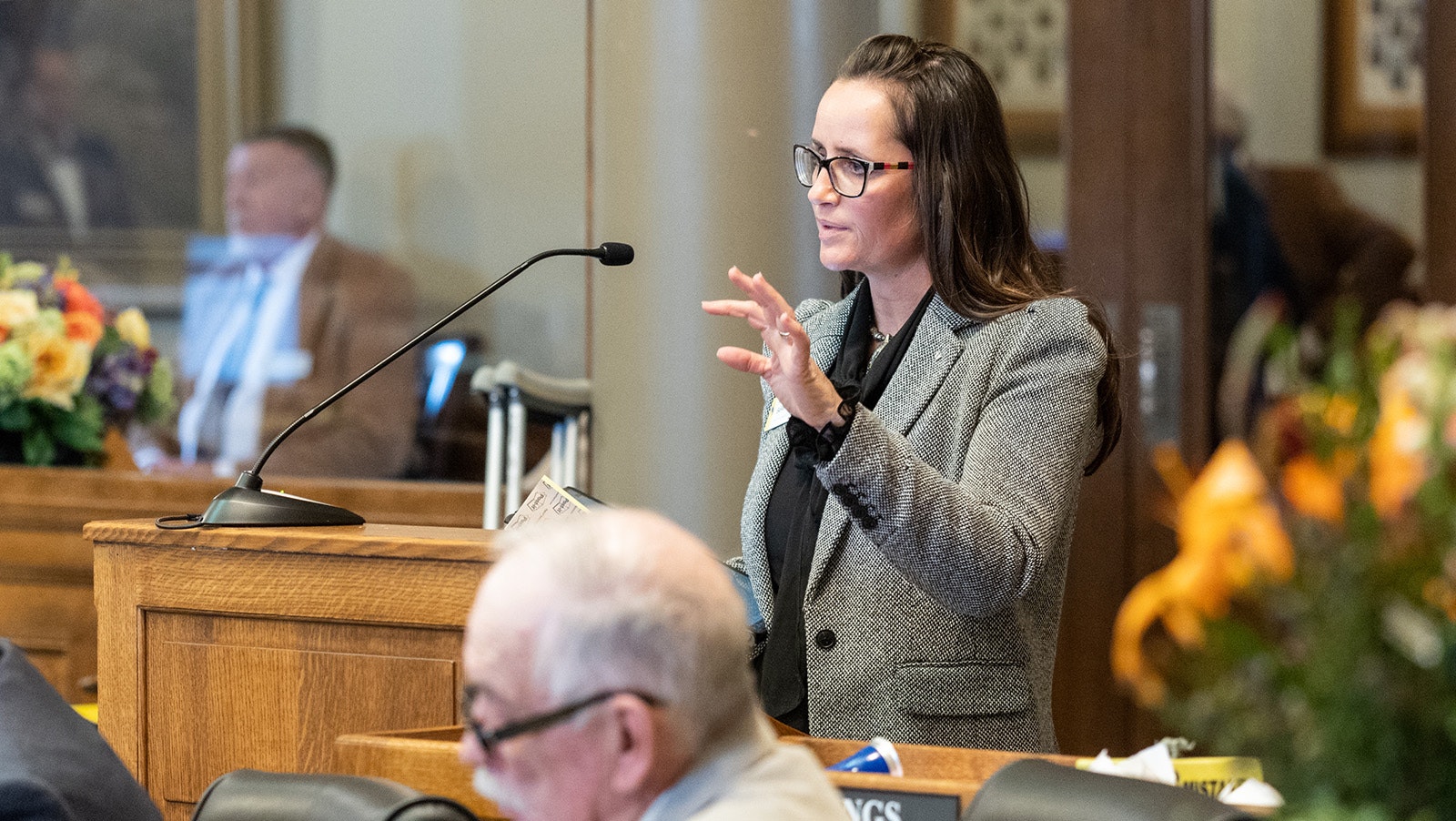
Although the COVID-19 pandemic is over, that isn’t stopping certain Wyoming lawmakers like state Rep. Sarah Penn, R-Fort Washakie, from continuing to propose legislation reacting to its effects.
Penn has sponsored a bill for the upcoming legislative session that would require all blood donated from a person who has received a COVID-19 vaccine to be specifically labeled.
That would allow blood recipients who object to the COVID vaccine to reject the blood in non-emergency situations.
“For various reasons, many people have purposefully strived to keep the mRNA therapies out of their bodies, even to the point that some lost their livelihoods,” Penn told Cowboy State Daily. “Their concerns are warranted.”
Not In My Body
Since the pandemic began, there has been a growing trend of people rejecting blood transfusions when their doctors can’t or won’t assure them the blood they are to receive would be from someone who hasn’t been vaccinated for the virus, no matter the risk of morbidity and mortality.
Currently, there are varying deferral periods for blood donors who received a COVID‐19 vaccine, but these time frames vary between health organizations and are vaccine‐dependent, ranging from no deferral to up to 28 days.
“Donated Blood–mRNA Disclosure,” would not apply to people receiving blood in emergency situations, nor would it impact in any way organ donor identifiers listed on Wyoming driver’s license cards.
How Would It Impact?
Since the Red Cross of Wyoming does not collect blood, it had no comment on Penn’s bill. The Wyoming Hospital Association said it will reserve its comments for when and if the bill reaches a committee.
We have some thoughts, but will wait and see how things play out,” said Eric Boley, president of the Wyoming Hospital Association.
At the very least, House Bill 115 would require blood draw workers to perform extra work labeling blood that has or has not been vaccinated.
It would also create extra work for health care workers who would then have to not only make sure a quantity of blood is the right type for the recipient, but also that it fulfills their vaccinated or unvaccinated preferences.
There also could be medical privacy issues that arise from requiring blood draw workers to ask a donor if they’ve been vaccinated, as the bill prescribes.
Penn noted that her bill does not discriminate against or turn away prospective blood donors.
“It simply allows better monitoring, and it allows people to have some choice when it comes to non-emergent transfusions,” she said. “First, do no harm.”
The bill applies to all messenger ribonucleic acid (mRNA) vaccines, like the Pfizer and Moderna COVID-19 vaccines, which unlike a traditional vaccine, teach human cells how to make a protein that triggers an immune response if someone gets infected with COVID.
HB 115 also could be leveraged by people who believe in the effectiveness of the vaccine to ensure that they are only receiving vaccinated blood.
Vaccine Concerns
Penn said issues continue to stem from COVID vaccines such as myocarditis, blood clots, strokes, Guillain Barre, tinnitus and autoimmunity.
Although this is true, the presence of these side effects has only been documented in a very small percentage of people who have received the vaccine.
Penn also mentioned how it’s not definitively determined the exact time length spike proteins used in the vaccines last, which are designed to help the body gain immunity to the COVID virus.
The Infectious Disease Society of America estimates that the spike proteins generated by COVID-19 vaccines only last up to a few weeks, while a Harvard study reports up to 60 days. Other studies found the protein lasting as long as six months.
“To our knowledge, the human body has no way of breaking down the messenger RNA or spike protein,” Penn said. “What are the effects of transfusing this blood to others?”
Many studies have shown that spike proteins last significantly longer in people with healthy immune systems.
Penn said she holds no grudges about the initial pandemic response, but wants people to use “great caution” when considering the effects of vaccinated blood.
“Despite historical progress in blood product safety, these are unchartered waters,” she said. “Many questions need to be answered before we can consider this safe.”
There are also bills being brought for the 2024 legislative session that seek to repeal a provision authorizing vaccination or medical treatment of a minor child without parental consent, prohibit mask, testing and vaccine discrimination, and repeal the Wyoming Department of Health’s authority to adopt measures for smallpox vaccination.
Leo Wolfson can be reached at leo@cowboystatedaily.com.