Lane Jones started out just asking fellow hunters a few questions about how technology has affected the sport, but he’s come to realize that it’s led to a deeper reflection on the future of hunting in Wyoming.
“I think being a younger person, a Gen. Z hunter, I have a lot to take in. It seems like the advancement is constant,” Jones told Cowboy State Daily.
And the focus seems to be shifting away from the days of filling the freezer being the primary goal for young hunters.
“Culturally, it’s kind of changing to where meat hunters are no longer the most plentiful,” he said. “It seems to be a lot more about the social media, a lot more trophy-oriented.”
But even as a member of the most tech-savvy generation to date, Jones said he struggles with some of the implications of advances in equipment, such as the ever-nagging question of just how far is too far for an ethical shot?
Survey Says …
When Jones, 18, and a Cheyenne Central High School senior, was given an assignment in his Advanced Placement research class, he knew instantly that hunting was going to be the focus.
“I chose hunting as the topic, because that’s what I do in my free time,” Jones told Cowboy State Daily.
He created a survey and posted requests for response on social media hunting sites. He’s been getting responses from across Wyoming, and the rest of the country.
“Currently, I am in the data gathering part of my research project, so I have not made any conclusions yet, but so far I am getting a lot of feedback, which is always great,” he told Cowboy State Daily in a text message prior to a telephone interview.
“Additionally, it is clear that most hunters utilize the new tech that is available,” he added. “For example, I have yet to have a hunter who says they primarily bow hunt with a recurve, which makes sense, as that is much more primitive than modern compound bow hunting.”
How Far Is Too Far To Shoot?
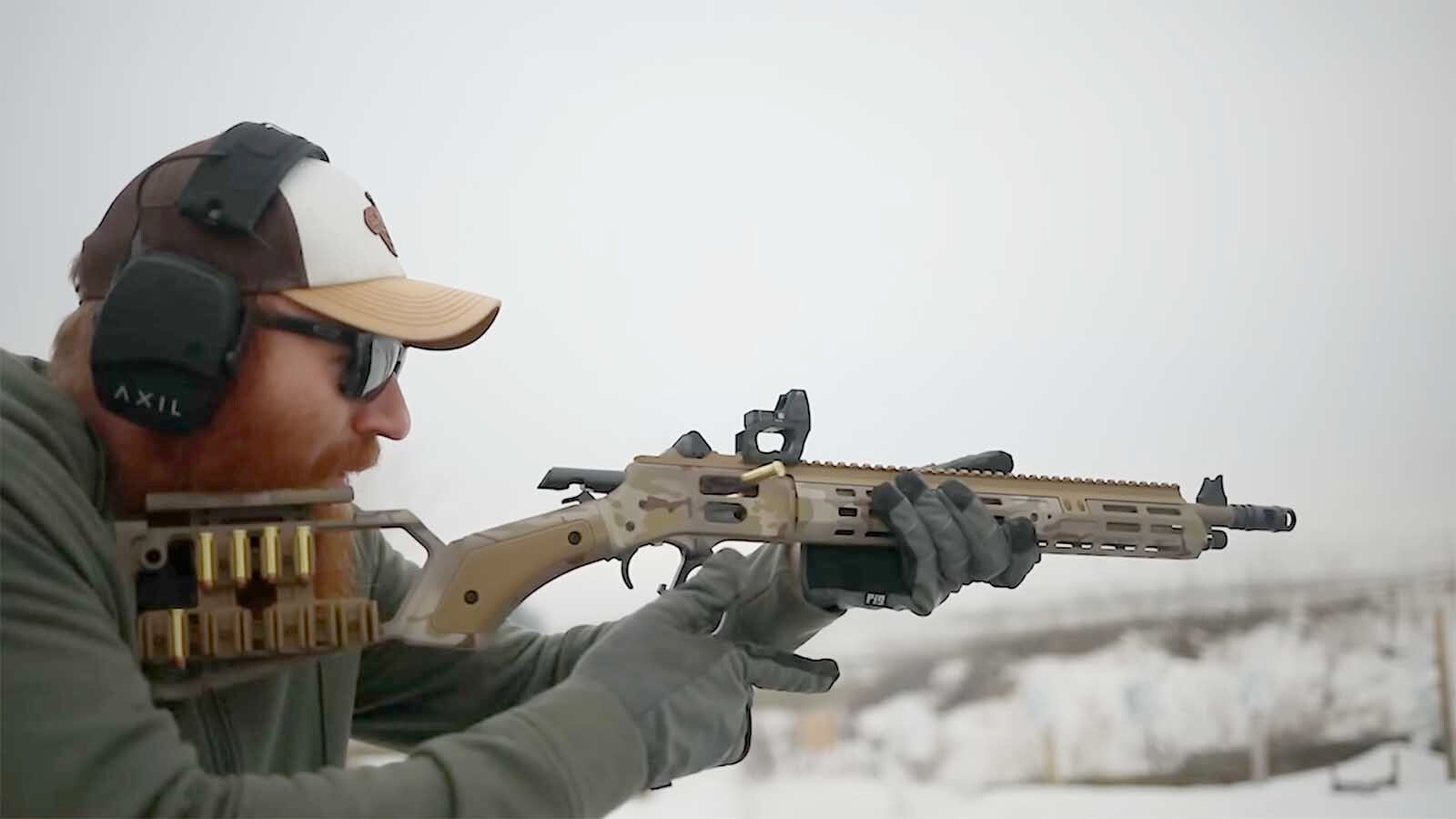
Rifles have come a long way from what Boomers and Gen. Xers might have carried on their first hunts. Hefty wooden stocks and basic scopes have been replaced by lightweight composite rifle stocks and smart optics that have built-in range finders.
And that has caused some hunters to push their shots out ever-farther. Shots much beyond 300 yards used to be rare. But now it’s not unusual for hunters to sling bullets at big game from much farther out.
How far is too far to shoot has become a lively debate among hunters. A past discussion among members of the Wyoming Wildlife Task Force about a reported 2,000-yard antelope kill shot sparked a heated discussion.
Jones’ survey doesn’t ask hunters specifically about what they consider to be ethical shot distances, but he said the subject inevitably comes up when hunters start swapping tales.
“It’s getting kind of out of hand. A dude posted that he shot an elk at 1,040 yards,” Jones said, adding that he questions the claim, even with the best advancements in rifle technology.
“Is it really fair chase when the elk probably doesn’t even know you’re there?” he said.
“Fair chase” is an ethical principle among hunters, the basic idea being that people should hunt in a manner that always allows game animals a reasonable chance of escape.
Technology is also affecting archery equipment — cutting edge bow sights can even aim the bow for the hunter, he said.
Jones only recently took up archery hunting, but said he’s already “hooked” on it.
“It’s been such a huge learning curve for me,” he said. “Although I recently broke my collarbone wrestling, so I can’t shoot my bow to practice with it right now.”
Technology Helps, But Can Hurt The Pocket Book
Jones said one interesting response he got was from some hunters “back East” who like to come out to Wyoming during the fall.
Technology makes hunting in the Cowboy State feasible for them.
“They were telling me things like, ‘If it wasn’t for things like GPS on my phone, or online articles or videos on YouTube showing you how to hunt elk, I wouldn’t be able to come out there, because I wouldn’t know what to do,’” he said.
Jones said he acknowledges that lighter gear, GPS maps showing the boundaries of hunting areas and better rifles have made hunting more accessible, and helped hunters make quick, humane kills.
Things have come a long way from the days of flannel jackets, grandpa’s old .30-30 rifle, a fixed-blade Buck knife and an ancient pair of military surplus binoculars dangling from a neck strap.
But it also can come at a price.
“I have nice hunting gear. The sky’s the limit in terms of what you can buy. I know guys who spend $5,000 on just a pair of binoculars,” he said.
Some Things Never Change
Jones said his hunting experience “isn’t as generational as you might think.”
His father moved to Wyoming from New Mexico and didn’t even really start hunting until about age 30, when a co-worker introduced him to it, Jones said.
He started tagging along with his dad on hunting trips as soon as he was about old enough to walk, so it’s all he’s known during the crisp Wyoming falls.
And listening to Jones talk about what drives his passion for hunting — and hearing him say the same things that hunters many decades older than him also say — it becomes apparent that some things never change.
Is it about the meat, the experience or the connection with other hunters? Is it about making the hunt as easy as possible through the use of state-of-the-art technology? Or can it be some from both columns?
“I would say, for me, it’s about a little bit of a mix of everything. I eat everything I harvest, and we do our own meat processing on nearly everything we harvest,” he said. “Hunting is 98% about the experience, and 2% about the kill and processing the animal.”
And it’s also about passing on the tradition, Jones said.
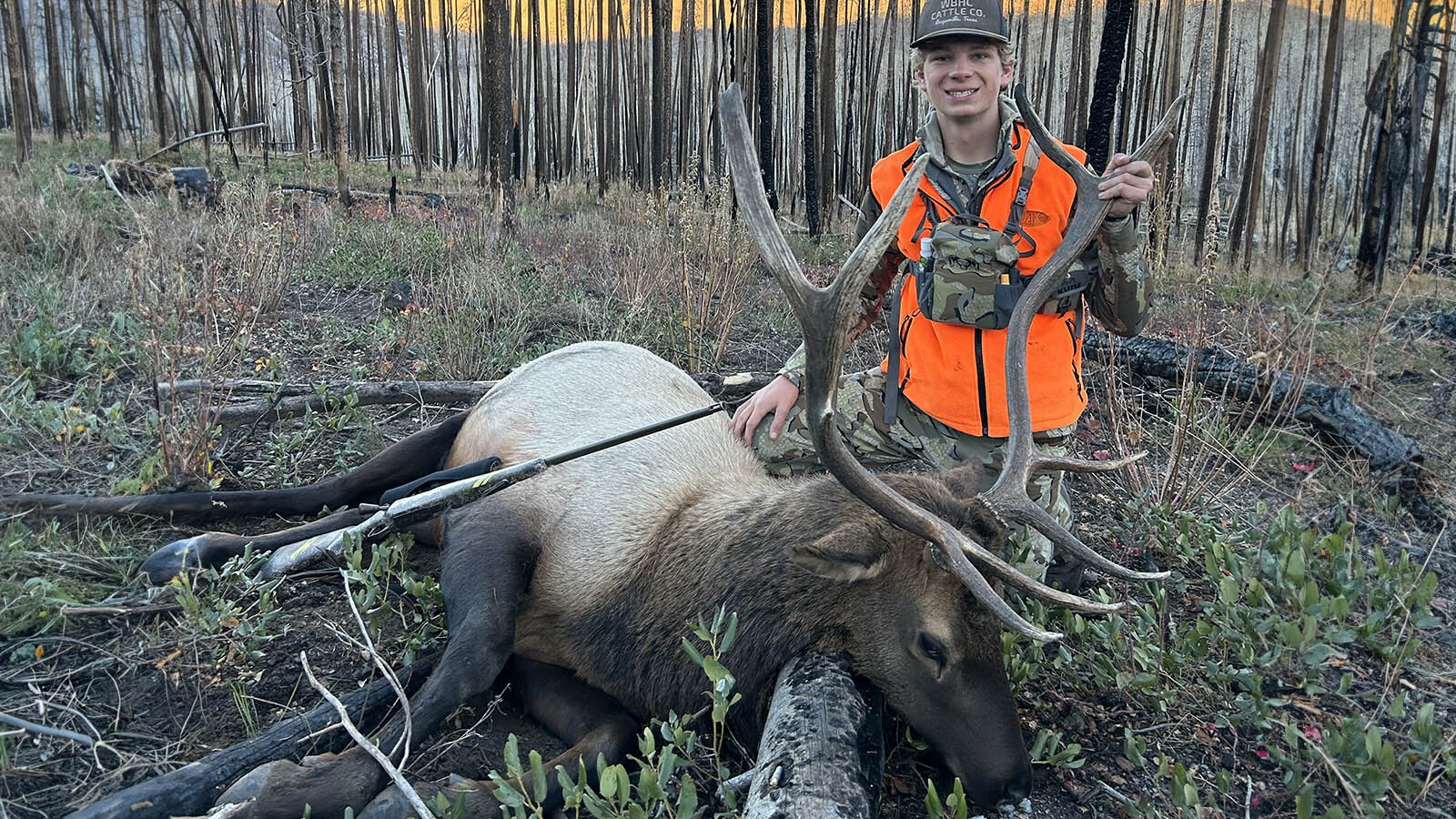
“When I was 16, I took a friend out to kill his first deer,” he said. “And this past season, I helped a different friend kill his first bull elk. It’s all about the time spent in the woods with people who are important to you.”
Mark Heinz can be reached at mark@cowboystatedaily.com.