The Wyoming Legislature will for a second time consider legislation that, if passed into law, would prevent minors from receiving transgender surgeries in most scenarios.
A new bill for the 2024 session sponsored by state Rep. Lloyd Larsen, R-Lander, comes on the heels of legislation brought in 2023 that would have done something similar, but more far-reaching than Larsen’s.
Sen. Wendy Schuler, R-Evanston, is a co-sponsor of the new bill, which she describes as “a little less frightening” than the “Chloe’s Law” legislation brought by Sen. Anthony Bouchard, R-Cheyenne, last session. Schuler voted to support that legislation as well.
“It’s a little less frightening for our medical folks,” Schuler said. “The way Rep. Larsen’s got his bill makes more sense.”
A former high school teacher, Schuler said adolescents sometimes need to be given time to work through the issues they are dealing with.
She mentioned how a friend in California had a daughter who wanted transgender surgery when she was in high school, but by the time she was a sophomore in college, expressed relief she hadn’t received the procedure.
“A gender transition is not something that should be rushed through,” Schuler said.
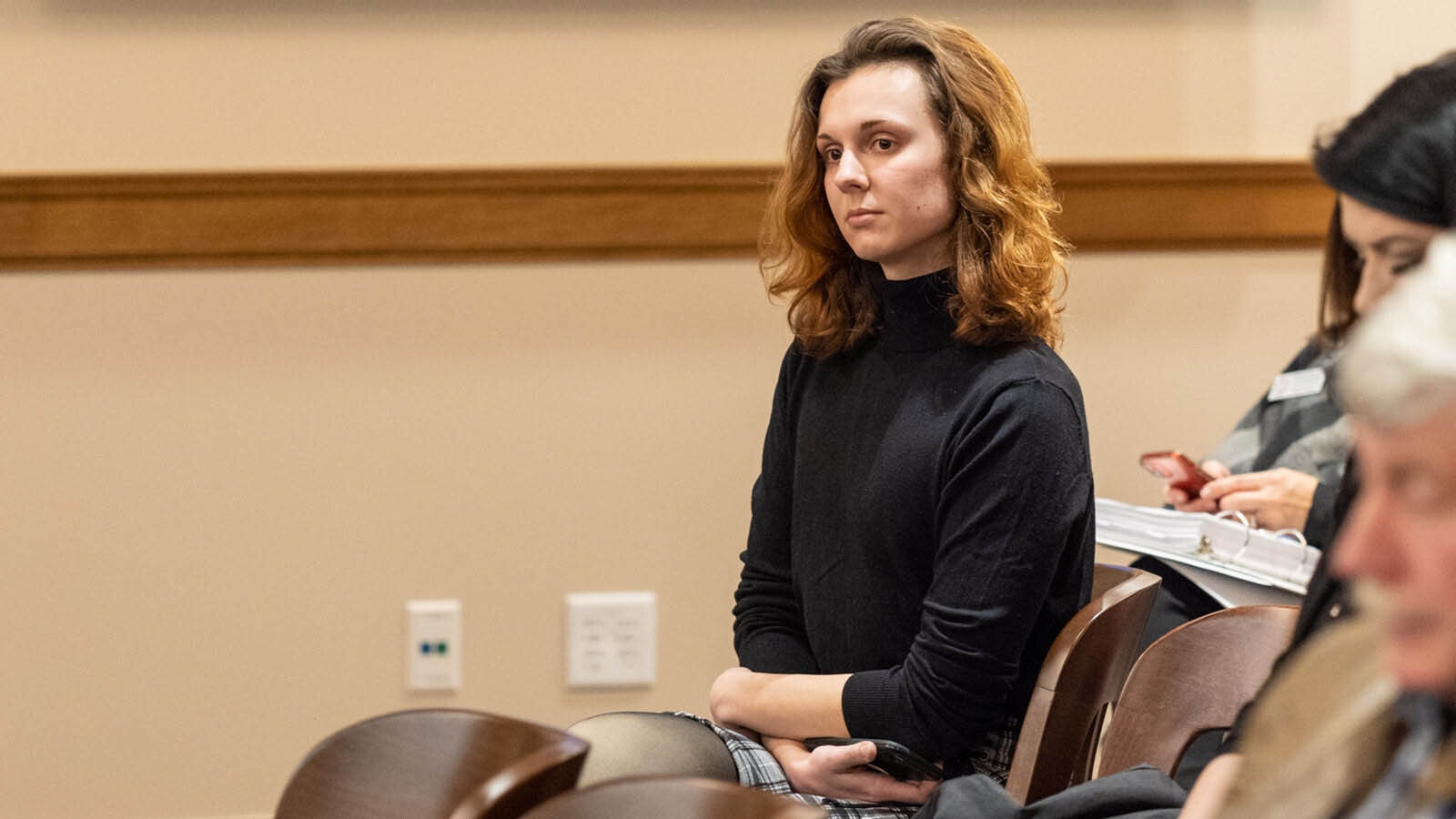
During the 2023 legislative session, Luka Hein, a 21-year-old detransitioner who regrets taking hormones and having surgery as a teenager, testified in favor of Chloe’s law.

Differences And Similarities
The new legislation, titled “Sex and Gender Changes for Children — Prohibited,” serves a similar overall purpose as Chloe’s Law in that it prohibits physicians from performing procedures on children related to gender transitioning and gender reassignment. It also contains the same exceptions for medically verified sexual disorders.
“It separates between the children who really need this medical attention who are staring at issues like switched chromosomes, versus a kid that just doesn’t feel right in their body,” Schuler said.
Where the two bills differ most significantly is on the punishment for doctors who perform gender changing procedures. Under Chloe’s law, a physician, surgeon or pharmacist could have lost their license for performing a transgender surgery on a minor. The former bill also forbade nurses and insurance companies from playing a role in all gender-transition treatments for children.
The new legislation, House Bill 63, has none of these stipulations beyond restricting the medical procedure.
HB 63 also has no restrictions related to the prescription of puberty blockers or cross-sex hormones, something that was included in Chloe’s law. Schuler said there are legitimate medical situations outside of transgender treatments that sometimes call for puberty blockers, such as treating pituitary gland issues.
Bouchard disagrees, and said the administration of these drugs can often be the lynchpin in sending minors “off the cliff” for gender reassignment.
Middle Ground
What Schuler said HB 63 accomplishes is finding a middle ground in Wyoming between what she sees as a concerning trend of minors having transgender surgeries that are medically difficult or impossible to reverse, and those who believe these operations should be allowed as a medical right with parental consent.
Sheila Bush, executive director of the Wyoming Medical Society, said Larsen actively worked with her organization on his bill. In 2023, the Medical Society was one of the most vocal critics of Chloe’s Law.
“We really appreciated working with him,” Bush said. “The representative heard most of our concerns and did his best to address them as best he could.”
But that still doesn’t mean the Medical Society supports HB 63, Bush said.
The organization will vote on its official stance shortly before the start of the upcoming session that begins Feb. 12. Bush said her group generally doesn’t support government restricting medical oversight and that medical innovation typically moves faster than governmental policy.
Larsen’s bill “still represents a step forward of the government being more present than it is right now in medical decision-making,” Bush said. “We’re not divided on opposing the role of government in clinical decision-making.
The World Professional Association for Transgender Health said in 2022 that hormone treatment for transgender youth can be started at age 14, two years earlier than the group’s previous advice, and some surgeries can be done as young as age 15.
Many people who oppose transgender treatments – which may or may not include surgical or other interventions – do so for various reasons, including religious beliefs and concerns about child abuse and mutilation. A Reuters investigation, for example, found that “no large-scale studies have tracked people who received gender-related medical care as children to determine how many remained satisfied with their treatment as they aged and how many eventually regretted transitioning.”
So far, nearly two dozen states have banned some form of transgender treatment, most specifically pertaining to minors.
Height Of The Issue
Current Wyoming law requires parental consent before a child receives transgender-related surgeries, but the law is more ambiguous on minors who have been emancipated.
The right for minors to receive transgender surgeries is an issue that’s been elevated in the national discussion, including in Wyoming. Bush said her organization, after searching through state medical coding records, found no evidence that a transgender surgery has ever happened in Wyoming.
Bush said that’s likely because an extensive sub-specialty team is needed to perform these operations, which also doesn’t exist in Wyoming.

‘It’s A Sham!”
Bouchard said the new bill the Legislature will consider next month is toothless.
“They are good at bringing watered-down bills with great sounding titles,” he told Cowboy State Daily in a text message. “This bill has no teeth, no punishment for the wrongdoers. It’s weak legislation for re-election purposes. It’s a sham!”
Chloe’s law passed the state Senate on a 26-5 vote before receiving a 5-2 do not pass recommendation from the House Appropriations Committee. Even with that recommendation, the bill still had significant changes by the Appropriations Committee, but it was House Majority Leader Rep. Chip Neiman, R-Hulett, who definitively killed it when refusing to take it out of his drawer.
If the bill had passed with the House Appropriations Committee’s suggested changes, Chloe’s Law would still have made doctors’ licenses revocable if they performed transgender surgeries on children or prescribed sterilizing medication.
Bouchard said the new bill is an example of the Legislature taking too much influence from lobbying groups. Larsen, the new bill’s sponsor, is a member of the Appropriations Committee, as is Rep. Clark Stith, R-Rock Springs, another co-sponsor on the new legislation.
“I’m certainly not surprised by the members of the Appropriations that during last year’s session gutted my good legislation and then killed it,” Bouchard said. “This is a pattern in the state Legislature.”
Bouchard said he plans on bringing Chloe’s Law back for the upcoming session, which will remain identical aside from taking out insurance prohibitions.
Leo Wolfson can be reached at leo@cowboystatedaily.com.