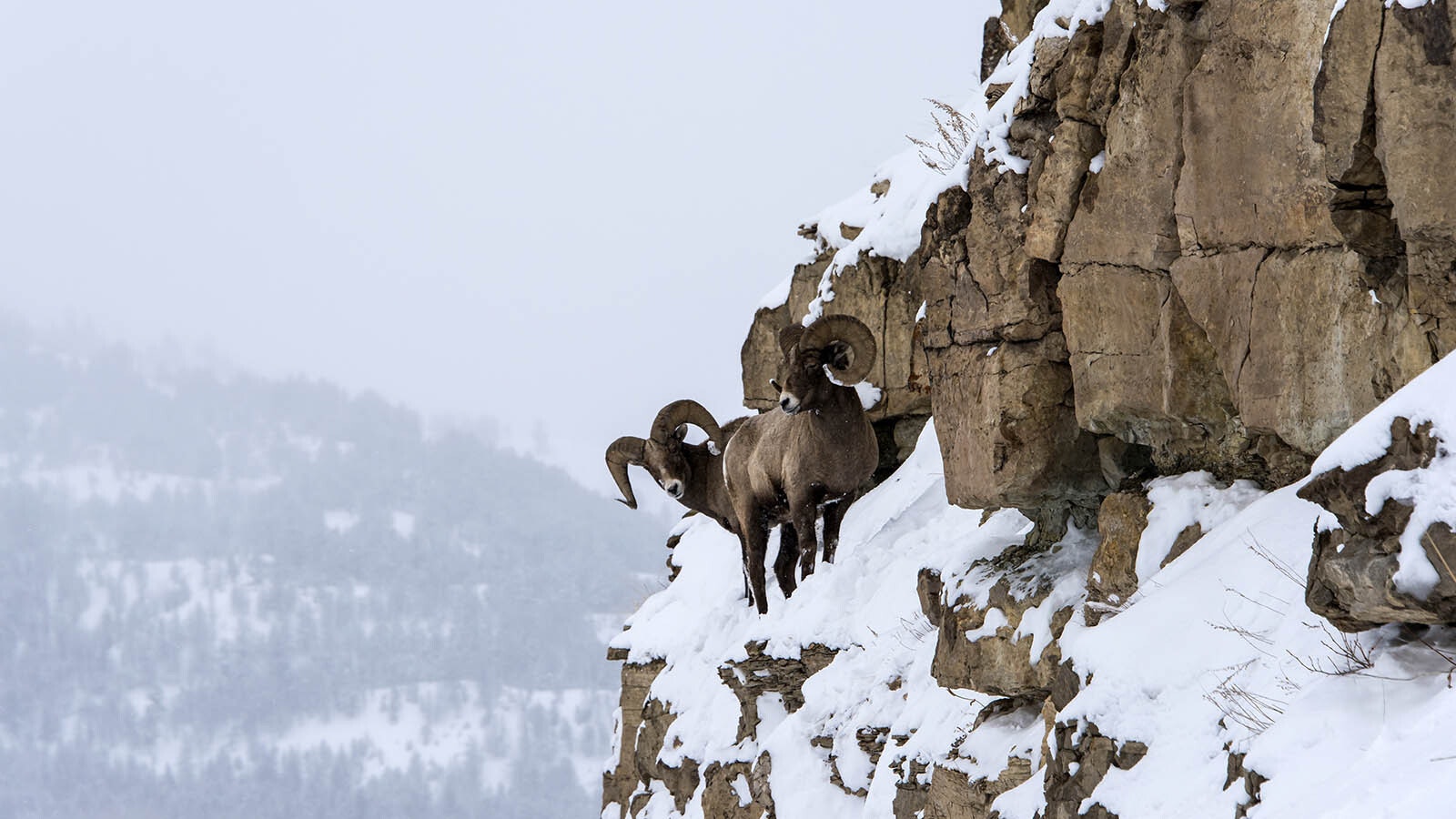
Rocky Mountain bighorn sheep once thrived in Sweetwater Rocks, a remote, rugged area in central Wyoming, but now they’re gone.
Some of the best bighorn sheep habitat in the area is on the Split Rock Ranch, and ranch manager Billy Burton told Cowboy State Daily that he and others would like to see bighorn sheep reintroduced there.
However, parts of that area are also controlled by the Bureau of Land Management.
That makes some area ranchers worried that the federal government use the bighorn sheep to ban livestock grazing under the auspices of protecting them, Jim Magagna, executive vice president of the Wyoming Stock Growers Association, told Cowboy State Daily.
“We will not consider a reintroduction unless we can get some legislation out of Congress” to guarantee that the BLM could never use the bighorn sheep as leverage against grazing leases, he said.
Prime Habitat
The Split Rock Ranch and the neighboring Pathfinder Ranch contain some of the best bighorn sheep habitat in the West, Burton said.
Both ranches are onboard with reintroducing bighorn sheep, he said. They Wyoming Game and Fish Department could transplant bighorns from an existing herd in Carbon County’s Ferris Mountains.
According to historical records, early pioneers reported seeing “immense numbers” of what they mistakenly called “mountain ibex” in the Sweetwater Rocks area, he said.
However, by the early 20th century, the bighorn sheep were gone from Sweetwater Rocks because of overhunting and disease, according to the Wyoming Wild Sheep Foundation.
Plan In Place
There’s been talk of bringing them back since the 1940s. And in 2021, there was a plan in place for the Wyoming Game and Fish Department to transfer some from the Ferris Mountains, said Katie Cheesbrough, executive director of the wild sheep foundation.
However, concerns that bighorn reintroduction could lead to a federal “land grab” put the brakes on the plan, she told Cowboy State Daily.
The proposed Sweetwater Rocks reintroduction area encompasses roughly 70,000 acres, including significant amounts of BLM land, Cheesbrough said.
And therein lies the rub, Magagna said. Simply put, many ranchers don’t trust the BLM not to change the rules of the game once bighorn sheep are returned.
“Over time, polices can be changed, agreements can be changed,” he said.
Disease Transmission Worries
The crux of the matter is possible disease transmission between domestic sheep and wild bighorns. Strains of pneumonia can pass back and forth between wild herds and domestic flocks. And sometimes strains that domestic sheep are largely resistant to can prove deadly to bighorns.
One of Wyoming’s prize bighorn populations, the Whiskey Mountain herd, has been continually battling bacterial pneumonia since the 1990s.
There are now no domestic sheep grazing allotments in the proposed Sweetwater Rocks reintroduction zone, according to the Wild Sheep Foundation. However, there are some domestic sheep flocks in the wider area, so there is some concern that bighorns might get infected if they wander too far.
And that has some ranchers on edge, Magagna said.
“The fear is, at some point in the future, the BLM would say, ‘We want to remove livestock to protect the bighorn sheep,’” he said.
The foundation has been working “with our partners in agriculture” and Game and Fish to ease those concerns, Cheesbrough said.
Make The Feds Follow State Policy
Wyoming has a bighorn sheep management plan that allows Game and Fish to relocate or remove bighorn sheep that wander from reintroduction zones and get too close to domestic flocks, Magagna said.
However, because that’s a state policy, the BLM and other federal agencies aren’t legally bound to follow it, he said.
So, the Stock Growers Association and others have approached Wyoming’s congressional delegates, asking for legislation to hold federal agencies to that standard, Magagna said.
Hunting Opportunities
Game and Fish issues bighorn sheep hunting tags, but only a precious few. Hunters might spend years applying for bighorn tags building up preference points and still never draw one.
A return of bighorns to Sweetwater Rocks could put “20-30 more ram tags” into system, thus increasing hunters’ odds of drawing one, Burton said.
He understands the lack of trust for the federal government, especially when it comes to wildlife reintroductions, such as Colorado’s recent reintroduction of wolves.
But bringing bighorn sheep back to Sweetwater Rocks makes sense because the habit is of such high quality, and the risk of disease transmission between domestic and wild sheep is low there, Burton said.
“We’re trying to put back a piece of the puzzle that belongs there,” he said.
Mark Heinz can be reached at mark@cowboystatedaily.com.