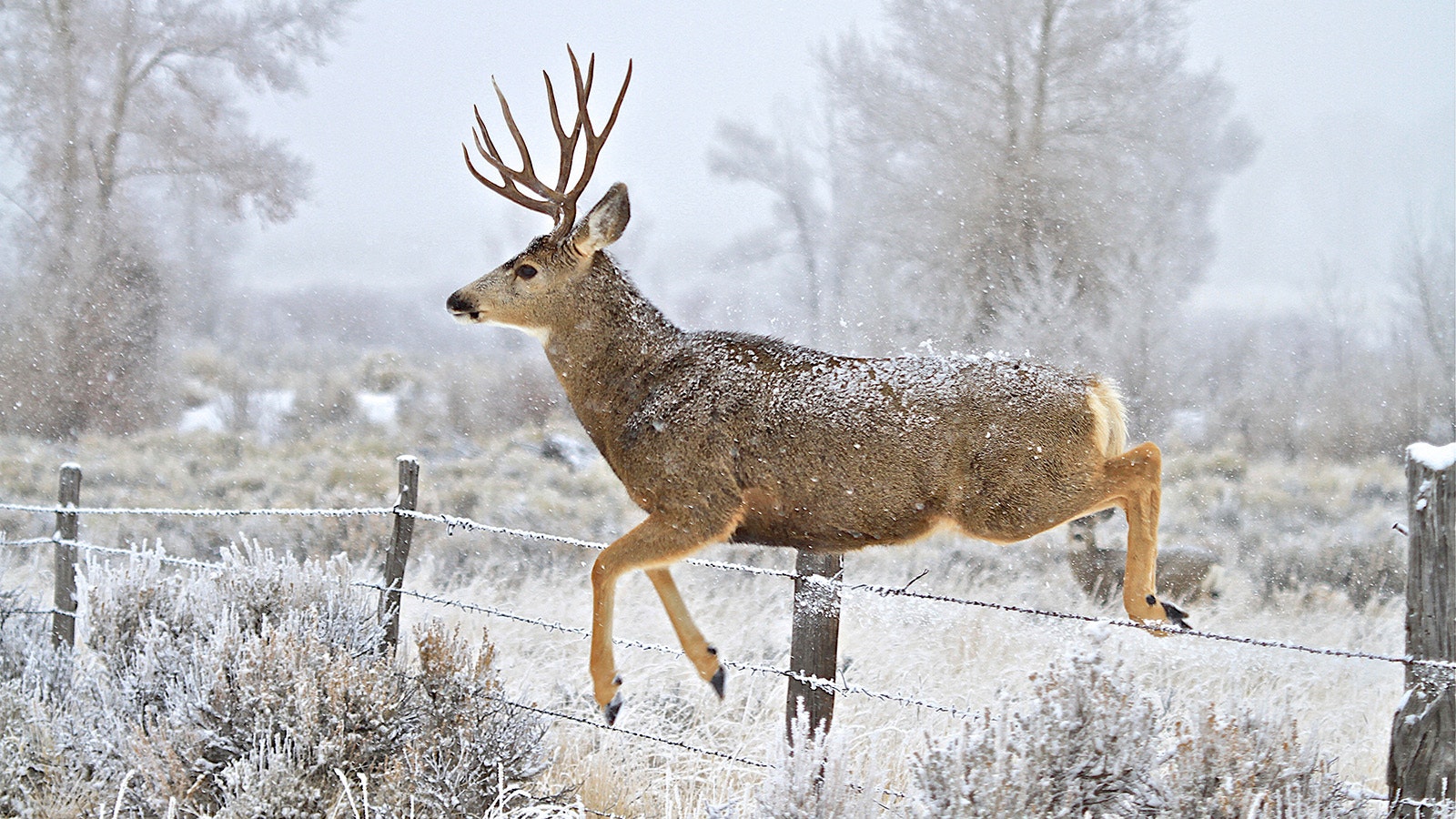
Despite mule deer herds suffering horribly in some parts of Wyoming during the winter of 2022-2023, things are looking far better this year, a wildlife expert said.
Even in pockets that were hit hard last winter – such as the Wyoming Range mule deer herd – surviving animals had rich forage to feast on all spring and summer, Jerod Merkle told Cowboy State Daily. He’s the Knobloch Professor of Migration, Ecology and Conservation at the University of Wyoming’s Department of Zoology and Physiology.
What’s more, does that lost their fawns last winter were able to recover themselves with greater strength this spring and summer.
“When a lot of juveniles die over the winter, the moms are going into that next year really fat and happy,” Merkle said. “We’ll probably see a really high survival rate this winter, and then everybody will give birth to fawns this coming spring.”
‘It’s Not The Whole State’
The plight of the Wyoming Range mule deer herd and other wildlife in the Sublette, Sweetwater and Fremont counties’ region of Wyoming drew plenty of attention last winter and spring, as animals froze and starved to death by the thousands.
However, it’s important to keep things in perspective, Merkle said. Across much of the rest of Wyoming, many big game herds pulled through the winter just fine.
“It’s not the whole state that got hit hard last winter. Of course, the Wyoming Range got hit very hard,” he said.
That mule deer herd, as well as some neighboring wildlife in southwest Wyoming and northwest Colorado, faced especially terrible conditions.
There was an unusual “reverse snowpack.” Meaning, the snow piled up, then hardened at the lower elevations, where many animals go to spend the winter. So, when they came down out of the mountains, they found deep, packed snow covering the forage on which they depended to get through the winter.
Lots For Deer To Eat
Even so, when that snowpack melted, it dumped much-needed moisture into the land. And that was followed by ample rains throughout the spring and early summer.
All that made for superb forage, Merkle said. And even now, plenty of it is still left exposed for the animals to eat and keep piling on fat reserves.
Across Wyoming, that’s left mule deer in good condition. And for the Wyoming Range herd – which lost many of its fawns last winter – things look much better than they did this time last year, he said.
“Everything is good for them – they don’t have young to deal with and the forage has been excellent,” Merkle said.
That’s good news for now, but the Wyoming Range deer herd still has a long road to recovery.
“The does can each have only one or two fawns next spring. So, they can’t just bounce back in one year,” he said.
Disease A Concern
Another looming threat is the spread of chronic wasting disease (CWD) among Wyoming’s mule deer.
CWD is spread through a malformed protein and attacks infected animals’ nervous systems. It’s always fatal in deer, and advanced symptoms can include lethargy, confusion, emaciation, and the animal going into a drooling stupor.
In Wyoming, it seems to have affected older mule deer bucks more than other deer, Merkle said.
It’s not certain why that it is, he added. One factor could be that older bucks tend to wander farther than other deer as they seek mating opportunities. That could expose them to more deer in more locations, thus increasing their chances of CWD infection, Merkle said.
It’s a concern for Wyoming’s mule deer, but not an existential threat, he added.
“Yes, it’s going to impact our herds, but it’s not going to wipe them out,” he said.
CWD is in the same disease family as Mad Cow Disease – which raised concern decades ago when it spread into humans after people ate beef from infected animals.
There have been no cases documented of CWD spreading to humans. The Wyoming Game and Fish Department has ramped up testing for the disease, and encourages deer hunters to have their kills tested. Game and Fish and the Centers for Disease Control and Prevention advise against eating meat from game animals infected with CWD.
Normal Migration Patterns
Snow has been light and temperatures relatively warm across much of Wyoming so far this fall and winter. But deer seem to be following their usual migration patterns, Merkle said.
He works with the Wyoming Migration Initiative – which researches wildlife migration patterns and advocates for migration route conservation.
Some of the animals that the group monitors have been outfitted with radio tracking collars. One is a mule deer doe dubbed “deer 665.”
She left her summer range in the Tetons in October and arrived on her winter range in the Red Desert on November 23, according to the Wyoming Migration Initiative.
“All of that seems totally normal,” Merkle said.
Mark Heinz can be reached at mark@cowboystatedaily.com.