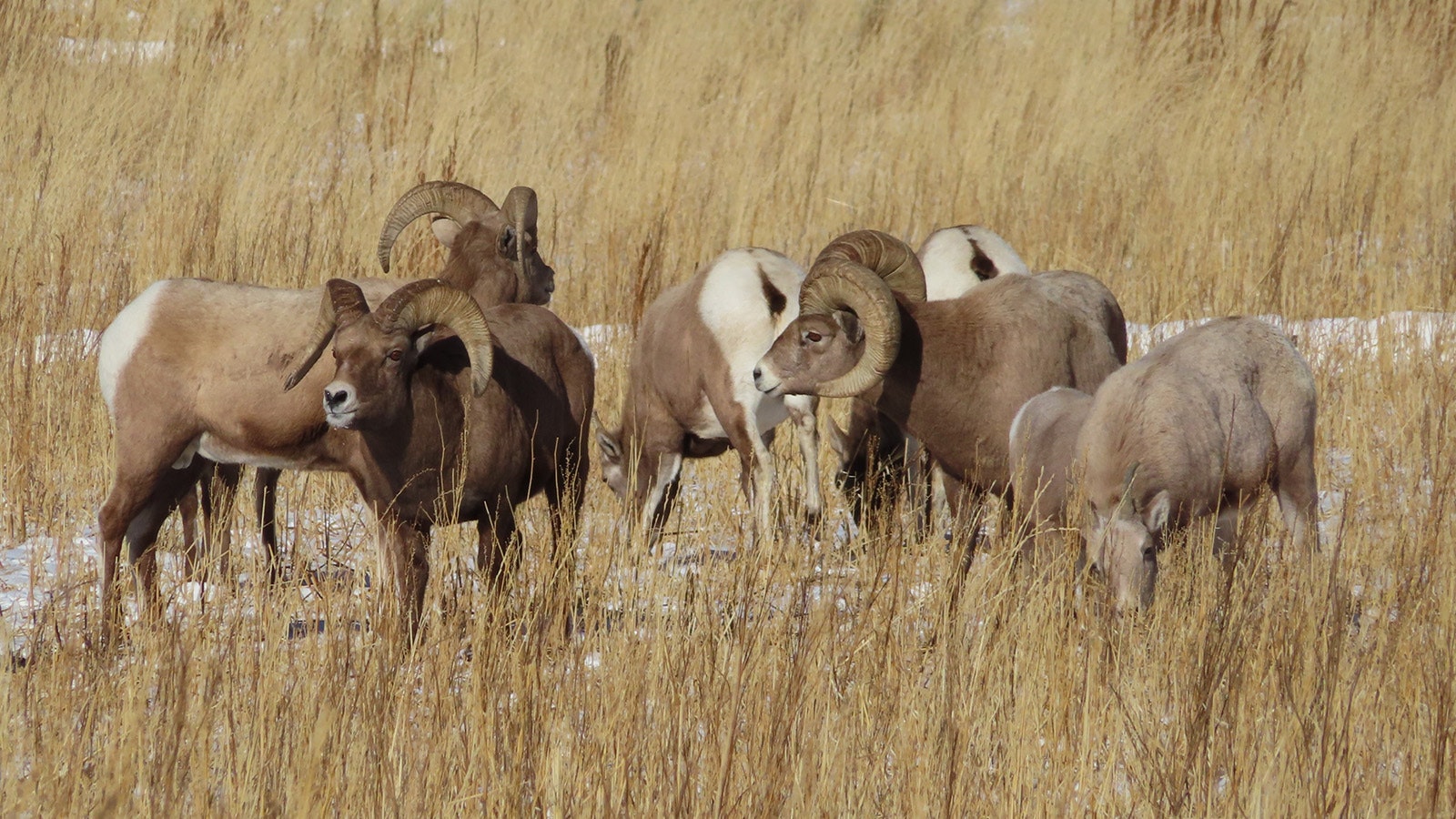
During November and December in some roadside meadows near Dubois, the “Ramland Wyoming” bighorn sheep put on a show for adoring fans.
It’s the time of the rut, or mating season, for the Whiskey Mountain bighorn herd. Gaggles of rams will gather and start butting heads as they compete for access to ewes. The distinctive crack of their horns colliding resounds through the crisp air.
‘A Matter Of Loving Them To Death’
It’s one of Wyoming’s premier wildlife treasures, advocates for the herd say. But they were hesitant to tell Cowboy State Daily the exact location of the spectacle for fear of drawing crowds to the site.
The bighorns don’t need any more stress, they say. The sheep have been struggling for decades with a nasty bacterial pneumonia strain that has killed hundreds of them and simply refuses to let go of the herd.
“It is a matter of loving them to death, especially on the winter range. The more you push them, the more stress they’re exposed to,” Wyoming Wild Sheep Foundation Executive Director Katie Cheesbrough of Casper told Cowboy State Daily.
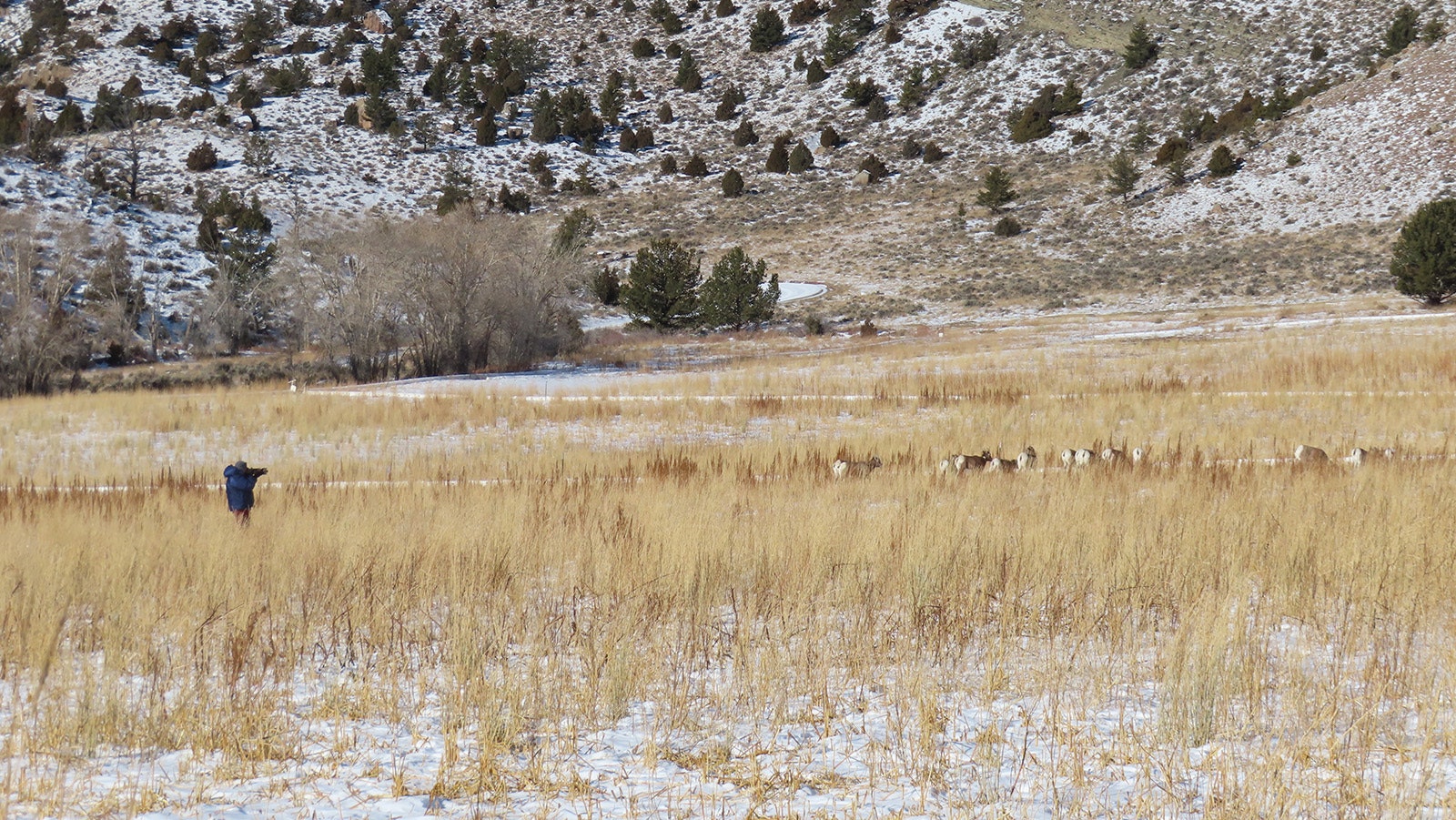
Retired forester Karl Brauneis of Lander told Cowboy State Daily that he likes to admire the Ramland Wyoming show from a distance, but has noticed that some people push in way too close.
He recalled one recent incident in particular.
“I was photographing from the road at about 250 to 300 yards, the limit for my pocket camera telephoto lens,” Brauneis said. “Then these two guys walk up to the sheep with massive telephoto lenses. I mean, they could have photographed the eyelash on a field mouse at a quarter mile with that set-up.”
Cheesbrough agreed that it’s best to watch and photograph the bighorns from a distance.
“The issue is when people are trying to get closer to get that beautiful photograph,” she said.
The Pneumonia Outbreak That Won’t Go Away
Pneumonia outbreaks are a regular threat to bighorn sheep throughout the West. The species is particularly susceptible various strains of the disease.
However, outbreaks usually come and go.
“Other herds have contracted that pathogen and they have a die-off, but then they recover,” Cheesbrough said.
Not so with the Whiskey Mountain herd. Pneumonia infections have persisted among them as far back as the early 1990s, taking a heavy toll and leaving biologists baffled as to why the disease has persisted with that herd.
The Whiskey Mountain herd used to be one of the largest and most robust in the West, Cheesbrough said. Bighorns captured from the herd were transplanted in several locations to seed new bighorn populations.
However, the viciously persistent pneumonia has taken a heavy toll on the Whiskey Mountain herd, according to the Wyoming Game and Fish Department.
At one time, there were as many as 2,500 sheep in the herd, but now Game and Fish estimates about 750 remain.
The pneumonia has been particularly deadly for lambs.
“This herd has struggled to recover from a catastrophic all-age die-off caused by pneumonia in 1991, causing an estimated 30% decline in the number of sheep. The herd continues to stay below the desired population size primarily because lamb survival is very low likely due to the persistence of lamb pneumonia,” according to Game and Fish.
Mystery Solved?
The Wyoming Wild Sheep Foundation and Game and Fish have partnered on research and plans to help the Whiskey Mountain bighorn herd recover.
Wildlife biologists might have discovered a way to break the seemingly never-ending cycle of pneumonia infections, Cheesbrough said.
They’ve surmised that some of the sheep, usually older ewes, are “chronic carriers” of the infection, she said.
“The chronic carries are sheep that can carry the infection and survive, but then they pass it along to the lambs,” Cheesbrough said.
The approach has been to “test and remove,” she added. “They test the older ewes that might be harboring the disease, and remove the ones that are harboring it from the herd.”
That seems to be working with the Red Creek sub-herd of the Whiskey Mountain herd, so there’s hope that using that method on the entire herd could yield similar results, Cheesbrough said.
Please, Stay Back
Lush meadows and a natural salt lick have kept the Whiskey Mountain herd coming back to Ramland every winter, Cheesbrough said.
Keeping it safe for the bighorns is a matter of balancing peoples’ love for the herd with the risks of overcrowding and too many bad actors trying to barge in on animals, she said.
A heavy snowpack last winter, coupled with a wet spring and summer, made for abundant forage, and the bighorns are going into this winter fat and robust.
But they still don’t need any more stress, Cheesbrough said. Even if sheep appear outwardly calm when people get too close, they still have elevated heart rates – which saps precious energy from them.
“Keep in mind, these animals are still battling a respiratory disease and that’s already taking a lot of their energy,” she said.
The best bet is for people to stay in or right next to their vehicles, and not to try approaching the bighorns on foot.
“They are pretty habituated to trucks on the road. As long as you stay on the road and stay near your vehicle, they’re fine,” Cheesbrough said.
Mark Heinz can be reached at mark@cowboystatedaily.com.