After Colorado released wolves earlier this month, many which have killed livestock in Oregon, some Wyoming ranchers said the Cowboy State’s “shoot on sight” wolf policy can protect ranches here.
“On the positive side, if any of those wolves cross over into Wyoming, they’re no longer protected. They’re classified as predators and they can be removed,” Jim Magagna, a sheep rancher and executive vice president of the Wyoming Stock Growers Association, told Cowboy State Daily.
Meanwhile, Wyoming ranchers can emphasize with the plight of their counterparts in Colorado, even if they can’t do much to change the Centennial State’s wolf policy, said cattle rancher and Wyoming Livestock Roundup publisher Dennis Sun.
“There’s really not a lot that Wyoming ranchers can do, except show support for the Colorado ranchers,” he told Cowboy State Daily.
Already Cattle Killers?
Colorado’s wolf reintroduction program has drawn criticism after it was revealed that some of the wolves transplanted from Oregon and released in Colorado earlier this month might have been involved in killing livestock in their home state.
Colorado’s wolf reintroduction program was initiated by Proposition 114, which Colorado voters passed in 2020 by the slimmest of margins, 50.91% to 49.09%. The goal was to put wolves on the ground in Colorado by the end of this year.
Colorado at first struggled to find wolves for reintroduction after Wyoming, Montana and Idaho all refused to provide any. This fall, Oregon agreed to give 10 wolves for Colorado’s initial reintroductions.
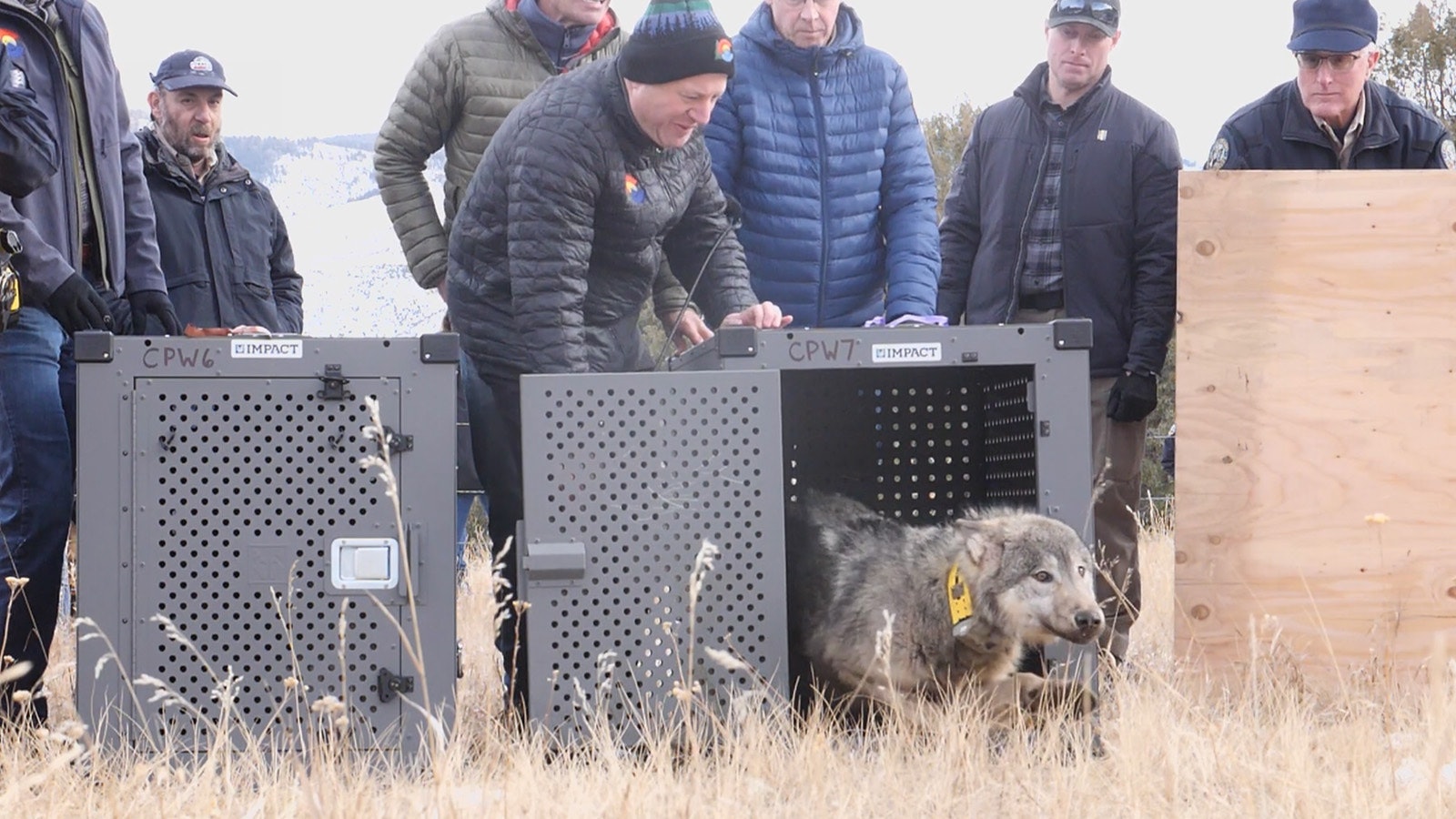
Those plans were realized Dec. 18 when Colorado Parks and Wildlife released five wolves at an undisclosed location in Grand County, Colorado. The event was by invitation only.
The secrecy of the event was criticized, as well as the fact that some of the wolves that were released had reportedly come from Oregon packs that had killed livestock.
Magagna said that might increase the chances that those wolves will start going after sheep and cattle in Colorado. Even so, he added that any wolves have the potential to kill livestock.
“I’m not convinced that there is any wolf or any pack of wolves that isn’t capable of becoming acclimated to killing livestock,” he said.
Wolves had already migrated from Wyoming into Colorado, forming Colorado’s North Park Pack around 2020. That pack later killed several livestock animals and dogs, Sun noted.
He wondered if Coloradans were starting to have buyer’s remorse over passing Proposition 114.
“It’s kind of a bad deal how it got crammed down everyone’s throat in Colorado. I think if they had to do it over again, they wouldn’t vote to have wolves,” Sun said.
Cross-State Complications
Ranchers who operate on both sides of the Wyoming-Colorado state line will likely get the worst of it, Magagna said. That’s because the two states’ polices are completely different.
In Colorado, wolves will remain protected for the foreseeable future. On the Wyoming side, they’d be in the section of the Cowboy State where they are classified as a predatory species and may be shot on sight at any time without a license or bag limits.
Ranchers straddling the state line will have to ask themselves, “Is that a Wyoming wolf or a Colorado wolf that killed my livestock?’” Magagna said.
Magagna added that many sheep ranchers run their flocks on private property or federal land leases in Colorado for part of the year, and then bring them north into Wyoming for the remaining months.
Rancher and former Wyoming legislator Pat O’Toole has property divided by the state line. He previously expressed similar concerns to Cowboy State Daily. He also said that in light of massive big game winterkill losses last winter, Colorado couldn’t have picked a worse time to bring in more apex predators.
No Containing Them
Colorado plans to keep a 60-mile buffer zone between its wolf release sites and the Wyoming state line, as well as its borders with other states and sovereign Native American tribal lands.
Sun said that won’t contain the wolves for long, given the species’ propensity for wandering. It could be just a few years before wolves are pushing up against the Wyoming state line in several areas, he said.
“Despite the availability of food sources, they’re going to travel,” Sun Said. “When wolves kick yearlings out of the group, they travel.”

Mark Heinz can be reached at mark@cowboystatedaily.com.