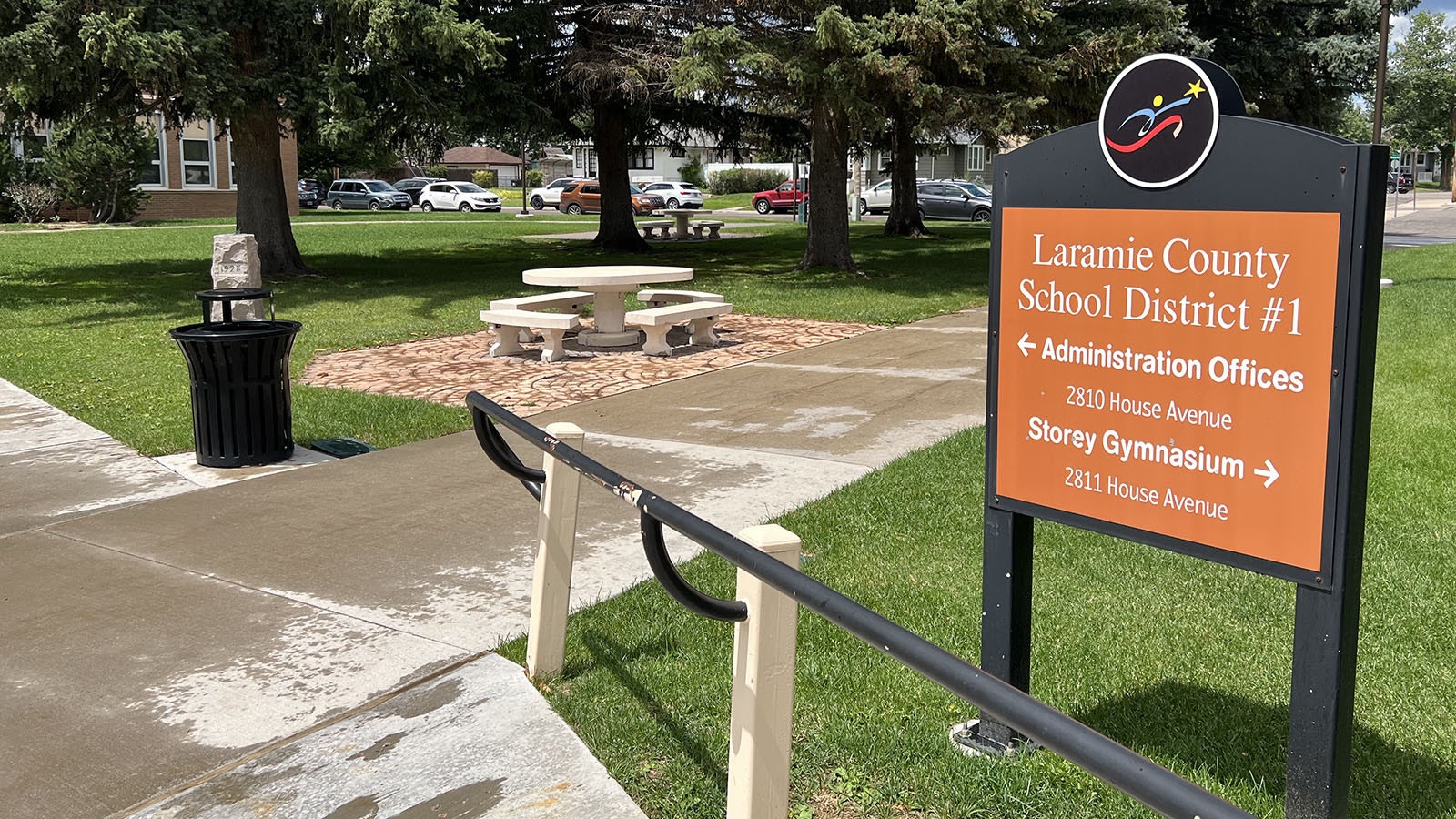
After some terse back-and-forth, school board members in Cheyenne updated their district’s library policy to start creating a list of sexually explicit books from which parents can restrict their children’s access.
A majority of Laramie County School District 1 members voted in favor of the policy Monday, with Trustees Rene Hinkle and Treasurer Brittany Ashby the only votes against it.
The policy replaces an earlier version whereby parents could build a list of books from which to restrict their students if they wanted to, but they wouldn't receive annual notifications about books in the district's libraries that have been deemed sexually explicit.
Whose Duty Is It Though
The discussion during the public school board meeting Monday grew heated.
Hinkle blasted the policy as “meant to address an ideology, not a policy meant to address an actual problem.”
She also emphasized that the board isn’t faced with a requirement from a higher legal power.
“There is no mandate from the Legislature; there is no mandate from the Wyoming Department of Education to make the changes this board has considered,” said Hinkle.
However, when committees in the Wyoming Legislature scrutinized a proposed bill draft early this year that would, if passed, have subjected teachers and librarians to the same consequences that non-teachers and non-librarians face for giving obscene materials to children, bill opponents said the obscenity question was better left to local school boards.
Because, Wyoming
Hinkle rebuked the new policy as adverse to Wyoming’s principles of limited government.
“The ideas that are at the heart of this policy come from a conservative, religious movement that started outside of Wyoming and does not follow Wyoming’s –“ at this point, people in the audience heckled Hinkle.
Board Chairman Tim Bolin urged decorum.
“I listened to you guys,” Hinkle said, continuing that it “does not follow Wyoming’s strongly held belief in limited government and individual rights. (As) a policy couched as protecting parental rights; in fact it does the opposite.”
Actually, Transparency
Assistant Treasurer Susan Edgerton grappled with Hinkle’s comments in her own remarks.
She said the new policy is about transparency so that parents with busy lives struggling to do their jobs and raise their children can have “some help” combing through all the books in the district library to protect their children’s innocence.
“It is the fundamental right of parents to direct the care, upbringing and education of their children,” said Edgerton, quoting from case law on the U.S. Constitution and from Wyoming law.
Some parents have railed against the new policy, saying it fails to consider “the book as a whole” when guarding against sexual content, Edgerton related.
“But the reality is, you’re going to check the box ‘all access,’ so I don’t know why you’re so worried about that,” Edgerton said of those parents. “The parents that want this (content limited), they don’t care about the books as a whole. And maybe you do, but that’s their parental right.”
It was a theme Edgerton continued to emphasize, saying that parents who want their kids to access sexually explicit materials at school can simply choose the open access designation.
What’s Banning?
Multiple proponents of the new policy took issue with detractors’ claims it “bans” books.
“There’s nothing in this policy. … That will remove any books or prevent students from reading anything in our secondary libraries, that their parent approves,” said Board Vice-Chair Christy Klaassen.
She clarified that books can be removed from elementary-school libraries under the policy and may be placed in higher-level libraries. But books in secondary grade-level libraries would remain there, albeit under the designation of sexually explicit.
“Books that would be captured by this policy would almost certainly not be intended for elementary students anyway,” Klaassen added.
To Earn … Someone’s Trust
Klaassen became tearful when confronting commenters’ claims that the policy is a witch hunt against teachers and librarians, saying that’s a misconception and contrary to the policy’s intent.
Hinkle countered, saying the idea that the policy is anti-teacher “comes from the teachers themselves.”
She’d hinted earlier that teachers and librarians may leave the school district over the new policy, saying it tells them “some people in our community do not trust them.”
To that, Klaassen responded that it’s the schools’ duty, rather, to earn parents’ trust.
“If the public education system is to maintain the trust of our families,” said Klaassen, “Our policies must reflect an acknowledgment and respect of the fundamental relationship of a parent and a child.”
What It Says
The new policy says parents can choose from four options with respect to their students’ access to books in the school district. Those are:
- Open access: A student could access any book and transfer in books from other school libraries, though not from higher grade-level schools.
- No access to materials containing sexually-explicit content, based on a running list the school will keep from book nominations and investigations.
- Parent/guardian limited access: Parents could customize a list of materials the student can check out.
- No access: To any book in the district’s library.
The policy also contains specific definitions of “sexual conduct” as found in school materials, including myriad sex acts and depictions.
It requires the district to notify parents of its running list of books deemed to be sexually explicit and to let parents change their students’ access options at any point during the school year.
Historical materials or district-approved curriculum materials will not be put on the Sexually Explicit Content list, the policy says.
Any parent or guardian of a student in the district can raise a challenge against a book.
An appointed district of stakeholders and at least one parent or guardian will review the book and send its findings to the superintendent, who will rule on those findings.
A person can appeal that ruling to the school board, and the school board can then rule on whether the process was followed.
Clair McFarland can be reached at clair@cowboystatedaily.com.