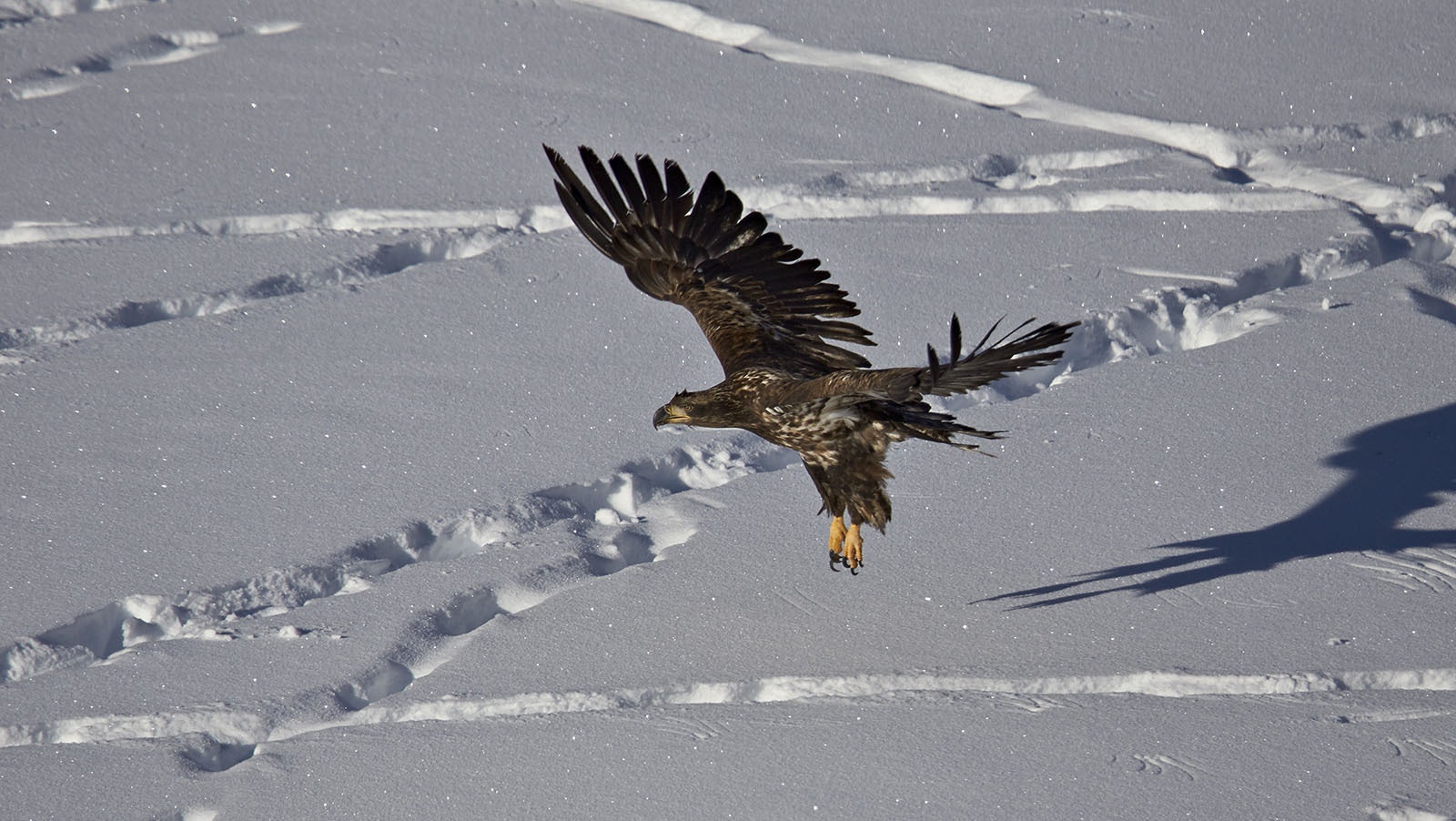
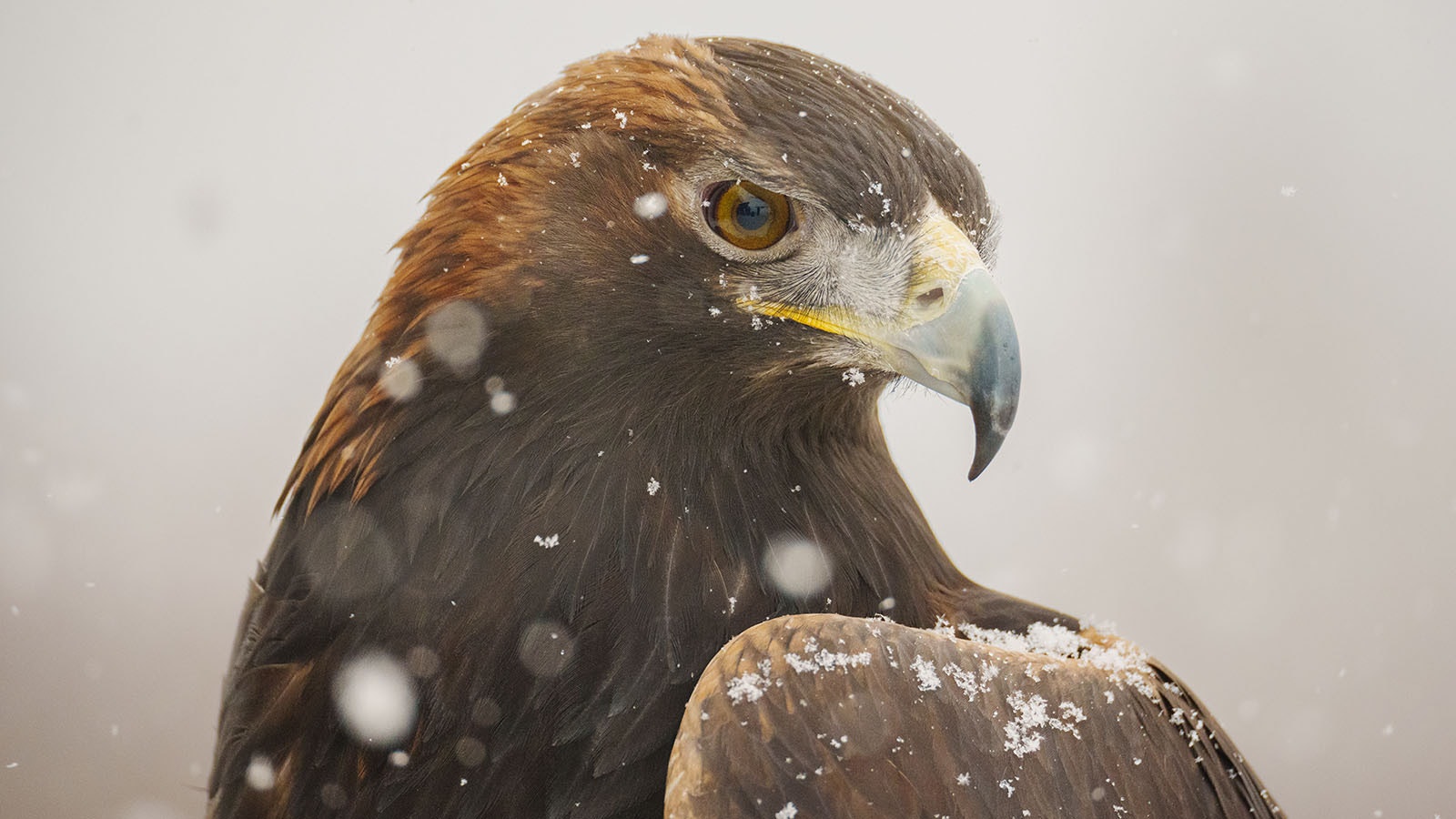
The exact size of Wyoming’s resident golden eagle population isn’t known, but it probably numbers “in the thousands,” a raptor conservationist said, and it doubles during the winter.
As winter descends, golden eagles pour into Wyoming from Alaska, British Columbia and the Yukon, said Bryran Bedrosian, conservation director at the Teton Raptor Center.
“It’s probably because of our wide-open spaces and the availability of their primary prey species, jackrabbits and cottontail rabbits,” he told Cowboy State Daily.
However, once they’re here, wind turbines can pose a threat to them. Golden eagles on the hunt can get killed by the giant turbines’ spinning blades.
“Wind development and golden eagles don’t mix,” Bedrosian said. “There’s a lot of collisions that happen, and that’s resulted in some steep fines for wind energy development companies.”
It’s hoped that new mapping technology that tracks where golden eagles are most likely to congregate in Wyoming can help the companies better decide where to build turbines, he said. That in turn will save eagles’ lives and the companies money and trouble.
It also could help protect eagles from other hazards, such as habitat loss and shifting prey populations.
A free online mapping database, RaptorMapper.com, shows where eagles are most likely to be during any given time of the year. Besides being handy for wind energy developers, it can help birdwatchers and other wildlife enthusiasts find the best places to go watch the mighty raptors in action, Bedrosian said.
Bald Eagles Doing Well, Goldens Struggle
Nationwide, the golden eagle population is, at best, holding steady — and declining in some areas.
Both species are vulnerable to lead poisoning after eating the remains of game birds or animals shot with lead ammunition. And Bedrosian advocates for hunters voluntarily switching to alternatives, such as steel shot and copper bullets.
However, bald eagles are, overall, faring well, he said.
“It’s been a huge success story, their numbers have recovered and continue to grow,” Bedrosian said.
That’s partly because balk eagles like to dine on fish, so they’re more likely to be around lakes, rivers and riparian areas where wind turbines are rare, he said.
Golden eagles, on the other hand, are more likely to migrate through or hunt rabbits and other small mammals in zones where turbines are built.
“Golden eagles love strong updrafts, whether they’re migrating or hunting,” he said. “And where the good wind is, is where the turbines might be too.”
Solar-Powered Backpacks
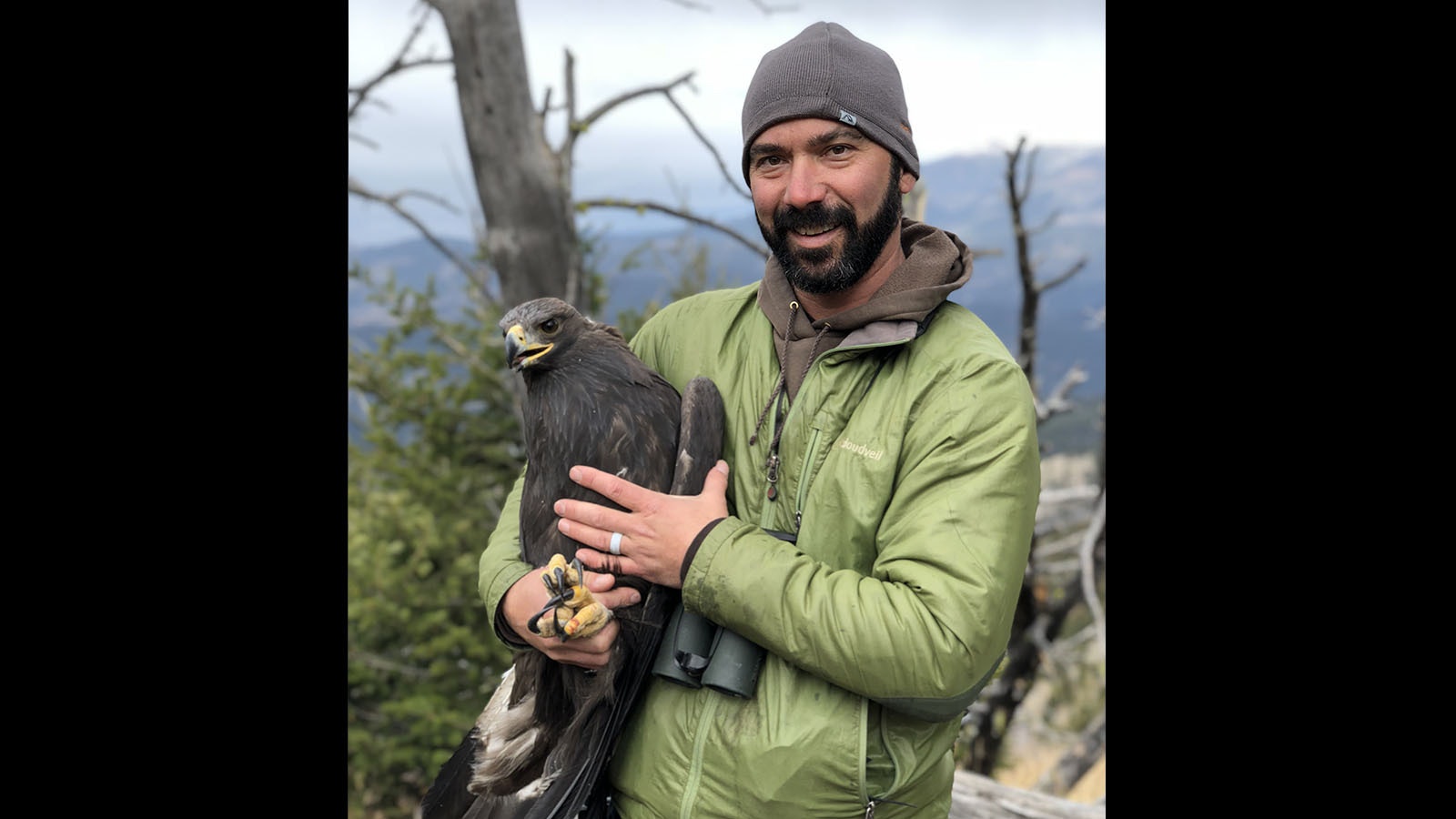
The data for the mapping software was gathered by tracking the movements of golden eagles in Wyoming and the areas that nonresident eagles are coming to and from.
Wildlife biologists will put collars with global positioning system (GPS) technology on animals. Collars don’t work well for eagles, so raptor researchers put solar-powered backpack units on the birds instead, Bedrosian said.
The packs are light and don’t impede the eagles’ ability to fly, he said. And GPS tracking has helped researchers pin down the raptor’s main migration routes into and out of Wyoming. They’ve also been able to determine their prime nesting habitat, favorite hunting grounds and other patterns in their lives.
And where the eagles typically aren’t should be the best places to build wind turbines, Bedrosian said.
The federal government allows wind turbine companies “eagle take permits,” or allotments for the maximum number of eagle casualties that can be tolerated at any particular location. If more than the allotted number of eagles are killed, companies face steep fines, he said.
So, it’s in a company’s best interest to stay well below that number, and it’s hoped that the maps can help, Bedrosian said.
Watch Responsibly
For those Wyoming wildlife enthusiasts who want to be where the eagles are, RaptorMapper can be a big help, he said.
He cautioned that golden eagles are best admired from a distance. It’s important to rely on good binoculars and telephoto camera lenses.
“It’s like it is with any wildlife, if they see a human outside of a vehicle, that scares them more than a vehicle,” he said. “If you try getting too close on foot, you’re going to end up flushing them.
That might not seem like that big of a deal. But during the winter, eagles have only a little margin for error when it comes to balancing the number of calories that they consume against the amount of energy they’re expending.
So, flushing a golden eagle can interrupt its meal and cause the raptor to burn energy that it doesn’t have to spare during the bitter cold of winter, lessening its odds of survival, Bedrosian said.
Mark Heinz can be reached at mark@cowboystatedaily.com.