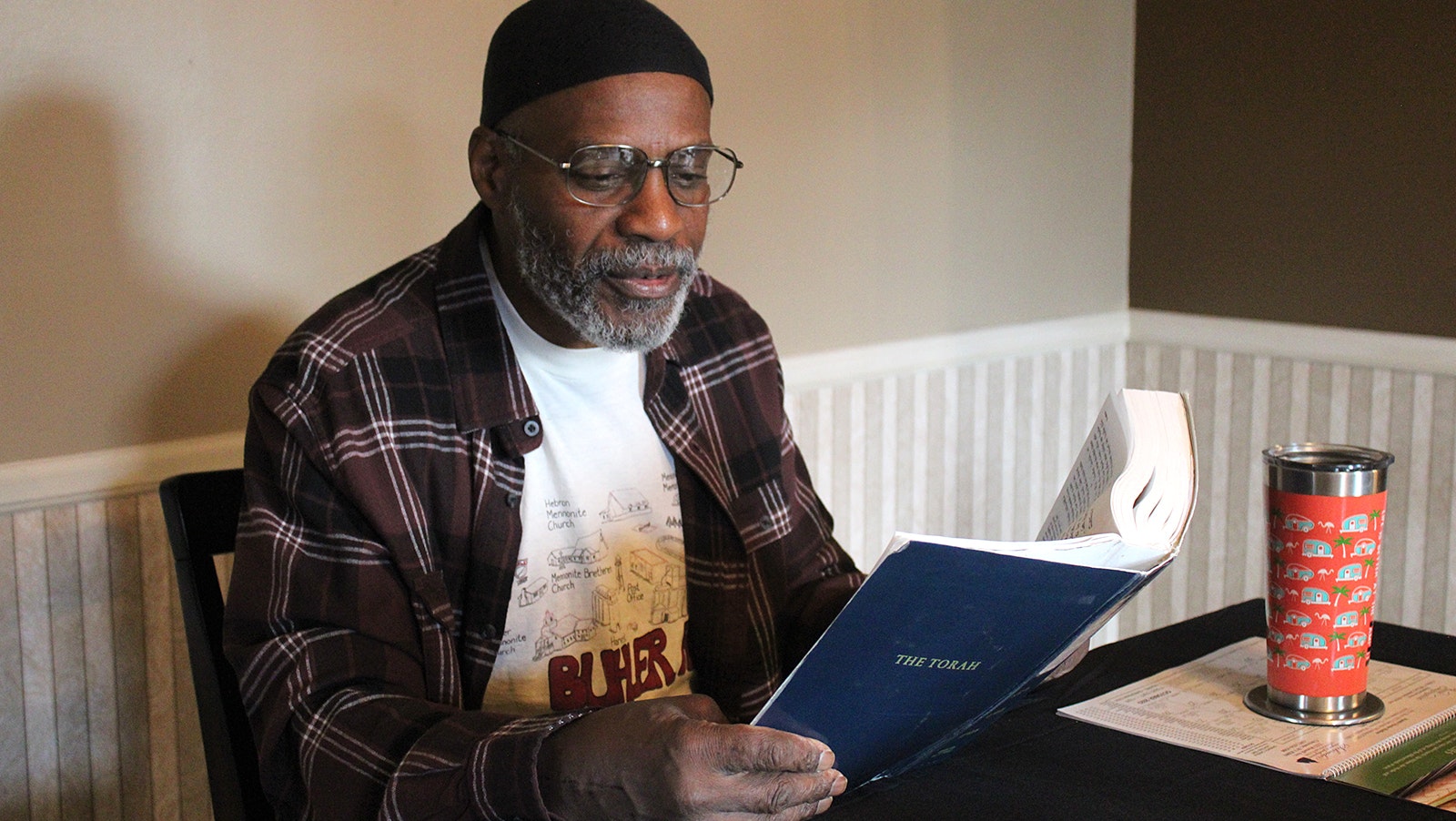
CHEYENNE — Clarence Fisher hasn’t wasted a minute making up for lost time, and he has a lot to make up for. He once was lost, but has found himself again.
Fisher, 64, was released from the Wyoming State Penitentiary in Rawlins in 2020 after spending 32 years there. He finished his three-year term of parole in February.
To this day, Fisher swears he was unjustly convicted. And when he was released, Fisher said he felt like the government and criminal justice system owed him millions of dollars for losing half his life.
“I’m going to get my money, they owe me,” Fisher explained of his mentality.
Despite a bitterness that can fester over decades, Fisher hasn’t let his anger at the system get in the way of taking full advantage of his newfound freedom.
He's started his own handyman business and working towards buying his own home. After his release from prison, Fisher worked three jobs to make ends meet, but eventually invested in himself and went all in on his handyman business, Sir Clarence LLC.
The investment paid off as he eventually built up a clientele to support himself in a full-time job. The income is enough to pay the mortgage on the home he bought in August.
Although he now is a free man, Fisher holds a deep resentment for what he had to go through in prison and the sentence that still hangs over him as a registered sex offender.
Defying The Odds
Fisher is an outlier among criminal justice statistics that show recidivism is a massive problem in America. A 2010 U.S. Sentencing Commission report exploring recidivism of federal offenders found that “over an eight-year follow-up period, nearly one-half of federal offenders released in 2010 were rearrested.”
Wyoming State Public Defender Diane Lozano described Fisher’s return to society as something that’s usually seen “just in movies.” She’s argued to judges countless times that she’s rarely seen someone go to prison and come out better.
Fisher is that exception to the rule.
“So that’s pretty impressive, especially someone who is innocent,” she said.
Lozano said recidivism has improved in Wyoming because of an increase in substance abuse treatment programs. She believes the criminal justice system also has become better at recognizing that sending someone to prison isn’t the answer for all offenses.
“If someone addresses the addiction or addresses the mental health issue, usually they don’t come back,” Lozano said.
The cumulative five-year rearrest rate of people exiting prison in 2012 was at 71%, according to the Council on Criminal Justice.

Military Roots
Fisher grew up in a military family and spent a significant part of his childhood living overseas. He returned to America and spent the rest of his childhood in Indiana and Missouri.
He ended up entering the military after attending community college to escape the racism still prevalent in everyday America at the time.
After spending time in the Army overseas, Fisher returned to Indiana after experiencing frustration over being passed up for promotion, which he believed was based on race.
He bounced between jobs, but excelled within the welding industry.
One night while out at a local bar, Fisher got in an altercation with someone he said had been teasing his cousin, who had cerebral palsy.
Fisher had a firearm on him while they were wrestling.
While brandishing the gun in his hand, Fisher laid a walloping backhand on his adversary’s head, resulting in an accidental discharge of the weapon that killed the man.
Although prosecutors originally seemed to believe Fisher’s account that the shooting was accidental, he said pressure from the victim’s family pushed the state to file charges against him for attempted murder.
The case went to a jury trial and Fisher was found not guilty, but the event would haunt him a few years down the road.
A Move To Wyoming
Fisher lost his job while awaiting trial on this case and after being released from jail, robbed an adult bookstore, which landed him in jail for two years.
After being released in 1987, Fisher moved to Cheyenne where his mother was living.
He bounced between jobs and eventually found himself short on money again. It wasn’t long before he and a girlfriend conspired to rob a laundromat, but planned to do so without real weapons to escape more serious charges if caught, so they brandished table knives instead.
The two executed the heist and got a few hundred bucks out of it without using any violence. But Fisher said a cousin of his girlfriend saw them with their disguises on and reported the crime to police.
Allegation That Stopped His Life
While out on bond for this case, Fisher said he was drinking frequently. One night he engaged in what he said was consensual sexual intercourse with a female acquaintance who also lent him money.
Afterward, he said the woman’s husband found out, which led her to reporting the event as armed robbery and rape. Fisher was charged with first-degree sexual assault.
He said a rape kit was performed on the victim that returned a negative result, and no physical injuries were ever found on the woman. Also, police never found any sign of breaking and entering the woman’s home.
A police report from the incident said a knife was found on Fisher at the time of his arrest that matched her description of the weapon, but Fisher said this account was completely fabricated, as well as his possession of other incriminating objects.

As a child in another life, Clarence Fisher couldn't have known he'd grow up to be in trouble with the law and finally serve a 32-year prison sentence. He's pictured here with his siblings in the 1960s (far back) and at age 10, right. (Courtesy Photos) 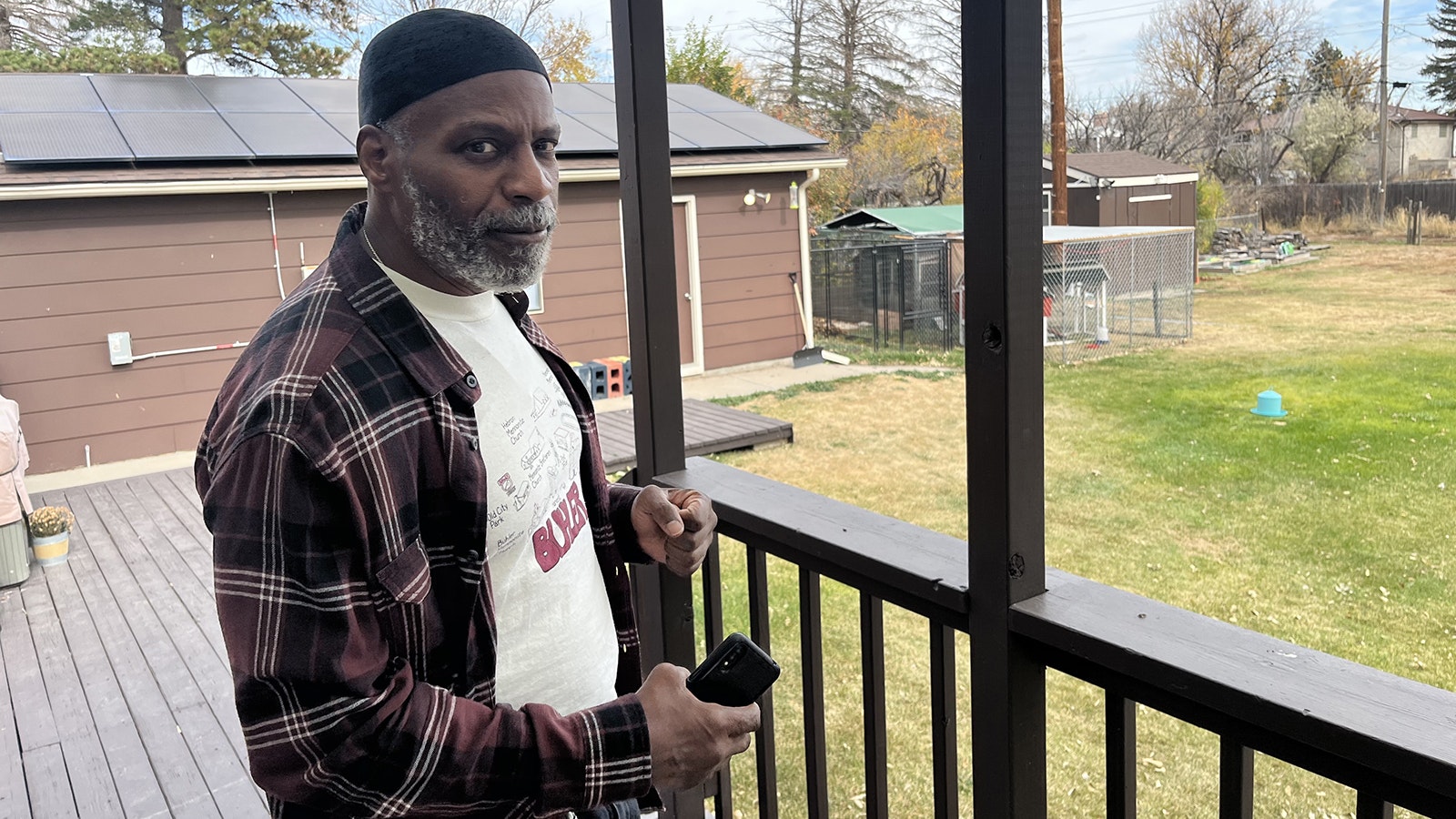
Clarence Fisher on the porch of his own home, which he bought in August. (Leo Wolfson, Cowboy State Daily) 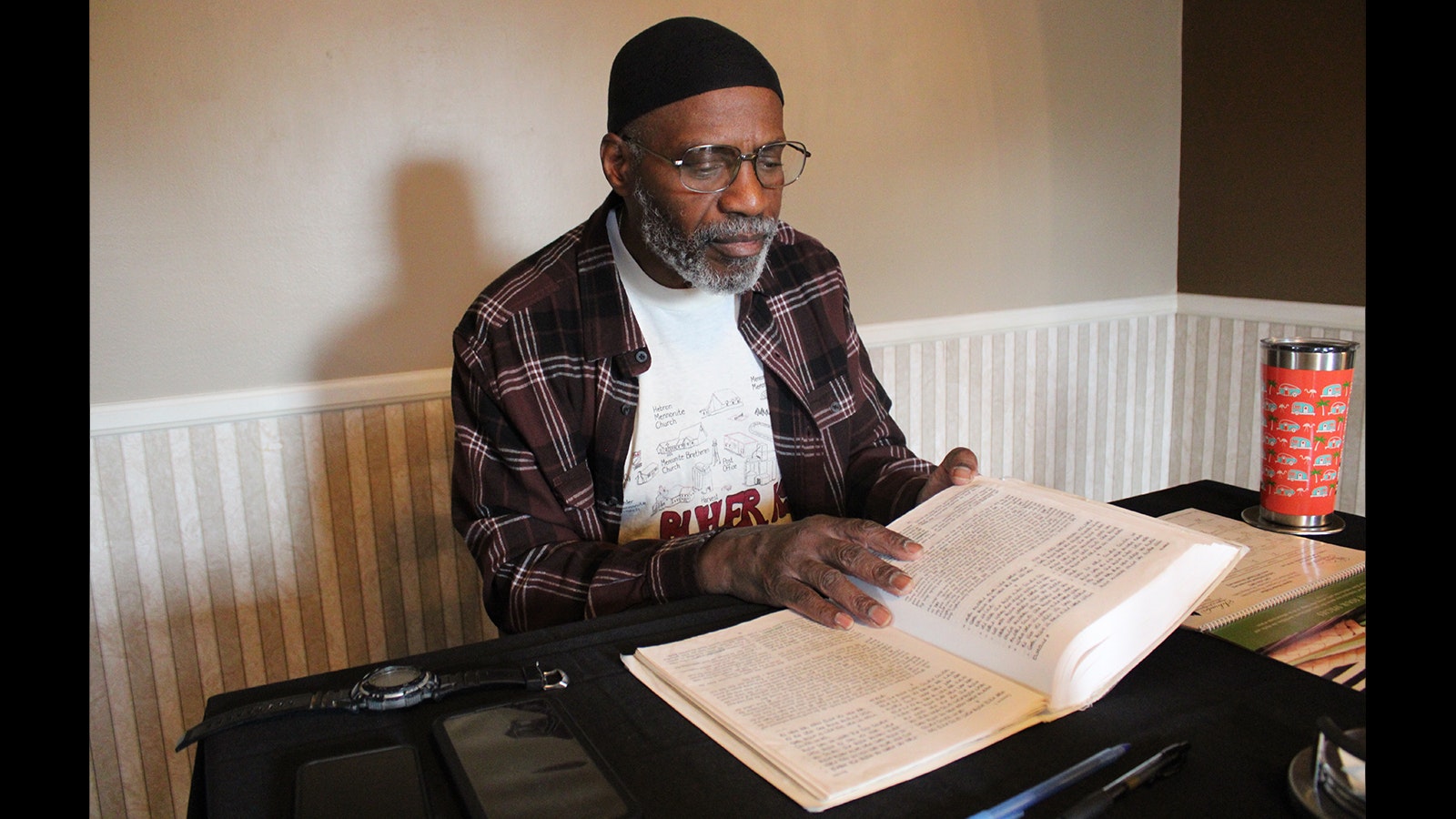
Clarence Fisher reads the Torah at a local Cheyenne coffee shop. He said finding God saved his soul and changed his perspective on life. (Leo Wolfson, Cowboy State Daily)
‘They Just Screwed Me’
While awaiting sentencing for both charges, Fisher said he was advised by his public defender to accept a plea deal that involved him receiving 5-10 years in prison in exchange for a guilty plea.
Fisher said he was hesitant to take the deal, adamantly professing his innocence on the sexual assault charge. But he said his attorney eventually convinced him to plead guilty and he gave a false confession to the sentencing judge.
Any time a defendant accepts a plea deal, he faces the risk of having a judge reject the deal. This was exactly what happened in Fisher’s case, as the judge referenced the homicide he was previously acquitted for and his prior incarceration to justify a sentence of 37-45 years in prison.
Before the gavel was struck, Fisher said he pleaded with his lawyer to try and let him rescind the plea, but the attorney encouraged him to accept the hefty sentence to give them leverage to fight the verdict on appeal.
“They just screwed me,” Fisher said.
Lozano said it’s the duty of a public defender to ensure a client knows exactly what he is and isn’t agreeing to at all times.
“Really, whatever the client decides to do, as long as it’s informed, whatever the decision is, then we’ve done our job,” she said.
‘I Was Just A Naïve Little Young Black Man’
But she also said the concept of public defense has changed since she joined the public defender’s office in 1994 and that there is much more focus put on clients than there was decades ago. She said an old-school mentality used to pervade the profession that defendants only either went to trial or submitted pleas.
Her best advice for other public defenders is to facilitate communication with clients so that they feel they are being fairly represented, whether or not a case goes in their favor.
Once incarcerated, Fisher said he was misled by another attorney into signing an agreement that waived his right to appeal. Lozano said it’s rare that a public defender will advise a client to waive that right, a move usually limited to cases involving deeply serious crimes that involve the death penalty.
Fisher said his lawyer told him to sign it so that he would have a better chance of having his sentence reduced in the future. No one else was there to tell him otherwise.
“I went on and signed it like a dummy,” he said. “I was just a naive little young black man.”
Shortly after, the judge rejected his request for a sentence reduction. Other appeals Fisher made to renew his right to appeal and withdraw his guilty plea were also rejected, and Fisher said he was never told he could file for additional sentence reductions beyond a year after sentencing.
Dismayed and facing nearly a lifetime in prison, Fisher had very little hope for a future. He was certain he would die behind bars and grew despondent.
“When I first got in, I didn’t see no good in it at all,” Fisher said. “I knew my life was over.”
Once Was Lost …
Although Fisher said his first 10 years in prison flew by, he was encumbered by resentment and rage over the predicament he found himself in. He took out his fury on almost anyone who rubbed him the wrong way, most often prison guards. His mentality was kill or get killed.
“You looked at me wrong, I beat you up,” he said. “You staring at me, I beat you up. You talking bad about me, I’m beating you up.”
Throwing feces at guards and making homemade bombs was simply a matter of course for Fisher.
And for his actions, Fisher feared for his life. The guards, he said, could have easily murdered him and staged it as a suicide.
One night after fighting with guards, Fisher was taken to solitary confinement, stripped completely naked inside a freezing, tiny pink room, a space so small that he could touch both walls on either side of him. He spent the night sleeping on the sink with his feet on the toilet, just so he could get off the freezing floor.
Serving a long term incarceration is not generally considered to be a healthy lifestyle. Many prisoners die each year in custody from health circumstances exacerbated by poor diet and lack of exercise.
Fisher was aware of this dynamic.
Saving His Soul
He said he finally found peace “because I wanted to serve God, and if I died in there, I at least wanted to be right with him so I’d go to a better place.”
One night in 1998, Fisher knelt by his bedside and prayed to God. He had little to offer beyond his word and a confession of his sins. From that moment on, he said he’s been committed to being a servant to the Lord in pursuit of a new life.
“From 1998 to the time I got out of prison, slowly but surely I started getting back to the Lord,” he said.
As the years passed, Fisher came to view the world from a new perspective, one that included strict adherence to the Jewish religion and the scripture he was raised on as a child.
“Ever since I’ve said, ‘Yes,’ he bless me from then on,” Fisher said of God. “He just blessed me because I said , ‘Yes.’”
He stopped engaging in fights and put his energy into more positive pursuits. He started reading Hebrew in prison and taught two different Torah classes while in prison.
“You can’t just approach God in any kind of way, you have to take the time,” he said.
Reading from the Torah as he takes intermittent bites from an avocado, Fisher speaks Hebrew fluidly, putting an emphasis on each guttural pronunciation synonymous with the language with his sing-song voice. It is these words that gave Fisher light when he was in his darkest place in prison, and in some ways the fresh air he breathes today.
Interpreting the meaning of these texts is of incredible importance for Fisher as they are the words he lives his life by.
Fisher reads from a particular passage that holds specific significance for him, a tale of God looking over the turbulent seas of mankind and giving the light that embodies him.
“He wants us to have dispelled the darkness and let light in,” Fisher said. “Only he can give you the light, so you have to have him to give you the light. But all you have to do is say, ‘Yes.’”

Along with building up his handyman business, Clarence Fisher also finds peace in raising his own chickens. (Leo Wolfson, Cowboy State Daily) 
Clarence Fisher with one of his chickens. (Leo Wolfson, Cowboy State Daily)
Beyond The Pale
Fisher also credits reconnecting with his faith for helping him see “beyond the obvious” and aspire for goals that were well beyond what most would consider attainable in prison.
“I was able to use my mind more and think quicker,” he said.
Once released, he also relished not having to wait for the approval of others to make decisions and take action.
“I said, ‘If I ever get out of here Lord, I’m not waiting on nobody. I’m not listening to nobody. I’m going to do it my way,’” he said.
Although he still faced a fair amount of adversity when he got out of prison because of his extensive criminal record, at least now Fisher had the relative freedom to make his own way in life.
A Tale Of Redemption
In August, Fisher bought his home in south Cheyenne. It has a hot tub, a home theater and a sizable backyard. He’s also raising chickens.
Although he swears to this day he was wrongly convicted for the burglary and sexual assault, Fisher admits his life was headed in a negative direction before getting incarcerated, likely to die from his alcoholism at some point down the road or possibly from other issues.
“This was good that I’ve been in prison to help me get over this alcohol,” he said.
He chose to return to Cheyenne after being released despite it being home to the justice system he adamantly believes failed him. The biggest reason he returned is because his mother still lives there.
He vowed to God to not become homeless or go hungry. Instead of trying to keep up with society or worrying about what he didn’t have, he instead focused on himself.
“My life is just important as the Joneses, I deserve just as much, if not more, than they do,” he said.
Fisher is thankful for what he has in life and gives to others to try and prevent them from becoming homeless. For those who are homeless, he often provides work opportunities for those staying at the Comea Homeless Shelter in Cheyenne.
Fisher used his anger and resentment about all those lost years to fuel his dreams. Although he hasn’t forgiven the legal system he said stole so many years from him, he’s used that bitterness to power his dreams.
“Even though I was angry when I got out of prison, I did not allow myself to be persuaded through the dissuasion of others,” Fisher said. “I did not let negativeness and bitterness to cause me to be unproductive. I took that anger which I have within me and utilized it to become a prosperous citizen of the community.”
Leo Wolfson can be reached at leo@cowboystatedaily.com.