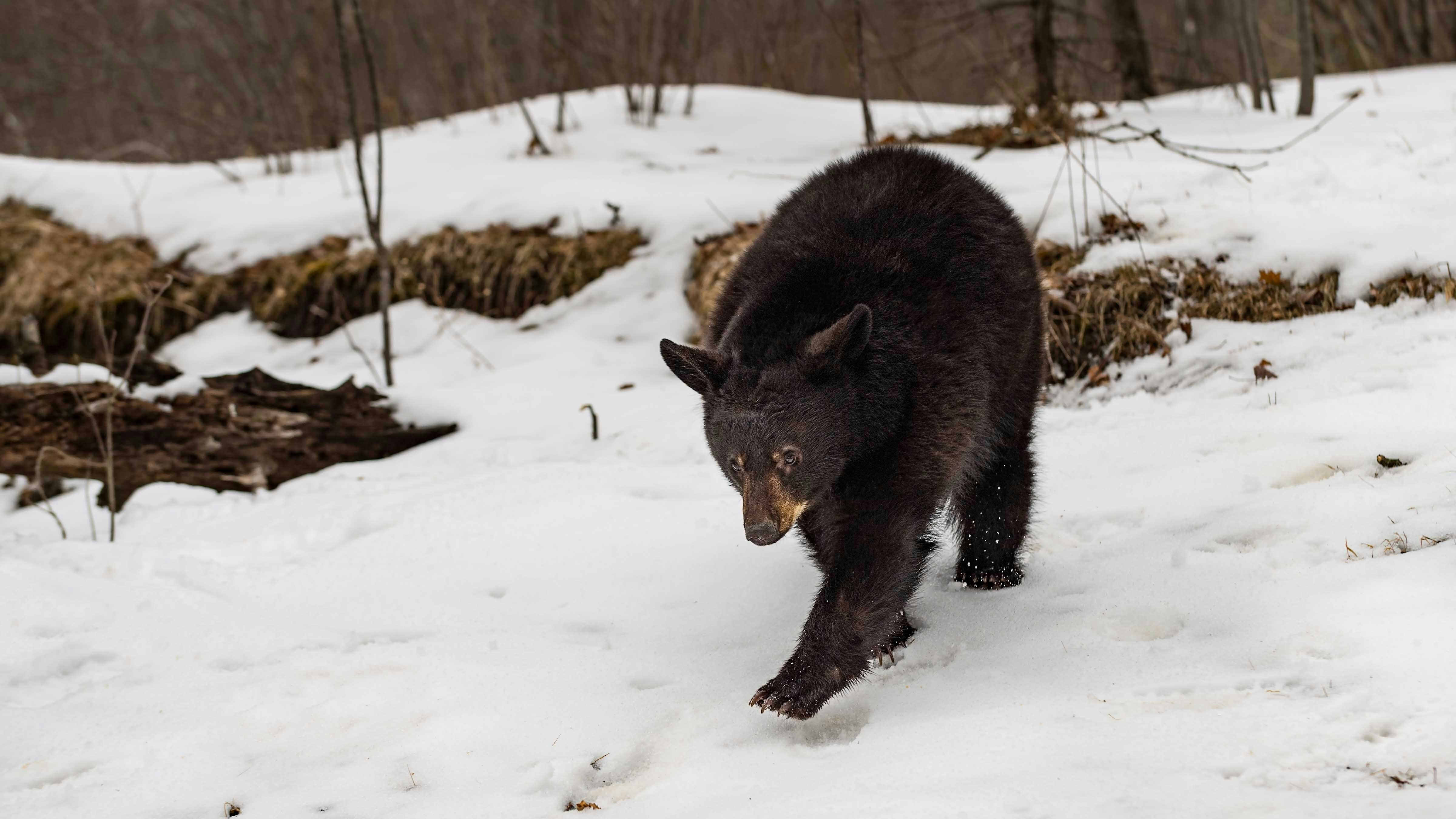
As odd as it might seem, a train conductor confirmed to Cowboy State Daily that grizzly bears and other wild animals frequently get intoxicated on fermented grain spilled from rail cars, and too many of them end up getting killed as a result.
Paul Summers told Cowboy State Daily he’s seen it with his own eyes.
“Especially in the summertime, it’s common to see bears, including grizzlies, drunk on grain. You will see them wobbling,” he said. “You will see them staggering.”
In fact, he said the bears’ own stubbornness often works against them, as they don’t want to move off the tracks despite warning horns from approaching trains. It can essentially be a game of chicken between the grizzlies and trains, with the bears losing every time.
Nothing Funny About It
At first, the notion of drunken bears stumbling along railroad tracks might seem humorous. But such drunkenness, as well as the general danger of the rail lines, kills numerous wild critters, said Summers. He worked on BNSF Railway trains as a conductor from 2013-2022. He now lives in Seattle and works for Amtrak.
During his tenure with BNSF, Summers said he was frequently on a roughly 500-mile stretch of track running between Havre, Montana, and Spokane, Washington. Part of that runs through prime grizzly habitat over Marias Pass in Montana near Glacier National Park and other vast wild country.
He loves wildlife, and said it still troubles him to think of all the animals he saw killed by trains.
“We’ve been on trains that have probably killed every type of large animal that lives in the state of Montana,” he said.
As bad as it was in the mountains, Summers said it could be worse out on the prairies, especially with antelope herds.
“I knew guys who would plow into 50 (antelope) at a time,” he said. “There’s nothing you can do.”
That wildlife is killed by trains also is something that bothers BNSF.

How Many Grizzlies Killed?
After reading a Cowboy State Daily story about drunk grizzlies getting hit on the tracks there, Summers reached out to tell his story.
Official reports state that 63 grizzlies have been killed along that section of the BNSF line since 1980.
That’s likely a gross undercount, said Summers, who can recall being on at least one train that killed a grizzly.
“If I’ve hit one, I’d be absolutely baffled if everybody who has run a train through there hasn’t,” he said. “Sixty-three since 1980? It’s got to be … if I had to hazard a guess, it has to be at least double or triple that.”
Where Does The Grain Come From?
Grain spilled from rail cars and then exposed to the moisture of rain or snow ferments and becomes “a de facto brewery,” retired federal ecologist Chuck Neal of Cody recently told Cowboy State Daily.
And there’s no shortage of the main ingredient for that brewery, Summers said. It’s mostly a matter of gravity. Railroad grain cars are a “simple, utilitarian design” he said.
Out on the plains of the Midwest or eastern Montana, they’re loaded directly through the top from grain silos, he said. Each car has three “hoppers,” or bins for grain, each with a set of steel doors at the bottom. During unloading, the doors are opened to let the grain spill out.
But there’s always some grain left on top of the cars during the loading process, Summers said.
Moreover, when the trains are on their return trip, the bottom doors of the grain cars are frequently left open, he said. That means any leftover grain could spill on the tracks as the trains travel back eastward.
“Just from the motion of the train going along the track” some grain inevitably spills off the tops of the cars or through gaps in the bottom doors, he said.
Grizzlies and black bears aren’t the only animals that get drunk off fermented grain and subsequently get hit by trains, he said.
He clearly recalls an inebriated whitetail deer doe that passed out “with her head laying across the rail” and was killed instantly.

‘Circle Of Life’
Summers said seeing all the wildlife along the rail lines was his favorite part of the job, but he also dreaded the toll taken by the trains.
“You got to see the whole circle of life,” he said. “The most common scenario was, you’d have a dead elk frozen in place by the side of the rails.”
That would draw bears and other predators, putting them at risk.
Sometimes eagles would gorge themselves to the point of not being able to fly away and get struck by trains, he said.
He recalled seeing a large lynx several times, because it was hanging around and eating an elk carcass alongside the tracks.
“He was just the most wonderful, magical presence to have while I was at work. But I heard that somebody hit him. I’m just glad it wasn’t me who got him,” Summer said.
The grizzlies and black bears would usually disappear into hibernation after the first big snows in October, he said. But things got even worse for other wildlife during the winter.
High on the mountain passes, there might be up to 10 feet of snow on the tracks, which railroad engines equipped with plows would blast through.
That would create a “path of least resistance” for animals, but also turned the tracks into what Summers called a wildlife “tunnel of death.”
‘The Bears Are That Wilderness’
Running the Amtrak lines, Summers said he’s seen far fewer animals hit than he did along the wild routes through Montana. These days, his biggest concern is people behaving foolishly along railroad tracks.
He wonders what can be done to cut down on the wildlife carnage on northern rail lines, adding that fencing off the entire stretch of rail line just wouldn’t be feasible.”
“I wonder if they could put in some wildlife overpasses, like they have along some of the highways?” he said.
He added that the fearlessness of grizzly bears could sometimes get them killed by trains, playing their own games of chicken with the locomotives.
“They can be stubborn asses,” he said. “If they were already on the tracks when we came along, they are so stubborn. They don’t want to move. You can blow the horn and flash the lights at them, and they still don’t want to move.
“The grizzly bears made the least effort to get out of the way, even the sober ones. They never ran. They would just saunter off. It’s such a dignified response, and it can get them killed.”
Even so, Summers said he still carries great love and admiration for grizzlies, which he summed up by paraphrasing one of his favorite authors, Rick Bass.
“In paraphrase, he described that most people will never be in a true wilderness, but it is essential that we know it is there; to know that mystery still exists,” Summers said. “I think the bears — and the lynx — are that wilderness to a lot of us.”

Mark Heinz can be reached at mark@cowboystatedaily.com.