For kids in the 1960s, the world of action, adventure and science fiction was dominated by “Jonny Quest.” The Hanna-Barbera show, which aired 26 episodes from 1964-1965, is cited by animators, directors and historians as one of the most influential animated series in television history.
In every episode, a young and fearless Jonny Quest goes on globe-trotting adventures that inevitable result in battles with evil scientists, monsters and Cold War villians, usually revolving around the “experiment of the week” of his scientist father, Dr. Benton Quest.
Most of the heavy lifting on the team is done by the white-haired badass Race Bannon. Still, Jonny gets his share of the action and clever one-liners along with his adopted brother Hadji and one of animation’s greatest liabilities, Bandit the Bulldog.
Bob Miller, an author and animation historian who’s worked as a storyboard artist on several shows — including Emmy-winning episodes of “The Simpsons” — said the animation and action of “Jonny Quest” was revolutionary. Realistic animation and characters were coupled with action set pieces and a genuine sense of danger. It was basically James Bond for kids.
“People could actually die,” he told Cowboy State Daily. “There was real jeopardy and consequences to the violence. The stories were written for a more mature audience and respected their intelligence.”
“Jonny Quest” has earned its place as an iconic animated series, but one episode especially should stand out to Wyomingites. But Jonny Quest’s connection to Wyoming is misleading and disappointing, much like the episode itself.
Cavemen And Nazis And Boredom
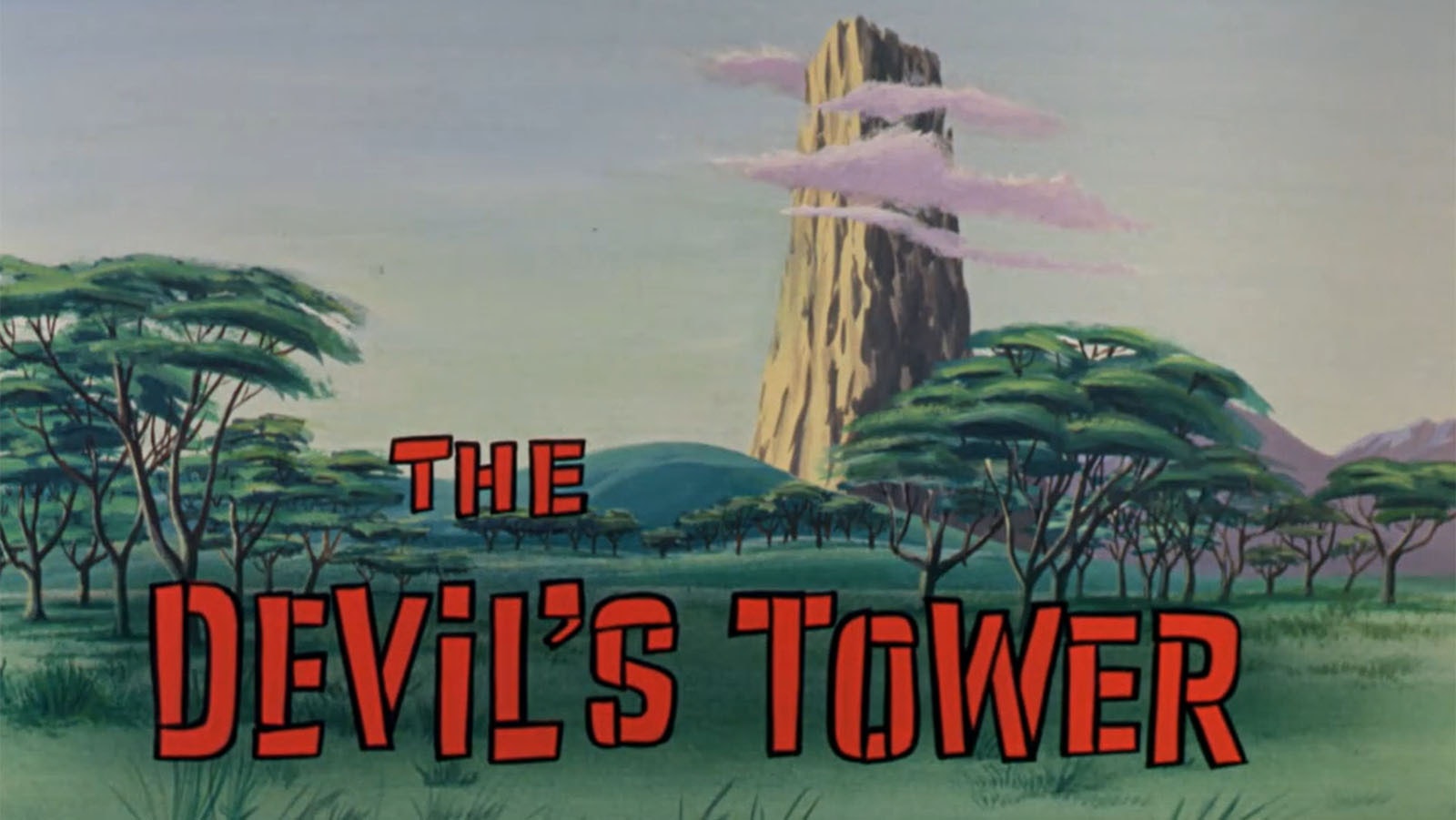
“The Devil’s Tower,” the 21st episode of the show, aired Feb. 4, 1965. In the episode, Dr. Quest attempts an experiment that involves sending a payload of unidentified beeping electronics into the air with a balloon to “get some readings.”
The balloon gets caught in an updraft and soars to the top of the tower, a plateau of rock so tall and sheer that nobody has ever figured out how to climb it. Dr. Quest resolves to recover the balloon, so he and Race rent a prop plane to reach the top and get the payload.
It has a more-than-coincidental resemblance to Wyoming’s famous Devils Tower.
Race leaves Dr. Quest at the summit to go collect Jonny, Hadji and Bandit so they have a reason to get involved in the story. It’s not much of a “Jonny Quest” episode if Jonny can’t at least quip about the plot.
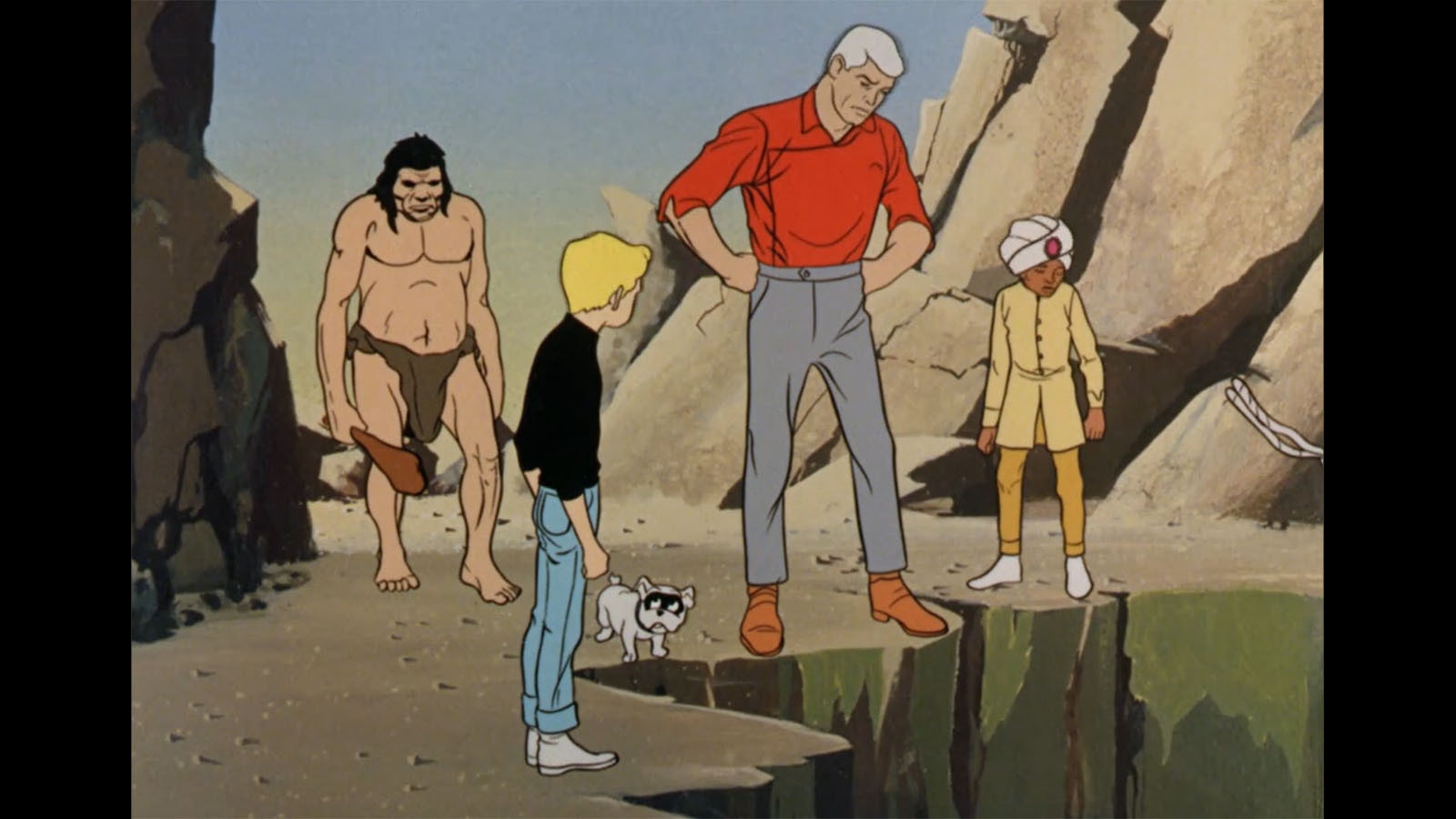
That’s when the team finds themselves surrounded by a group of German-grunting cavemen. Jonny body slams one (the most exciting thing he does in this episode of his show) before they’re captured and led into the cavernous interior of the tower.
Inside, Jonny meets the true villain of the episode: Heinrich Von Duffel, a Nazi war criminal and concentration camp commandant who has been hiding on the escarpment since the end of World War II and mining a fortune in diamonds.
In the dramatic climax, Von Duffel steals the prop plane and bombs Jonny and the rest with grenades. He meets a fitting, but somewhat anticlimactic, end when he throws a grenade into the plane’s wing and crashes into the tower.
“Not an end I’d wish on anyone, but he deserved it,” Dr. Quest stoically muses. The episode ends with Bandit’s final confrontation with his nemesis for this episode, a baby gorilla.
Despite the captivating setup, a Nazi war criminal leading an army of cavemen from inside “The Devil’s Tower,” the episode is disappointingly dull. Most of the runtime is spent following Jonny and friends as they dodge rocks, surf logs and follow fresh air to freedom.
Even the action is lackluster, with no punches thrown or science fiction weapons fired. In one adrenaline-filled moment, Race knocks out a caveman by lightly tapping his head with a club.
“Sorry, pal," Race says. "You need your beauty sleep."
Good one, Race.
Way Out Of Africa
Wyomingites reading the episode’s summary might notice some glaring incongruities in the details of “The Devil’s Tower.” That’s because the episode has nothing to do with Wyoming.
Despite the title, “The Devil’s Tower” takes place in an unidentified part of Africa. In fact, “Devils Tower” is never spoken by anybody in the episode. The giant rock pillar is called “the Devil’s Escarpment.”
There are other clues that the episode isn’t set in the Cowboy State. The summit of Devils Tower is much too short for a prop plane landing, and the Devil’s Escarpment in the episode is said to be t2wo miles high compared to the paltry 625 feet of Devils Tower.
Also, there are no gorillas in Wyoming. Sorry, Bandit.
Miller doesn’t know exactly why the episode was set in Africa, but it's not surprising given the show's themes. Wyoming has its remote wilderness and isolation but lacks the dramatic potential of “deep, dark Africa” (at least from a Jonny Quest perspective).
“I doubt Devils Tower, Wyoming, would have a renegade Nazi and caveman on it,” he said. “It was more believable in the context of the story to have it far away in Africa. It’s sort of believable there if you can buy into the plot.”
Exotic locations are a hallmark of “Jonny Quest,” so perhaps an adventure with Devils Tower in Wyoming doesn’t have the cachet the show’s producers wanted. Jonny and the gang lived at the Quest Compound on an island in Palm Key, Florida. Many episodes started at the Florida compound, but nearly every episode had them jetting elsewhere around the globe for their adventures.
Miller could only recall two episodes that took place in the United States: "Pirates from Below" and “The Robot Spy,” which were set in Florida and a U.S. military base, respectively.
“The Robot Spy,” where a spider-like robot tries to steal data on Dr. Quest’s Para-Power ray cannon, is often cited as the best episode of “Jonny Quest” (and yet another episode of Jonny's show where he doesn't have much of anything to do).
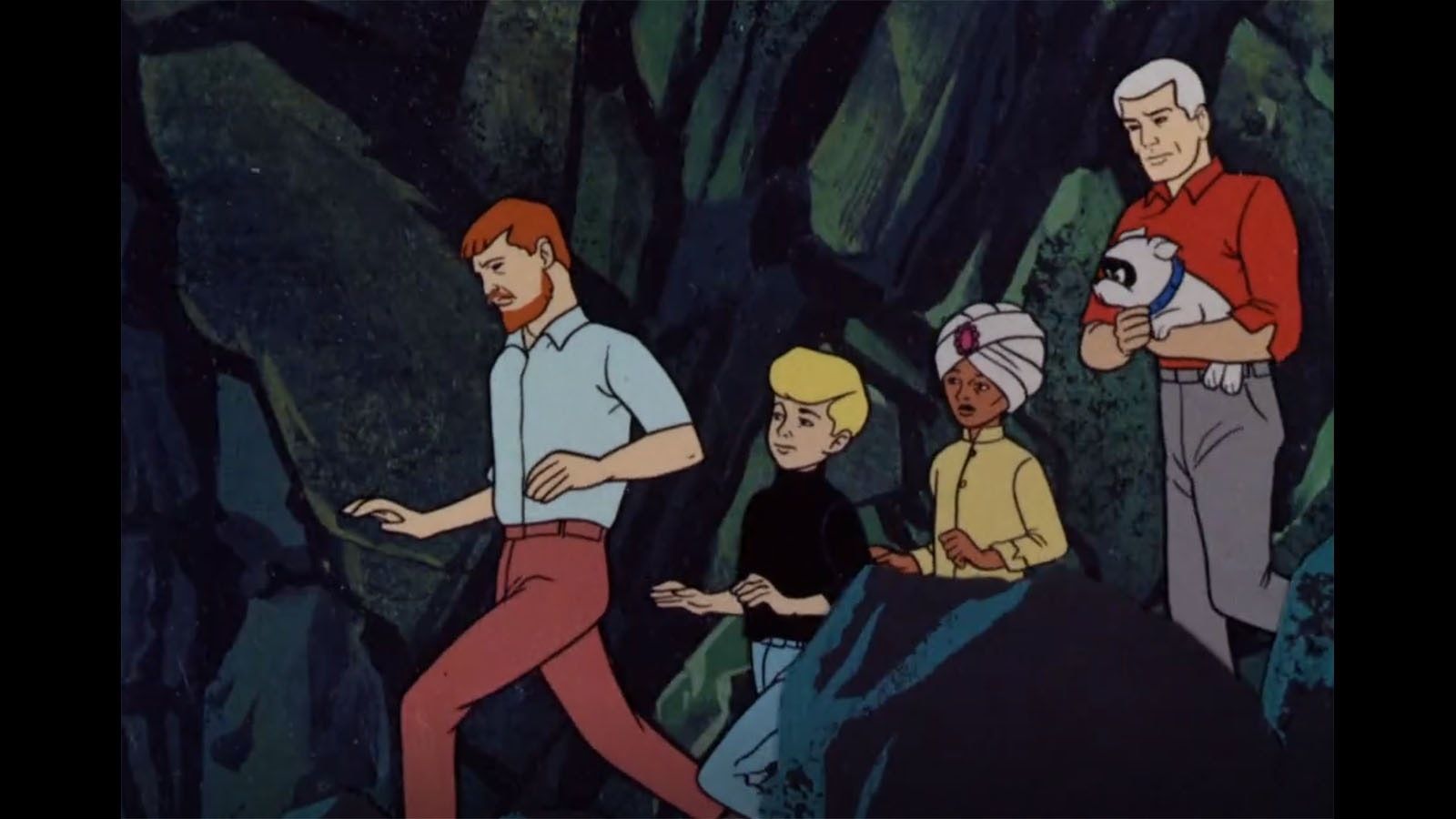
From Episode 21 of "Jonny Quest," "The Devil's Tower." (Hanna-Barbera) 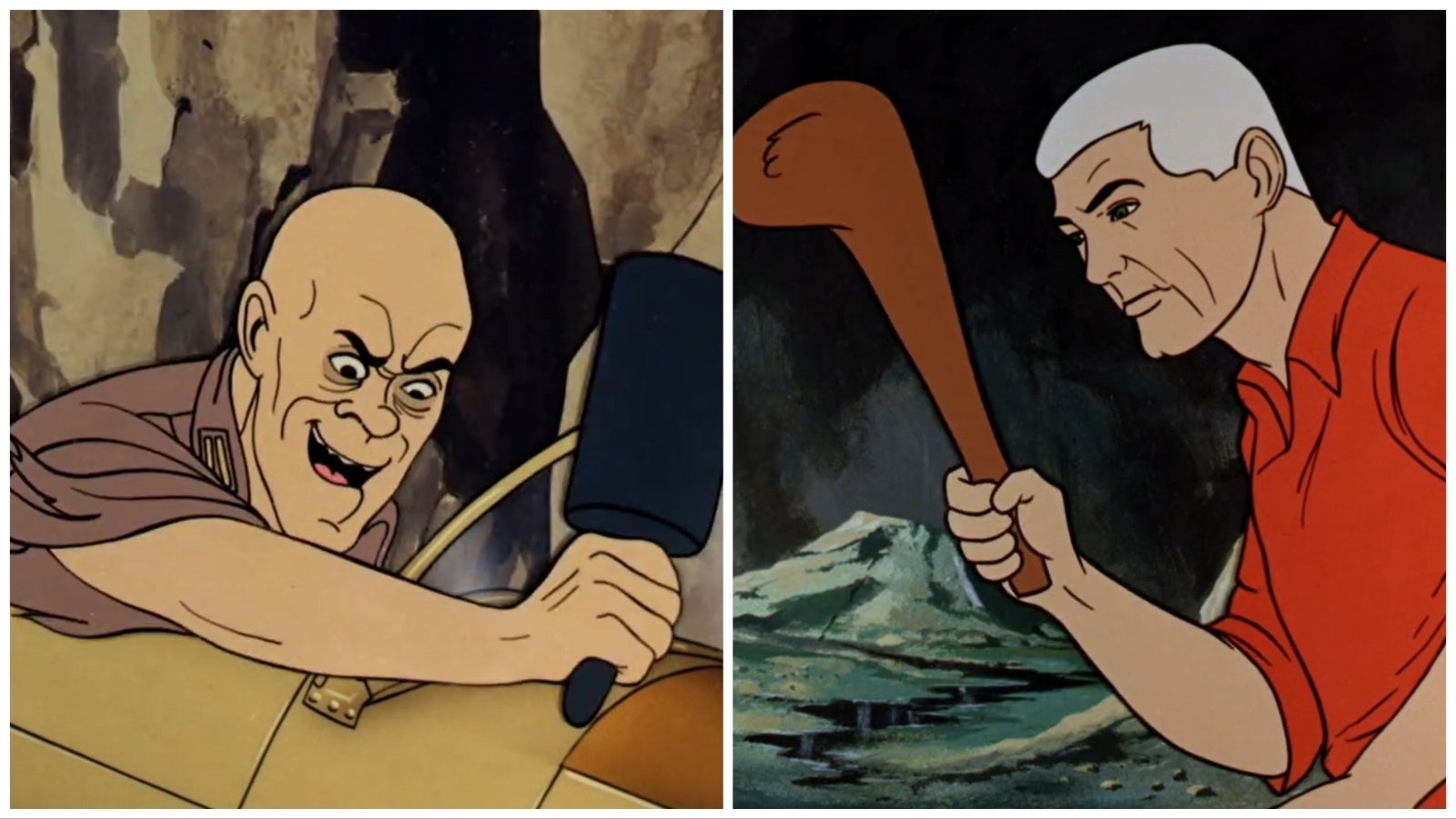
From Episode 21 of "Jonny Quest," "The Devil's Tower." (Hanna-Barbera) 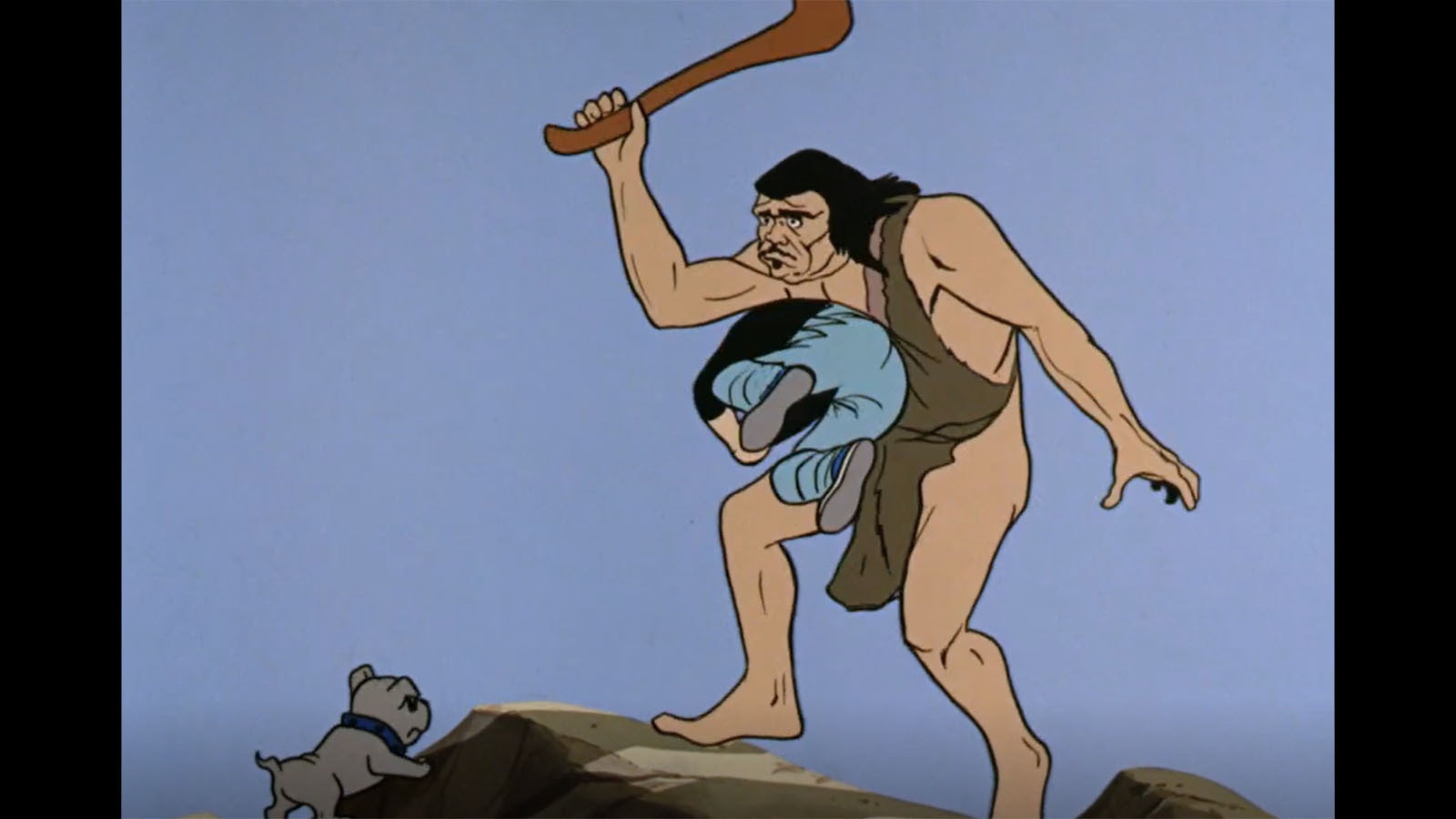
From Episode 21 of "Jonny Quest," "The Devil's Tower." (Hanna-Barbera)
Education, Action And Toys
The ethos of Jonny Quest’s production came from its creator, Doug Wildey. Wildey was a comic book artist Hanna-Barbera Productions hired to create an animated science-fiction series that evolved into “Jonny Quest.”
Miller says Wildey used the action-adventure, science-fiction premise of “Jonny Quest” to expose viewers to the world beyond the United States. He wanted each episode of the show to not only feel exciting, but informed.
“Wildey wanted a little bit of education for the viewer, not just an action show,” he said. “A little takeaway for the audience to say, ‘We know what we’re writing about, and we know what we’re doing.’ Introducing the local wildlife gave the viewer a chance to say, “We’re going someplace exotic, and what an interesting animal they have in this area.’”
The exposure to exotic animals was usually relegated to the antics of Bandit the Bulldog. Wildey wanted Jonny’s pet to be a chimpanzee, but Bandit was selected as a better toy seller (the most potent force in the animation industry).
Wildey may have decided that Bandit would have a better time contending with a gorilla in Africa than a bear cub or bison calf in Wyoming. Or, he may have avoided Wyoming altogether to ensure there would never be a “Jonny Quest” crossover with Yogi Bear, another Hanna-Barbera character with a dubious Wyoming connection.
We’ll never know.
A Quest For The Future
Beyond the resemblance and names, Miller doesn’t think there’s much of a connection between Wyoming’s Devils Tower and “Jonny Quest’s” “The Devil’s Tower.”
“I honestly don’t see a connection,” he said. “They were probably inspired by Devils Tower, but it’s only the episode’s title.”
It might be best that Wyoming isn't connected with this one. While many episodes of “Jonny Quest” are still celebrated for their plots and action, Miller said "The Devil's Tower" usually isn't among them.
"I consider it one of the lackluster episodes," he said.
“Jonny Quest” was revolutionary but short-lived. While other Hanna-Barbera shows like “The Flintstones,” “Yogi Bear” and “Scooby-Doo” continued into the present day as television and pop-culture juggernauts, “Jonny Quest” has a brief revival in the 1980s, but faded into its current status: an influential but obscure artifact of its era that hasn’t aged particularly well (especially in its depictions of the residents of the exotic places Quest visited).
Nevertheless, the influence of the show cannot be understated. Miller is working on his next book of animation history, “Batman: The Animated Interviews,” on the people who created “Batman: The Animated Series” in the 1990s.
“Batman: The Animated Series” is widely considered the greatest animated television series in history. Miller said many people responsible for its success cited “Jonny Quest” as one of their greatest inspirations of their careers and the show's mature themes that took its audience seriously.
“Batman opened the climate for action-adventure,” he said. “It became the first series since Jonny Quest to have that kind of action, where people could die and there’s real jeopardy. The directors and producers all cite Jonny Quest as a prime influence. That’s why it's so important.”
Batman never had a Wyoming adventure in any of the 109 episodes of “Batman: The Animated Series,” so the Cowboy State loses another connection to an animated icon.
At least Daffy Duck almost visited Thermopolis.
Andrew Rossi can be reached at arossi@cowboystatedaily.com.