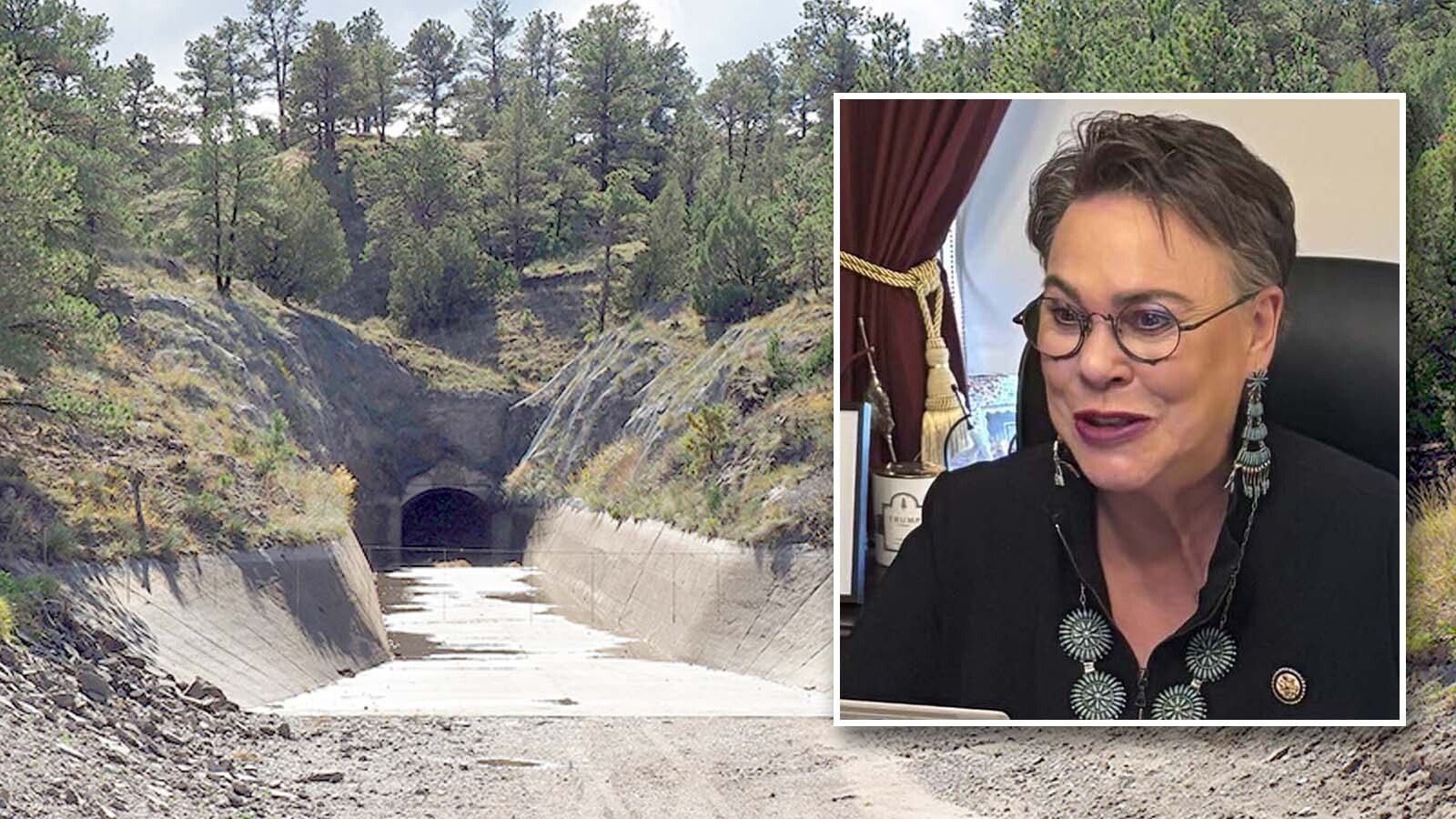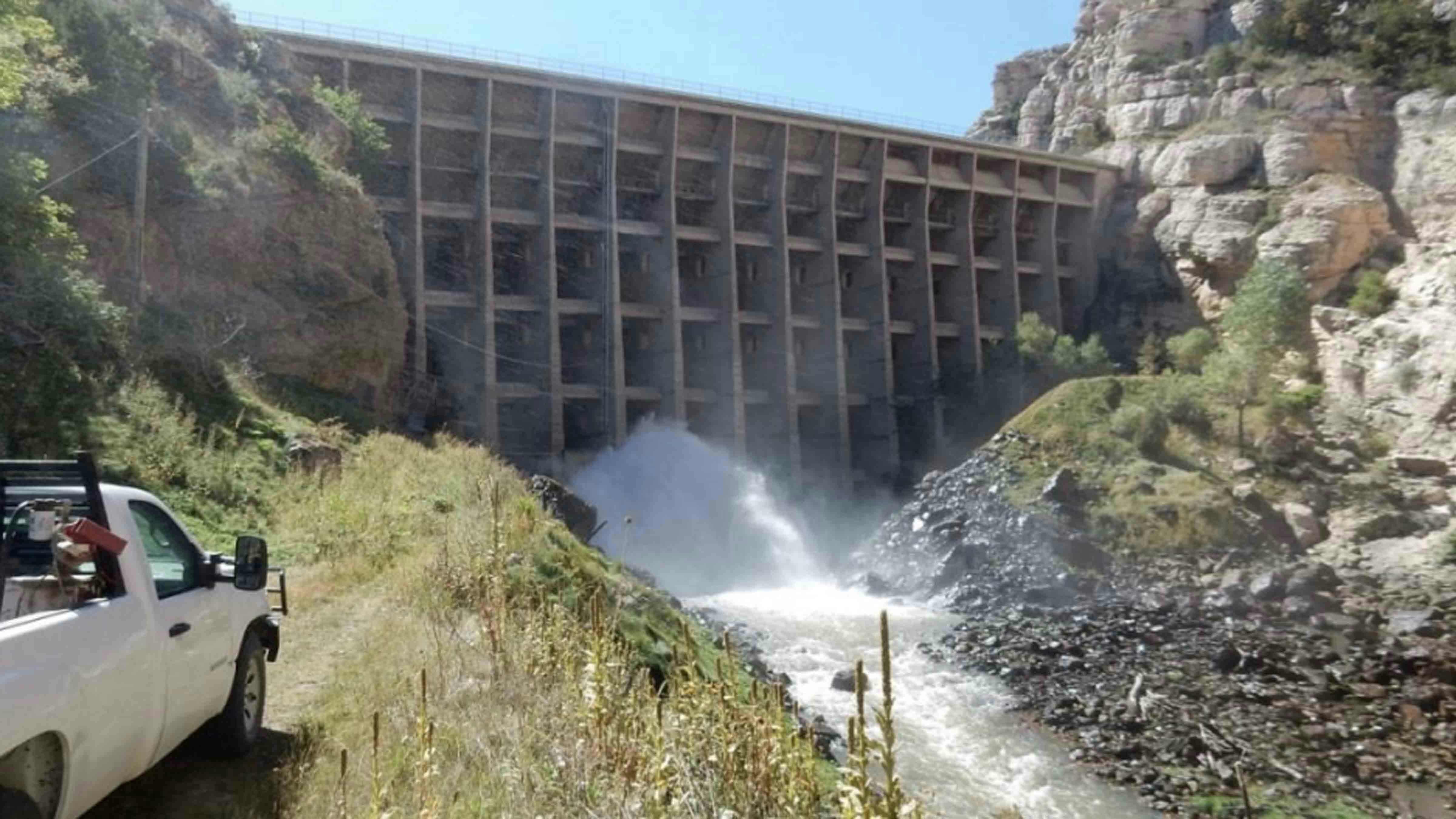
The LaPrele Dam in Converse County had seen more than double its intended 50-year service life when inspectors took a closer look at its hard-to-reach upper half in 2019.
The intent of the inspection was to look for rock fall damage. But instead, they found cracks in the dam’s “flying buttress” structure. And that alarmed them enough to call for lowering the dam’s authorized maximum capacity to 60%.
That should be enough to keep things safe, for now, but the aging structure should be replaced sooner rather than later, Nathan Graves told Cowboy State Daily on Friday.
Graves was the dam safety engineer for the Wyoming State Engineer’s Office from 2012-2022.
But at 114 years old, LaPrele is the nation’s oldest open-front dam.
‘You Can’t See Them From The Bottom’
The dam’s structure has something to do with why the cracks went unnoticed, he said.
“Most of the dams were easy to inspect because you could walk along them and inspect them” from the top or look up at the smooth-faced structure from the bottom, Graves said.
But the LaPrele Dam, built in 1909, has a baffled front end with flying buttresses, a fairly common dam design at the time.
“You couldn’t see them (the cracks) from the bottom,” he said. “I couldn’t see them walking along the top or looking over the side.”
The cracks were the sort of damage that took drones, or inspectors hanging from climbing ropes, to pick out.
‘It Would Happen Rapidly’
The damage was detected, and the reservoir lowered soon enough to avert disaster, Graves said. Chances of the LaPrele Dam giving way anytime soon are slim.
“The idea is, if you can keep the water off of that (the cracked section), it will be a lot safer,” Graves said.
But if it did happen, it would be ugly, he said.
“If that dam were to fail, it’s not going to be like an earthen dam failing, where it would slowly give way. It would happen rapidly,” Graves said.
The “potential loss of life” was calculated at 15 people in a hypothetical failure scenario.
“Everybody from the dam down to Interstate 25 would be in danger,” he said.
‘Evacuate The Park’
Ayers Natural Bridge Park would catch the worst of it. About 20 feet of water would go roaring into the park, moving fast and taking out everything in its path.
Park managers have kept an eye on the dam, and for good reason.
“If we ever get a big rain event and they can’t release water from the reservoir at LaPrele fast enough, they should evacuate the park,” Graves said.
The flood from a dam collapse probably wouldn’t be deadly for Douglas, but it could cause extensive damage.
“The city of Douglas might get flooded. It would be a foot or less of water, and not moving very fast,” Graves said.
Keeping It At The Right Level
A replacement for the LaPrele is still in the design phase, which is about 30 % complete. A price tag for the project hasn’t been determined, but some preliminary estimates put it as much as $80 million.
The Wyoming Legislature’s Select Water Committee recently discussed the project. Funding for it could possibly be attached to an omnibus water bill expected to go to the Wyoming Legislature during its upcoming 2024 budget session.
So, for the foreseeable future, its important to keep the reservoir at the right level, below the cracks in the dam, Graves explained.
It’s set by the elevation above sea level of the water’s surface, 5,475 feet. The reservoir’s capacity is calculated by acre feet. An acre foot is the amount of water that would flood an acre to the depth of one foot.
“The 5,475 (feet in elevation) is the storage restriction elevation and not the acre-foot capacity,” Graves said. “It is still limited to 60% capacity, which is 60% of 20,000 acre feet, or around 12,000 acre-feet. Above elevation 5,475 is where HDR (an engineering firm) started noticing the shear cracks in the buttresses. The spillway elevation is 5,490, which would hold about 20,000 acre-feet.”
Mark Heinz can be reached at mark@cowboystatedaily.com.