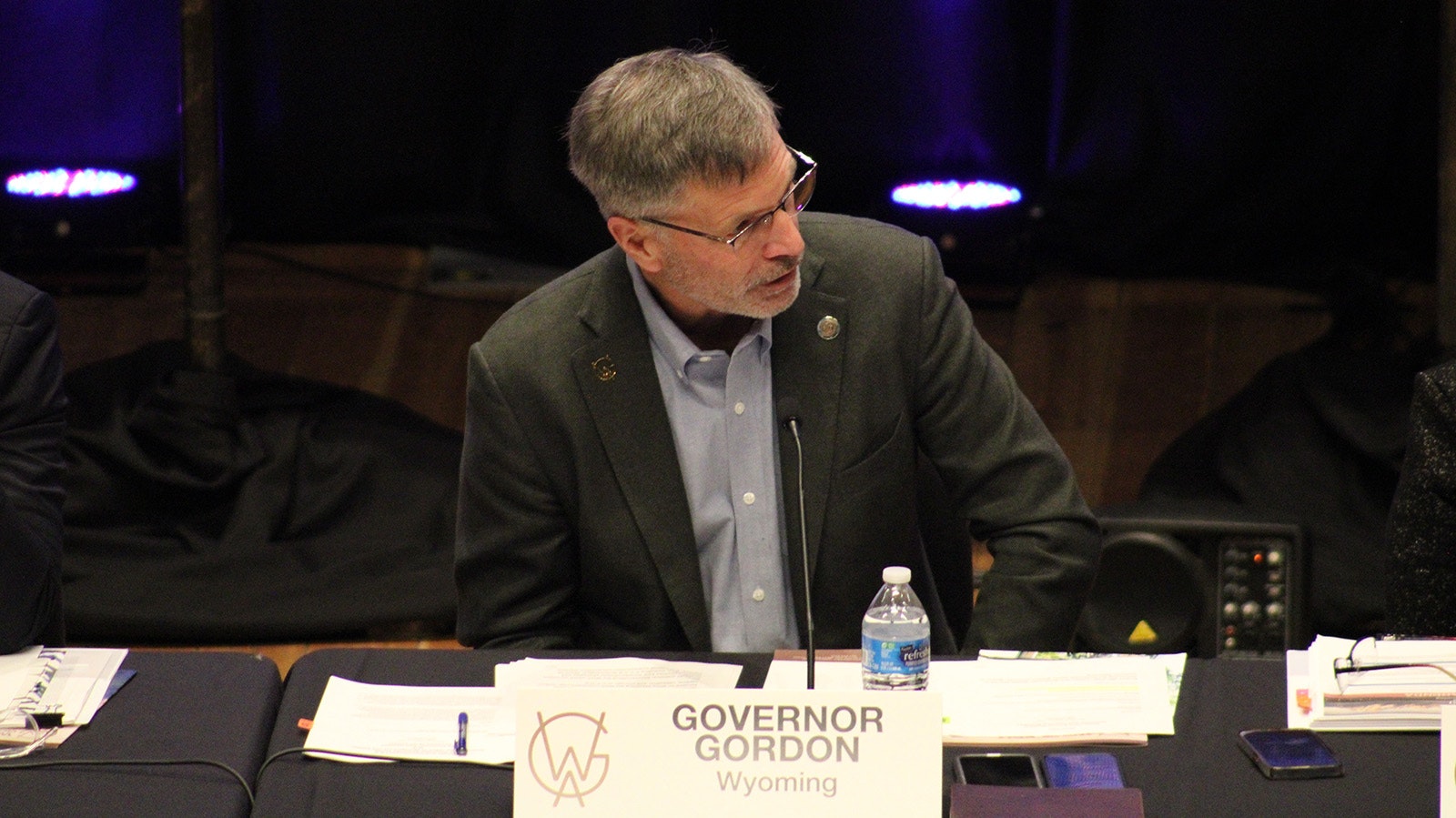
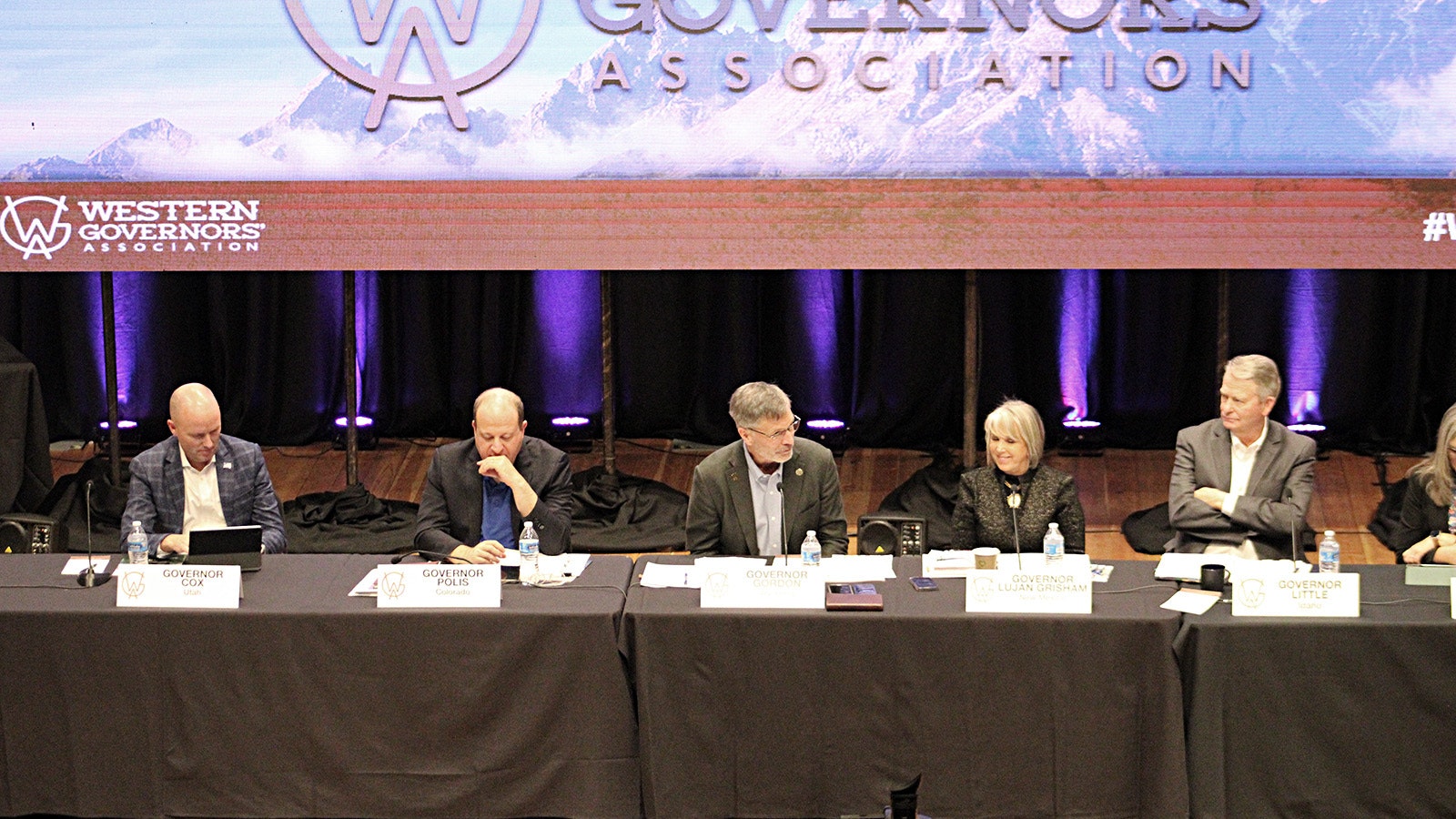
JACKSON — Despite expressed outrage and a vote of “no confidence” from the Wyoming Republican Party on Saturday over comments he made about climate change and reducing Wyoming’s carbon output, Gov. Mark Gordon stuck to his firm “decarbonization” policy at Monday’s Western Governors’ Association meeting in Jackson.
During a press conference held before the event, Gordon said there has been some confusion about what “decarbonizing the West” means.
“It is about what we do about carbon dioxide in the atmosphere and how we move forward in an aggressive fashion really to address that issue and understanding how all energy sources have a place,” he said.
Gordon has championed the initiative of “decarbonizing the West” in his role as chair of the Western Governors’ Association. On Monday, he said there is a shared, bipartisan commitment amongst Western governors to address climate change in the West. Gordon said these issues are of shared importance throughout the Western states, which produce about 50% of America’s energy.
“I think there is the opportunity really put in place by the policy framework that can allow our states to move quickly,” he said.
On Saturday, the Wyoming Republican Party made a vote of “no confidence” in response to comments Gordon made at Harvard University last month on the state’s commitment to becoming “carbon negative” and fighting climate change.

Cox Takes The Lead
On Monday, two leading members of President Joe Biden’s cabinet, Secretary of the Interior Deb Haaland and U.S. Office of Management and Budget Director Shalanda Young, spoke to the governors.
It was Utah Gov. Spencer Cox, not Gordon, who questioned Haaland about a controversial BLM Rock Springs Resource Management Plan and similar projects happening on federal land in Utah, where local input was viewed as being ignored.
“As we try to work together on those preferred alternatives, and a recommendation is made, sadly we’re used to having the preferred alternatives of a state ignored,” he said.
Cox said there is a perception from his constituents that these RMPs are being finalized even without consideration for local input from local BLM office staff, with a preference given to the suggestions of “donors, environmental agents, environmentalist groups, instead of people who are actually doing work on the ground,” he said.
Cox questioned Young why it seems this input is being ignored more often now.
Young said this isn’t the case, but committed to taking Cox’s input back to Washington, D.C.
“We take those comments seriously because you are on the ground and we listen to those,” she said. “We do have to hear everyone’s point of view. You do have to take those things into account when we finalize rules.”
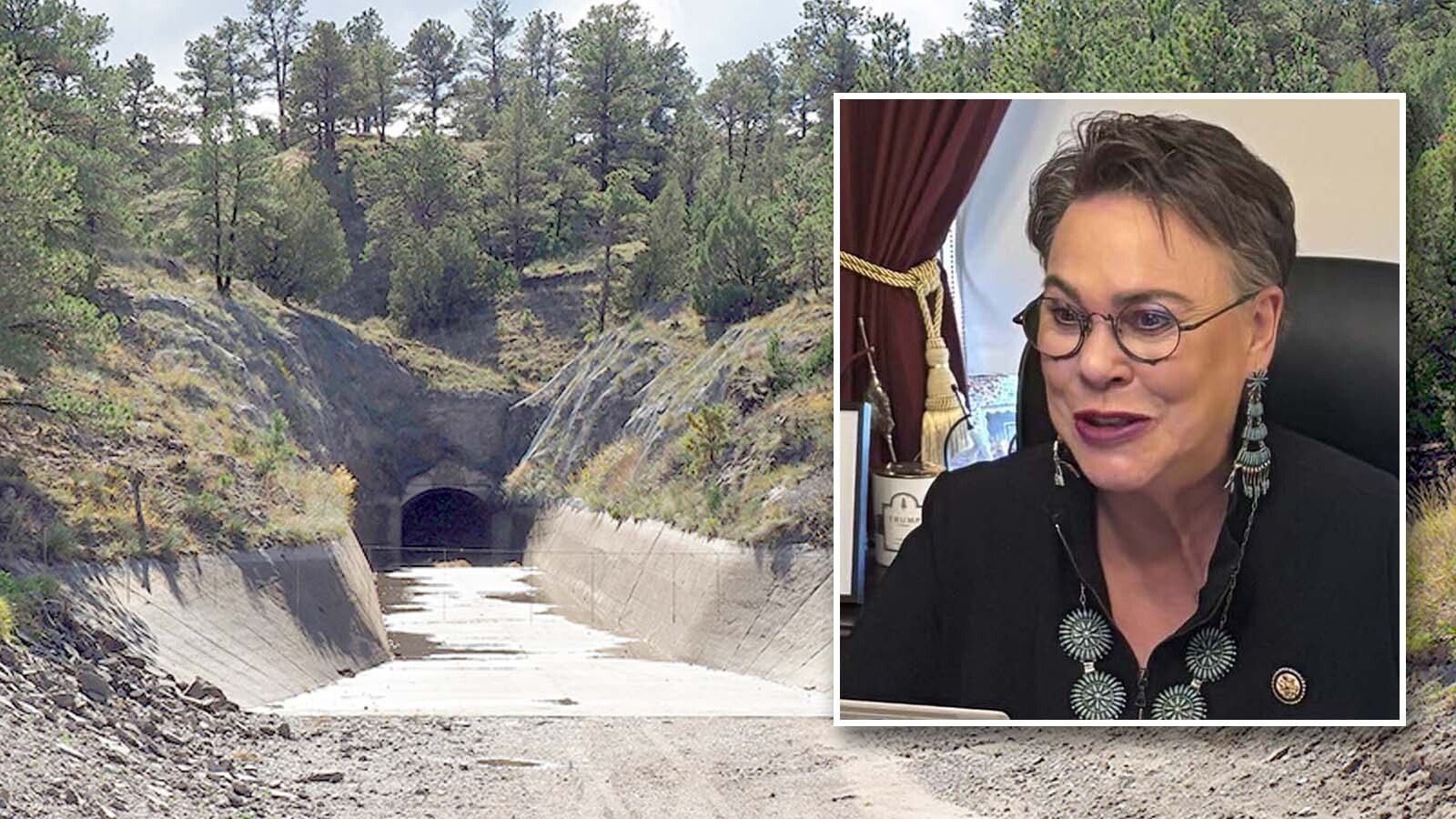
Haaland declined Cowboy State Daily’s request for comment.
Feds Not So Bad?
On Monday, Gordon said the fact that Wyoming was successful in pressuring the BLM to extend the comment period the Rock Springs plan to Jan. 17, 2024, is proof that the federal government has some willingness to cooperate.
Earlier Monday, Gordon announced three more public meetings that will be held later this month for people to comment on the draft plan.
“It was a bit of a shock that it was rolled out the way it did, and of course we were all taken a little bit by surprise,” Gordon said. “And occasionally when you vent it gives an opportunity to reconcile and I do believe that what we have now is a productive framework for moving forward.”
Although comments made at these meetings can be submitted to the BLM, there will be no BLM staff at the meetings.
Gordon also said the state has had a positive relationship with the U.S. Department of Agriculture on issues like migration corridors, which Gordon said requires buy-in from local landowners.
“One of the things that Wyoming has done pretty well, I think, is to engage our stakeholders from industry, private landowners, to try work on issues that are really sensitive and don’t lend themselves well to heavy-handed policy initiatives,” he said.
Gordon also encouraged Haaland and Young to expedite the federal approval process for oil and gas leasing in Wyoming, “Which would actually decrease the environmental impact of the development as it goes.”
Neither Haaland nor Young offered a response.
Haaland painted a picture of dire need in the West.
“The climate crisis threatens the very livability of many of the reasons we all cherish; increasingly scarce water that feeds our fields and families,” she said. “Once plentiful resources like the Colorado River Basin and ecosystems and habitats that are changing right before our eyes.”
Gordon took a slightly different perspective, mentioning Wyoming’s low level of methane output and efforts to close abandoned and orphan well.
Decarbonizing The West
Later Monday, Gordon and representatives from the University of Wyoming also highlighted the state’s efforts on carbon capture and carbon sequestration. When he visited Harvard in October and made his comments, Gordon brought asphalt to the school to show the value of coal.
Gordon said the marginal cost and economics of green energy doesn’t always add up.
Holly Krutka, executive director of the UW School of Energy Resources, said carbon capture could be made just as viable as wind and solar energies if it’s invested in at the same level.
“We have a real opportunity to bring down costs if this technology scales up,” Krutka said.
Leo Wolfson can be reached at leo@cowboystatedaily.com.