As Wyoming’s elk population continues to boom, there’s been frustration on both sides of the fence between hunters and ranchers.
Ranchers have argued that in some places, elk are overrunning their property, wrecking fences and gorging on their forage. Hunters in turn have clamored for more access, saying they’ll gladly shoot the animals, especially cow elk, to help trim the population.
But ranchers in turn say that just granting wide-open public access has led to abuses from the few “slob hunters” who ruin things for everybody by not respecting property boundaries, leaving garbage and gut piles laying around, and so forth.
Then there’s the money.
Increasingly, well-healed out-of-staters are willing to pony up tens of thousands of dollars a year to essentially turn ranches into their private hunting clubs. Or, guides can fetch thousands of dollars per hunt from clients who are willing to pay whatever it takes for an exclusive crack at a trophy bull on private ranchland.
But even with all of that, a rancher and a hunter — both multi-generation Wyoming natives — told Cowboy State Daily there are better ways to work things out. They don’t think there’s need for extreme measures, such as a recently proposed unlimited “lethal take” permitting system for elk on private land.
Willing To Pay Even For ‘The Sucker Fishing’
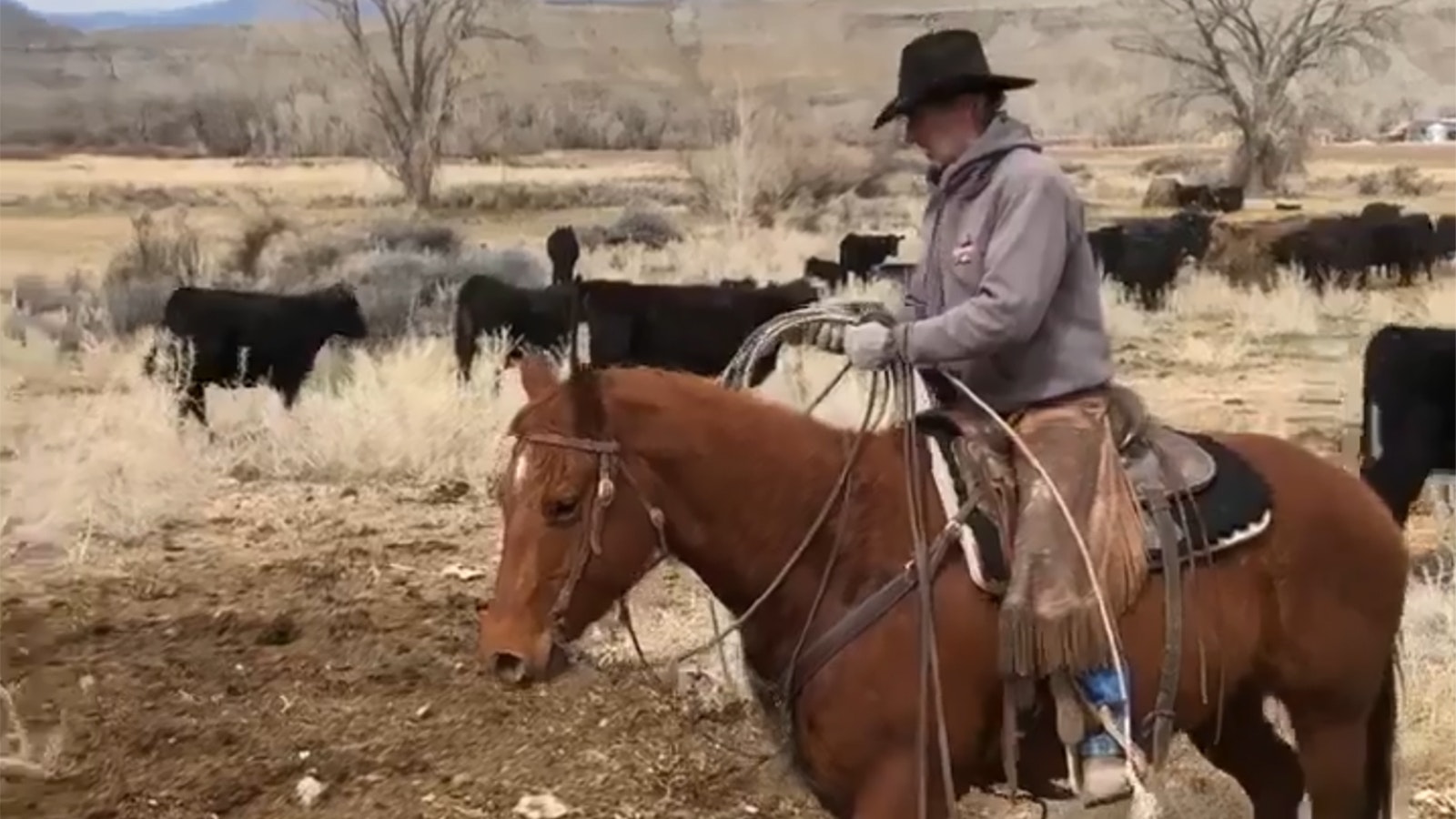
Tim Flitner’s multi-generation ranch sits between Greybull and Shell on prime habitat for elk and all sorts of other critters.
And it’s not as if he hasn’t been tempted by high-dollar offers over the years for exclusive access to his property, which hosts elk, game birds, skads of whitetail deer and even some fishing.
And he has granted exclusive early season access to outfitters taking clients on trophy bull elk hunts.
But he’s turned down other offers.
“We’re getting all kinds of offers from people who want to exclusively lease everything – the hunting, the shed antler hunting, the sucker fishing even,” he told Cowboy State Daily.
He likes to grant access to general public hunters, particularly locals with whom he’s built longstanding relationships with. The old-fashioned ethic of “neighbors helping neighbors” can still prevail, Flitner said.
For instance, there’s a local mechanic he’s know for years who loves to hunt on the family ranch and is willing to prioritize Flitner as a customer in return.
“When I call him and tell him I’ve got a pickup down, he’s going to jump it up in line for me to get it done,” Flitner said.
No Getting Away From Crowds
Janice White has lived in Encampment for years, and her family has been in Wyoming since her great-grandfather came here for work. She and her husband have hunted elk together for decades, primarily for getting meat in the freezer.
But it’s been increasingly more difficult to find access for hunting, she told Cowboy State Daily. And now that they’re in their 70s, the Whites aren’t as keen as they used to be to scale steep ridges to get to early season elk herds in the high country.
And with increasing pressure on public land, particularly from out-of-state hunters, sometimes even that isn’t enough to escape the crowds, she said.
“Where we’ve hunted for 35 years now has so many out-of-state hunters in it, you can trudge up in the dark of night and then when dawn comes, there’s some guy sitting up there on a four-wheeler, and we’re like, ‘Whoa, where did you come from?’” she said.
It would be better to be able to hunt the lowlands later in the season, once the elk have migrated down into what is mostly private ranch land, she said. But it’s become ever-more difficult to find ranches that haven’t already been leased out for high-dollar trophy bull hunts.
The Wyoming Game and Fish Department has made great efforts to build a bridge between ranchers and rank-and-file hunters, she said.
They’ve offered to help build fences around ranchers’ haystacks to keep hungry elk, for instance, she said.
In return for those services, ranchers should, ideally, provide better public hunting access, White said.
“I don’t have a solution, and public policy is very difficult, because what will work for one group won’t work for another. And I understand where the ranchers are coming from when it comes to irresponsible hunters,” White said. “But if they want assistance from Game and Fish, they should allow public access.”
And moreover “public access” shouldn’t mean just a few exclusive clients, she said.
‘Mom-And-Pop Ranches’
One thing that White and Flitner agree on — genuine family ranches are vital to Wyoming’s culture.
White said that local “mom-and-pop ranches” are better about giving hunters access, particularly to locals that they know.
In recent years “corporate ranches” have been setting a different set of rules, generally favoring those how have the most money to offer toward exclusive hunting rights.
Flitner said that as a family rancher, he’s tried to maintain as much general public access as he can. Sometimes it’s a matter of numbers, particularly for whitetail deer hunting on the lower sections of his family’s property.
“Doors still do get knocked on by hunters asking for permission,” he said. “And you can knock on this door, but I can only have so many on here at once” because it can become unsafe when the hunting grounds get too crowded.
He’s seen an increase in “absentee landowners” or wealthy out-of-staters who buy up large parcels of land.
In fact, he said his ranch borders property owned by Kanye West, who lived in Wyoming only briefly. Absolutely nobody is allowed access to West’s property, Flitner said.
Ranchers are the stewards of some of Wyoming's best wildlife habitat, and family ranchers are a far better option than wildlife habitat being subdivided into small parcels, he said.
White said Wyoming property law was largely forged during a time when most of the private land was owned by resident families. So, the state was ill-prepared for an influx of absentee or corporate owners, who can too easily cut off access and essentially make game herds a private commodity.
“In Wyoming, owning a ranch, or owning any type of property it interesting. I don’t think we had the foresight to see the corporate takeovers. There’s so few laws because we didn’t see any of this coming. You can do just about anything on private property in Wyoming,” she said.
But the fact stands, under the North American model of wildlife conservation, wildlife is a public trust and shouldn’t be treated as a cash crop.
“Wildlife is public property. Even bull elk are public property,” she said.
Ranchers Pay A Heavy Price
Flitner said he appreciates the compensation that Game and Fish is willing to pay for lost pasture forage that elk eat before cattle can get to it and other damage.
And a legislative bill is in the works to compensate ranchers for 150% of the market value for forage in areas where elk herds exceed the Game and Fish’s population objectives.
But even so, what ranchers lose often exceeds compensation, Flitner said.
“Despite the stereotype of the ‘welfare rancher,’ we have ranchers like Juan Reyes, who donated $80,000 of forage for that elk herd on his place,” he said.
Reyes ranches in Albany County, where some elk herds are thousands of animals above Game and Fish objective numbers. He told Cowboy State Daily this summer that a special “lethal take” hunt on his property helped, but still made only a small dent in the elk population.
Flitner said he regularly loses more in forage to elk than compensation can cover, but he doesn’t mind so long as it doesn’t get out of control.
For now, letting outfitters guide paying clients on trophy bull elk hunts during the early season — and then opening up his property for some regular hunters to shoot cow elk during later seasons — has been enough to keep the elk population in check on his ranch.
Hunters Can Spook Elk
White said that even those hunters who don’t manage to kill elk on ranchland can still spook the herds and keep them moving rather than lingering and continuing to gobble hay and grain.
One rancher she knows intercepts elk as soon as they start filtering down out of the high country as fall temperatures drop.
“One of our ranchers physically pushes elk off his property. He doesn’t want them on his land,” she said.
And even if hunters aren’t allowed to try shooting elk on such properties, they’d likely be willing to help drive them off and onto public land, she said.
‘All-You-Can Kill’ Is A Bad Idea
Neither Flitner or White like the idea of unlimited killing of elk on ranches.
State Rep. Bill Allemand, R-Midwest, recently told Cowboy State Daily that he was considering introducing a bill that would allow unlimited “lethal take” permits for cow elk on private property in areas where the herds were above objective numbers.
The permits could be issued on the condition that the elk carcasses would have to be processed for human consumption. And $20 would be reimbursed to Game and Fish for every cow elk killed.
White said she thinks such permits would be too easy to abuse.
“Who is going to count the carcasses?” she said.
Flitner said he and other working ranchers wouldn’t have time to be “skinning elk carcasses every day for most of the month of October.”
And he doesn’t favor what he thinks could become “wholesale slaughter.”
“As ranchers, we’re in the business of keeping things alive,” he said.
Mark Heinz can be reached at mark@cowboystatedaily.com.