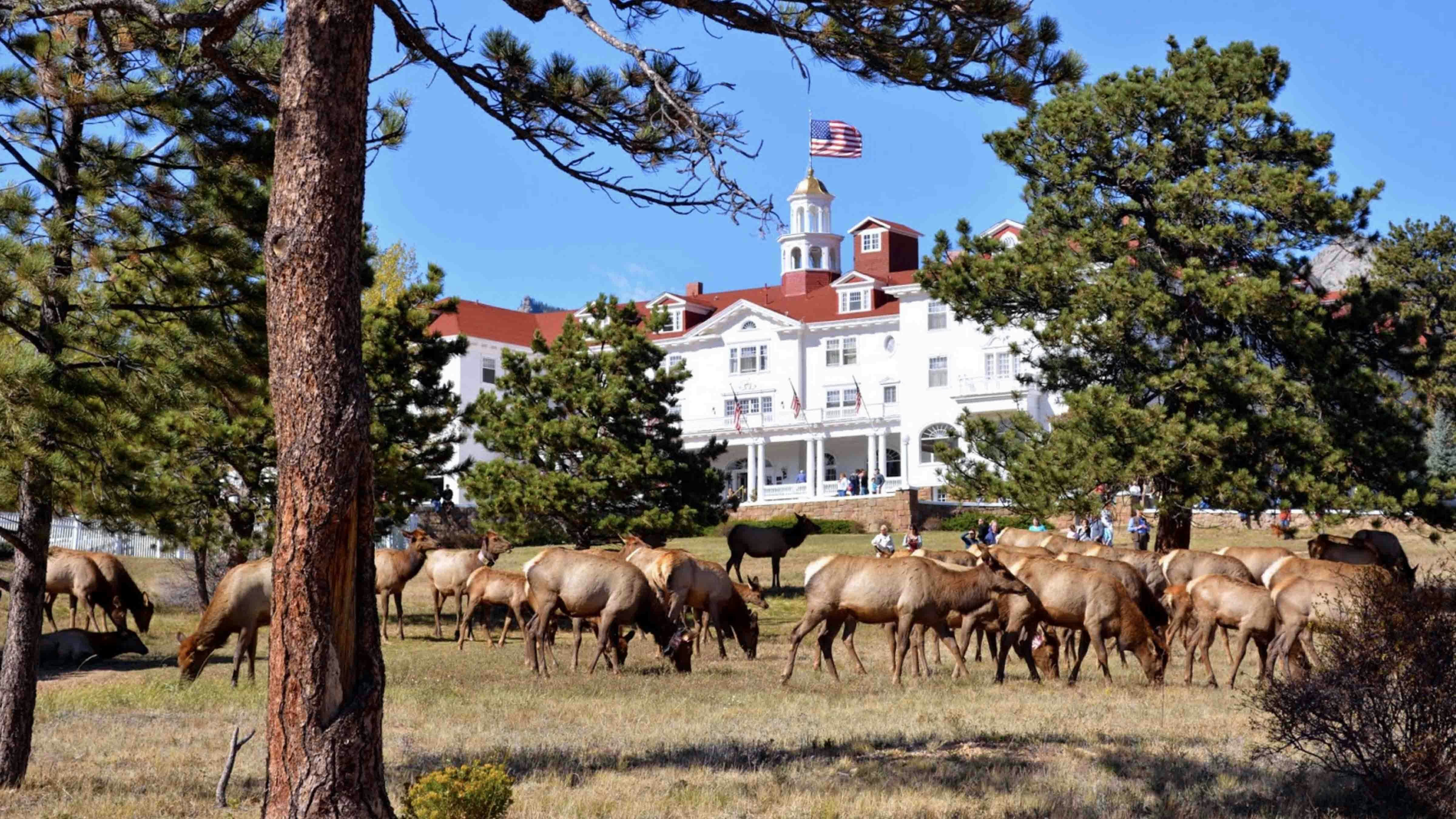
Much like Wyoming’s gateway communities near Grand Teton and Yellowstone national parks, Estes Park, Colorado, must deal with critter jams and gawking tourists when the elk take over town.
Twice each year – in the spring, and right about this time every fall – what seems a wall of wapiti moves into town on their migrations too and from Rocky Mountain National Park.
The elk, which likely have Wyoming DNA, hang out in parking lots, lounge on suburban lawns and block traffic on downtown streets.
It’s been going on for years, and the townspeople have adapted to it, said Seth Calbert, a store manager at Estes Park Mountain Shop.
“The golf course is all tied up with elk activity this time of year,” he told Cowboy State Daily. “They take all the swings off the playgrounds around town so that elk don’t get tangled up in them.”
Wyoming Roots
Colorado boasts the world’s largest elk population at 280,000 strong – and has Wyoming to thank for it.
There was a time when the Centennial State was all but out of Wapiti. By the early 20th century, the state’s elk population was disappearing. But then Wyoming stepped in to help.
“In 1916, Colorado imported 50 elk from Wyoming to re-establish dwindling herds,” according to Colorado Park and Wildlife.
“The elk were transported and released in Idaho Springs and the Greenhorn Mountains in Pueblo County. From these limited transplants, and through decades of trapping and relocation efforts by wildlife managers, elk populations have soared to the abundant herds for which Colorado is now famous.”
‘A Super-Hot Spot’
Because it sits right outside of a famous national park, Estes Park is in much the same position as Cody in Jackson in terms of drawing visitors, CPW spokeswoman Bridget O'Rourke told Cowboy State Daily.
“It’s a super-hot spot for people from Denver to get to Rocky Mountain National Park,” she said.
During the fall elk migration thorough Estes Park, it’s time for the elk rut, or mating season, which can make bull elk cantankerous, O’Rourke said.
“You have to drive through Estes Park to get to the east side of the national park,” she said. “You really have to be mindful of the bull elk during the rut, because they can be more aggressive.”
People Mostly Well-Behaved
Despite the crowds of people and gobs of elk, there’s remarkably little conflict between the two, Calbert said. Most people know how to behave themselves and keep their distance from the elk.
“It’s mostly OK. Usually, there’s one or two times a year that somebody will get backed down by an elk. Somebody will get too close to a bull and he’ll start leveling his antlers at them,” he said.
While bulls are the ones to watch out for during the fall migration through Estes Park, the script flips in the spring, Calbert said.
“During the springtime, the cows can get aggressive because they’re being protective of their new calves,” he said.
The elk have been passing through Estes Park so long, they’ve become fairly adapted to people, Calbert said, adding that “about 20-30 feet” seems to be their typical comfort bubble with humans.
Out And About All Over Town
The migrating elk don’t come thundering through town all at once, Calbert said. Instead, they pass through in bunches.
“You might see one dominant bull with 20 or so cows, and then you’ll see a bunch of younger bulls together,” he said. “It’s not uncommon to see groups of 20-40 elk.”
Sometimes the elk linger for a while, bedding down on people’s lawns, in parks or on the golf course.
“We get them hanging out here in the store’s parking lot,” Calbert said.
And driving in Estes Park during the twice-yearly migrations is an exercise in patience, he said.
“You’ll get traffic backed up everywhere all the time as the elk are crossing the streets and roads,” Calbert said.
Mark Heinz can be reached at mark@cowboystatedaily.com.