Greg Weatherby has seen a lot in his decades of hunting with a bow or muzzle-loader in the Greater Yellowstone backcountry — including a surge of conflicts between hunters and Bears.
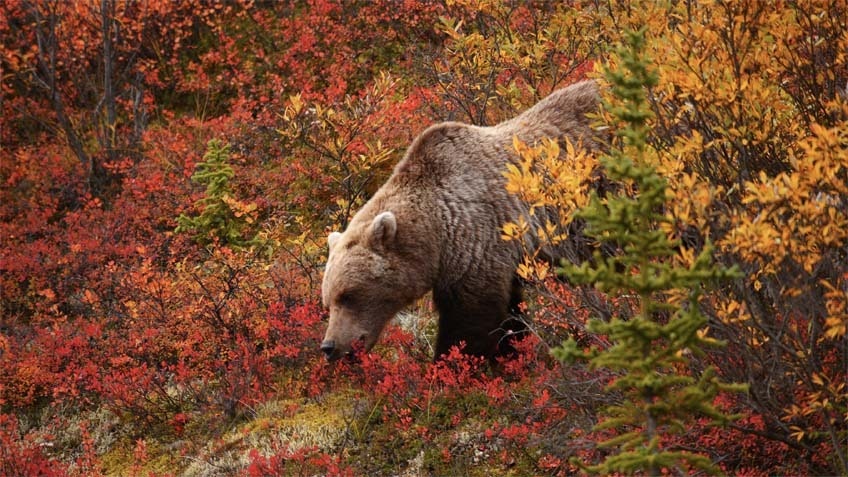
Most recently, archery hunters in two incidents shot and killed charging grizzlies in remote areas of Idaho outside of Yellowstone National Park. In both cases, wildlife agents determined that the shootings were legitimate self-defense.
Wants To Advise, Not Criticize
Weatherby, who has homes in Alta, Wyoming, and Idaho Falls, Idaho, said he’s frequently hunted the areas where those shootings took place – and keen situational awareness has kept him out of trouble so far.
For instance, he questions whether hunters should traverse through thick stands of brush, especially along creeks and streams – where the sound of running water can keep humans and bears from hearing each other.
Even so, Weatherby said he wants to offer insights that might save both humans and grizzlies, rather than try armchair quarterbacking everybody who has had a bad bear encounter.
“I wasn’t there,” he told Cowboy State Daily about the recent Idaho altercations. “I have no idea what the situation was. I don’t have anything good or bad to say about the situations.”

Plan It Like You Plan Everything
But in the larger picture, Weatherby said he’s noticed that hunters will meticulously plan every aspect of a hunt – except the best routes to take to avoid surprise encounters with grizzlies.
The shootings in Idaho – as well as recent cases of charging grizzlies killed by hunters in Montana – seem to hinge on a common factor. That being, the bears and hunters surprise each other at close range in thick cover.
That’s why hunters, especially during early archery or muzzleloader seasons, need to plan the exact routes they’re going to take into and out of the backcountry, Weatherby said.
“Hunters seem to plan for everything – what they’re going to eat, where they’re going to stay, even what beer they’re going to drink — but they don’t really plan for where they’re going to ingress and regress for their hunt,” he said.
‘Got Almost All The Meat Torn Off His Arm’
Weatherby had a long career as an accident risk specialist, and he applies those principles to hunting in grizzly country.
He said he likes to scrutinize the landscape and avoids thick brush, especially along creeks and streams. Those places are just too risky in terms of surprising a bear, particularly a female with cubs, he said.
He recalls advising a fellow hunter to not traverse along a remote creek bed about 15 years ago. The hunter ignored that advice and paid dearly.
“I told him, ‘Don’t walk up that creek, because you can’t hear over the rushing water.’ And he walked up that creek and got attacked by a mom grizzly with cubs and got almost all the meat torn off his arm,” Weatherby said.
Hunters also need to pay keen attention to what’s going on around them, Weatherby said.
Hunters are frequently out before dawn or at dusk, when bears are most active. And during hunting season, grizzlies are eating all they can to fatten up for winter hibernation. Big game gut piles and carcasses can be their favorite treats.
“If you see circling crows or other birds like that — scavenger birds, you’d better be aware,” he said. “If you do see a gut pile or you see a dead animal, you’d better get out of there, or at least avoid it.”

Can You Really Shoot That Well?
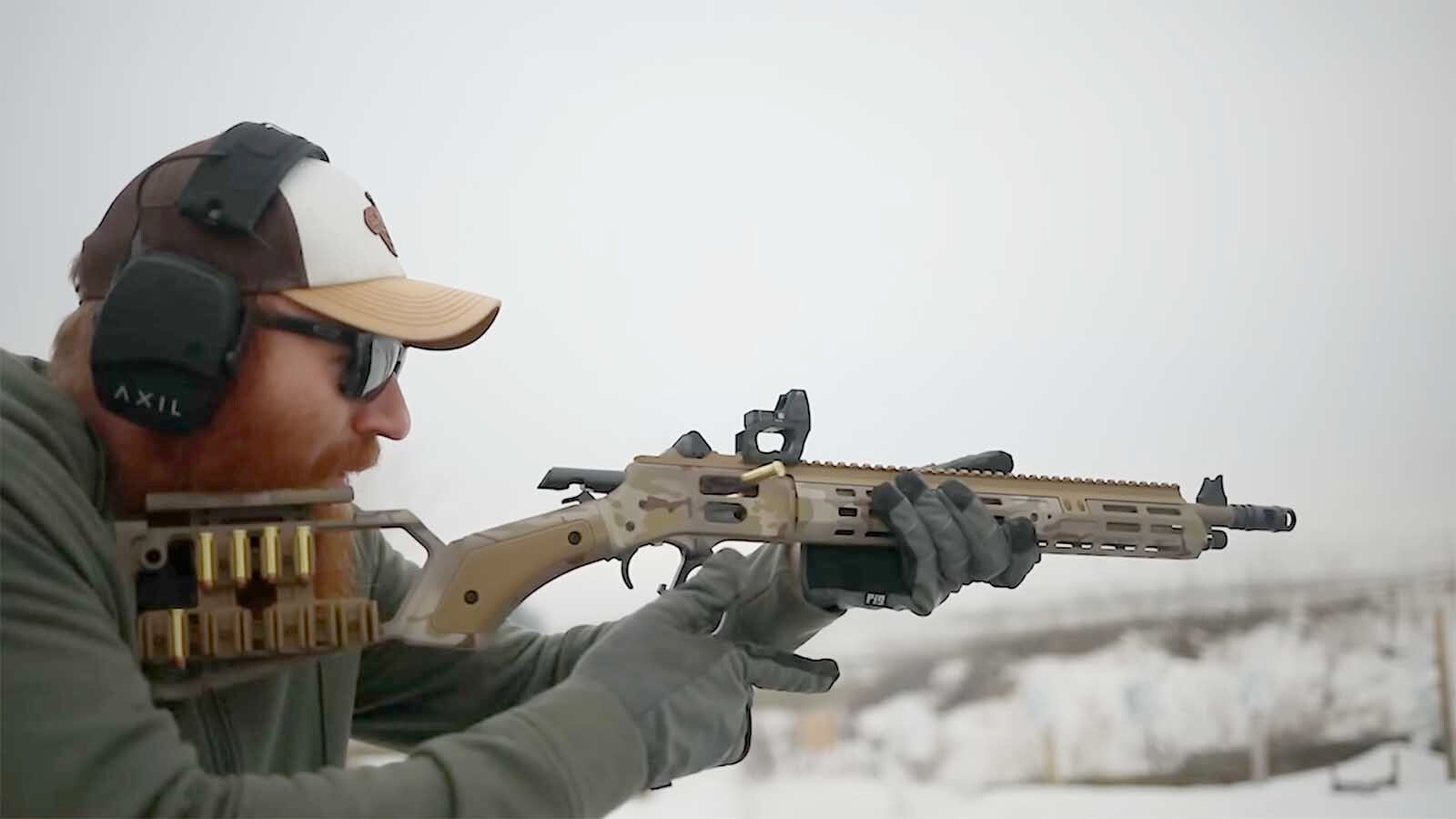
As for the guns vs. bear spray debate, Weatherby said he carries both spray and a sidearm, but the spray is his first choice.
When he can’t avoid going through thick vegetation, he’s prepared.
“First of all, I’m going to have my bear spray out and in my hand. And secondly, I’m going to traverse that area just as quickly as I can,” he said.
Many people are probably overconfident about their ability to effectively use a handgun under the extreme stress of a grizzly charge, Weatherby added.
“How would you like to try to hit something the size of a dinner plate coming at you at 35 mph through the brush, and have 1.5 seconds to do that?” he said.
Can’t Just Spray And Pray
Likewise, people shouldn’t just take for granted that they can hit a bear in the face with a stream of spray if they haven’t practiced, he said.
And hunters should keep in mind that spray has an effective shelf life. If it’s much more than a year or two old, it might have lost its effectiveness and should be used for practice, Weatherby said.
“I tell people to take and old can of bear spray and practice with it,” he said. “See what it’s really like to pull it from the holster, get the safety tab off and hit the spray in just a matter of seconds.”
Hitting a grizzly right with bear spray can be tricker that it seems, he added.
He’s never had to use bear spray while hunting, but said he did once have to spray a grizzly on his remote property near Alta.
The first blast wasn’t quite on target, but a second blast got the bear in the face “and it ambled off,” he said.
Weatherby said he doesn’t consider himself any sort of expert, but he’s figured some things out after countless hours out among grizzlies.
And he hopes he still has some good hunting seasons left in him.
“I’m still alive, and I’m 68 years old,” he said.
Mark Heinz can be reached at mark@cowboystatedaily.com.