I never thought I’d be quoting former President Bill Clinton, but here I am: “It depends on what the meaning of the word ‘is’ is.”
I’ve started writing up my comments on the draft resource management plan (RMP) and environmental impact statement (EIS) that will guide the Bureau of Land Management in the Rock Springs District and have concluded that it’s semantics that matter, that set the stage, and that will impact our future.
When the BLM was confronted with the plan’s proposed closure of thousands of miles of roads and routes, BLM staffers said it was mistakenly included, that the agency intends to fix it. While that gives us a little hope, don’t count on it for much. What counts is not what agency officials say, or what it pledges it intends to do, but what is in writing in the official record.
This draft plan is a disaster and I’m pleased to see that numerous governments and organizations are following Gov. Mark Gordon’s lead in requesting that the very flawed document be withdrawn. It should be tossed aside because it’s a two-tome pile of garbage. It’s replete with contradictions, mistakes, and lacking scientific support – and this combination should be enough to force the BLM to go back to the drafting table.
But back to semantics. To understand the restrictions the BLM plans to impose under each alternative, the reader must understand the terms used in the proposed restrictions, so turning to the glossary will provide the definition. But you’ll have to flip through 36 pages of definitions since the BLM has apparently cut-and-pasted terms from other documents. The glossary includes at least two dozen words and terms that are not mentioned anywhere else in the 1,330 pages of the RMP. It’s pages and pages of junk.
Why do I think the glossary matter so much? Just off the top of my head, because the BLM is legally mandated to manage public lands on the basis of multiple use and sustained yield, yet failed to include the Congressional definition of sustained yield as “the achievement and maintenance in perpetuity of a high-level annual or regular periodic output of the various renewable resources of the public lands consistent with multiple use.” That definition means everything when it comes to managing public lands.
How the BLM’s glossary defines words will dictate how resource use is restricted. For example, the BLM proposes to “prohibit livestock grazing in big game parturition habitat during the birthing season.” The glossary defines big game to include elk, deer, bighorn sheep, moose and pronghorn.
That means that livestock grazing is prohibited even in pronghorn antelope fawning habitat during the birthing season, so no domestic sheep or cattle on grazing allotments through June 30. Really? Did the BLM only mean to apply this term to designated birthing areas, for certain big game species like elk? T
he agency’s intention doesn’t matter because that’s not how the document currently reads. We can’t rely on what the BLM may say its intentions are; we can only go with what is in the document. As written, the document would prohibit livestock grazing on most of the district through June 30.
If you’re not a livestock producer in the area, perhaps this doesn’t concern you. But if you drive through these public lands, the plan will impact you as well.
The plan says the BLM will “Seasonally close vehicular travel in crucial and important wildlife habitats and during crucial and important periods (big game crucial winter ranges 11/15-4/30, deer parturition areas 5/1-6/30, elk calving areas 5/1-6/30, moose calving areas 5/1-6/30, raptor nesting areas 2/1-7/31).” Again, did the BLM mean vehicle closures would only apply in certain designated birthing areas, or designated areas on certain maps in the RMP, or wherever in the district these areas occur? Right now, it’s wherever in the district these areas are located.
The BLM defines “disruptive activities” as activities that “would require people and/or the structure or activity to be present in these habitats for a duration of more than one hour during any one 24-hour period during the applicable season in the site-specific area.”
It’s important to note that this definition can apply to any use of public lands – not just energy development. So when the BLM proposes (Page 2-69) to “prohibit surface disturbing or disruptive activities on big game crucial winter ranges, parturition areas, migration corridors and transitional habitats, as identified by WGFD” it means any human use for more than one hour in a 24-hour period within these areas would be prohibited.
That’s what it says. People would be prohibited from camping within these habitats during that time. Sheepherder camps would be prohibited. Anything that involved people being present for more than one hour would be prohibited. But this time BLM noted the restriction would apply in these habitats as identified by the Wyoming Game & Fish Department.
The BLM did not include maps of these areas in the EIS (another significant failure by the federal agency), so I went to WG&F’s Statewide Habitat Plan 2020 Priority Areas and had a look. When you overlay all these important habitats for the agency’s “terrestrial crucial habitat priorities,” it’s much of the Rock Springs district (and a large portion of the entire state).
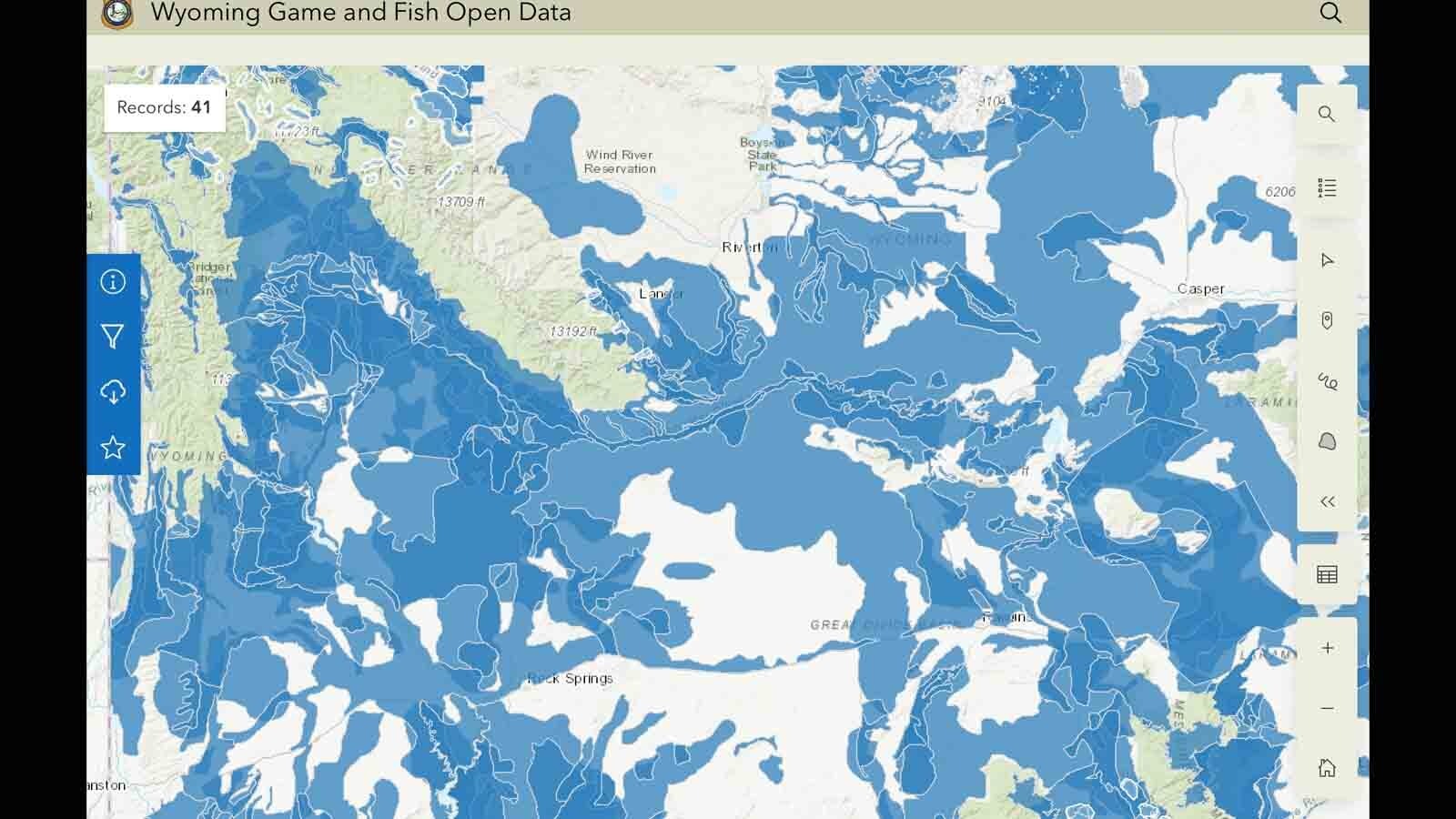
By not providing the maps, BLM is not providing a fair and comprehensive document for our assessment.
Page 2-74 says the BLM will “Restrict surface disturbing and disruptive activities seasonally within a two-mile radius of occupied nests and historic raptor nesting sites and associated feeding grounds to protect nesting raptors.” That would encompass a huge amount of ground throughout the RSFO for about six months of the year for raptor nesting. Is this really the BLM’s intention? To restrict any human use of more than an hour throughout much of the district, for six months of the year? The agency’s intention is not what matters; what matters is what’s in writing. On paper, the BLM proposes to disallow most human use for six months of the year across much of the district.
I guess I keep looking at this plan and think that the restrictions are so onerous that the BLM didn’t realize what it’s proposing. Then I remember that the federal agency picked the most restrictive management as its preferred alternative. This is BLM’s plan.
Don’t give the BLM the benefit of the doubt – the agency doesn’t deserve it. When the BLM tells you that it intends to renew existing right-of-way grants in the ROW Exclusion area like agency officials told a legislative committee last week, don’t take them at their word. We’re going to need that in writing.
If the BLM says it will continue to issue trailing permits for livestock movement, don’t believe it. It’s not in their preferred alternative and not in writing, it won’t happen. We’re going to need that in writing.
And when the BLM says that it will take up its transportation plan later as a separate planning process, know that the agency has prepared the foundation to close thousands of miles of roads and routes with this RMP. If it adopts the alternative that calls for pristine, quiet recreation, kiss the majority of roads and routes goodbye. We’ve already got that in writing.
Cat Urbigkit is an author and rancher who lives on the range in Sublette County, Wyoming. Her column, Range Writing, appears weekly in Cowboy State Daily.