“Sometimes in the most unlikely elements comes a tantalizing mystery and confirmation that the truth is stranger than fiction,” says Robert Stack, the host of the hit TV show “Unsolved Mysteries” in a 1992 episode.
“The mystery might start with this broken-down footlocker. Who can guess what the old trunk might contain or where it might lead? Perhaps to a small town in Wyoming called Thermopolis.”
“Thermopolis” never sounded as eerie as it did when it was spoken by Stack recalling the story of a murder in Iowa, a skeleton in a footlocker in Wyoming, and the family resemblance that solved the mystery.
A Skeleton In A Footlocker
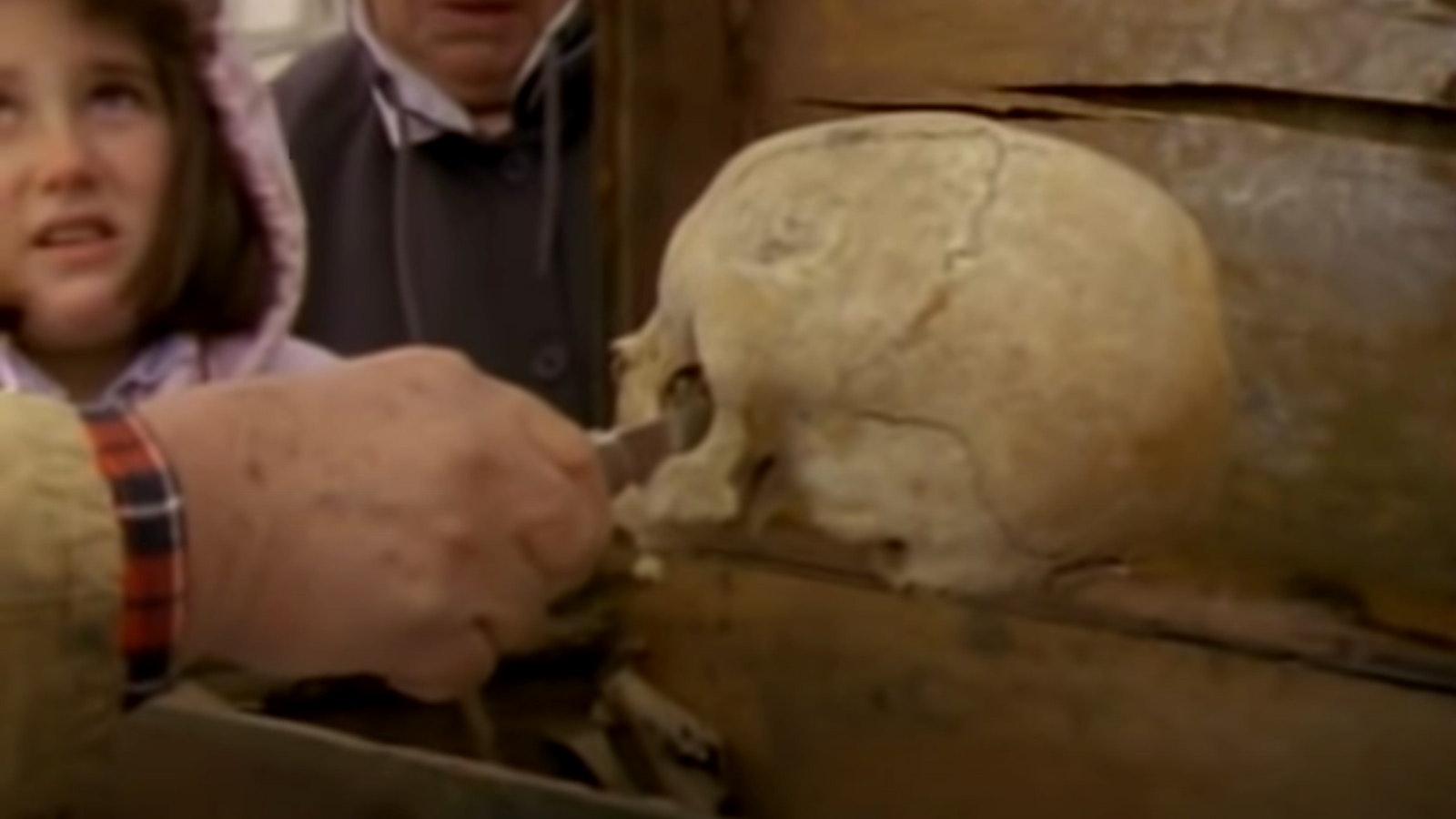
The cold case was opened in 1992 when Thermopolis resident Newel Sessions opened a locked 1930s-era military footlocker to see what was inside.
The footlocker was owned by John Morris, who had left it and some other property in a shed on Sessions’ property before moving away from Thermopolis in 1986.
That’s when John Lumley, then the Hot Springs County Sheriff, got the call from Sessions about the human bones he found inside it.
“He opened the footlocker to see what was in it and was going to get rid of it and clean the shed up,” Lumley told Cowboy State Daily. “Upon opening it, he discovered a human skeleton.”
The case might have ended there. Sessions wanted to give the skeleton “a proper burial,” something he admitted during his interview for the “Unsolved Mysteries” episode. His wife Daisy thought otherwise.
“He was going to take the skeleton and bury it,” Lumley said. “Daisy told him, ‘No, you’re going to call the sheriff.’ So, I went out to visit with Newel, and the county coroner took the skeleton to Cheyenne.”
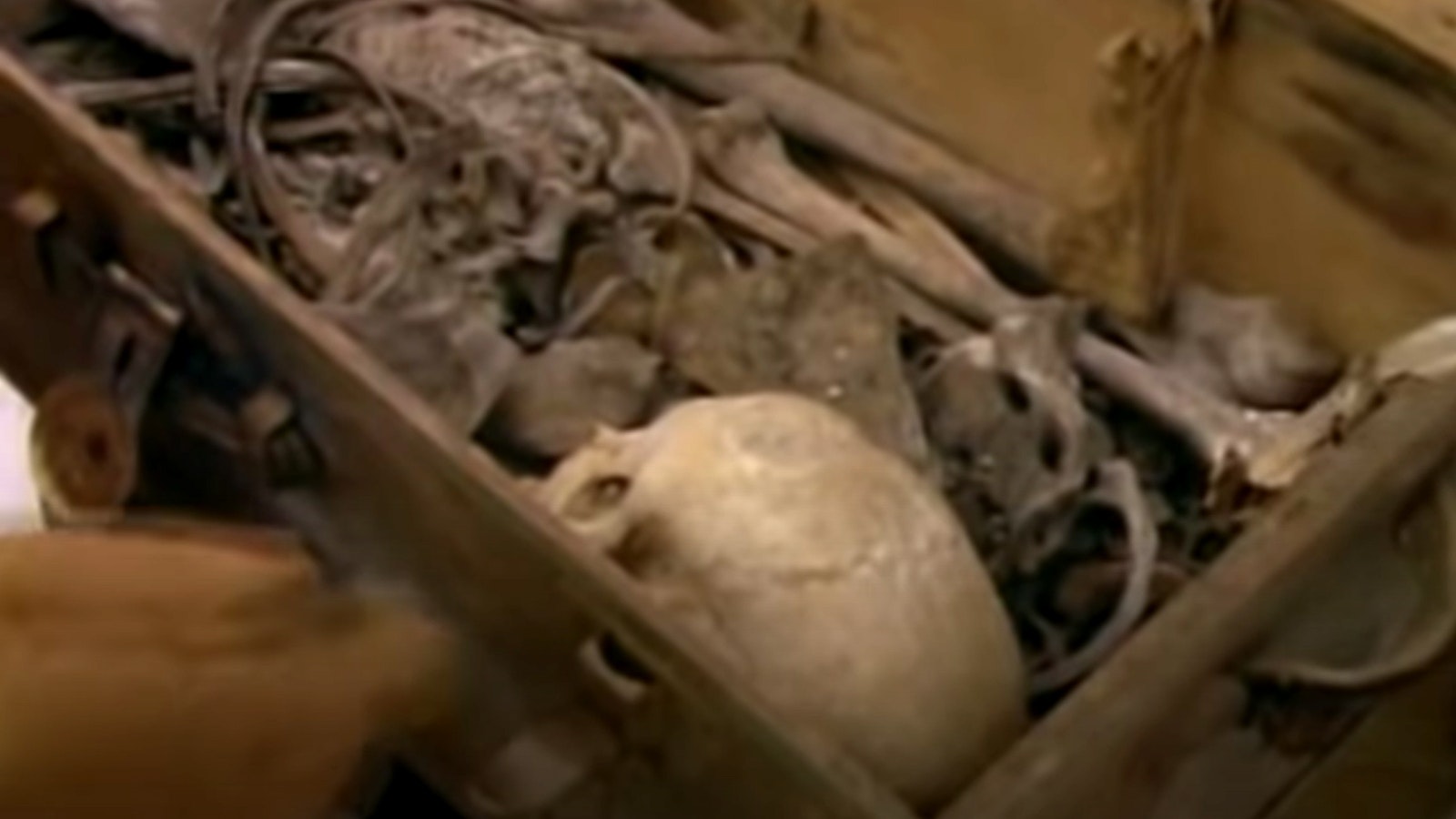
The skeleton was nearly complete, minus the feet and lower legs. The only other things inside the footlocker, other than dirt, were a belt and a Hy-Vee plastic shopping bag.
Once the skeleton was examined at the Wyoming State Crime Lab in Cheyenne, Sandra Mays, then director of the lab, confirmed that it belonged to a murder victim. A bullet was lodged behind the left eye and another had grazed the ribs.
“I jokingly told (people) it was a homicide,” Lumley said. “They got one on me when they called and said it really was.”
Silent Secrets
The first step in Lumley’s cold case investigation was to call Morris, who had since moved to Texas. The first phone interrogation gave Lumley an immediate sense of unease.
“He said he’d bought (the footlocker) in either Oklahoma or Iowa,” the former sheriff said. “He didn’t remember where. He had moved from town to town, state to state, and never opened it. He just kept it.”
Lumley wasn’t buying Morris’ explanation and wasn’t shy about saying so.
“I told him I didn’t believe him,” he said. “I knew he was lying to me. I felt he was involved and at least knew who the victim was.”
Another phone interrogation conducted by the Wyoming Division of Criminal Investigation got the same answers. So, Lumley traveled to Texas to interrogate Morris in person.
“I got into his face about it a little bit. He related the same (information) and terminated the conversation,” he said. “He invoked his rights under Miranda, and we ceased talking.”
Without Morris’ cooperation, there wasn’t much else to be done. But one of Lumley’s speculations produced the next “big break” in the case.
“I said, ‘I guess this is one for Unsolved Mysteries’ kind of jokingly,” he said. “But they heard about the case and put it up.”
The Real Story With The Real People
“Gabby’s Bones,” the segment showcasing the cold case, appeared in the 20th episode of the show’s fifth season. The episode first aired March 30, 1992.
This was the era of the show when “whenever possible, the actual family members and police officials participated in recreating the events.”
That meant Lumley, Sessions and others participated in the recreation of events for the camera, including a sub-zero shoot on Sessions’ ranch to depict the opening of the footlocker that reopened the cold case.
In addition to being very cold, Lumley found parts of his portrayal a little uncomfortable.
“I had a great empathy for women at that point,” Lumley said. “They took the lenses out of my glasses and put makeup all over my face, then stuck me in front of a camera with an imposed set in the background. It’s very uncomfortable wearing that stuff.”
But Lumley didn’t feel any discomfort discussing or recreating the circumstances of the case. Even then, he knew some good might come from the exposure on the show.
“They asked the questions, and you respond,” he said.
Facial Reconstruction
John Morris, identified as “Gabby” in the episode, did not participate in the recreations, but did sit down for an interview with his face obscured. Lumley’s interrogation of Morris in Texas was recreated with an actor in what is now the Safari Club at the Hot Springs Hotel and Spa in Hot Springs State Park.
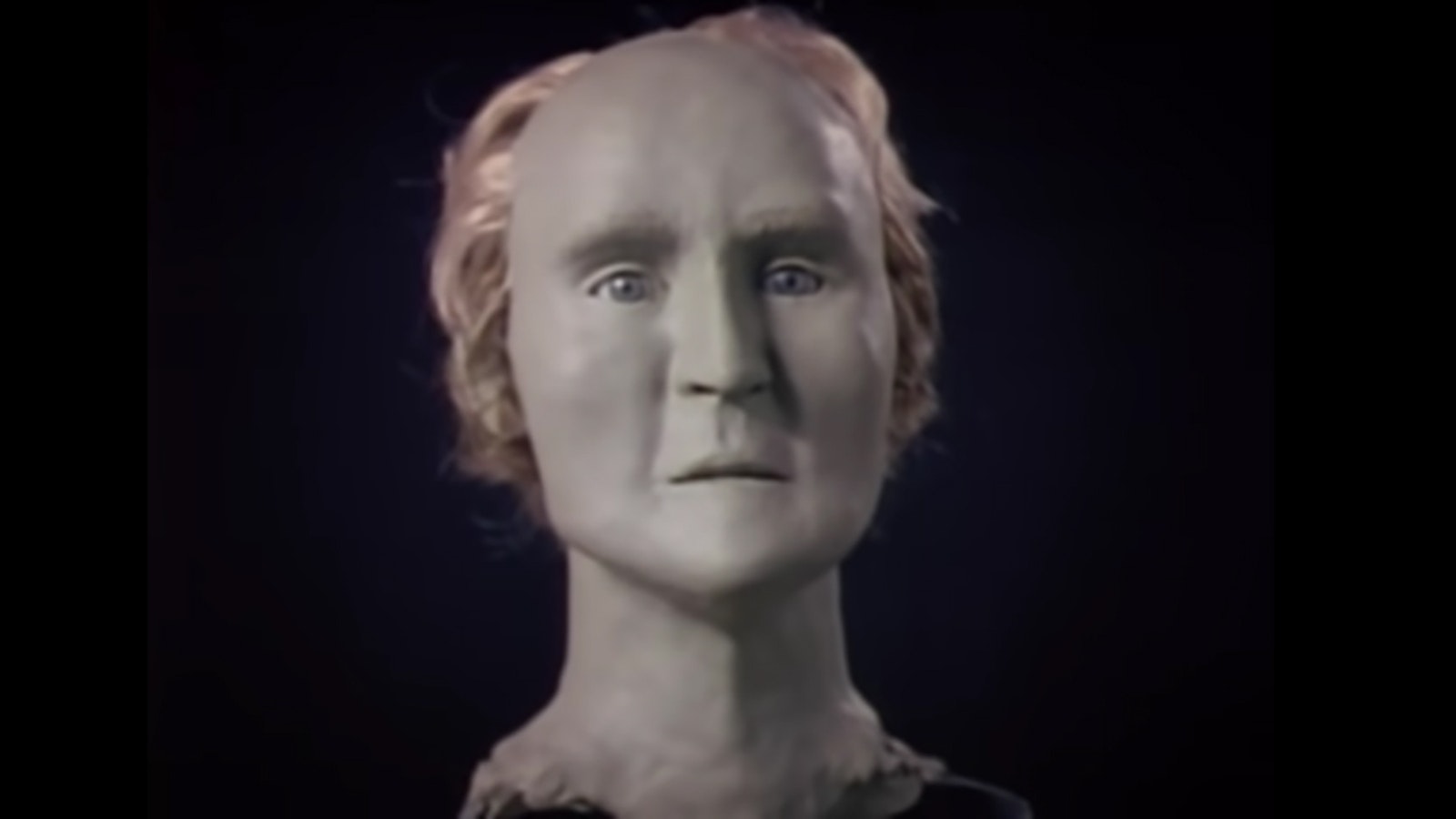
One critical inclusion in the episode was a forensic facial reconstruction sculpted in clay by Mays and the Wyoming State Crime Lab using the proportions of the victim’s skull.
“The result is uncanny,” Stack says in the episode. “Only the eyes and hair are guesswork. Otherwise, this should be a good likeness of a man who somehow got a bullet in his head sometime after 1908.”
Many details of the case were vague in 1992. The initial assessment of the victim’s skeleton surmised it was a man in his 50s or 60s, and a possible timeframe for the murder couldn’t be determined.
Nevertheless, May’s recreation gave the victim a face that would eventually prove to be a critical part of confirming an identity and solving the murder.
Lumley said he received hundreds of calls about the case each time the episode aired, many from people seeing if the victim was a long-lost friend or loved one. However, the case remained unsolved for more than two decades.
Grandpa’s Jawline
The break that ultimately led to solving the cold case didn’t come from Lumley or the Wyoming Division of Criminal Investigation. It started with a call Lumley received from Shelley Statler in Waukee, Iowa, in 2017.
“She told me (the forensic facial reconstruction) just looked like her grandfather,” he said.
Statler was looking into her family’s history when she saw the “Gabby’s Bones” segment on a rerun of “Unsolved Mysteries.” The jawline on the reconstruction, based on the skeleton’s skull, was extremely similar to many people in her family.
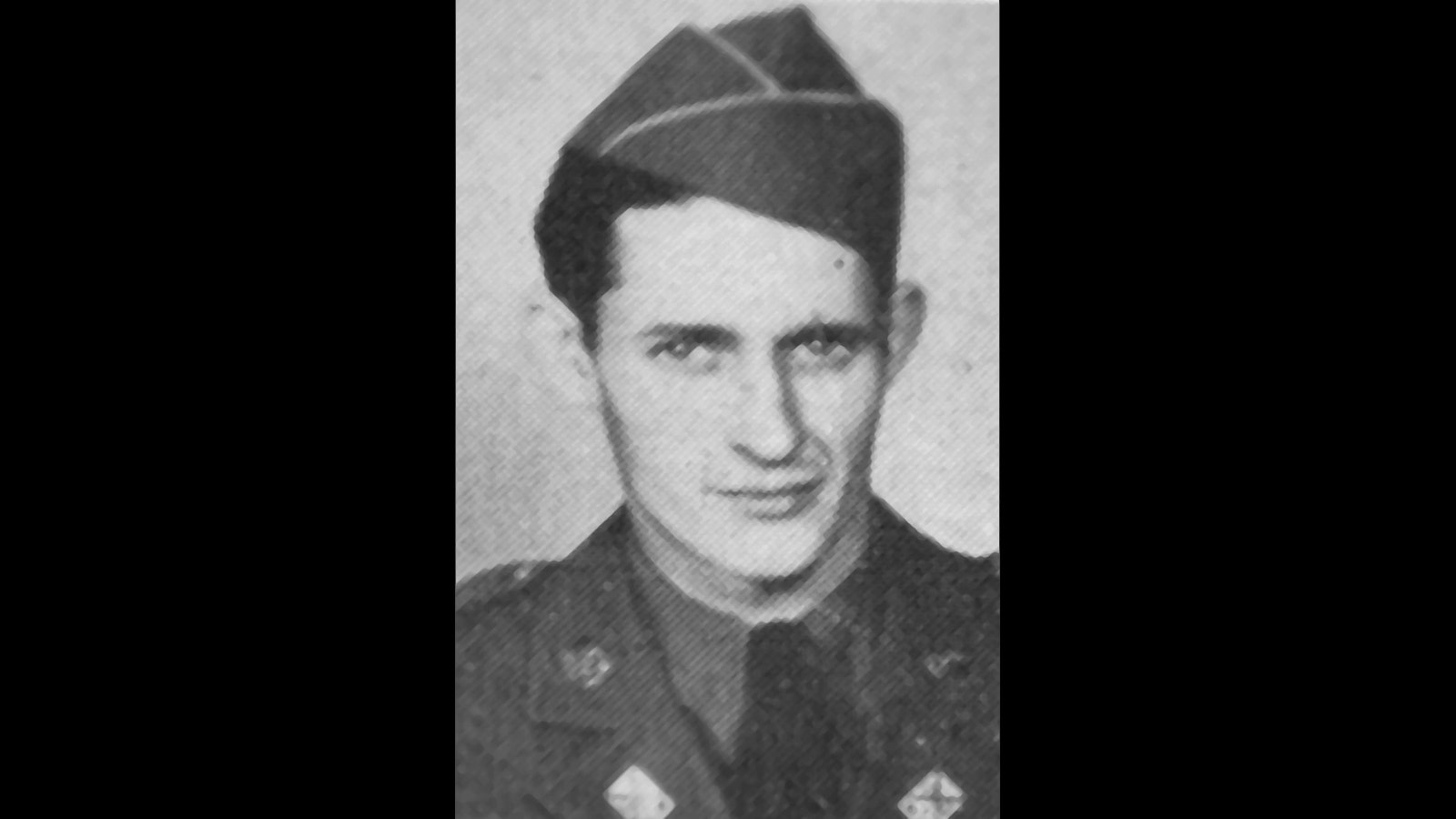
That’s when Lumley first saw a picture of Statler’s grandfather, Joseph Mulvaney.
Mulvaney was a World War II veteran living in Des Moines, Iowa, with his wife, Mary Alyce McLees, and three children. He disappeared in 1963 when he was 42 years old.
Statler never knew her grandfather, but the resemblance of the forensic reconstruction to her family members piqued her suspicion that the skeleton belonged to her long-lost grandfather. Adding to Statler’s suspicion was that John Morris, the footlocker’s owner, was Mulvaney’s nephew.
Lumley told Statler to send a DNA sample to the Wyoming State Crime Lab and the Hot Springs County Sheriff’s Office to compare it with the victim. A sample from Statler’s mother, Mulvaney’s daughter, was a 99.99% match.
Mulvaney's identity was confirmed in October 2017, 54 years after his murder and 25 years after his skeleton was found by Newel Sessions in a footlocker in Thermopolis.
A funeral for Mulvaney was held at Ballard Funeral Home in Cody on March 29, 2019, with full military honors. Statler was there to collect her grandfather’s remains, which were cremated and buried in Iowa.
Whodunit?
There have been no charges or arrests for the murder of Mulvaney, but there are theories of what happened in Iowa that led to his skeleton ending up in a footlocker in Thermopolis.
The predominant theory, which Statler and her family believe, is that Mulvaney was murdered by his wife, Mary Alyce, with a 25-caliber firearm in April 1963. She never reported her husband missing, telling their children he left voluntarily.
Meanwhile, Morris, who was 16 years old at the time, is believed to have buried his uncle’s body. The extent of his involvement beyond that is uncertain.
Lumley believes Morris exhumed the skeleton himself and placed it in the footlocker, then transported it with him during his many moves until abandoning it in Thermopolis. The key piece of evidence was the Hy-Vee grocery bag found in the footlocker with the skeleton.
“With the plastic sack, you knew there was a future date when somebody dug it up. There wasn’t plastic way back when all they used was paper,” he said.
By the time Mulvaney’s identity was confirmed, there was nobody left to prosecute for his murder. Mary Alyce McLees died in 2009, and it’s not know what became of Morris.
“I could never find anyone (in Texas) to interview (Morris,) and nobody in Des Moines wanted to pursue anything with it, which I understand. There’s no evidence and everyone who was involved is dead,” Lumley said.
Solved But Always ‘Unsolved’
Lumley retired from the Hot Springs County Sheriff’s Department years ago, but this unique case sticks with him. Even three decades years later, he can easily recall all the details.
Solving any cold case is satisfying, but Lumley gives the lion’s share of credit in this case to Mulvaney’s granddaughter, Statler.
“It was awesome to see something solved like that, even after that long,” he said. “And I told Shelley Statler if I were still sheriff, I’d hire her as a detective because of her tenacity, pursuing the truth and getting justice.”
The “Unsolved Mysteries” episode featuring “Gabby’s Bones” is available on YouTube and Amazon. It has been updated with Mulvaney’s identity.
Andrew Rossi can be reached at arossi@cowboystatedaily.com.