
Curious minds cannot discover the names of those who challenge library books in Colorado by filing public records requests, the Colorado Appeals Court ruled Thursday.
Challenging the appropriateness of material in public and school libraries has been growing in states across the nation, including in Wyoming.
The ruling also may have implications for Wyoming which, like Colorado, exempts library patron records from public records searches. Also like Colorado, Wyoming has a public records act compelling governments to show their records to the public, generally.
“This case involves the apparent conflict between two principles embodied in (Colorado law),” says the ruling.
Those principles are that public records must be open for inspection at any time, and that library users deserve a right of privacy.
Because Of ‘Gender Queer’
This case started in 2022 when four people asked the Gunnison County Library District to remove Maia Kobabe’s “Gender Queer: A Memoir” from the shelves of the Gunnison County Public Library, or in the alternative prevent children from accessing it.
“Gender Queer” is a comic book-style memoir of a youth’s arrival at a nonbinary gender identity, and includes nude foreplay and sex cartoon images, including a drawing of female-on-female oral sex acts using a lifelike phallic toy.
It was the most-challenged book in the U.S. in 2022, with 151 challenges, according to the American Library Association.
Wyoming had eight official book challenges that year comprising 15 titles. At least one of those challenges targeted “Gender Queer.” The Natrona County School District received a challenge for the title Aug. 15, 2022.
Colorado matched the national statistic: “Gender Queer” was its most-challenged book in 2022.
The ALA does not show which book was Wyoming’s most challenged.
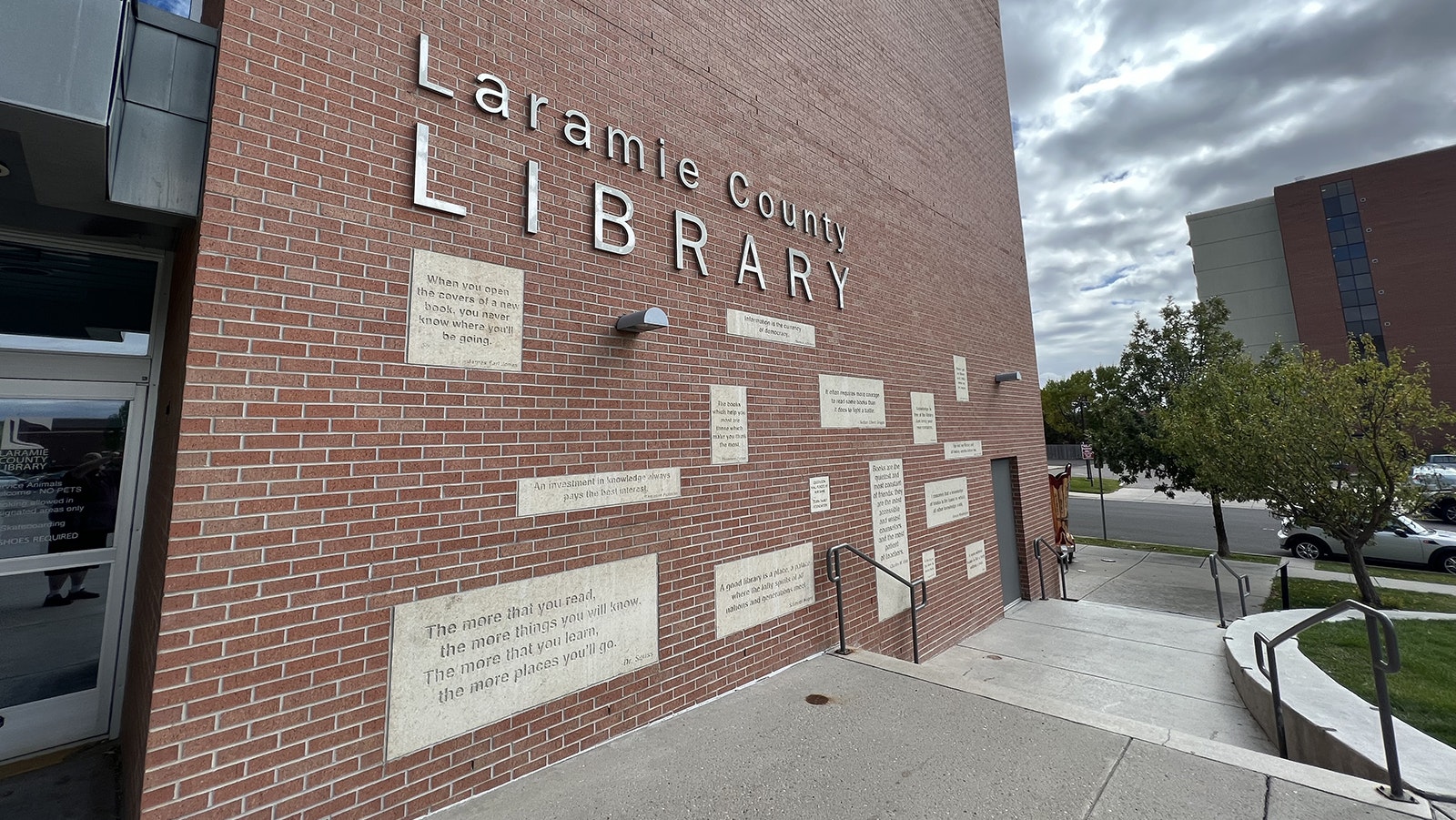
Gung-Ho Newspaper Editor
Anyone at the Gunnison County Library District can submit a reconsideration form to ask for a book’s removal or restriction, says the Thursday ruling from the Colorado Court of Appeals.
Mark Reaman, editor of the Crested Butte News, filed a public records request to learn who had submitted an earlier challenge against the book.
Library district director Andrew Brookhart gave the newspaper an unredacted copy of that challenge form, the ruling says.
Prosecutor Says Law Not To Protect Book Challengers
The person who’d filed the earlier challenge then went to the Gunnison Police Department to accuse Brookhart of violating a Colorado law that, at that time, subjected library officials who disclose private information to a $300 criminal fine.
The Colorado General Assembly since that time has shifted the law to make the infraction civil, not criminal. Violators still may pay a $300 fine over it.
The community gave a “negative reaction” to the librarian’s release of the challenger’s name, says the ruling.
But, saying Colorado’s library privacy law wasn’t designed to protect book challengers, the local district attorney declined to prosecute the librarian.
This Time I’m Asking The Judge
It was after that the four challengers involved in this court case sent in their reconsideration forms challenging “Gender Queer.”
Reaman sent another public-records request, this time asking for all book challenges filed with the library from Jan. 1, 2022, to the date of his request, March 28, 2022.
This time, Brookhart asked the state district court to give an opinion on whether Colorado’s law exempting library records from public searches also exempts book challenges.
Brookhart applied for this opinion in “neutral terms,” but told the court that in his opinion, the newspaper editor should have the book challengers’ forms since those challengers weren’t library “users” in terms of the privacy law.
Wyoming’s law has slightly different wording than Colorado’s here. It exempts library “patron transactions” from public records exposure, whereas the Colorado law exempts services for library “users.”
The district court gave the librarian an answer, ruling the librarian must give the newspaper editor the book-challenge forms, but with the challengers’ names redacted.
Not content with that judgment, the newspaper editor appealed, asking the higher court to order the district court to let the librarian give up the challengers’ names.
Narrow Issue Though
The appeals court emphasized in its ruling that the case is not about whether “Gender Queer” has social or artistic merit, or whether all readers regardless of age have a right to access library materials.
Rather, the question is simply: Did the district court make a mistake by ordering the library district to redact book challengers’ names?
Librarian Is Stuck
The librarian was in a tight spot, the ruling says.
He could face court costs and attorneys’ fees in a civil action if he broke Colorado’s public-records law by refusing to give up public information, or he could pay a $300 fine each time he gave away challengers’ names, if a court decided that wasn’t public information.
“The die was cast when the library district created and posted a form to allow any person to seek the removal or restriction of any item in the library’s catalogue,” says the ruling, adding that people who fill out those forms are using the library’s “services,” and therefore entitled to identity privacy.
While their names should be redacted, there is “no dispute” that the rest of the book-challenge form is a public record and should be given to the public, says the ruling, which upheld the district court’s earlier decision.
Clair McFarland can be reached at clair@cowboystatedaily.com.