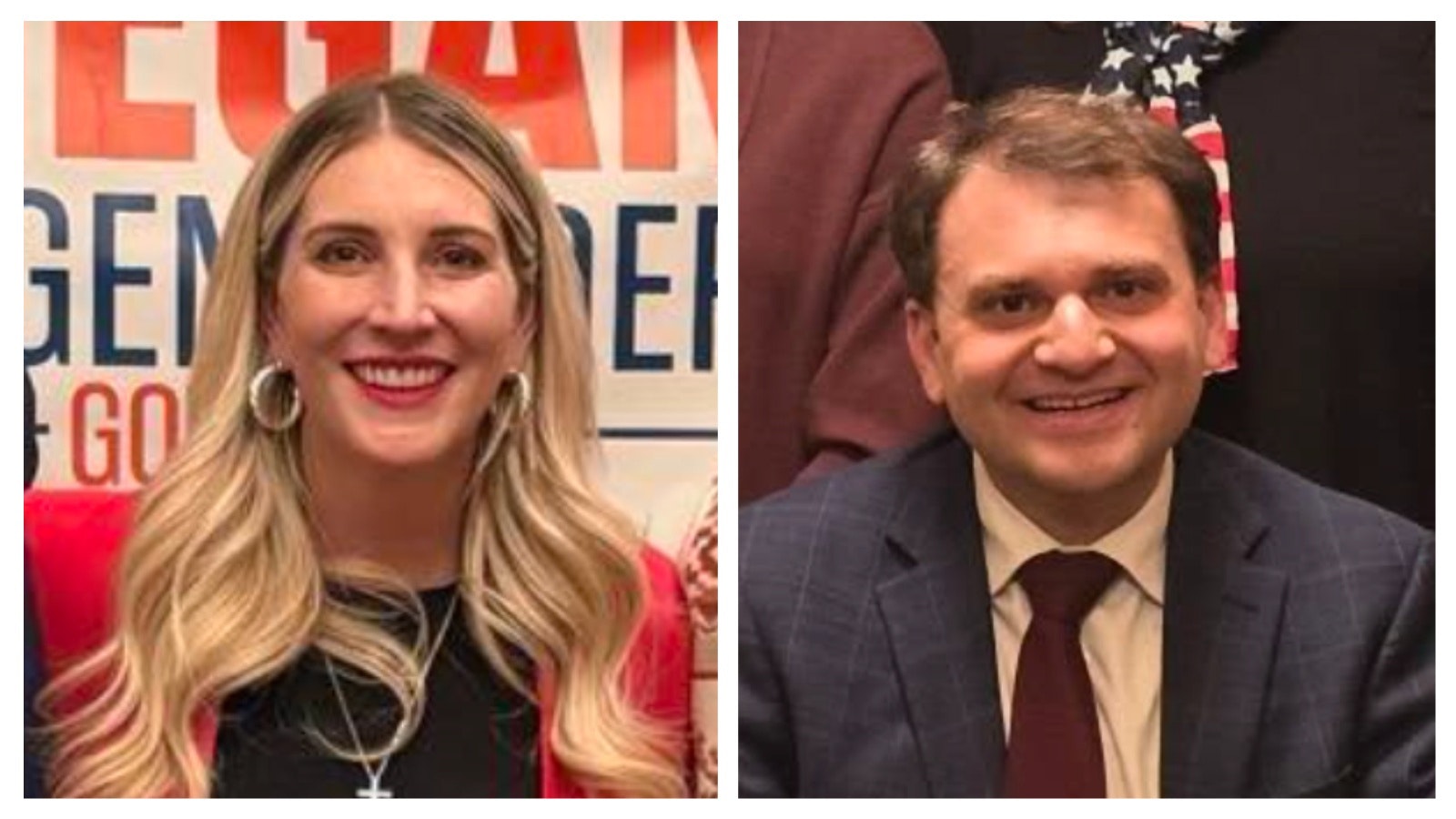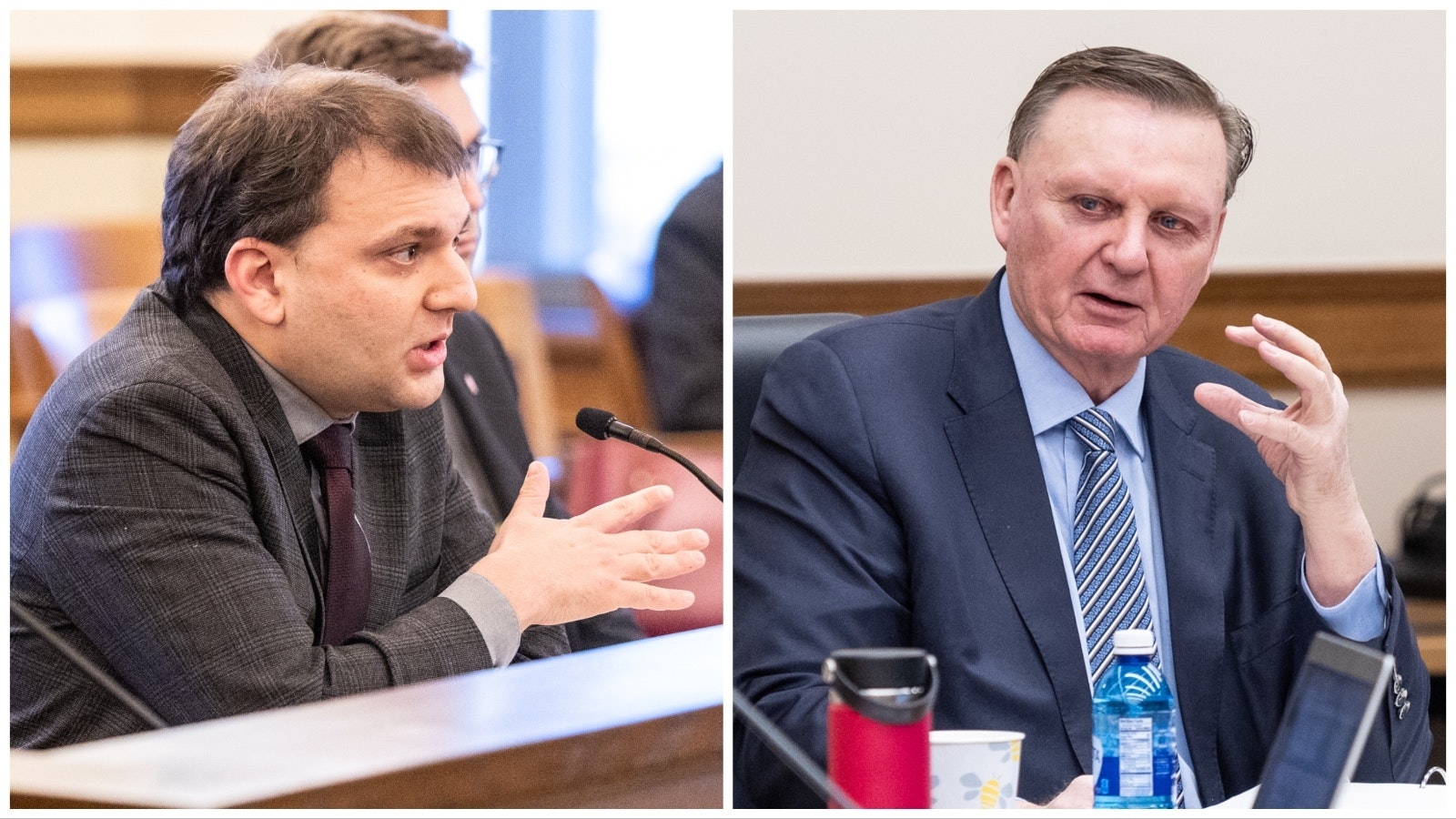
Things got a little testy between Secretary of State Chuck Gray and Treasurer Curt Meier during a State Loan and Investment Board meeting Thursday over an agreement the state signed with a financial firm generally opposed to investing in coal.
The argument flared up during a discussion about whether to hire KKR as a state private credit investment manager.
Although the board had already completed its discussion on the issue about 15 minutes earlier and unanimously voted to approve the agreement, Gray said a point Gov. Mark Gordon made earlier in the meeting about the future of coal as a viable investment opportunity caught his attention.
It was Gordon’s pitch for coal that helped Gray and Superintendent of Public Instruction Megan Degenfelder notice an important piece of information provided by KKR in its agreement with the state.
Under the terms of the investment agreement, KKR states that it does not intend to invest in “any portfolio company engaged primarily in, or in properties acquired solely for the mining of coal or the production or distribution of coal-based energy.”
Gray said he finds these terms “outrageous” for the state of Wyoming to have with anyone. Degenfelder agreed and said she finds it “suspect” that the stipulation was included with other exclusions for investment such as tobacco, illicit drugs and pornography.
“That is just a bit of a red flag,” she said.
Gray then made a motion to reconsider the earlier vote to approve KKR.
“I’ve tried to be reasonable on this and consider these things rather than do a blanket ‘no’ on these deals, but this language is a step too far for me,” Gray said.
It Escalates
Meier opposed the reconsideration and said discussing it would be non-debatable. The vote to reconsider the topic was defeated 3-2 with Meier, Gordon and State Auditor Kristi Racines voting against.
Gray then asked the three opposing members why they wouldn’t reconsider the agreement.
“You’re not open to people being able to have informed votes?” he questioned. “This is something that did not come up in my briefing and I find very troubling.”
Gordon stressed that having KKR reconsider its policy on coal investing would be more valuable than not doing business with the company at all.
The governor's point did little to convince Gray, who said that if the board can’t have “good faith conversations” with the treasurer’s office about future investments, it sets “a really troubling precedent.”
That comment was too much for Meier, who then complained to Gordon that it was the second time in the meeting Gray “has disparaged our office” about its ability to provide information transparently.
“I want to make it clear that every briefing that the secretary of state is going to have will be on a Zoom call and it will be recorded so we can put this issue to bed at last,” Meier said.
Gordon told Gray that materials related to the meeting were provided to all board members at the start and that it was his responsibility to spot the coal policy before the board voted on it.
“You have a responsibility, sir, to read the materials and understand them,” Gordon told Gray.
Gray responded that the meeting materials include hundreds of pages of documents presented only a few days before their meetings.
“Sometimes there’s little things that possibly aren’t caught,” he said, also mentioning a prior issue he noticed earlier in the meeting that no other board member had said they saw.
Gray said he will submit in writing a request to change his previous vote to support the KKR agreement, but Gordon said he doesn’t think that would be necessary based on Gray’s documented effort to reconsider the matter.
Not ESG?
The topic of environmental, social,and corporate governance (ESG) investing has been a hot-button issue for SLIB and particularly Gray over the past year as many of these policies run conflict with supporting Wyoming’s fossil fuels industries.
ESG measures rate funds on various markers of progressive-friendly policies related to protecting the environment, diversity in the workplace and community relations. Any association with fossil fuel industries is rated down.
In August, SLIB voted to pass a new investment policy statement meant to push back against ESG investments. Gray’s office has also sent for public comment an administrative rule that will require companies doing business with Wyoming to disclose if they are using ESG principles in their business decisions.
Although there have been some market improvements in recent years, the long-term future of fossil fuel investments, and particularly coal, is often looked at with a rather dim view by most investment managers.
Patrick Fleming, chief investment officer for the state treasurer’s office, explained that KKR’s coal stipulation is not one of prohibition, but rather one of intent based on forecasted investment growth compared to risks.
He also mentioned how KKR bought Contango, an oil and gas company, in 2021 as proof the company is not against fossil fuels. Contango employs many people in Wyoming.
“They’re looking out for the LP’s (limited partners) best interest, not from an ESG perspective, but from a risk-return perspective,” Fleming said.
But KKR does have an ESG policy in place, vowing to integrate ESG “considerations into the investment process to identify risks and opportunities, including due diligence, decision-making, and management practices, as appropriate,” according to its website.
Gordon stood up for Wyoming’s coal industries and carbon-capture efforts multiple times during the meeting, stressing that he believes both have a solid future for investment potential. Over the last few years, coal has seen a strong resurgence with prices increasing for the commodity.
“The message here is that if investment decisions are made for investment reasons that’s a good thing,” Gordon said. “If they’re made for fashionable or philosophical or notional ideas, that’s troubling.”
When it comes to green energy pursuits, Gordon believes there’s an equitable number of investment risks.
“It certainly is a wide choice to look broadly, it seems to me, across all investments,” he said.
Gordon also cited private credit as a line of financing support coal companies may need to rely on as they are “savaged” by ESG policies in the future.
More Fighting
Meier and Gray continued their spat into the board’s next topic on a treasurer’s office recommendation that SLIB support a constitutional amendment creating a ceiling for how much earnings can be spent from Wyoming’s Permanent Mineral Trust Fund (PMTF) and Common School account within the Permanent Land Fund.
Gray said he’s always had concerns with putting a cap on spending based on his past experiences working in the Legislature. He said that nearly all of the money in the PMTF should be going into the Legislative Stabilization Reserve Account (LSRA) and that not doing so provides a path for a possible statewide tax increase in the future when responding to various crisis events.
“There needs to be some flexibility there,” he said.
Meier disagreed and said the state has a longtime precedent of using these types of caps.
Expressing mild exasperation, he then said the members could vote however they’d like on the matter, and “if you want to stand with Secretary Gray and (state) Representative (Steve) Harshman, then certainly vote it down.”
That remark was made as a possible slight against Gray, as Harshman, a Republican from Casper, is seen by some Republicans as not conservative enough.
“I think that was a little jab to try and link me with somebody else,” Gray said in response. “I work with people from all points of view. I always have and will continue to do so.”
Gray said he has worked with Harshman on certain elements of spending policy including getting more money into the LSRA. He said if Meier doesn’t believe the rules on spending from the funds are adequate, “maybe he should bring a lawsuit.”
At this point Gordon interjected, saying he didn’t want any more “tit-for-tat” between the two.
Meier’s recommendation passed 4-1 with Gray voting against.
Leo Wolfson can be reached at leo@cowboystatedaily.com.