Those are just two of the emotions reflected in emails and text messages between Cody Planning and Zoning board members when discussing the advice they got from Cody City Attorney Scott Kolpitcke and City Planner Todd Stowell about a controversial proposal to build a Church of Jesus Christ of Latter-day Saints temple in their community.
The messages are part of a recent court filing by a local group that opposes building the temple in its proposed location. The information was provided as a result of a public records request and includes statements from Cody Planning and Zoning Board members saying they can’t trust Kolpitcke and Stowell, who they think misled the board into approving the temple.
‘Threw Us Under The Bus’
The first set of emails between P&Z Chairman Carson Rowley and then-board member Scott Richard from June 22 show that at that time, they had no intention of accepting Stowell’s interpretation of the city’s zoning regulations about the height of the proposed temple, one of the most contested features of the project.
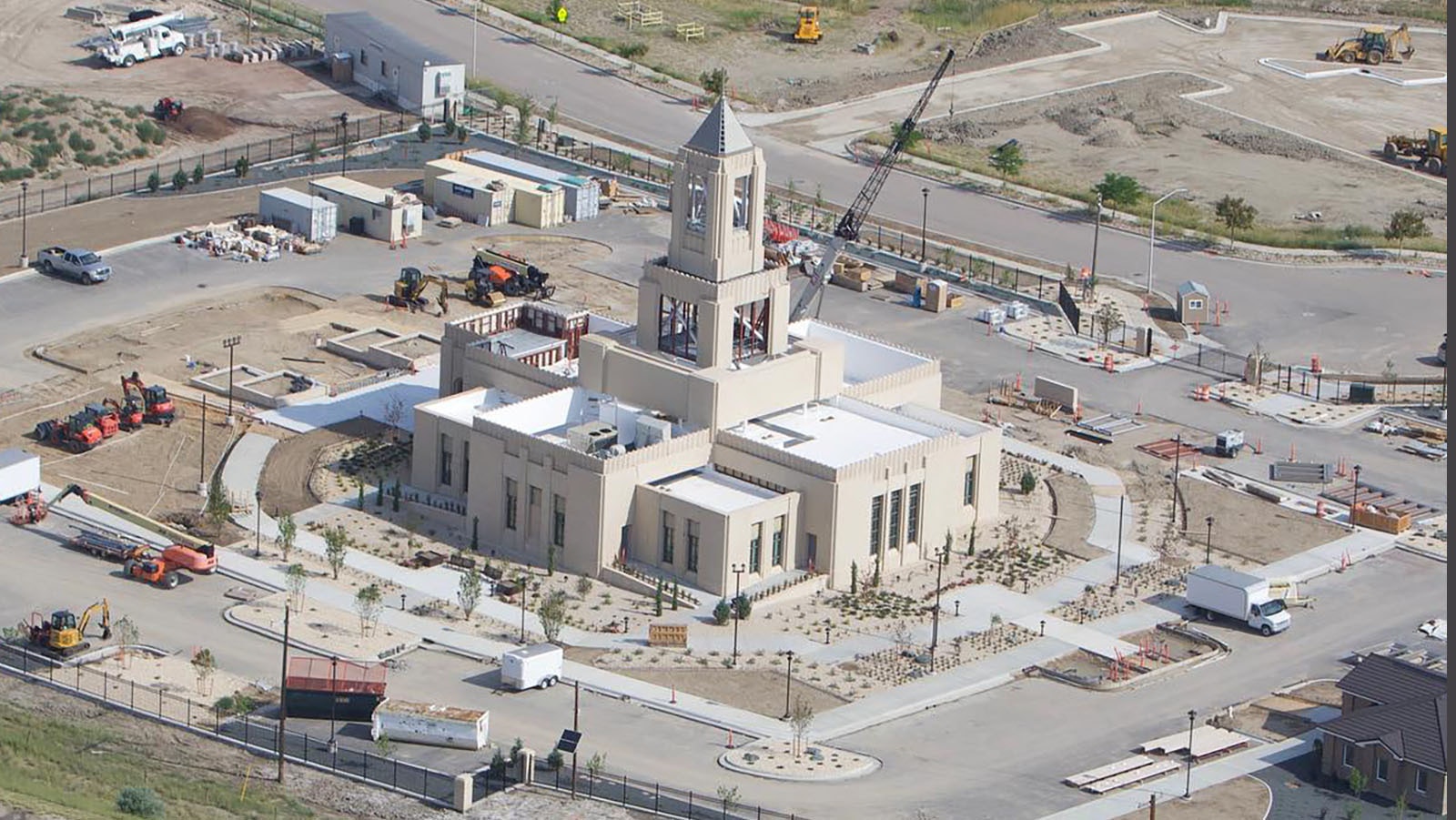
It was Stowell’s determination that the 77-foot steeple on top of the temple should not be counted toward its overall building height. Counting the steeple, the temple is planned to be 101 feet tall.
In the email, Richard, who resigned from the board in September after the temple discussions completed, also expresses frustration that he may have been given inaccurate legal advice about delaying a decision on the question of the building’s height.
“If we inadvertently approved it because of legal counsel advice I’m going to be pissed,” Richard told Rowley.
Rowley agreed and added that he doesn’t trust Stowell “at all” and “can barely trust” Kolpitcke.
Richard then responded that he believes Kolpitcke “threw us under the buss (sic)” by telling the board it could approve a conditional use permit (CUP) and a height exemption as two separate measures.
“The video clearly states him saying they could build a temple, but not the steeple, if we vote in favor of the CUP,” Richard wrote.
Rowley responded with concern that if the Cody Master Plan has no legal standing, as Stowell had alluded to in prior staff reports, it would set a precedent for future applicants to reference the temple as a reason to approve their projects even if they don’t fit with the areas they are proposed in.
This is a main point that Preserve Our Cody Neighborhoods (POCN), the group opposing the temple construction in court, has argued in its case.
“He’s (Stowell) talking out both sides of his mouth,” Rowley said. “Why do we have a commercial site plan, but no commercial architectural review or anything else that comes with commercial buildings? You can’t just take a commercial building, drop it in residential then only look at it with residential rules.”
Rowley finishes the email by reiterating that he’s opposed to the steeple and will continue referring to it as a tower.
He and most of the board eventually voted to approve the temple with its 77-foot tower included in August. The church has referred this decision multiple times in court filings.
‘Incredibly Frustrating’
Richard told Cowboy State Daily on Wednesday afternoon that as a Planning and Zoning Board member, he found the entire temple consideration process “incredibly frustrating.”
“In the context of the conversation I had with Mr. Rowley, I was upset at the fact that the city’s legal counsel informed the P&Z board on June 15 that if we approved the CUP, we would still be able to deliberate the height of the tower under the special exemption request (height approval), which was one of the most significant contention points we heard that night from public testimony,” he said.
Richard said the opportunity to rule on height was never given to the board because the church withdrew its height exemption request, which it claimed wasn’t necessary to have the height approved because of the city planner’s interpretation it’s not part of the building’s roof.
Text Conversation
In a July 11 text conversation, Richard and Rowley continued discussing the topic of the temple height.
Richard referenced a nearly completed temple being built in Casper and how it has a steel structure extending from the foundation of the temple to the top of the tower. Architect Jeremy Bastow told Stowell in an email provided in the court filing that the Cody temple will have a similar design.
“I just can’t logically see how that can’t be discussed by our board as part of the height vs. what Todd (Stowell) is trying to force us to accept that it doesn’t count as part of the height,” Richard texted.
Rowley responded that he agreed “1000%” and also questioned how the steeple could not be counted toward the building’s height.
In the court filing, POCN states that it will provide Planning and Zoning Board meeting transcripts soon that further substantiate these viewpoints and beliefs expressed by the board members in their private conversations.
Stowell and Kolpitcke did not immediately respond to a Cowboy State Daily request for comment in response to these conversations.
Other Arguments
The reason POCN is showing these conversations is part of a larger argument it is making to convince the court to approve an injunction suspending the construction of the temple.
There are four ongoing court petitions challenging decisions made regarding the temple construction by the Cody Planning and Zoning Board, two of which POCN has made requests for a court injunction to halt construction.
In its Friday filing, the group responds to an earlier filing made by the church opposing an injunction and argues that some of the earlier decisions made by the board were neither final nor appealable.
POCN also criticizes the church’s use of the federal Religious Land Use and Institutionalized Persons Act to justify approval for the temple. That law is designed to prevent governmental agencies from discriminating when approving construction of religious facilities.
POCN claims that Rowley and fellow board member Kim Borer stated in public meetings that they were threatened and “bullied” with the law.
The group states that this law has no relevance to the city code on height restrictions for residential areas as it does not prevent the church from exercising their religion, and no court has ever found these types of codes in conflict with the law.
POCN also mentions there are other Church of Jesus Christ of Latter-day Saints temples built throughout the world that don’t have a steeple.
The church estimates it’s losing $200,000 each month that the project is delayed because of inflation and other related construction costs. It has determined the value of the property and the temple itself at $41 million.
According to last week’s filing, legal counsel for the church admitted during a Sept. 21 scheduling conference that they will not wait until the appeal process is complete to start building.
Leo Wolfson can be reached at leo@cowboystatedaily.com.