A Story, Wyoming, man had a heart attack and died while trying to divorce his wife, leaving half of his $1 million estate to his wife and another half divided among his son and grandsons.
The son and grandkids would have inherited more money if the divorce had been finalized before his death.
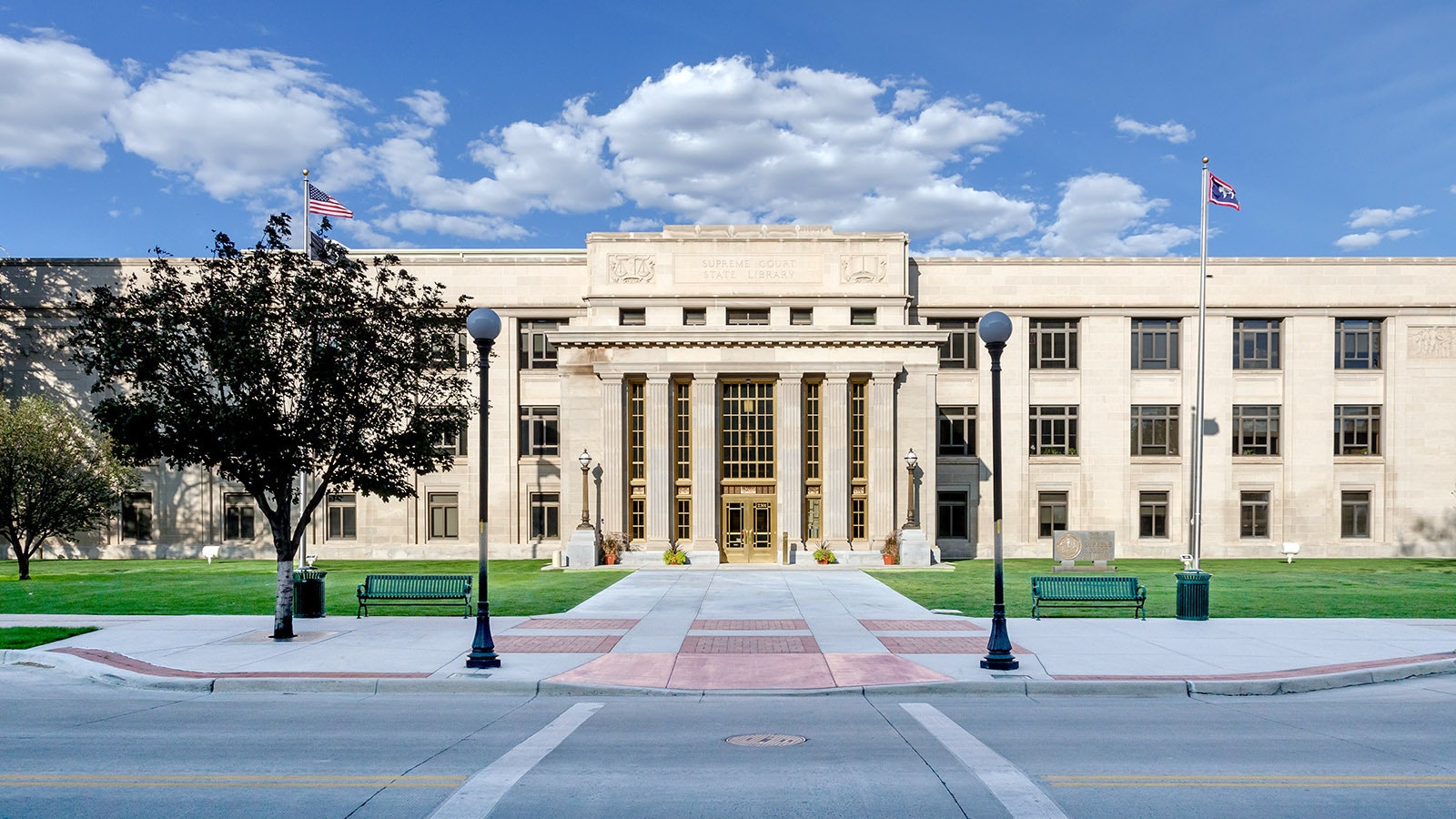
The man’s son also can’t sue his father’s attorney for legal malpractice for not completing the divorce fast enough, because there’s no evidence the father was getting divorced to benefit the son, the Wyoming Supreme Court ruled Tuesday.
Third Time’s No Charm
Michael Lee Schlegel and Charlene Ann Schlegel married three times and divorced twice between 1999 and 2017. They separated a third time in June 2018 after having remarried one year earlier, says the Tuesday ruling.
Michael had two sons, Taran and Kalen, from a different relationship.
Kalen had died before Michael’s death, but had two boys of his own who were still minors when their grandfather died.
“There was no love lost between Taran and his stepmother, Charlene,” says the ruling. “Taran encouraged Michael on multiple occasions to divorce Charlene.”
Michael met with an attorney, Shelby Noel Hughes, in the spring of 2019, wanting her to represent him in what could have been his third divorce from Charlene.
Michael also brought along his sister, Punky Bradley, because Michael had had a stroke in 2014 and couldn’t communicate well, court documents say.
Hughes learned during that meeting that Michael’s sister and his living son, and other members of the family, did not like Charlene “and believed she had absconded with Michael’s money,” the document says.
Michael then hired Hughes.
‘Get Your Client Divorced’
Hughes filed Michael’s divorce complaint April 2, 2019.
Charlene failed to answer. The court scheduled a hearing to address her failure to answer June 20, 2019.
Charlene appeared without an attorney, and the court rescheduled the hearing to give Charlene time to find an attorney.
But on the newly scheduled hearing date, Sept. 19, 2019, Charlene appeared again without an attorney.
Hughes told the court that Michael wanted a divorce but there were unresolved personal property issues: specifically, how to divide up the couple’s vehicles.
The judge said Hughes should send a proposed decree of divorce dividing all property except the vehicles, then he’d enter a divorce decree and they could all address the vehicles’ value at a separate hearing if necessary.
“So, get me the decree,” said the judge, according to the ruling. “Get your client divorced.”
Where There’s A Will …
Rather than immediately provide a proposed divorce decree to the judge, Hughes pressed forward toward valuing everything, trying to get Michael to complete his initial disclosures so that the decree could distribute “all the property,” says the ruling.
Michael didn’t return his initial disclosures to his lawyer because he was “working on them.”
Hughes made a settlement offer to Charlene.
No response came.
The judge’s assistant asked Hughes how things were going, and on Jan. 15, 2020, Hughes asked for a hearing to resolve the vehicle distribution.
The court scheduled that for March 26, 2020.
But on Feb. 23, 2020, Michael died of a heart attack without a known will.
Taran believed Michael intended for Taran to inherit Michael’s entire estate and that there was a will somewhere. But Taran never could find the will, says the ruling.
One Day Later
The day after her husband’s death, Charlene filed a motion in court to dismiss the divorce complaint.
Taran drew attention to this swift maneuver in his appeal, implying it evidenced opportunism.
Hughes countered, turning in a proposed divorce decree to the court. Hughes’ firm, Barney & Graham LLC, argued that the court had granted a divorce to Michael at the Sept. 19, 2019, hearing but that the court had bifurcated the proceedings: giving a divorce one day and resolving to address outstanding property disputes on another day.
The judge disagreed and dismissed the divorce complaint.
The Split
If the divorce was completed before Michael died, Taran would have inherited 50% of his father’s roughly $1 million estate.
But since the divorce wasn’t completed, Charlene inherited 50% of the estate —about $500,000, according to the ruling.
Taran inherited 25% and Kalen’s two children split the remaining 25%.
See You In Court
Claiming legal malpractice, Taran sued Hughes and her firm Sept. 17, 2021. He accused Hughes of negligence for not presenting the proposed divorce decree immediately to the court and blamed her for his lesser inheritance.
Hughes and her firm asked the court to judge the case as groundless. They argued that they didn’t owe any duty to Taran, who was not Hughes’ client.
The judge agreed with the attorneys, deeming the case groundless on Oct. 26, 2022.
“The Court cannot identify any facts on the record indicating that (Michael) sought his divorce with the intention of enlarging his son’s inheritance,” wrote Judge Campbell. “Therefore, (Taran) lacks standing to pursue legal malpractice claims against his father’s attorneys as a matter of law.”
Because Of This Case
The Wyoming Supreme Court upheld Campbell’s ruling and his reasoning, rebutting Taran’s arguments with case law from a 2004 Wyoming case called “Estate of Drwenski.”
In that case, the state court had determined that sometimes attorneys do owe a care of duty toward people who are not their clients, but only if the contested action was intended to benefit those people.
“We see no reason why attorneys deserve absolute immunity when their clients intend their services to directly benefit a nonclient,” says the ruling, quoting from Drwenski.
But in this case, Taran didn’t show that his dad was getting divorced specifically for his son’s financial sake.
“You don’t have any evidence via text message or anything else that your father said, ‘I’m divorcing Charlene to financially benefit you,’ do you?” asked an interviewer at a deposition in the case.
“No, not at all,” answered Taran, according to the ruling. “It was probably said by him, but not in those terms. … It was just like, ‘I don’t want my legacy to be gone.’”
These claims weren’t enough, the high court concluded.
The evidence “only supports Taran was ‘an incidental beneficiary’ of the divorce proceedings,” the ruling says. “Taran lacked standing to file a claim of legal malpractice.”
Clair McFarland can be reached at clair@cowboystatedaily.com.