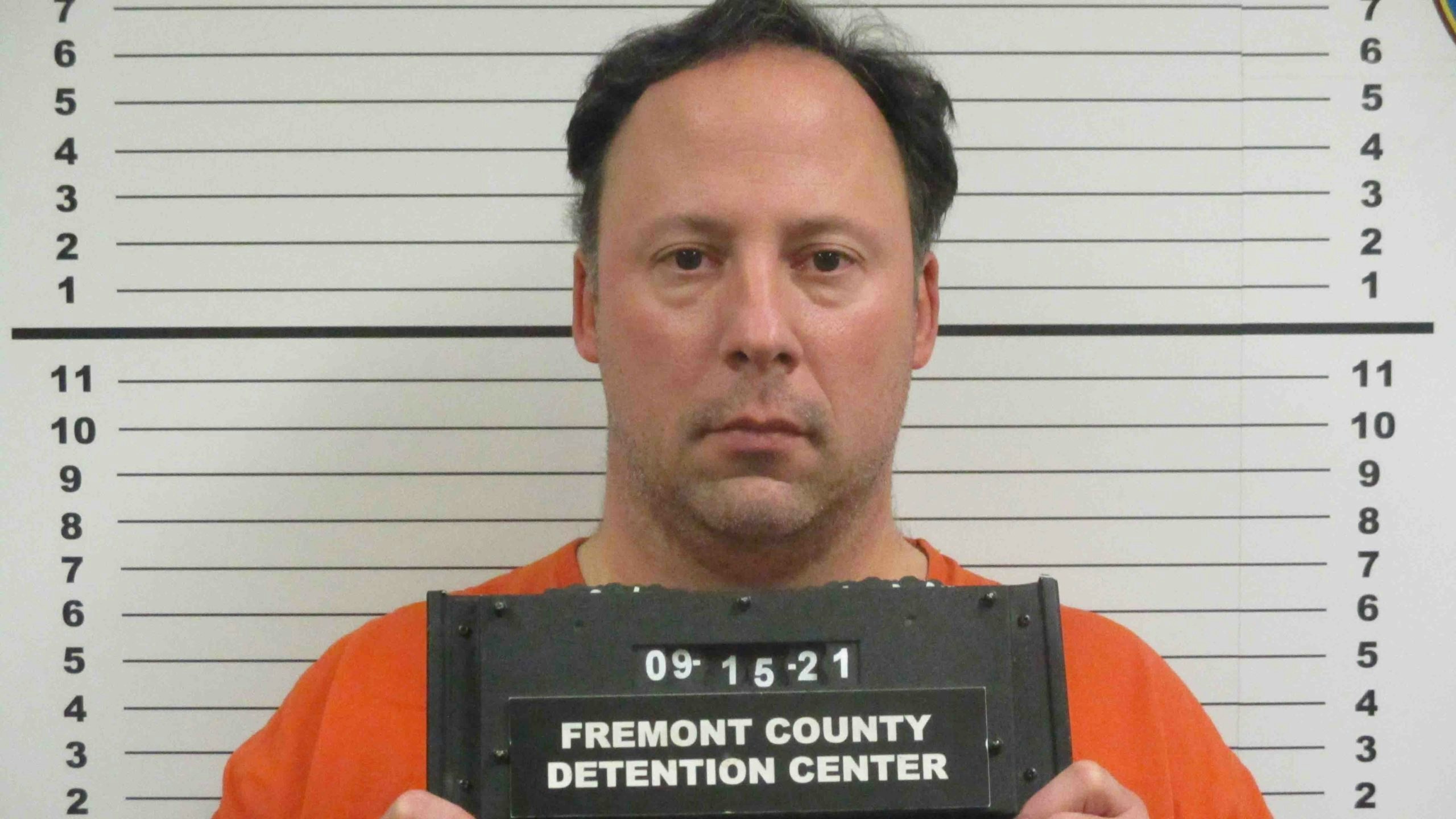
A Riverton man convicted last year of molesting a young girl for most of her life will not get a new trial, after failing to convince the Wyoming Supreme Court that prosecutors paraded inflammatory witnesses into his trial to incite the jury.
Fremont County District Court Judge Jason Conder sentenced David Wayne Munda, 45, to between 56 and 65 years in prison in August 2022 for sexually groping and later molesting a female child starting when she was 5 years old.
In a Monday ruling penned by Wyoming Supreme Court Justice Kari Gray, the court upheld Munda’s conviction and denied him a new trial.
Munda appealed in January, arguing that case prosecutors Fremont County Attorney Patrick LeBrun and then-deputy Seth Griswold paraded witnesses with hearsay and inflammatory verbiage to the witness stand to inflame the jury.
Some of the language Munda claimed was inflammatory included references to “rape,” which is in layman’s usage but not part of Wyoming’s sexual assault and abuse laws, and references to Munda’s having subjected a child to “fellatio.”
Point, Counterpoint
Munda claimed that the testimonies of three witnesses were unfair and cumulatively sabotaged his whole trial.
Those witnesses were the detective who conducted the victim’s forensic interview, a nurse practitioner to whom the victim confided that she’d been raped, and a neighbor woman in whom the victim also confided.
Conder decided against letting prosecutors air Riverton Police Department Detective Jim Donahue’s entire recorded interview with the victim in court, opting instead to let a prosecutor question Donahue “strategic(ally) and surgical(ly).”
Donahue’s testimony from his earlier police interview with the victim mirrored the victim’s own claims at trial.
Normally doubling up on someone’s testimony via different sources is not allowed, the order says.
But Munda’s main trial strategy was to question the victim’s credibility and characterize her as a liar.
Conder let the prosecutors air statements she made to others before Munda was charged that were consistent with her court testimony - to rebut Munda’s assertion that she was a liar.
The Wyoming Supreme Court upheld Conder’s choice, saying that where a defendant attacks a victim’s credibility, prosecutors can introduce counter evidence to show that her trial statements are “consistent” with prior statements.
The Icky Words
Donahue did just that, revealing that in his interview with her she disclosed that Munda had raped her and subjected her to fellatio.
Munda argued in his appeal that this language was more inflammatory than evidentiary, and served only to prejudice the jury against him.
Wyoming’s laws use the term “sexual assault” for more forcible sex crimes and “sexual abuse” for less forcible crimes. Not “rape,” he argued.
But Donahue’s testimony was not as graphic as it could have been if prosecutors had aired the rest of his interview with the victim, the high court decided.
Also, though Wyoming law uses colder language, “the terms (Donahue) used to describe (the victim’s) portrayal of events and his recitation of (her) allegations was not inaccurate,” says the ruling.
Hearsay
In challenging the testimony of the victim’s female neighbor in whom the girl had confided, Munda claimed that Conder was wrong to allow hearsay in court.
Hearsay is essentially a secondhand statement in court, offered to prove the truth of a matter.
But the neighbor woman’s recounting of her talks with the victim were not offered to prove that Munda molested the girl: they were offered to show that the girl’s statements of having been molested were “consistent” from before the case and into trial — that she wasn’t lying.
Again, Conder let the prosecutors bring evidence contradicting Munda’s repeated attacks on the victim’s character.
Munda also had claimed that the victim and another girl he’d abused were trying to get him in trouble.
Prosecutors used the neighbor woman’s testimony to rebut this, noting that the victim confided in people who were close to her instead of going to the police on her own.
Medical Diagnosis
Lastly, Munda challenged the testimony of a nurse practitioner to whom the victim disclosed the abuse.
Conder ruled that this hearsay evidence was allowed in court because Wyoming’s evidentiary rules allow hearsay if it’s a medical diagnosis.
One of Munda’s main trial strategies was to emphasize that the girl’s hymen was intact during her medical examination. He used this to insist that she hadn’t been abused.
Other medical authorities told the jury that this doesn’t rule out sexual abuse: the hymen can heal or remain intact even with sexual abuse.
Because Munda himself was relying so heavily on the girl’s medical exam, the prosecutors were within the rules to introduce the nurse practitioner’s account of the girl’s visit, says the ruling.
Again, Language
Again, Munda disputed the nurse practitioner’s use of the term “rape,” calling it “extremely inflammatory” and saying it prejudiced his jury against him without giving much evidentiary value.
And once again, the high court noted that non-lawyers use the term “rape” to describe “unwanted sexual intrusion,” and said the nurse practitioner was not out of line.
The nurse practitioner didn’t emphasize the word or add details to the girl’s account: she delivered in simple terms what the girl told her, the ruling says.
Because none of these testimonies was given in error, Munda failed to prove that a series of errors sabotaged his trial, the Wyoming Supreme Court concluded.
Clair McFarland can be reached at clair@cowboystatedaily.com.