
Saying private organizations can interpret their own rules — including how to define the word “woman” — a Wyoming federal judge on Friday dismissed a lawsuit brought by six women challenging their sorority’s induction of a transgender member.
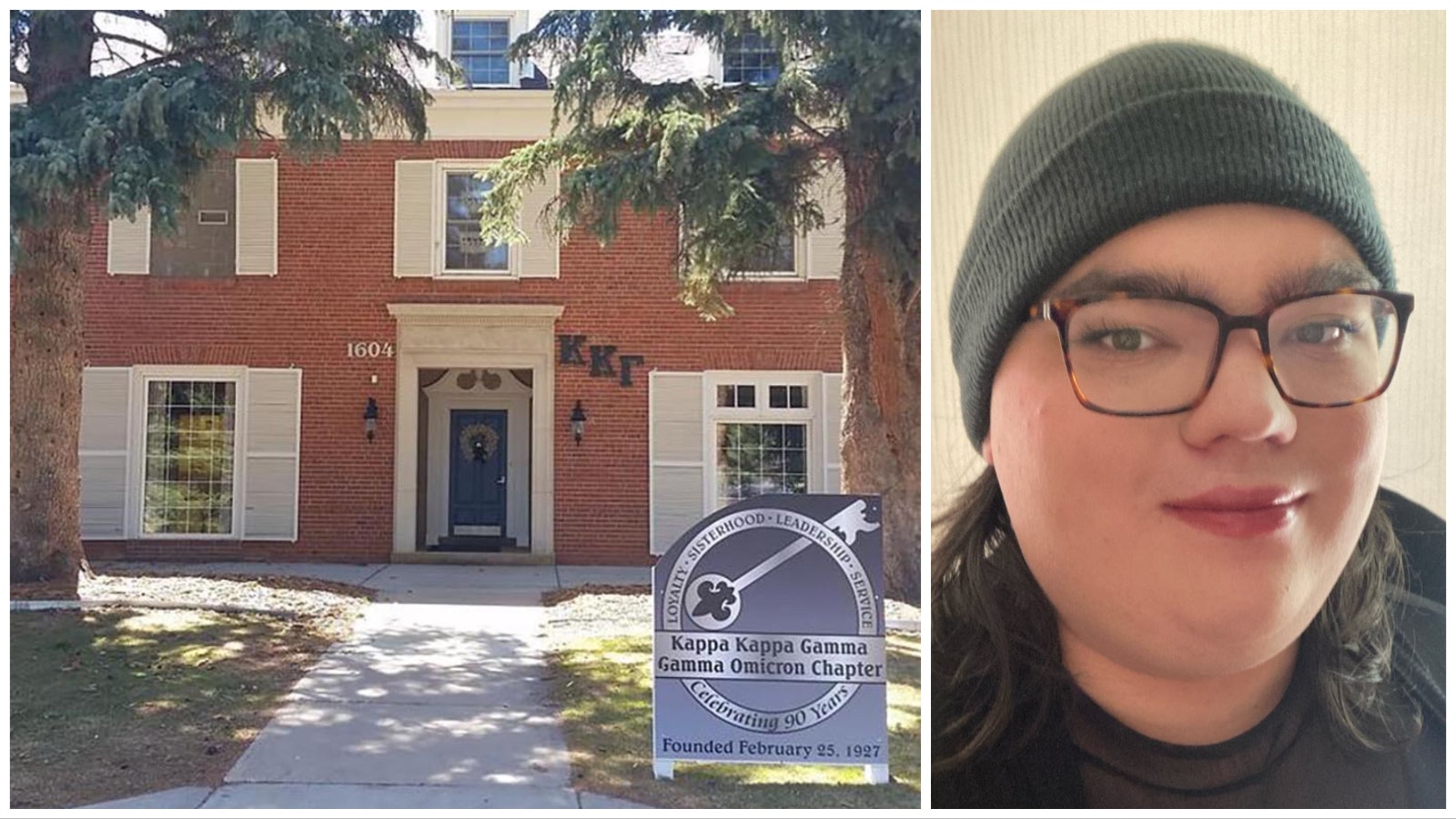
The Wyoming-based chapter of Kappa Kappa Gamma voted in September to admit its first transgender member, a move the national organization approved.
“With its inquiry beginning and ending there, the Court will not define ‘woman’ today,” wrote Wyoming’s U.S. District Court Judge Alan B. Johnson in a Friday order dismissing the entire case.
Johnson pointed to case law giving private organizations the right to make and — more importantly to this case — define their own rules.
“This Judge may not invade Kappa Kappa Gamma’s freedom of expressive association and inject the (definition of woman) Plaintiffs urge,” he wrote.
Cassie Craven, the women’s attorney, characterized the order as a departure from the case’s fundamental issue.
"Today's opinion reflects an idea that the Plaintiffs cannot agree with. Women's rights do mean something,” wrote Craven in a Friday email to Cowboy State Daily. “Women have a biological reality that deserves to be protected and recognized and we will continue to fight for that right.”
Craven compared the women’s plight to that of women suffragists, whom society undermined for decades.
“The Court stated it would not define what a 'woman' is,” Craven continued. “The fundamental issue has remained undecided."

Because, Freedom Of Association
Jaylyn Westenbroek, Hannah Holtmeier, Allison Coghan, Grace Choate, Madeline Ramar and Megan Kosar in March sued the Kappa Kappa Gamma sorority, the Kappa Kappa Gamma Building Co., and Artemis Langford, the sorority’s first transgender inductee.
The women, all Kappa members, claimed that the sorority violated its own bylaws to its detriment, violated its membership contract and interfered with the Kappa housing contracts.
They also sued Kappa’s national president Mary Pat Rooney, saying Rooney’s alleged approval of Langford’s induction harmed them.
And they included Langford in the lawsuit because the inductee’s interests were at stake: one of the women’s requests was for the court to void Langford’s sorority membership.
Johnson dismissed all their claims, tracing many tenets of his dismissals back to the autonomy rights of private organizations.
The For-Your-Own-Good Charge
The women satisfied half of the requirements for suing the sorority on a derivative claim. A derivative claim is a civil charge aimed at rescuing a self-harming organization from its own misdeeds.
The plaintiffs showed that their attempts to save Kappa from the perceived harm (of admitting a biological male) were futile, but that was only the first hurdle to clear in launching the derivative claim.
For the second hurdle, the women would have had to show that Kappa acted outside its freedom of association, and they didn’t show that, Johnson ruled.
“Their derivative claim condenses to this: from 1870 to 2018, KKG defined ‘woman’ to exclude transgender women,” wrote Johnson. “Any new definition may not be enacted … without a KKG bylaw amendment.”
Kappa Kappa Gamma countered that private organizations may interpret their own governing documents.
Kappa was correct, Johnson wrote.
“Defining ‘woman’ is Kappa Kappa Gamma’s bedrock right as a private, voluntary organization – and one this Court may not invade,” the judge ruled.
Case law relevant to the lawsuit holds that each private organization is “supreme” in interpreting its own rules, the order says.
In the back-and-forth throughout this case, the Kappa women countered that the sorority is bound by its own bylaws.
While the bylaws say that a new Kappa member “shall be a woman,” wrote Johnson, the organization still can interpret the word for itself. Private clubs often frustrate individual members and factions within their ranks, he continued, but courts can’t intervene every time they do.
Not Spelled Out In Contract
For the second civil claim, the Kappa women had accused the sorority of breaching its own membership contracts and the women’s KKG housing contracts. But they failed to back up these claims sufficiently, Johnson wrote.
“KKG undertook no contractual obligation to reject transgender women,” wrote Johnson.
The plaintiffs had accused the sorority of skewing its normal voting procedures when voting on Langford’s induction. While the Wyoming Kappa chapter usually holds secret votes, Langford’s vote was conducted in an app showing the voting sisters’ names and emails, the complaint had alleged.
The complaint also referenced “behind-the scenes direction from national Sorority officials and alumnae advisers” and peer pressure from local Kappa leaders, urging the sisters to vote for Langford or be considered bigots.
Tortious Interference Relies On Breach Of Contract
A third claim alleging KKG wrongfully interfered with the women’s housing contracts also failed because the women would have had to show breach of contract first to advance that claim, and they did not.
“Plaintiffs fail to even attempt their burden” on that claim, the judge wrote.
Judge Can ‘Haul’ A Woman From Illinois
The women did show that Rooney, of Illinois, intentionally directed her actions toward people in Wyoming in a way that allegedly harmed them when the Kappa headquarters approved Langford’s induction.
Johnson concluded that he would have jurisdiction “to haul (Rooney) to Wyoming federal court” if the case were to proceed.
But jurisdiction or not, the women’s claim that Rooney harmed them fails because the women didn’t show that Rooney had a special duty to protect them from Langford’s induction and the alleged harms flowing from it, and they didn’t show that they suffered any harms distinct from the other sorority sisters.
Housing Company, You’re Free
The judge dismissed the women’s claims against Kappa Kappa Gamma Building Co., in part because the women have not asked for damages or other relief from that defendant.
The women argued the building company. was a necessary party since the company’s contracts are at issue, but Johnson disagreed, saying it’s the sorority’s bylaws and the sorority’s behavior affecting the housing situation that are at issue.
The building company, the judge continued, doesn’t have an interest at risk in the lawsuit. The women’s housing contracts may be “relevant to damages down the road (but) are not the subject of this litigation,” wrote Johnson.
Without Prejudice
Though he swept the women’s claims away as inadequate, Johnson dismissed the lawsuit without prejudice, meaning the women can bring it again.
KKG had asked Johnson to dismiss it altogether, with prejudice. But the judge said KKG failed to show that the case would be futile if the women amended their claims in a new legal case.
Related stories
UW Transgender Sorority Member Denies Erection Allegation, Says Claim Was Drunken Gossip
Wyoming Sorority Members Say They Won’t Back Off Transgender Lawsuit
Transgender University Of Wyoming Sorority Member Asks To Be Let Out Of Lawsuit
Sorority Calls Wyoming Lawsuit Over Transgender Member ‘Frivolous,’ Says Women Can Leave
Six UW Sorority Members Suing Over Transgender Members Name Themselves To Continue Lawsuit
Judge Denies University of Wyoming Sorority Women, Transgender Member Anonymity In Lawsuit
‘Floodgates Are Open’ With Lawsuit Challenging UW Sorority Over Transgender Member
Women Sue University Of Wyoming Sorority For Accepting Transgender Member
Clair McFarland can be reached at clair@cowboystatedaily.com.