Religious themes in some Wyoming legislators’ policy discussions are relevant to a pro-choice lawsuit attempting overturn the state’s abortion bans as religious mandates, a Teton County judge has ruled.
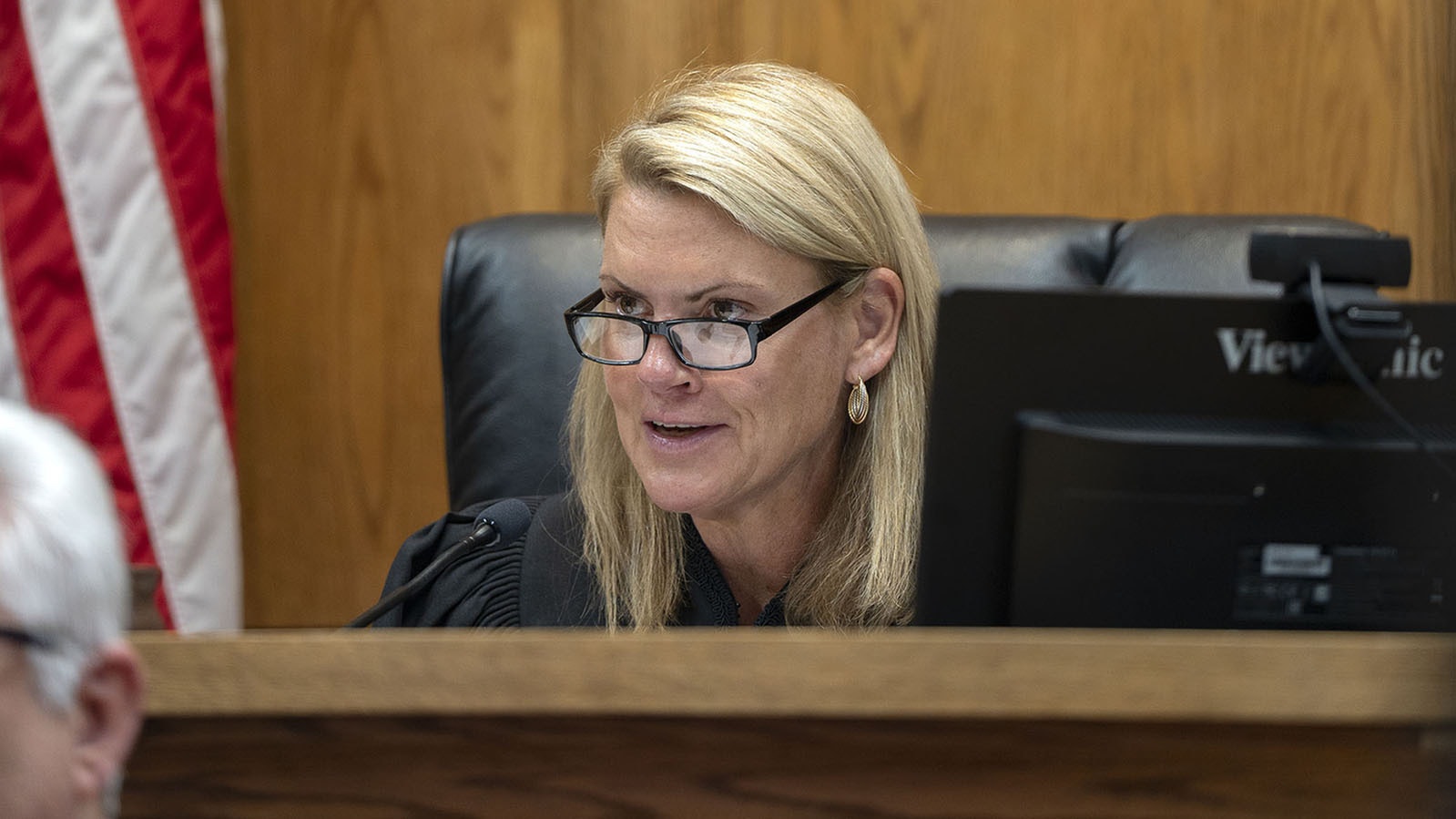
Teton County District Court Judge Melissa Owens has ordered the office of Wyoming Attorney General Bridget Hill to comply with a pro-choice coalition’s requests for information about a “round table” video in which Wyoming Republican legislators discussed the state’s abortion “trigger ban” on May 4, 2022.
Establishment Clause
Two birthing-age women, two abortion providers, an abortion clinic and an abortion fundraising organization sued Wyoming in March to challenge the state’s two newest abortion bans as unconstitutional.
Among other claims, the plaintiffs say the bans violate the Establishment Clause of the Wyoming Constitution by forcing a Christian policy onto non-Christians. They asked Owens to make Wyoming officials respond to related questions about the 2022 online video.
Key legislative proponents of the abortion bans’ 2022 predecessor, the “trigger ban,” discussed the likely overturn of Roe vs. Wade in that video.
About six weeks later, the U.S. Supreme Court did overturn the federal right to abortion with Roe vs. Wade, and Wyoming’s trigger ban went briefly into effect until Owens paused it to contemplate its constitutionality.
Those key legislative proponents were all Republican members of the socially conservative Wyoming House Freedom Caucus. Their discussions in the public video mentioned the need to pray, the leading of the Lord, and divine orchestration of the pro-life policy changes.
Now the pro-choice plaintiffs suing Wyoming are calling on the state’s legal counsel to respond to questions connected to claims the lawmakers crafted the law as a religious mandate. The trigger ban, the plaintiffs noted, was a predecessor to Wyoming’s two new abortion bans.
When contemplating claims that certain laws violate religious freedom, “courts may look to a ‘measure’s sponsor and chief proponents’ to ascertain legislative purpose, which can include individual legislators’ public statements,” wrote Owens, quoting earlier case law.
The plaintiffs’ requests for admission of information relating to the video is relevant to the case, the judge added.
No Discovery Of Individual Legislators’ Brains
But Owens said a different request for admission on similar grounds was not relevant. The plaintiffs asked for admissions regarding key trigger-ban sponsor Rep. Rachel Rodriguez-Williams’ history as director of a pro-life center that touts itself as “Christ-centered.”
“The court does not find these requests relevant to any of the claims or defenses in this matter,” wrote Owens in her Aug. 16 ruling. “Serenity Pregnancy Resource Center (the pro-life organization) does not stand in the shoes of the Wyoming Legislature as a whole.”
Also, the judge continued, the Wyoming Supreme Court has noted repeatedly that the intent of an individual legislator does not reflect the intent of the Legislature as a whole.
Equal … Protection
The plaintiffs levied numerous admission and discovery requests on the state, many of which the state has until Sept. 6 to answer in their original form, though Owens pared down a few that were overbroad.
The coalition asked Wyoming to answer what distinguishes the value of a fetus conceived in rape or incest from a fetus conceived through consensual sex.
That’s because Wyoming’s criminal ban on nearly all abortions makes exceptions, allowing abortions in cases of rape or incest.
It’s a relevant question, said Owens. The plaintiffs are challenging Wyoming’s abortion bans with claims that they violate fundamental rights in the Wyoming Constitution, such as the document’s promise of health care autonomy.
If a state makes a law violating a fundamental right, the state has to show that it had a compelling reason for doing so and that it did so in the least onerous way.
Wyoming legislators argued during the bans’ passage that their function was to preserve human life.
The plaintiffs are demanding an answer on whether rape-conceived fetuses have less life value than fetuses conceived amid consent.
“This request directly relates to the government’s state interests and objectives regarding preservation of life at all stages,” wrote Owens, ordering the state to respond to that request for admission.
Still Blocked
Owens has blocked the enforcement of both bans during the case. One ban outlaws almost all abortions and the other outlaws the sale and marketing of chemicals to procure abortions. Abortion is currently legal up to the point of viability in Wyoming.
Wyoming’s judicial branch has not yet ruled on whether the Wyoming Constitution promises a state right to abortion access.
Clair McFarland can be reached at clair@cowboystatedaily.com.