With the help of Karelian bear dogs, Carrie Hunt has been training grizzlies to stay out of trouble for nearly 30 years.
“We’re trying to teach the bear, ‘This is ours, you can’t be here,’” she told Cowboy State Daily during a telephone interview from her home in Florence, Montana, south of Missoula.
Hunt does what she does not because she resents bears, but because as a bear biologist, she has a profound respect for them. She doesn’t want to see them come to bad ends.
“I’ve been in the bear business since I was 23 years old, and I’m 69 years old now,” she said.
During the earlier years of her biology career, she got fed up with seeing grizzlies and black bears get into trouble and end up being killed for it.
And that’s where the Karelian bear dogs come in.
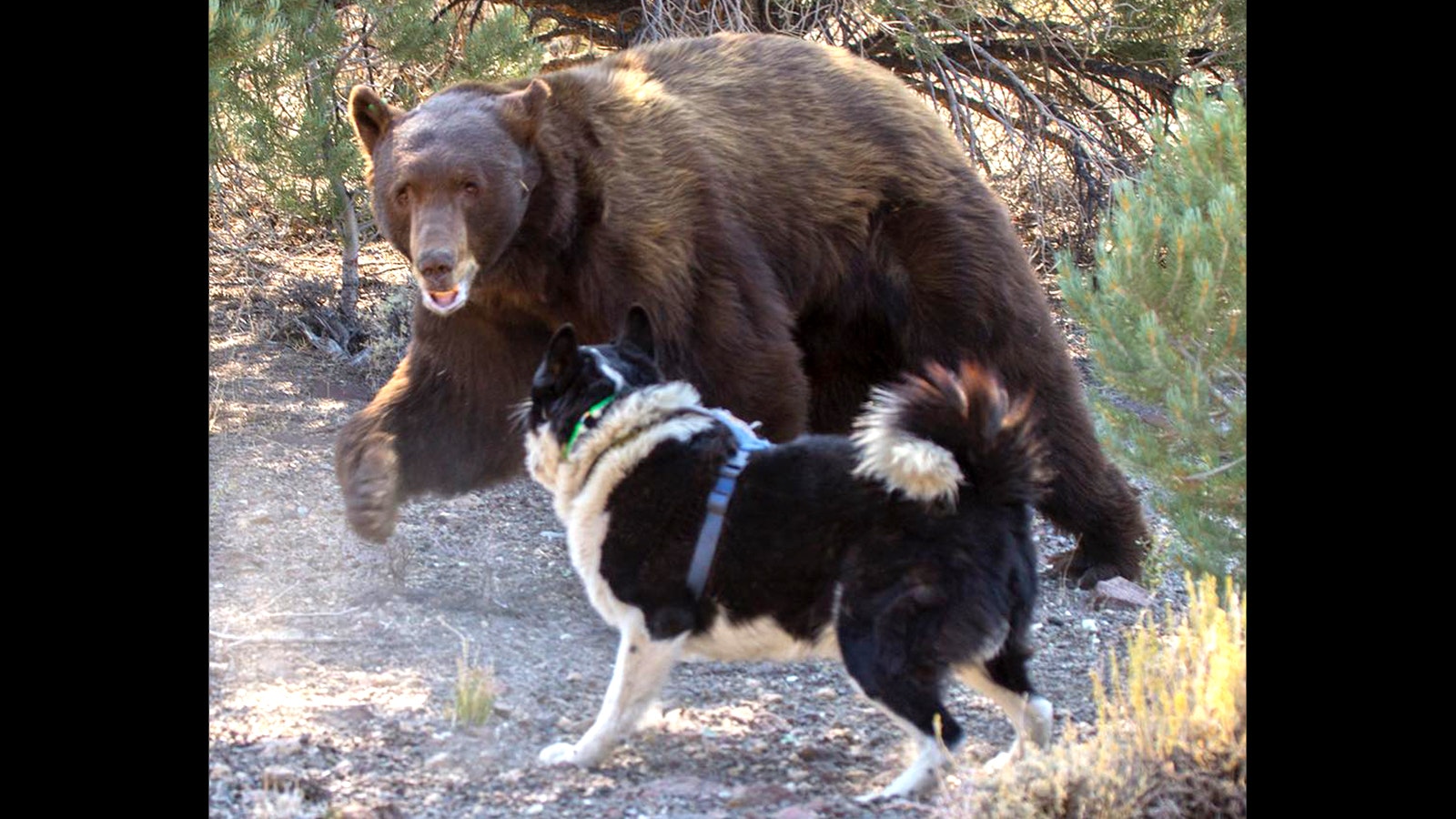
Dances With Bears
Hunt lives in Montana’s Bitterroot Valley, the heart of bear country. Previously, she lived in Cody and Dubois, and still has a deep fondness for Wyoming.
“I love Montana, but Wyoming has my heart,” she said.
In Wyoming, she noticed that some outfitters “had great little cow dogs that would keep bears away from camp,” she said.
So, she started looking around for a dog breed with similar characteristics, that could specialize in bears. She settled on Karelian bear dogs.
The breed traces back to 1936, when it was officially recognized by Finnish and Scandinavian kennel clubs. It’s primarily a hunting breed. But perhaps contrary to the name, not all Karelian bear dogs are good for working with bears, Hunt said.
They’re all intelligent, strong-headed dogs. Some of them decide they’d rather not push bears, she said – and there’s no forcing them to do something they don’t want to.
In fact, on their home turf in Finland, it’s estimated that only about 20 percent of Karelian Bear Dog puppies end up having an aptitude and desire for working with bears, she said.
Hunt started breeding, raising and training Karelian bear dogs in 1992. She and her business partners went on to form Wind River Karelian Bear Dog Partners and the Wind River Karelian Bear Dog Institute, based in Florence.
They’ve selectively bred dogs keen on working bears for numerous canine generations, to the point where she estimates that 80 percent of their puppies are born raring to go at grizzlies and black bears.
“The dogs we pick to work with are telling the bear, ‘We’re not afraid of you,’ and the bears know that,” Hunt said.
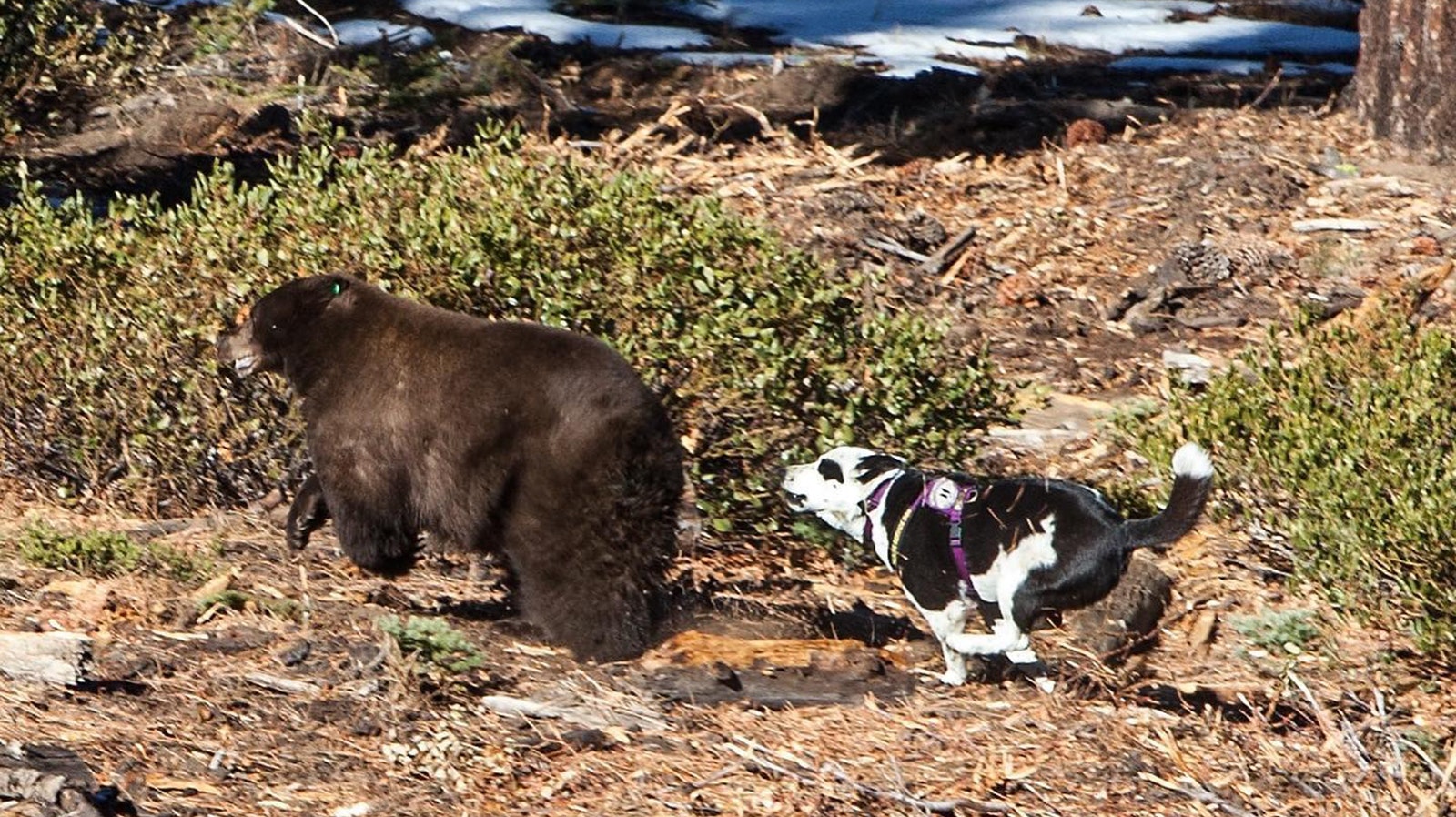
Karelian bear dogs don’t actually fight bears. Instead, they’re bred to intimidate and push bears away. That’s usually done from dozens of yards away, Hunt said. But in close quarters, the dogs can use their exceptional agility to avoid bear swipes and bites. Like a mongoose to a cobra.
“They are bred to ‘dance on the ground’ with a bear or a moose the way that a cow dog dances with cows,” Hunt said.
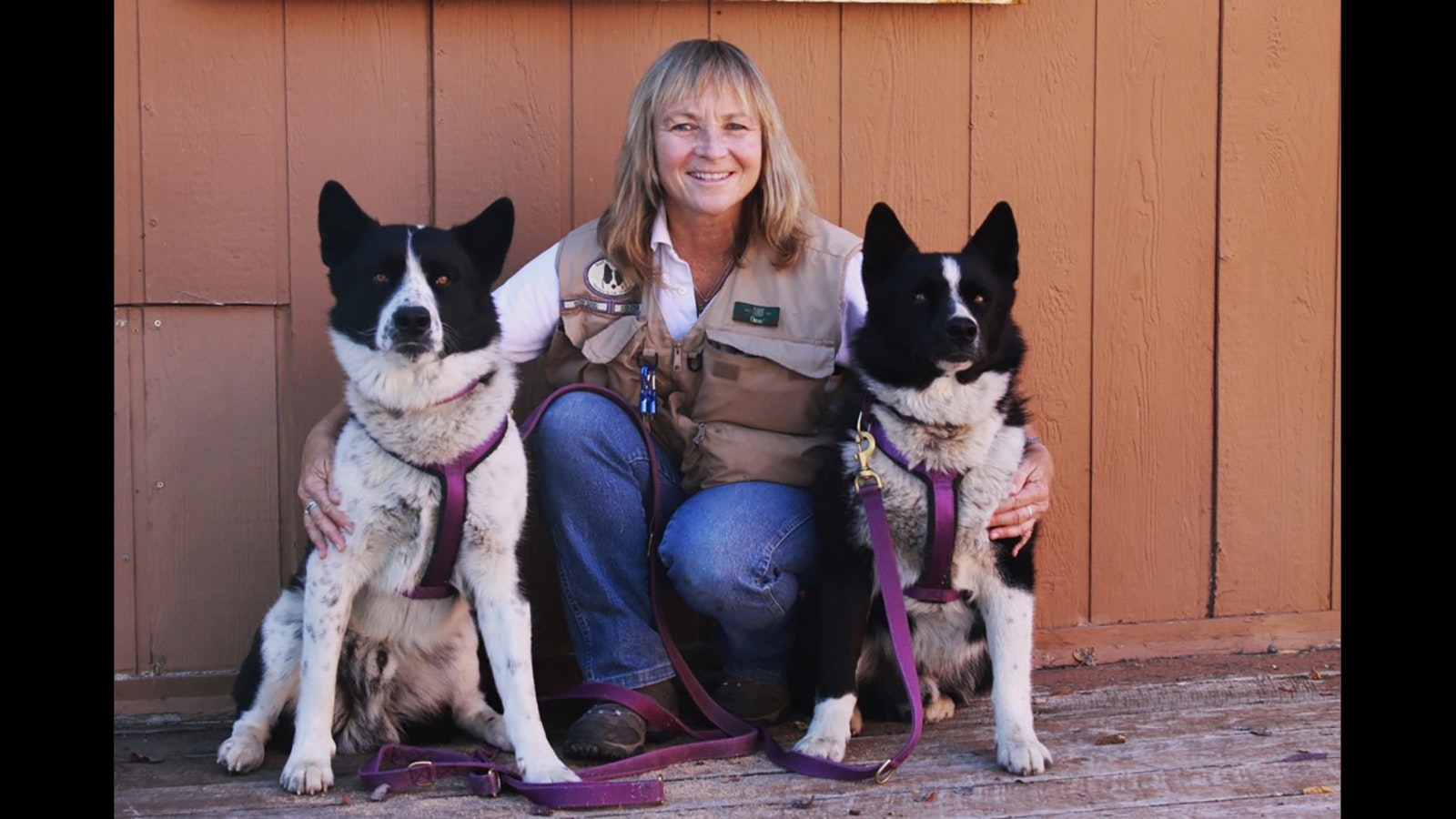
Carrie Hunt, of the Wind River Bear Institute in Florence, Montana, has been raising and training Karelian Bear Dogs for decades. (Courtesy Carrie Hunt) 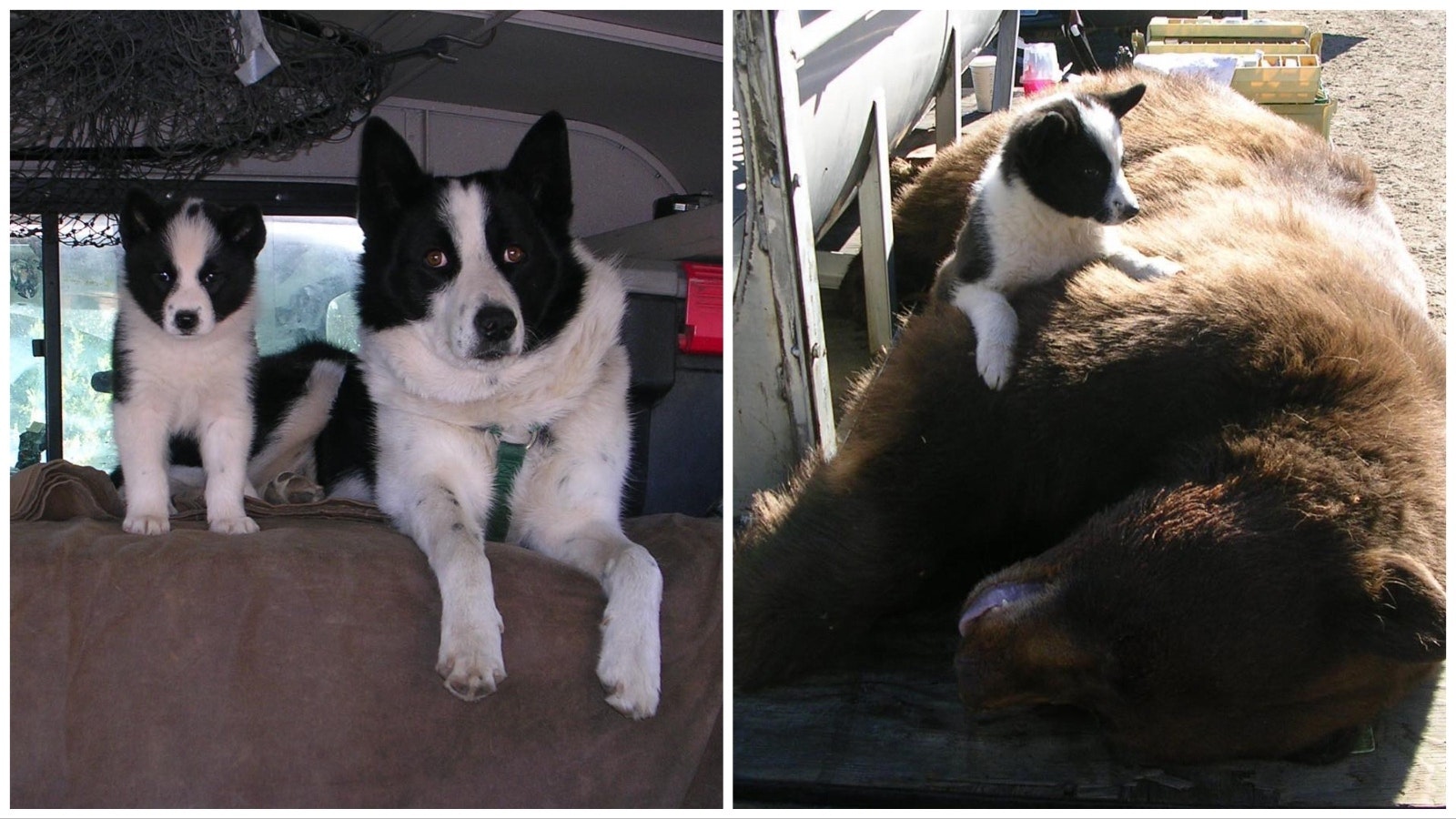
A Karelian bear dog and a pup, along with a downed bruin. (Wind River Bear Institute) 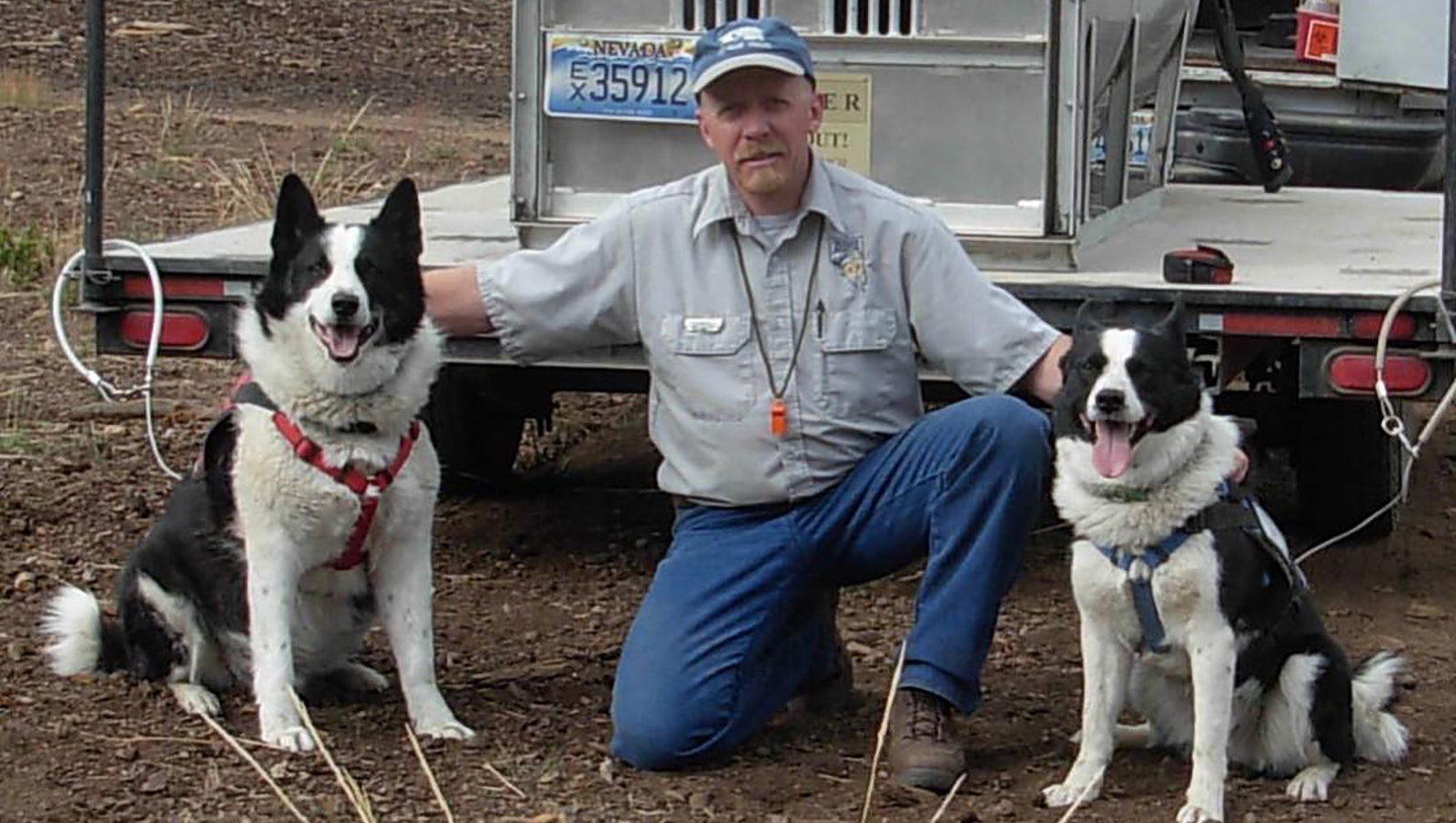
A pair of Karelian bear dogs trained to protect humans and bears. (Courtesy Wind River Bear Institute)
Off To Canada And Japan
Over the years Wind River Karelian bear dogs’ reputation grew, and the business started working with government agencies and private clients in the Western U.S. and Canada. The company used dogs to push grizzlies, black bears, brown bears and even polar bears out of potential trouble spots. And it’s done some work in Japan. That’s right, Japan has bear problems too.
The Pacific Nation’s northernmost island has a species of brown bear similar to grizzlies, while the rural parts of the main island have abundant black bears, Hunt said.
Trouble with black bears in one Japanese resort town started the way it usually does – irresponsible human behavior, she said.
“It’s the garbage,” she said.
“I worked in the richest vacation village in Japan,” and bears were getting into trouble there because people were leaving their garbage easily accessible to bears – just like what happens in some American and Canadian towns.
Hunt and her fellow dog handlers started working in that village in the early 2000s. They also taught some locals how to properly train and handle Karelian bear dogs.
It’s been a huge success, Hunt said.
“They’ve gone down to almost zero conflicts with bears in that resort town,” she said.
The company has been busy, averaging 400-800 bear “pushes” per year, she said.
“In all this time we’ve had zero dogs hurt, zero humans hurt and zero bears hurt,” Hunt said.
‘Spanking’ Grizzlies
The way bear pushing, or as Hunt calls it, “bear shepherding” works is straightforward.
It’s based in the bears’ basic instincts.
“Bears have a natural fear of canines. Wolves and coyotes can kill their cubs, or steal big game carcasses from bears,” she said.
Capitalizing on that, it’s often enough to let the dogs, which are usually kept on seven-foot leashes, use their natural intimidation factor from a safe distance.
Teams usually consist of two handlers, each with a dog.
“Bears understand numerical superiority. That’s four of us against one bear,” she said.
If intimidation isn’t enough, handlers can use firearms to shoot rubber bullets, bean bags or “cracker shells” she said.
Cracker shells fire a small explosive charge that explodes in mid-air, like a firecracker.
“We use rubber bullets, bean bag rounds or cracker shells to ‘spank’ bears. It’s tough love,” Hunt said.

‘Hazing’ Doesn’t Work
Hunt isn’t a fan of “hazing” bears. By that, she means using non-lethal ammunition or other means to chase a bear away just once or twice.
“Hazing just makes them sneakier” if they’re after a food reward or some other temptation in human-occupied territory, she said.
Instead, it’s important to realize that bears, like dogs, learn through repetition.
With grizzlies, the object is to stop the pursuit once the bear enters cover, such as thick brush.
“Going for cover is what wild bears do. We’re teaching grizzlies to be wild again,” Hunt said.
If a grizzly that has been hanging out by a roadside or a campground is repeatedly pushed into cover by a team of handlers and dogs, that bear learns that the sight of humans is their cue to go for cover.
“We’re conditioning them to move away from people and seek cover, instead of moving toward people,” Hunt said.
Mother grizzlies will hand that lesson down to their cubs, she added.
When it’s necessary to shoot non-lethal projectiles at grizzlies, the handlers say “hey bear” before they fire, Hunt said. That’s because bears, again, like dogs, can learn to recognize short word combinations or commands.
“Hikers are taught to say, ‘Hey bear, hey bear’ when they’re approaching thick brush or a bend in the trail in grizzly country,” Hunt said. So, bears that have encountered her team know that “hey bear” means “get away.”
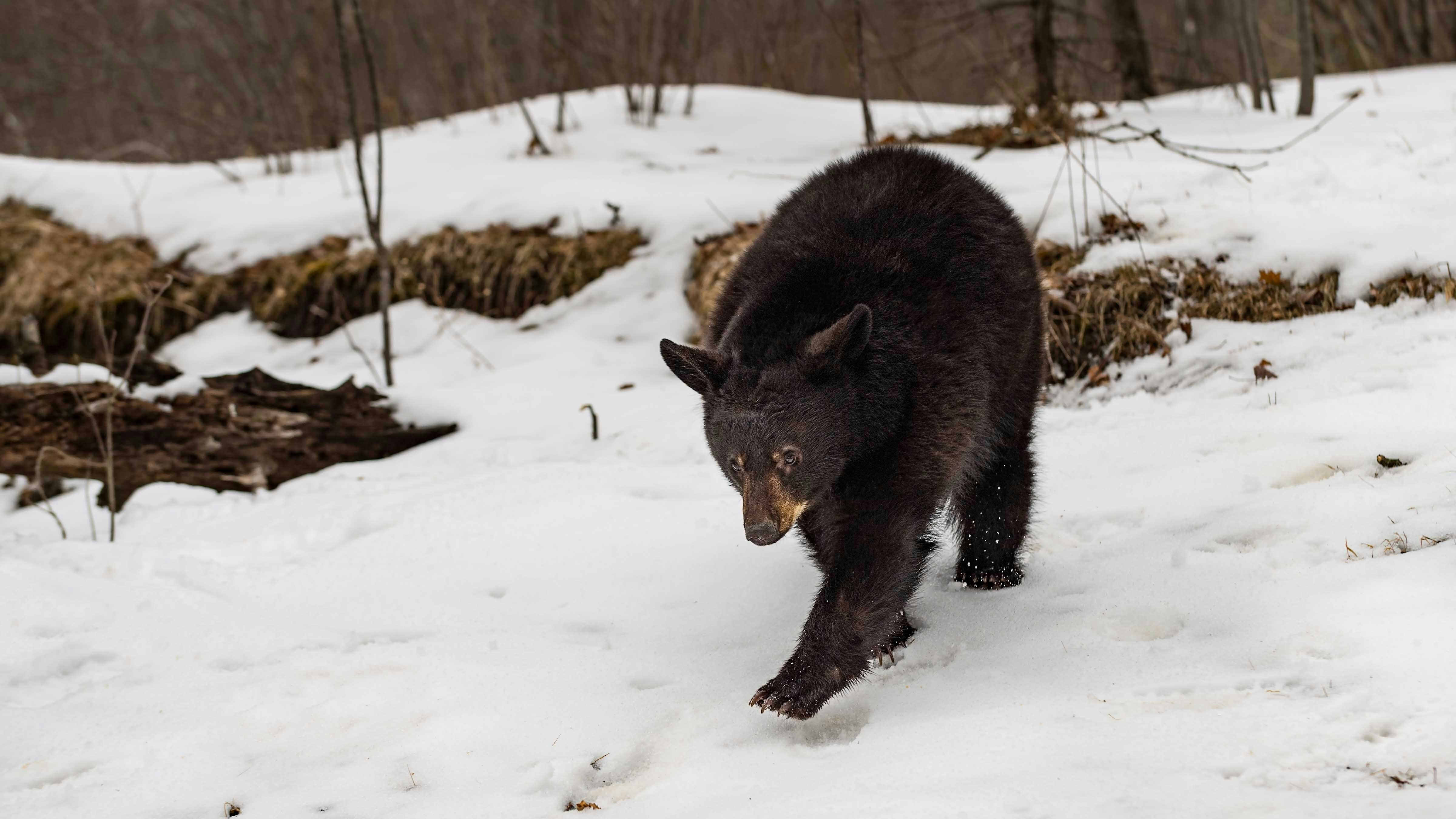
With black bears, the dogs are sometimes let off leash to pursue and tree the bear, Hunt said. Again, repeated unpleasant lessons teach the bears to move away from people and settled areas, rather than toward them.
Cody Connection
Hunt said her bear dog program has gotten support and some funding from the Cody-based American Bear Foundation, headed by avid bear hunter and conservationist Joe Kondelis of Cody.
“We look at what she’s doing with the Karelians as a style of bear conflict mitigation that’s valuable in many areas. I definitely see more and more people using dogs to handle bear conflicts,” he told Cowboy State Daily.
Dogs can be part of a wholistic approach to cutting down on the number of run-ins with grizzly bears, particularly around hunting camps in the fall – when grizzlies are looking for all the calories that they can gorge on in order to fatten up for winter hibernation, he said.
Portable electric fences set up around hunting camps can also help, Kondelis added.
Conflicts with black bears are common across Wyoming and the region, he said. Those are probably driven by a combination of an increasing bear population, along with more people building homes in remote areas adjacent to bear habitat.
Karelian bear dogs come in handy keeping people and black bears safely separated, Kondelis said.
“The biggest issue right now is just not having enough of the Karelians, we need more of those dogs out there,” he said.

Humans Need Lessons Too
Hunt stressed that no matter how well she and her team condition a bear, if people in that area continue to be sloppy, the bear might not be able to resist the wafting odor of fresh garbage, pet food or other temptations.
“People have to learn to put away attractants,” she said.
That means keeping garbage in bear-resistant containers, keeping pet food stored inside and taking similar precautions in bear country, Hunt said.
Not A Dog Breed For Everybody
Hunt realizes it might be tempting for folks who live or recreate in bear country to run out and buy a Karelian Bear Dog – thinking that’s an easy solution for bear protection.
They should think again, she said.
The breed is intelligent, sensitive, extremely energetic and almost impossible for a novice to train, she said. And again, there’s the unknown factor of whether any particular pup will have an aptitude for pushing bears to begin with.
“I very strongly recommend that people be aware that these are working dogs. They need a job, and not all of them want to work bears. So, if somebody thinks that they are getting one of these dogs for bear protection during just weekend hiking, they are sadly mistaken,” she said.
It’s best to leave training up to the pros, she said. And for those Karelian bear dogs that, seemingly ironically, just don’t care much for bears, there are other jobs available, she said.
“They can make excellent search and rescue dogs,” Hunt said.
Working With The Park Service
Hunt works closely with clients by “matching” a particular pup with its future handlers, and the job that they want it for.
She said she recently matched two Karelian bear dogs with outfitters in Wyoming, for protecting hunting camps in grizzly country.
Her company has also worked with the National Park Service. The company has placed dogs in Yosemite Park and “are in initial talks” to perhaps match some pups with rangers in Wyoming’s Teton Park.
“Eventually, I’d like to see two Karelian bear dogs in every national park,” Hunt said.
Mark Heinz can be reached at mark@cowboystatedaily.com.