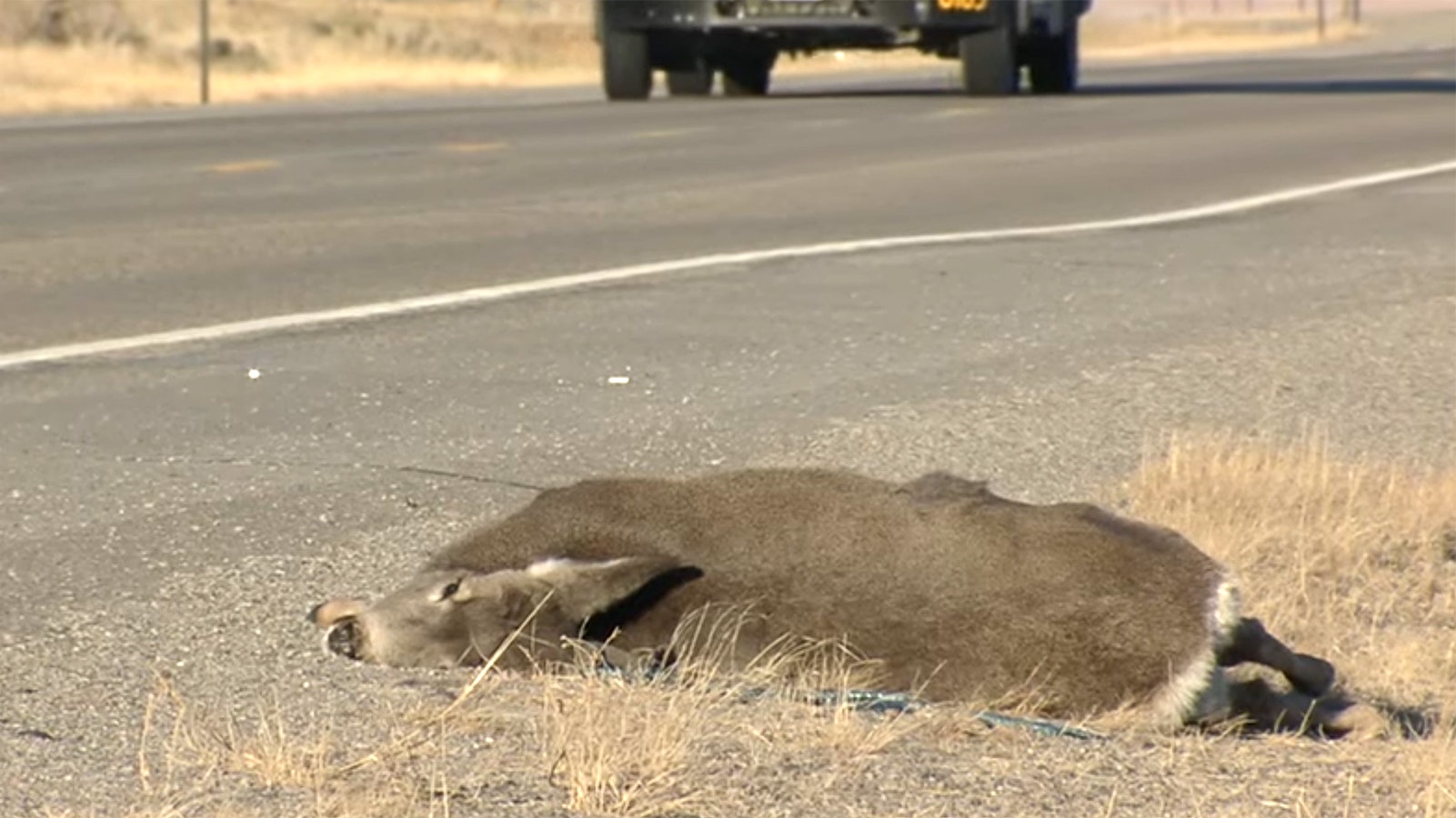
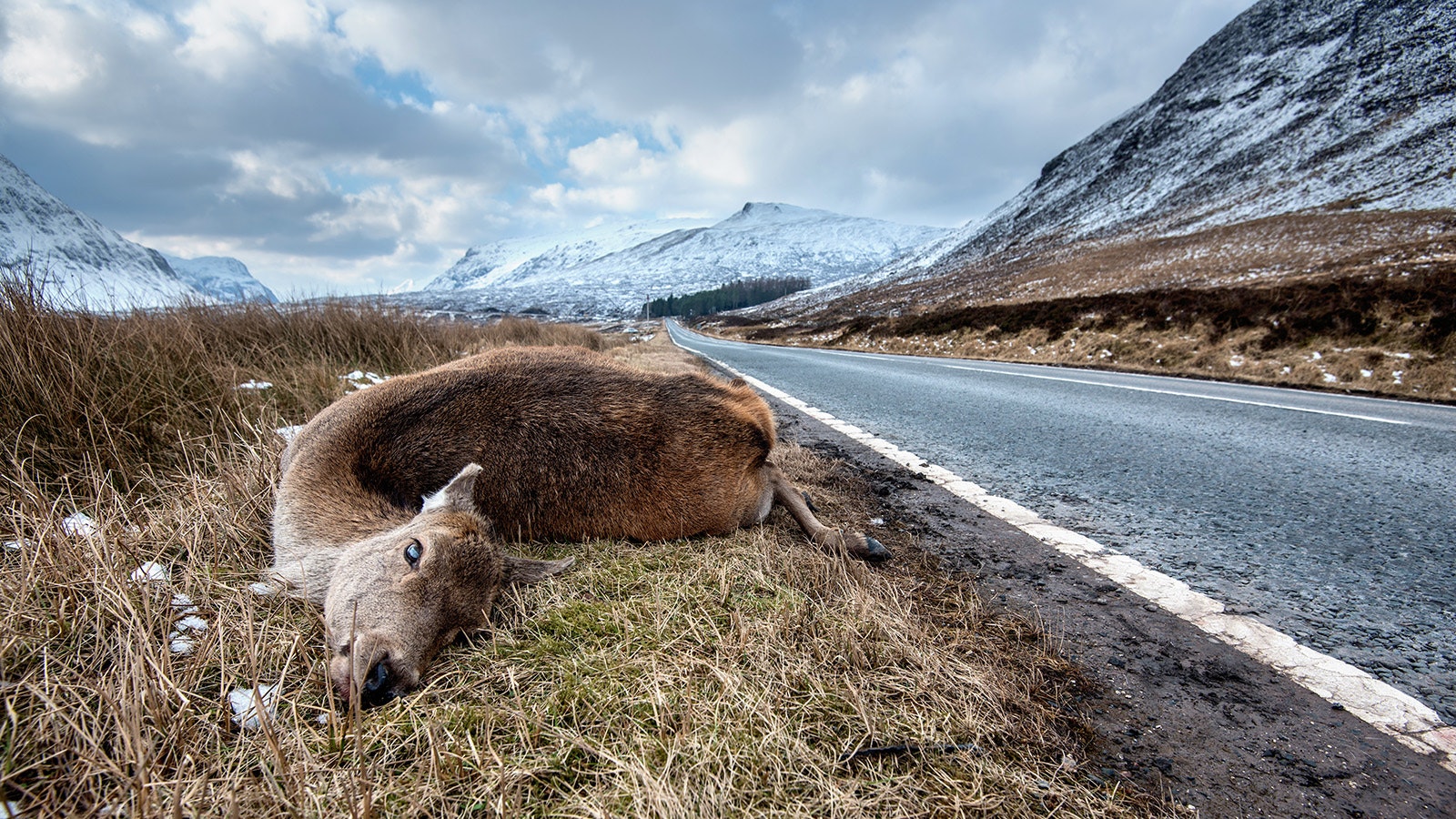
Wyoming can’t be the best at everything, but when it comes to roadkill, the state with the fewest people still has a strong showing, coming with the eighth most of all 50 states and the District of Columbia.
That’s according to data compiled by the auto insurance industry for reported collisions with wildlife in all 50 states, plus the District of Columbia.
Wyoming’s neighbor to the north, Montana, came in second, while West Virginia claims the No. 1 spot as the state with the most roadkill.
A Matter Of Odds
The rankings are according to the odds of striking a critter in any given state, as calculated by the State Farm Insurance Co., according to the report. Deer are the most commonly clobbered large critter nationwide.
That holds true for Wyoming, where transportation and wildlife officials estimate that as many as 85% of the roughly 6,000 yearly animal collisions here involve mule deer. Elsewhere, it’s the mule deer’s more diminutive cousins, the whitetail deer, that are most likely to meet their fate on the asphalt.
In West Virginia, a driver’s odds of smacking a critter are a whopping 1 in 37, according to the report. In Montana, it drops to 1 in 39. In Wyoming, the odds are 1 in 58.
What’s more, roadkill seems to be on the rise nationwide, according to State Farm.
“State Farm estimates there were more than 2 million animal collision insurance claims in the U.S. between July 1, 2020, and June 30, 2021, almost 200,000 more claims than in the previous 12-month period,” the report states. “The (nationwide average) odds of experiencing a collision with an animal are 1 out of 109, which increased in 2021-2022 over the 2020-2021 odds of 1 out of 116. That likelihood doubles during deer season every year from October to December.”
Particularly in more densely populated areas in the Midwest and East, pressure from hunters can send deer fleeing toward roads. That means they dodge bullets and buckshot, only to be killed by front bumpers and grills.

River Bottom Roads Might Drive Montana’s Numbers
Montana’s ranking puts it well above the other Mountain West States. Montana Fish, Wildlife and Parks spokesman Greg Lemon told Cowboy State Daily it’s not exactly clear why that is.
He surmised it might have something to do with the number of highways the Big Sky State has running along river bottoms.
Montana boasts many legendary rivers, such as the Jefferson, Madison and Galatin rivers, which come together near the town of Three Forks to form the Missouri River.
And many of those rivers have winding two-lane roads adjacent to them, which can be a bad set-up when hapless animals meet inattentive drivers.
Anywhere in the state where we have river bottoms with highway corridors, we also have animals moving to water and back out across the highway every day, Lemon said.
As for the top-ranking roadkill state, West Virgina has abundant deer, as well as numerous winding roads with thick cover on both sides. A request for comment from Cowboy State Daily to the West Virginia Department of Wildlife and Fisheries wasn’t answered by Friday afternoon.
New Wildlife Crossing Might Drive Down Wyoming’s Roadkill Ranking
Lemon said Montana FWP works with the Montana Department of Transportation to mitigate roadkill. That includes wildlife crossing projects, public education and the like.
It’s similar in the Cowboy State, where the Wyoming Department of Transportation, the Wyoming Game and Fish Department and others agencies have staked their hopes in wildlife crossing projects.
One of the most sorely needed wildlife crossing projects — a series of underpasses between La Barge and Big Piney — is nearly finished, WYDOT spokeswoman Jordan Young told Cowboy State Daily.
“The Dry Piney wildlife project (around La Barge and Big Piney) is expected to be complete this fall, and we are in the process of planning a ribbon cutting event,” she said.
“We also have a wildlife fencing project going on near Kaycee on I-25 that is scheduled to be complete this fall, weather permitting,” Young added.
The underpasses between La Barge and Big Piney could very will drive Wyoming’s roadkill ranking down significantly. That stretch of U.S. Highway 189 runs right through a major migration route for mule deer herds, and hundreds of them are struck and killed there every year.
Proceeds from conservation license plates go toward funding wildlife crossings, young said.
Meanwhile, Wyoming is one of numerous states where it’s legal to recover roadkill for food.
Mark Heinz can be reached at mark@cowboystatedaily.com.