VEDAUWOO — When “Hawk” the Karelian bear dog hits the end of his leash, the person holding the other end gets a true feeling for just how much power is coiled up in his relatively small frame.
At 70 pounds, he’s on the large side for his breed, and a lot smaller than one might expect for a dog bred to stand off with a grizzly bear.
Karelian bear dogs, or KBDs as enthusiasts call them, are bred mainly to protect people from bears and other wild critters. And they aren’t for everyone, breeder Jenna Bourgeois told Cowboy State Daily.
They’re definitely not a good breed for first-time dog owners. They’re absolutely fearless, noisy, energetic, extremely strong-willed and can be difficult to train, he said.
“It’s about teaching the owner how to understand what the dog wants,” said Friday amid a cacophony of barks and yips. “A KBD is going to do what a KBD wants to do.”
Canine Family Campout
Bourgeois lives in Big Timber, Montana. But since he works remotely in tech support, he travels extensively during the warmer months. He sets up his camper tailer in national forest campgrounds around the West — anywhere he can get a strong enough Wi-Fi connection for his work.
Vedauwoo is one of his favorite places because it’s spacious enough to give him ample room for the dogs.
He was camped there this week with his original two Karelian bear dogs Hawk and Liberty. He also has five puppies remaining from the litter of eight they had 10 weeks ago, and three more adult dogs.
Ten dogs produce an impressive volume of canine symphonics upon a visitor’s arrival.
Another thing Karelian bear dogs are known for is their exceptionally loud bark.
“In a wide-open space like this, it’s not too bad. But when they’re in the truck cab with me, it really hurts my ears,” Bourgeois said.
Good Choice For An Outdoorswoman
Bourgeois got Hawk and Liberty about three years ago when they were still puppies. At the time, he had no intent of being a breeder.
“But I found out that Hawk really likes Liberty a lot,” he said.
The pair has produced three litters so far, two of Bourgeois’ other adult dogs are from that first batch. The latest mob of eight puppies is their largest yet. And, Bourgeois hopes, they last for a while.
He sells the puppies for $500 each. He said that’s about enough to make back the expenses of raising the puppies for the few weeks off their lives, including food, vaccinations and deworming medicine.
Chinook is one of the puppies that was bought by Calli Geddis of Cheyenne, who hopes to pick him up within a few days.
“He (Bourgeois) came into where I work in Cheyenne with some of the puppies to market them. I went to pick Chinook up and he snuggled right into my arms. I think we bonded right then,” she told Cowboy State Daily on Friday.
Geddis said she’s researched the breed, and thinks a Karelian bear dog is a good choice. Her family is frequently outdoors hunting, hiking, fishing and camping. She also frequently goes hiking or traveling alone, so having a protective pooch that isn’t scared of anything will provide peace of mind.
It’s All In The Fancy Footwork
Though relatively small, Karelian bear dogs are great for stopping bears, Bourgeois said.
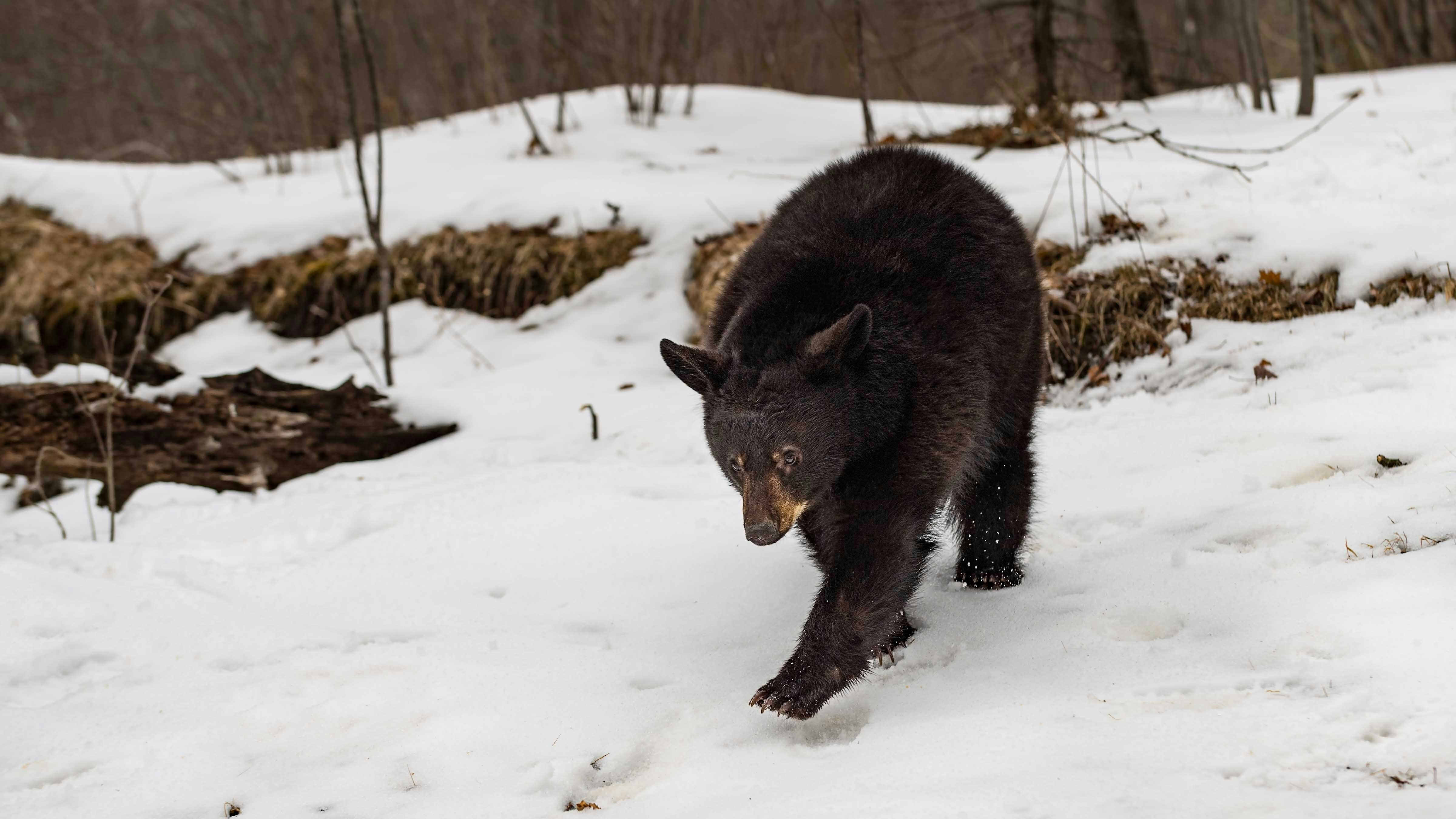
The dogs don’t engage bears directly. Instead, they use their loud barks and superb agility to harass and distract bears, sometimes even chasing the big predators away.
They seem to know how to stay just out the reach of a bear’s teeth and claws, and to keep a black bear or grizzly fully occupied. That gives their owners time to get away or, if they’re hunting bears, get in a good shot, he said.
They originated in Karelia, a Finnish providence near Russia. The were derived from six other dog breeds, Bourgeois said. In their home territory, they’re frequently used as sledding dogs.
“The bred the fear right out of them,” he said, adding that, “I think one was a digging breed, which is why they have such big front paws.”
That allows Karelian bear dogs to spring back and forth with amazing speed, which seems to be their favorite tactic for hazing bears.
That raises the question: How does one train a dog to haze bears, other than putting them in front of bears?
“You don’t have to train them to do that, they do that automatically,” Bourgeois said. “What you have to train them to do is to come back away from the bear when you’re ready. And also basic discipline and following commands like ‘sit’ and ‘stay.’”
Bourgeois said he initially got Karelian bear dogs because he wanted reliable companions for hikes and fishing trips in Montana’s bear country.
So far, his dogs haven’t had to face off with a bear, but he has complete confidence in them.
“In the wild, I trust these dogs with my life,” he said.
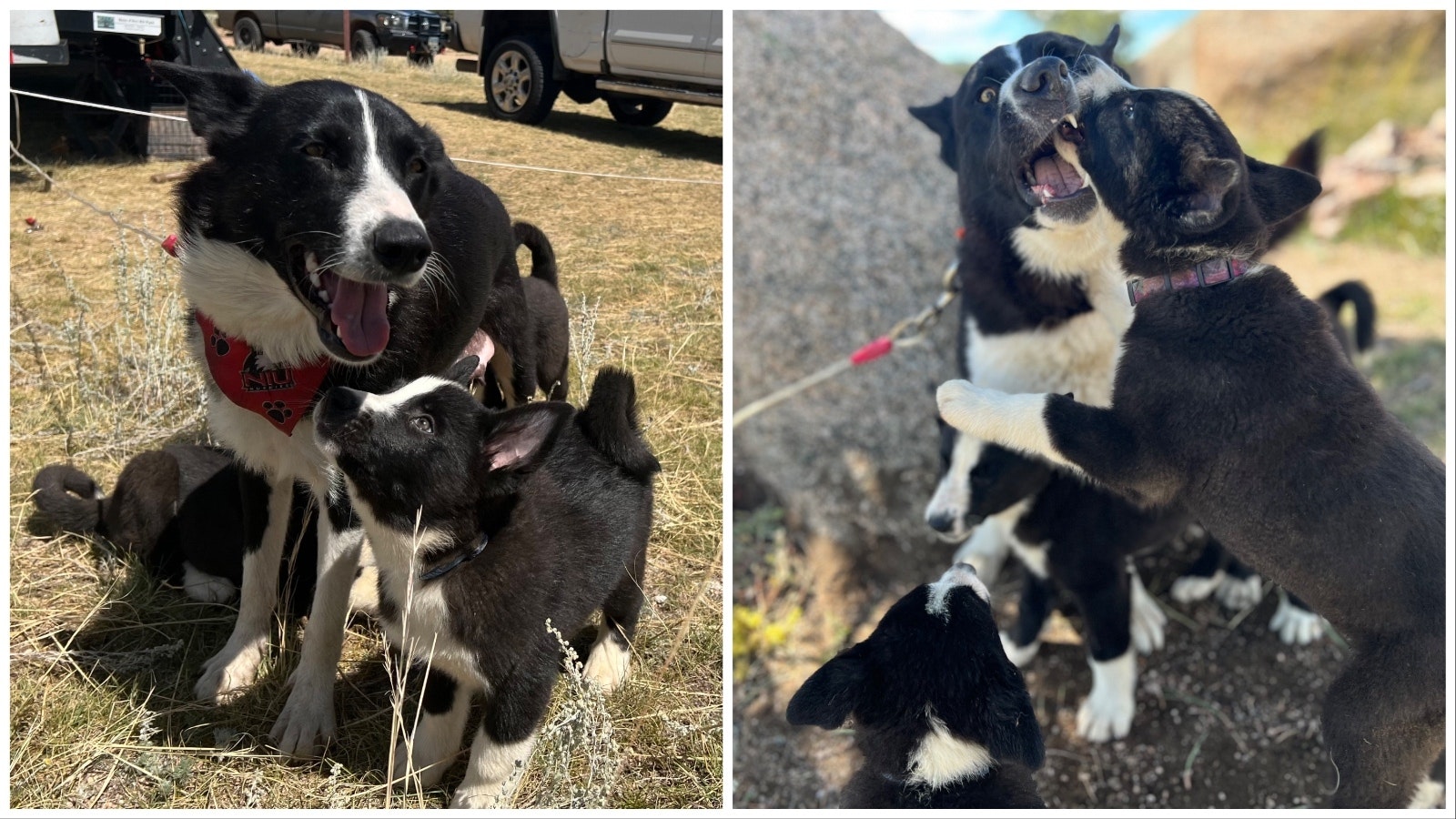
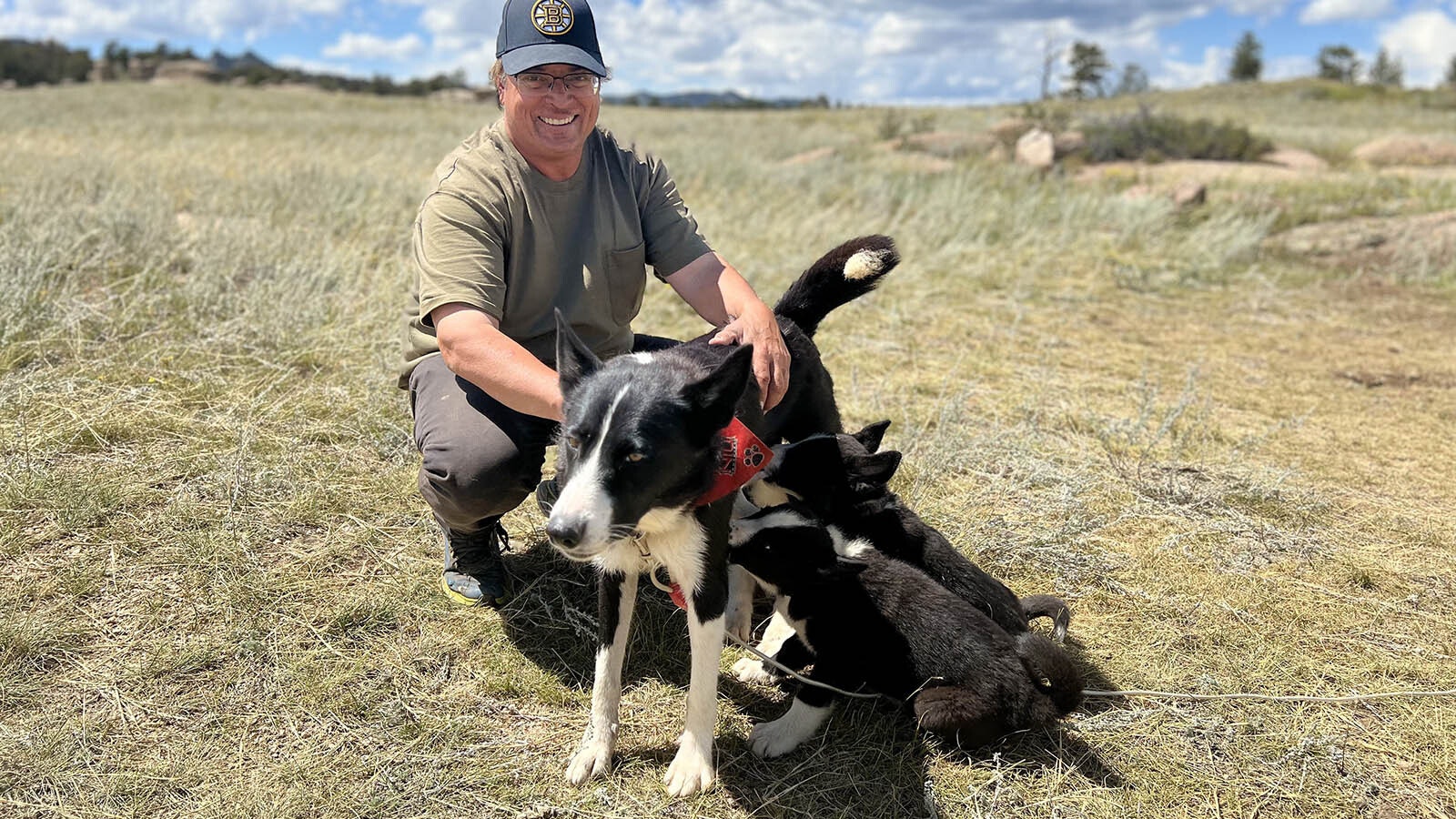
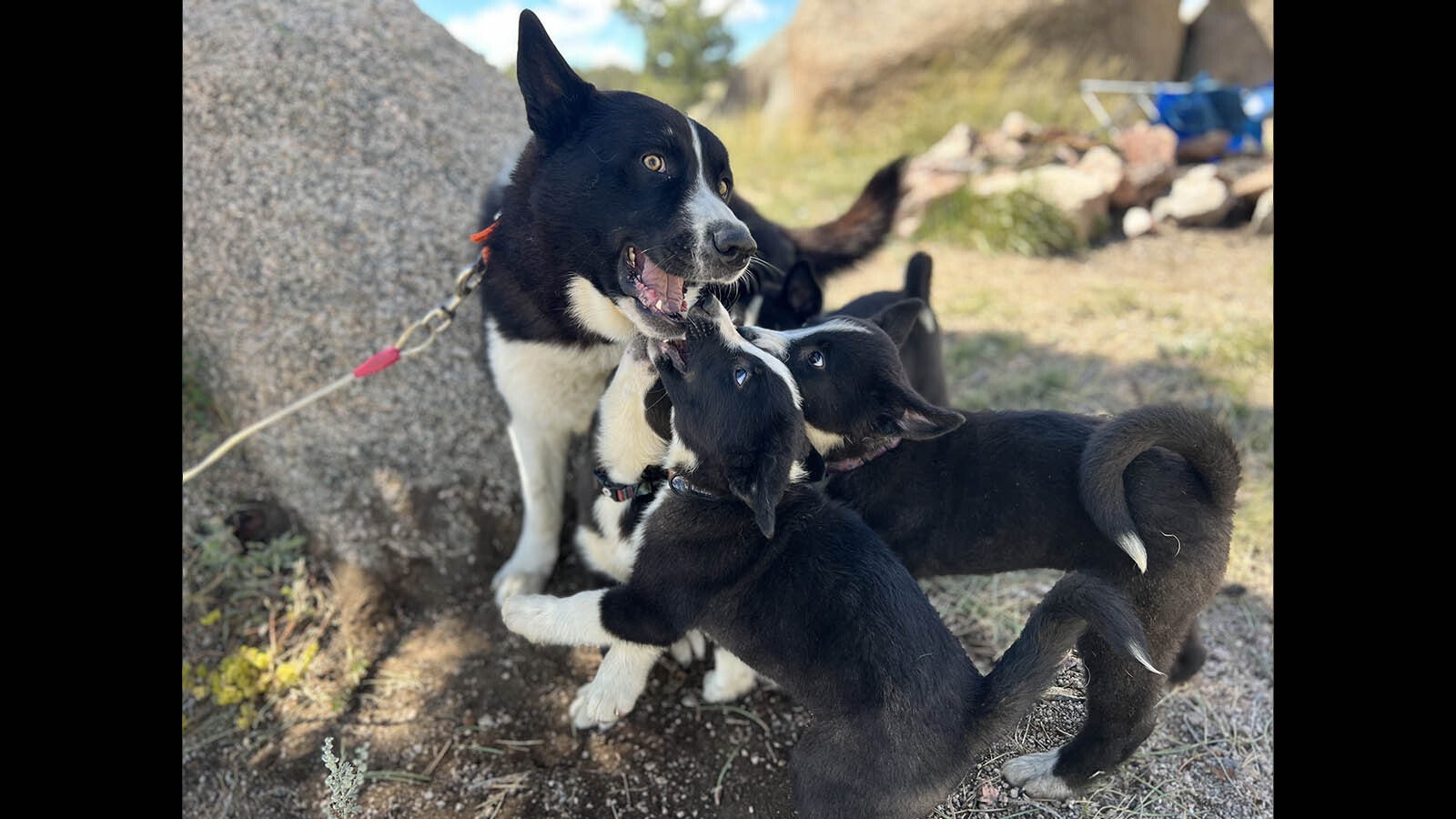
Liberty, a female Karelian bear dog, left, and Hawk, a male, are surrounded by her puppies while camping out at Vedauwoo. (Mark Heinz, Cowboy State Daily) 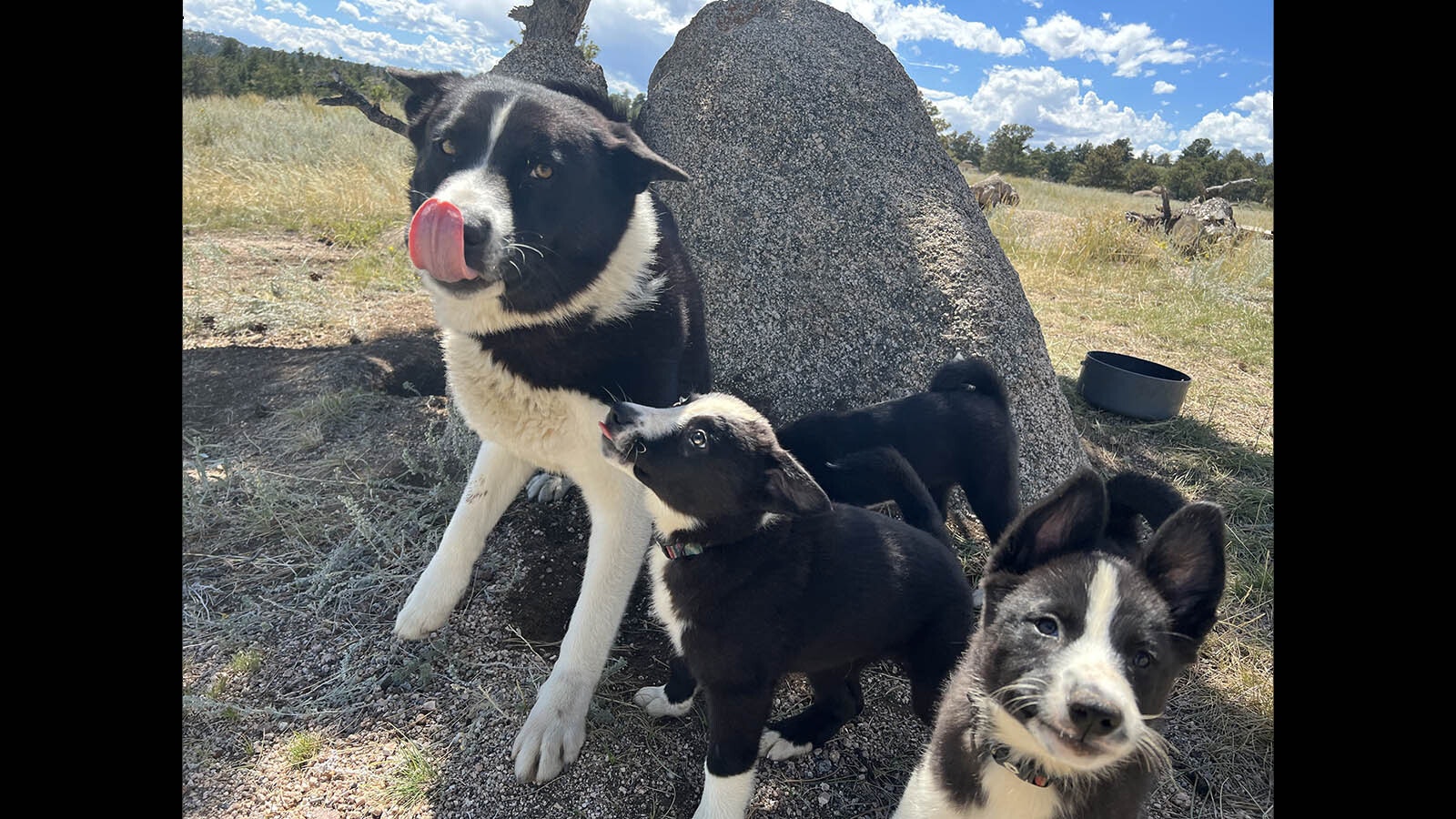
Karelian bear dogs are bred and trained to fend off bears, mostly with their loud barks and ability to haze them while staying out of reach. (Mark Heinz, Cowboy State Daily) 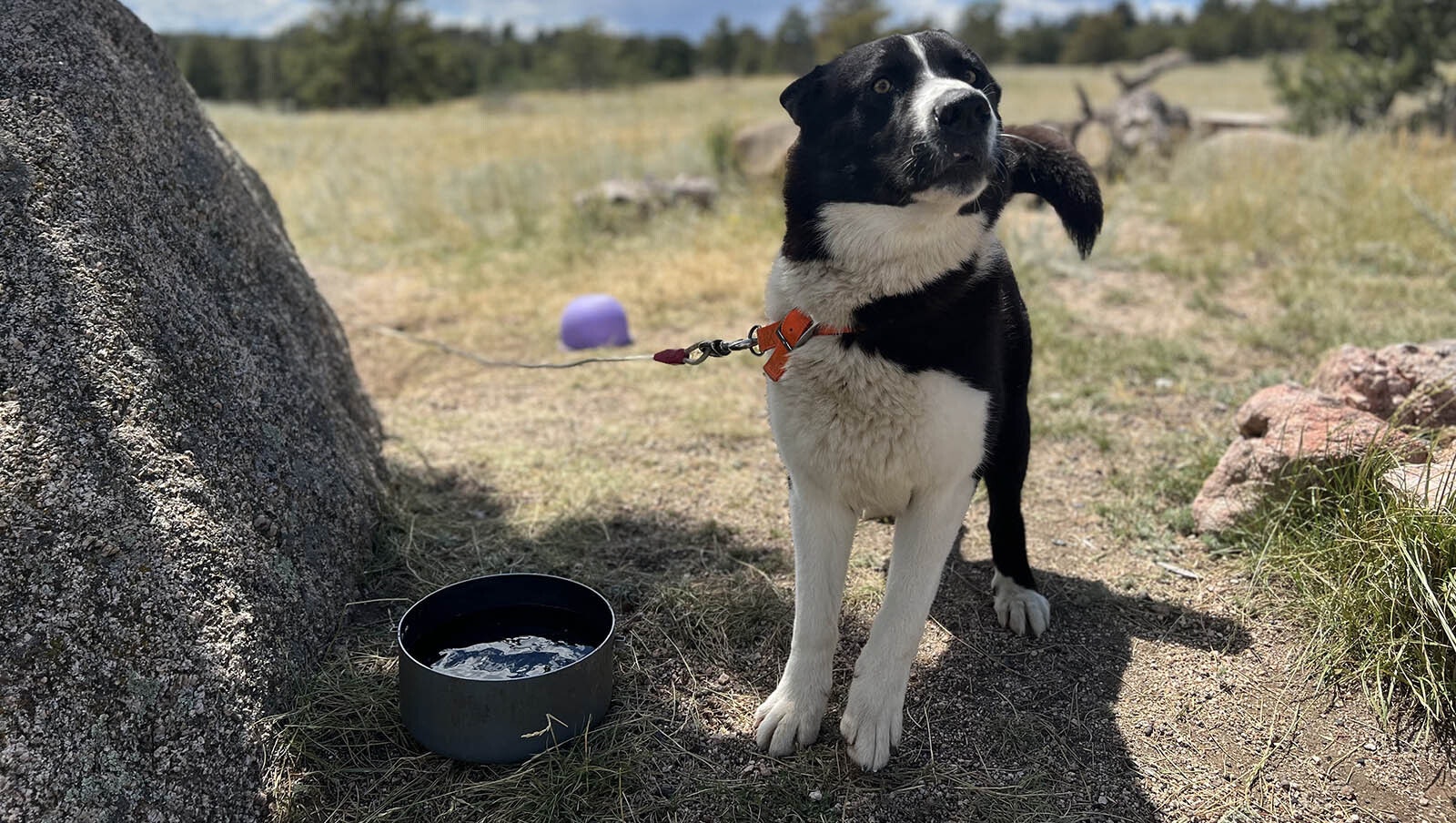
Hawks is Jenna Bourgeois' male Karelian bear dog. (Mark Heinz, Cowboy State Daily)
Good Family Dogs, But …
Karelian bear dogs will protect their owners against people with bad intent, but they’re generally friendly toward people and other dogs, Bourgeois said.
He said when his dogs are young, he takes them to dog parks so they can socialize with other dogs and their owners.
“That socialization is really important,” he said.
Under the right circumstances, they can make great family dogs because they bond strongly with their owners and are gentle with children, he added.
But he would not recommend them to families who don’t have experience training dogs, and lots of space.
Karelian Bear Dogs are energetic and require exercise, especially in the morning. And they bark. A lot, at anything that comes within a couple hundred yards or so of their territory.
“When I first got Hawk and Liberty, I was living in an apartment with concrete walls,” he said. “Their barking would bounce off those walls and echo all over the apartment complex. That didn’t work out too well.”
Mark Heinz can be reached at mark@cowboystatedaily.com.