Correction: This story has been corrected to reflect that DeWilde's dispute was over the right to make a machine gun, not to own one.
Wyoming’s chief federal judge has dismissed a Wapiti man’s lawsuit against the U.S. Attorney General challenging whether people have a Second Amendment right to make machine guns.
Jake DeWilde sued both U.S. Attorney Merrick Garland and the Bureau of Alcohol, Tobacco, Firearms and Explosives in January.
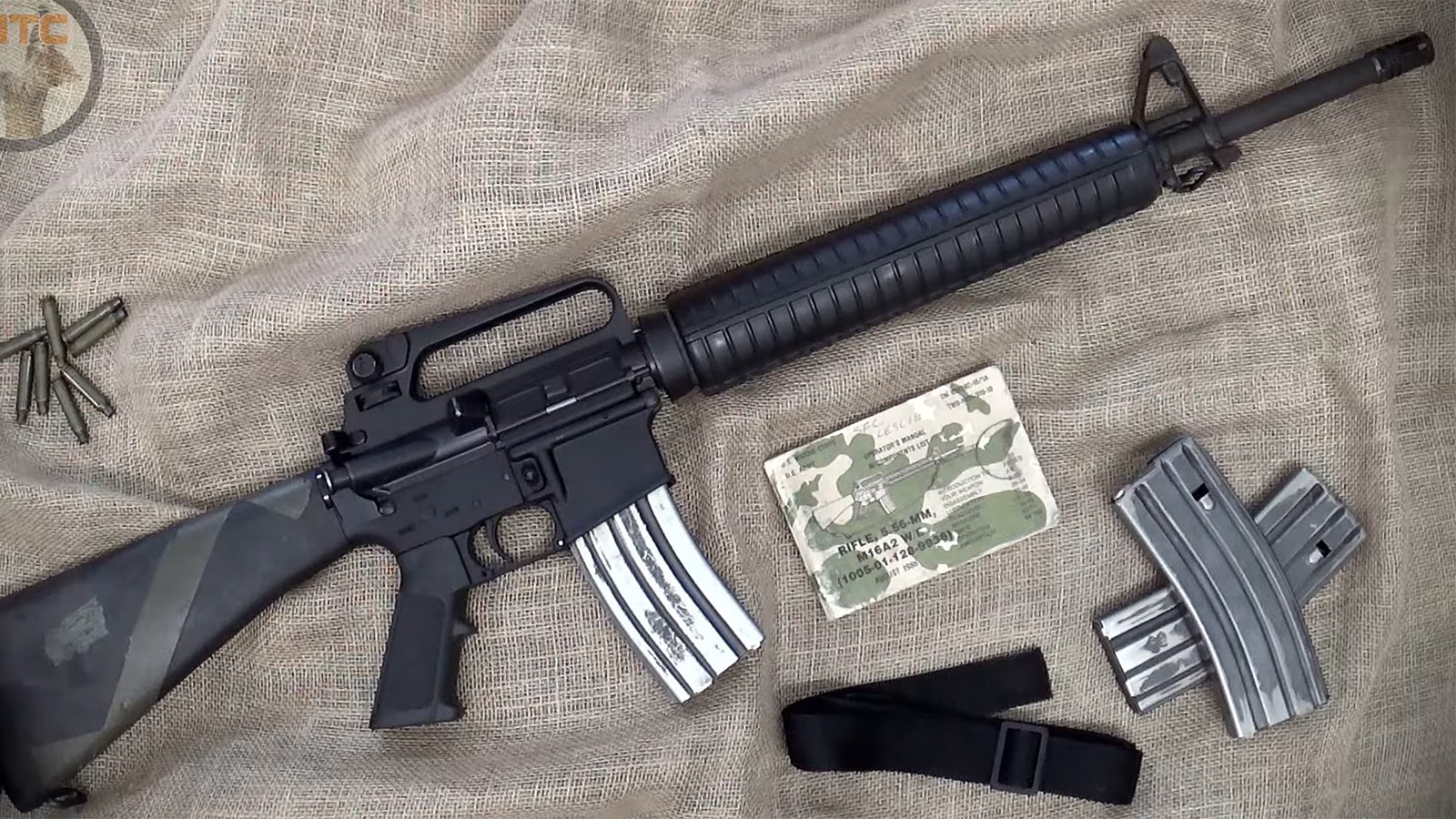
DeWilde alleged that the ATF’s decision to deny his permit request to make his own M16 machine gun is unconstitutional under the Second Amendment.
The M16, DeWilde argued, is in common military use and therefore may be manufactured by citizens to possess to uphold their militia right.
‘Tanks, Bombs, Nuclear Weapons?’
Wyoming Chief U.S. District Court Judge Scott Skavdahl said he couldn’t permit DeWilde’s argument because it’s contrary to U.S. Supreme Court rulings.
“Plaintiff’s argument logically would demand that the entire law-abiding citizenry is permitted to possess the same weapons our armed forces utilize,” wrote Skavdahl in a Monday order dismissing DeWilde’s lawsuit from the federal court. “Where is the limit? Tanks, bombs, nuclear weapons?
“This is beyond outlandish, yet it is the logical result of Plaintiff’s argument that provides no limit. The Court declines to permit such an astonishing result.”
Courts throughout U.S. history have held that weapons normally in use by law-abiding citizens are allowed by the Second Amendment to the U.S. Constitution, but “dangerous and unusual” weapons are not allowed without limit.
The M16 manufacture isn't necessarily allowed by the Second Amendment, wrote Skavdahl.
DeWilde had based much of his argument on the 2022 Supreme Court case New York State Rifle and Pistol Association vs. Bruen.
In it, the high court said governments can’t outlaw weapons that are in the “common use.” DeWilde argued that the M16 is in “common use” by the military, so potential militia people or citizens should be allowed to make them.
But Bruen didn’t disturb key Second Amendment cases before it, the judge wrote, which allowed for some restrictions on the kinds of weapons people may possess.
“The Second Amendment is not a second-class right, but it also is not without limits,” wrote Skavdahl.
No Standing
Skavdahl also dismissed DeWilde’s suit for another reason: It was DeWilde’s trust that applied for and did not win the permit to build an M16, but DeWilde sued the federal government as an individual.
Originally, DeWilde included his trust in the lawsuit, but re-filed without the trust after the federal government noted that DeWilde could not represent the trust since he’s not an attorney — though he can represent himself pro se.
With the ATF's denial of DeWilde's trust's machine gun application no longer a factor in the suit, Skavdahl concluded that the remaining claim - that DeWilde wanted a machine gun and believes he has a right to make one - was not enough to give him standing in a federal case.
Clair McFarland can be reached at clair@cowboystatedaily.com.