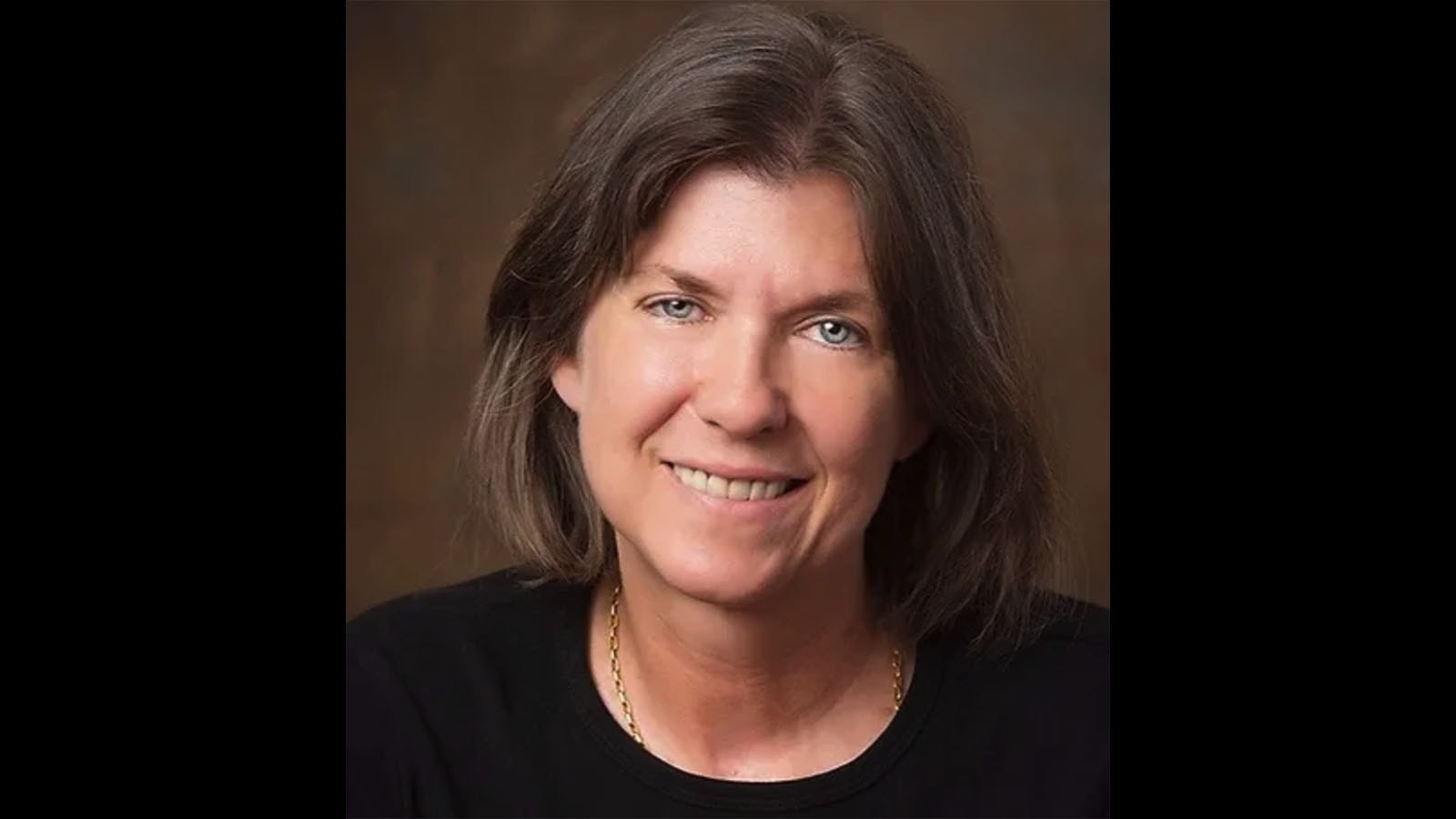
Dr. Judith Curry, who was scheduled to testify as an expert for the state of Montana in a case that’s being reported as a “referendum for climate change,” was never called to the stand, but she talked to Cowboy State Daily about the potential impacts of the landmark case.
The case, which is the first of its kind to go to trial, had closing arguments Tuesday.
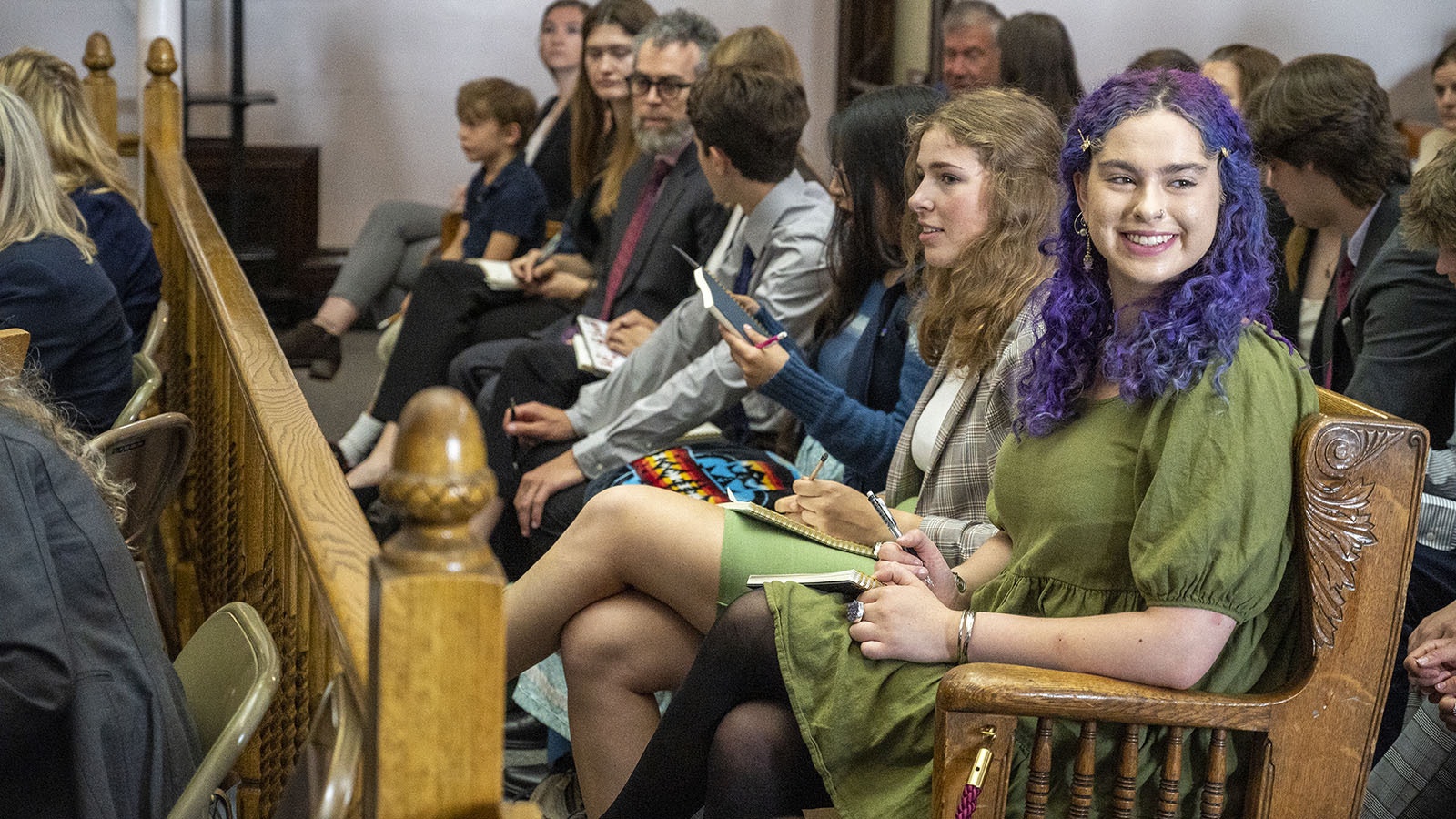
Sixteen young people, now ages 6-22, sued Montana for allegedly failing to protect their rights to a clean environment under the state’s constitution by continuing to permit projects related to fossil fuels.
Our Children’s Trust, an anti-fossil fuel nonprofit, provided the youths’ legal representation.
Curry says in a blog post she provided exclusively to Cowboy State Daily that Our Children’s Trust wrongly claimed in a press release that she had canceled her appearance in court.
“I didn’t cancel my appearance, but I am extremely relieved not to have participated in the trial,” Curry said, explaining that attorneys representing the state decided not to call her.
Three-Ring Climate Circus
Curry is president and co-owner of Climate Forecast Application Network.
Before she moved into the private sector, she was a professor of Earth and Atmospheric Sciences at Georgia Institute of Technology, as well as chair of the program. She also was a professor in the Department of Aerospace Engineering Sciences Program in Atmospheric and Oceanic Sciences Environmental Studies Program at the University of Colorado-Boulder.
Some of the plaintiffs’ witnesses submitted rebuttals ahead of Curry’s testimony in the trial, which she said totally misrepresented what was in her written testimony.
“All this would have turned the hearing into a three-ring climate circus, with me in the lion’s cage,” Curry said.
She received a call from the Montana lawyers Thursday evening telling her that they were “letting her off the hook.”
“My other half [her husband] told me I looked like 10 years were just added to my life. I was beyond relieved,” Curry said.
Cowboy State Daily reached out to Our Children’s Trust to ask about the statements in the press release regarding Curry and didn’t receive a response.
Case Summary
The Montana Constitution guarantees residents a healthy environment, but state law bars agencies from considering any action outside the state of Montana when issuing permits for fossil fuel projects, including the impacts of global greenhouse gasses.
That law, the youths argue, is therefore in conflict with the state’s constitutional guarantees for a healthy environment.
Curry had entered into an agreement in September to be an expert witness for the state, which included preparing written testimony, being deposed and testifying at trial. She signed no formal agreement with the state and has no legal restrictions on what she can say about it.
As a general practice, Curry said she doesn’t discuss anything her clients tell her in private, but since her name has appeared in numerous news reports and Our Children’s Trust press releases, her involvement is no secret.
Her statements to Cowboy State Daily, which will be posted on her blog, provide post-trial comments.
Natural Climate Variability
The plaintiffs in the case testified that floods, heat waves and wildfires were direct consequences of greenhouse gas emissions from fossil fuels.
Curry’s written report states that these events the they describe are well within the range of historical natural weather and climate variability, and the worst occurrences of these climate extremes happened in the early part of the 20th century, prior to significant amounts of carbon dioxide entering the atmosphere from fossil fuels.
The plaintiffs also claimed that future threats from what they say is a “climate crisis” are threatening humanity’s existence. Curry said that these claims are exaggerated and inconsistent with the most recent International Panel on Climate Change assessment reports and research publications.
Not A Scratch
Curry said that during her deposition, she was “grilled” by Julia Olsen, founder of Our Children’s Trust, for eight hours.
“She seemed to get pretty frustrated and occasionally too aggressive. From my perspective, she didn’t land so much as a scratch,” Curry said.
The organization, Curry said, did an “amazing job” presenting its case to the Montana judge. She called the plaintiffs “marvelous” and said the case was an impressive advertisement for the work of Our Children’s Trust, which as a result will “surely fill their coffers with huge donations.”
According to the group’s nonprofit tax documents, it raised $17 million between 2017 and 2021.
“The sad part is that the plaintiffs and Our Children’s Trust have been so badly misled about climate change, its causes, its impacts and its remedies. The organization might actually be well meaning, but they have been badly misled,” Curry said.
Curry has been critical of what she says is harmful rhetoric driving children’s anxiety about climate change.
Every Ton Counts?
The plaintiffs in the case claimed that Montana has a responsibility to be a leader in fighting climate change, even if its contributions to global emissions is negligible. Their mantra was “every ton of emissions counts.”
Even if Montana were to stop all oil, gas and coal production in the state, it wouldn’t stop much of the state’s greenhouse gas emissions. Residents of Montana would just import fossil fuels that are produced elsewhere.
However, if by some fantasy means all emissions from Montana were to be stopped, Curry said the impact to global warming would be negligible, which can be estimated using “third-grade math.”
Based on 2019 estimates, Montana produces 0.63% of U.S. emissions and 0.09% of global emissions. For an anticipated warming of 2 degrees Celsius, Curry explained, Montana’s 0.09% of emissions would account for 0.0018 degrees of warming.
Expert Charges
Curry said that a big issue was made in the media over the fact she was paid, whereas the plaintiffs’ expert witnesses provided their services free. Curry said there are a couple possible reasons they had agreed to do so.
These witnesses are employed by universities, Curry points out, which means they are funded in part by the state of Montana. Universities place few restrictions on what faculty do, and working on the trial is likely more interesting than other activities.
Another possibility is the witnesses are climate activists who feel that winning a war against oil companies and government officials that allow the companies to operate is a good cause.
“Playing the role of climate activist scores you points at most universities and in professional societies,” Curry said.
Curry charged $400 per hour for her work in the case.
“If this sounds outrageous to you, I have been criticized by headhunters recommending me to clients that I am charging far too little,” Curry said.
Different Roles
During the deposition, Curry said Olsen criticized her for not providing her services for free, but Curry said she’s not in the same position as university professors who are already on the state government payroll.
The fees Montana was charged for Curry’s services go to her company, which covers her time that would otherwise be spent on projects for paying clients that generate revenues for the company. As president of the company, that is her job description, she said.
Part of the services the company provides is expert testimony.
Curry said that being a paid expert witness does not imply statements given are biased.
“Science is a public good, and what I have to say is the same regardless of which ‘side’ might be paying for my services. An overly biased, partisan expert witness will be discredited by effective cross-examination,” Curry said.
She said that her reputation relies on her ability to be a reliable source of litigation support.
“It is absolutely essential that my reports and testimony be accurate, relevant, strongly justified and non-partisan,” she said. “You judge for yourself.”
Shredding Witnesses
Curry said that Montana’s lawyers were totally unprepared for direct cross-examination of the climate witnesses.
For example, one lawyer who was cross-examining a witnesses confused the International Panel on Climate Change, a consortium of the world’s leading climate scientists, with Representative Concentration Pathways, which are climate models estimating future warming trends.
Curry said the plaintiffs’ expert witnesses were ignorant of extreme event detection and attribution, which was central to a causality in the kids’ claims of injuries, and the witnesses wouldn’t answer the most basic questions about Montana’s emissions and their contribution to global warming.
“If I had been cross-examining these witnesses, I would have shredded their testimony,” Curry said.
Stop Scaring Kids
The fundamental premises behind the whole lawsuit, Curry said, are deeply flawed and based on an inappropriate attribution of every extreme weather event to warming caused by fossil fuel emissions. This causes pre-traumatic stress syndrome, she said, from apocalyptic scenarios and rhetoric.
“Please stop scaring the kids in an attempt to score political points in the climate/energy debate,” Curry said. “If you are concerned about your grandkids, help them to live their best lives and stop scaring them about bad weather.”